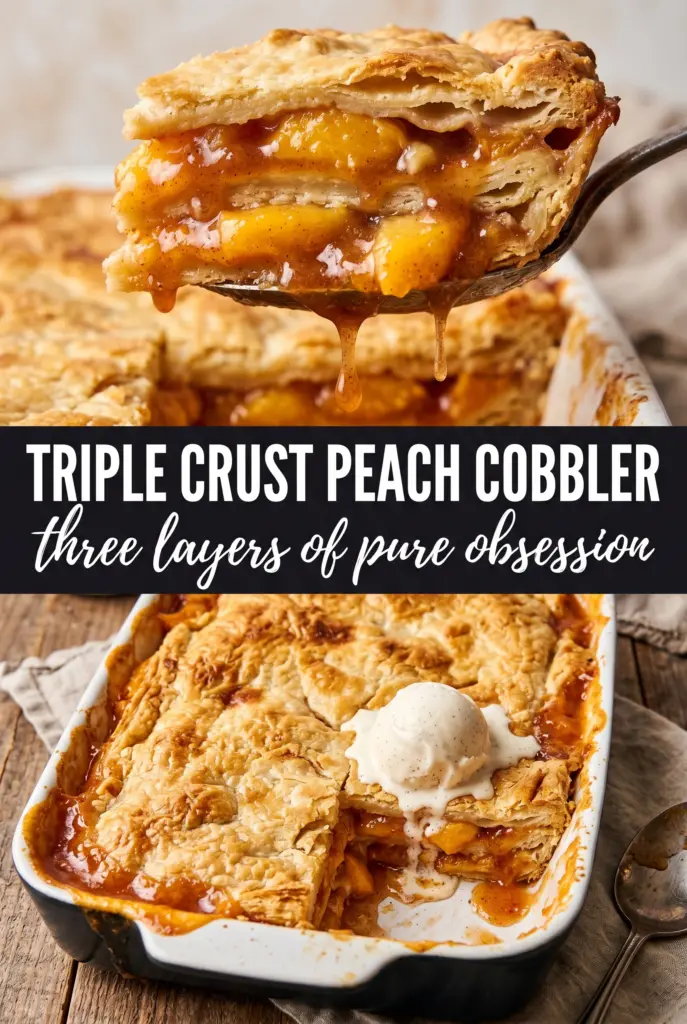
Three flaky crust layers turn this peach cobbler into something between a pie and a spoonable dessert, and that extra structure changes the whole bite. Instead of one soft top and a loose fruit layer underneath, you get buttery pastry on the bottom, a syrupy peach middle, and a shatteringly golden lid that catches caramelized juice in every crack. It slices cleanly, but it still eats like cobbler should: warm, messy at the edges, and loaded with peaches.
The trick is starting the bottom crust before the filling goes in. That short bake keeps the base from turning gummy once the peaches release their juice. Cornstarch thickens the fruit just enough to hold the layers together without turning the filling paste-like, and the egg wash plus coarse sugar on top gives you that bakery-style finish you can hear when the knife goes through it.
The crust stayed flaky all the way through, and the filling thickened up instead of running everywhere. I served it after 15 minutes of resting and it cut into perfect slices with those peach layers still visible.
Pin this triple crust peach cobbler for the kind of dessert that bakes up with flaky layers, syrupy peaches, and a crackly sugar top.
The Bottom Crust Has to Pre-Bake or the Whole Thing Turns Soggy
The mistake with layered cobblers is treating every crust the same. The bottom layer sits under hot fruit juices for nearly an hour, and if it goes into the oven raw, it never really gets a chance to dry out and set. That’s how you end up with a soft, doughy base instead of a true crust.
A quick 10-minute bake gives the first layer enough structure to hold the filling without collapsing. You’re not looking for color yet. You want the dough just set so it can stand up to the peaches that come next. The same idea applies to the rest of the bake: this dessert works because each layer gets just enough heat at the right time.
What Each Ingredient Is Actually Doing in This Triple Crust Cobbler
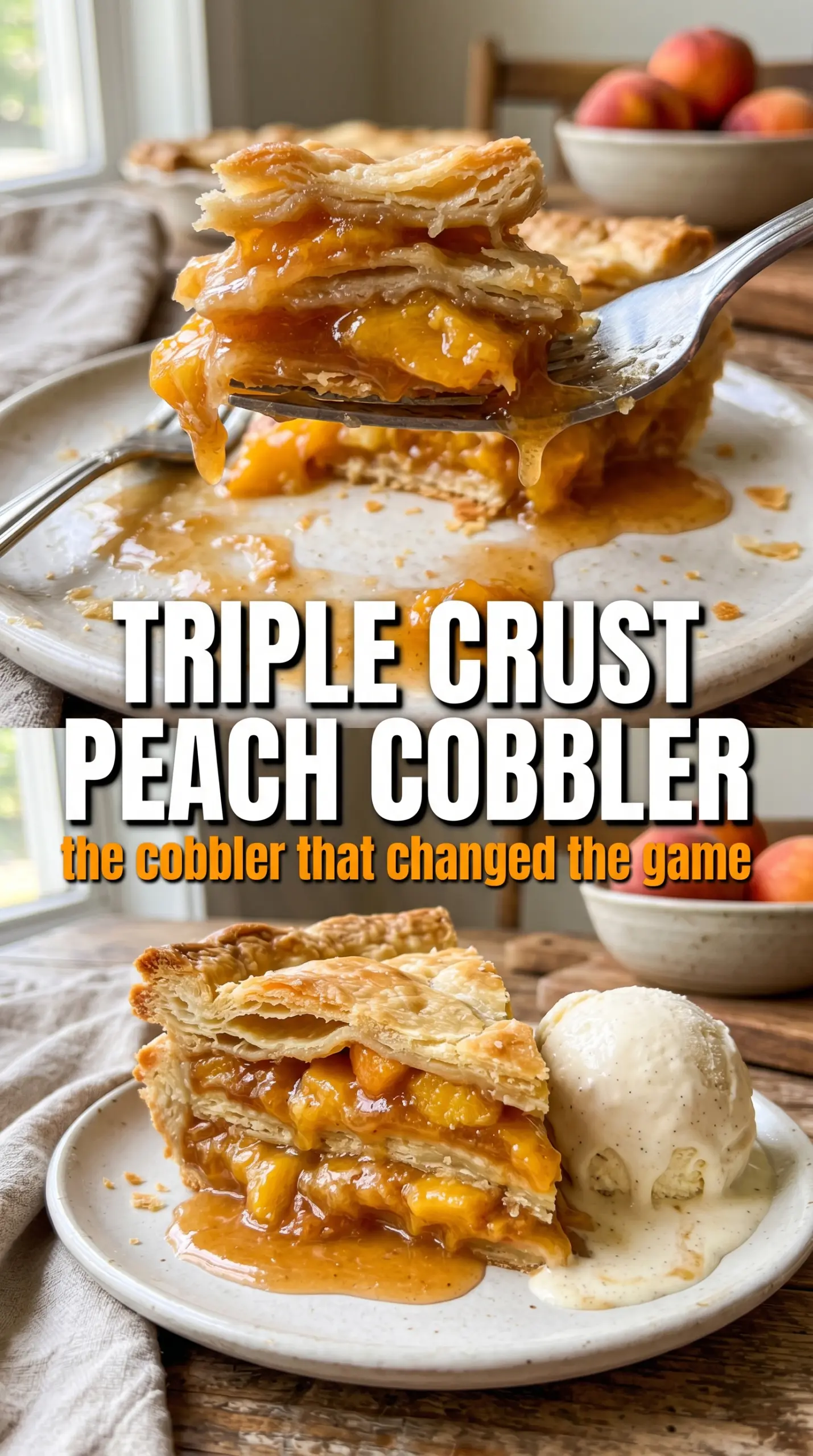
- Pie crusts — These are the backbone of the dessert. Store-bought crust works fine here as long as it’s rolled cold and handled gently; homemade gives you a little more flavor, but the method matters more than the brand. If the dough warms up too much, it gets harder to press into the dish without tearing.
- Fresh peaches — Use ripe peaches with good aroma and a little give at the stem end. Hard peaches stay bland, and overripe ones can collapse into mush before the crusts finish baking. If you need to, peel them by blanching first so the skins don’t slip into the filling.
- Cornstarch — This keeps the peach juices from flooding the dish. Stir it evenly through the fruit before baking so it can thicken the syrup as it heats; if you dump it in unevenly, you’ll get chalky patches. Flour can work in a pinch, but it gives a duller, heavier filling.
- Butter — The cubed butter melts into the peaches and helps create little pockets of richness through the filling. Don’t melt it first. Those cold cubes create better texture and help the syrup taste rounded instead of flat.
- Egg wash and coarse sugar — The egg wash gives the top crust color and shine, and the sugar adds the crackly finish that makes the lid taste as good as it looks. If you skip the sugar, the top will still bake, but it won’t have that crisp, bakery-style edge.
How to Build the Layers So the Filling Stays Juicy, Not Watery
Starting With the First Set Crust
Press the first pie crust into a greased 9×13 baking dish and bake it just until it loses its raw look. The dough should look matte and slightly set, not browned. If it puffs in places, dock it lightly before baking so the base stays even. This first layer is the one that keeps the whole dessert from slumping into fruit soup.
Mixing the Peach Filling
Toss the sliced peaches with sugar, cinnamon, nutmeg, lemon juice, and cornstarch until every piece looks lightly coated. You want the fruit to look glossy, not wet with loose sugar at the bottom of the bowl. If your peaches are especially juicy, let them sit for a few minutes, then spoon them in and leave excess liquid behind. That keeps the filling thick instead of runny.
Stacking the Middle and Top
Spoon half the filling over the first crust, dot it with half the butter, then lay on the second crust before adding the remaining peaches and butter. Press the second crust gently so it sits against the fruit without trapping big air pockets. The third crust goes on top with vents cut in it so steam can escape; if you skip the vents, the filling pushes up and can split the top in uneven places.
Baking Until the Syrup Bubbles at the Edges
Bake until the top is deeply golden and the filling is actively bubbling around the edges and through the vents. That bubbling matters more than the clock because it tells you the cornstarch has thickened the juices. Pull it too early and the center stays loose. Let it rest at least 15 minutes before serving so the syrup settles and the slices hold together.
How to Adjust the Cobbler Without Losing the Layered Texture
Use frozen peaches when fresh ones aren’t good
Frozen peaches work, but thaw them first and drain off the extra liquid so the filling doesn’t get soupy. They’ll bake up a little softer than fresh, but the flavor still lands well. If the peaches taste less sweet than peak-season fruit, add a spoonful more sugar and don’t skip the lemon juice.
Make it gluten-free with a sturdy GF pie crust
Use a gluten-free pie crust that rolls well and can handle being layered in a dish. Some GF crusts crack more easily, so chill the dough until firm but flexible and patch tears as you go. The filling itself stays the same, and the final dessert still gets that stacked, pie-like finish.
Dial the sweetness down a little for very ripe peaches
If your peaches are intensely sweet, cut the sugar back by a few tablespoons. The filling should taste balanced, not candy-like, because the crust already brings plenty of richness. Keep the cornstarch the same or the juices can get loose once the sugar drops.
Storage and Reheating
- Refrigerator: Store covered for up to 4 days. The crust softens a bit as it sits, but the flavor holds well.
- Freezer: This cobbler freezes best after baking and cooling completely. Wrap portions tightly and freeze for up to 2 months; thaw overnight in the fridge before reheating.
- Reheating: Warm slices in a 325F oven until the filling is hot and the crust edges crisp back up. The microwave works in a pinch, but it softens the pastry and takes away the layered texture.
Questions I Get Asked About This Recipe
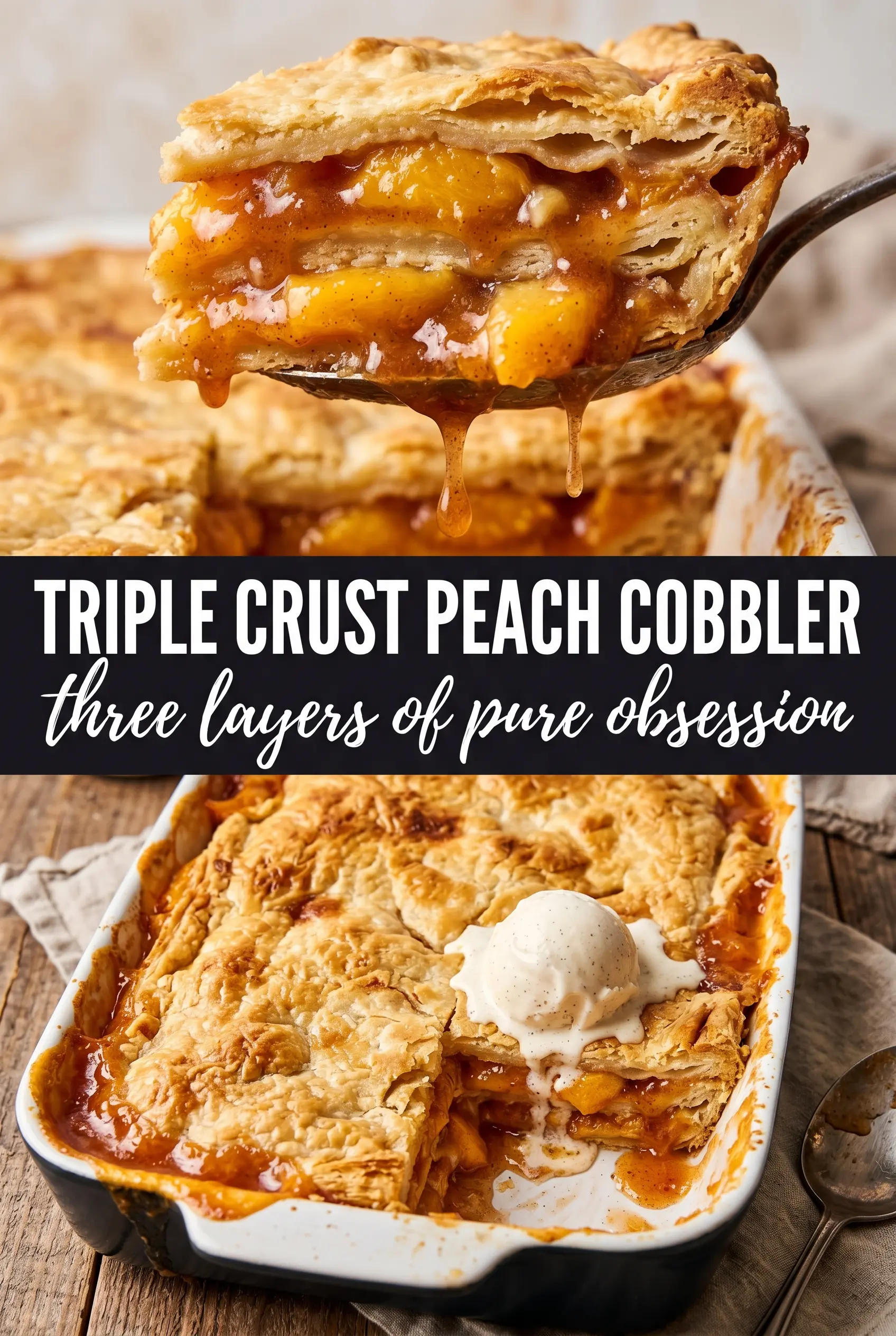
Triple Crust Peach Cobbler
Ingredients
Equipment
Method
- Preheat oven to 375F and grease a 9x13 baking dish. Set it aside so the dish is ready to build the layered cobbler.
- Toss sliced peaches with granulated sugar, cinnamon, nutmeg, lemon juice, and cornstarch until combined. The mixture should look evenly coated with no dry cornstarch pockets.
- Press the first pie crust into the bottom of the dish and bake for 10 minutes until just set. Look for light set edges without full browning.
- Spoon half the peach filling over the first crust and dot with half the unsalted butter. Distribute to reach the corners so each slice gets syrupy filling.
- Press the second pie crust over the peaches, then top with the remaining peach filling and butter. Aim for an even layer so the third crust sits flat.
- Lay the third pie crust on top, brush with egg wash, and sprinkle with coarse sugar. You should see a glossy top surface where the egg wash hits.
- Cut several vents in the top crust and bake for 45-55 minutes until deeply golden and bubbling. Watch for peach syrup bubbling through the vents and golden caramel color.
- Let the triple crust peach cobbler rest 15 minutes before serving. The layers will thicken slightly so the slice holds and syrup settles at the cracks.