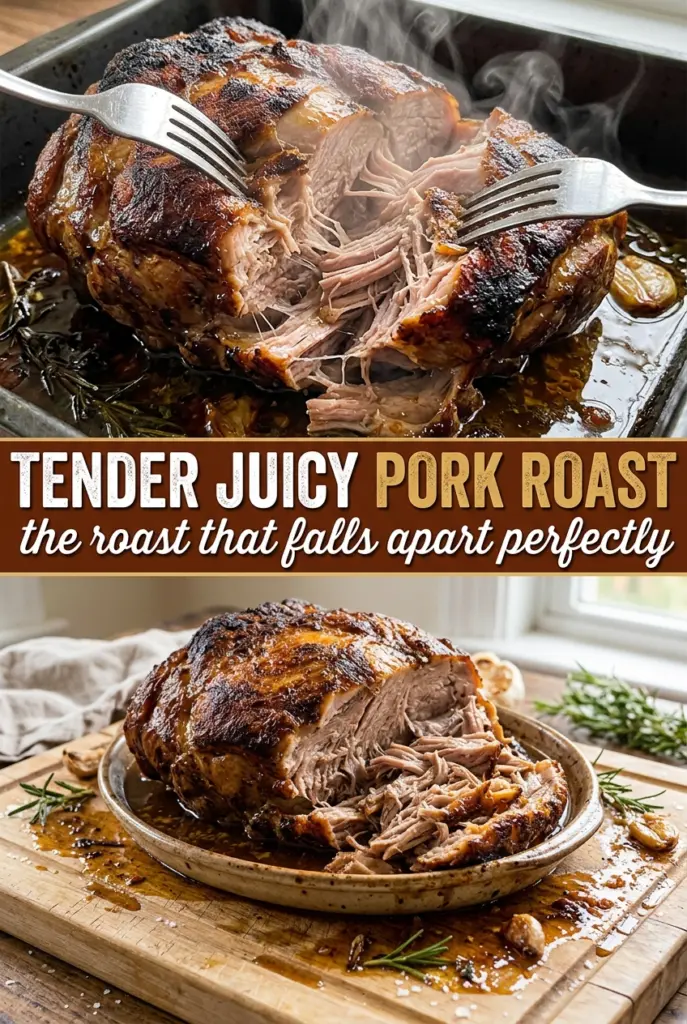
Golden crust, juicy slices, and a pan of herb-scented drippings make this pork roast the kind of main dish people go back to before the platter even hits the table. The outside gets deeply browned and savory while the center stays moist and tender, with just enough garlic, rosemary, and thyme to taste classic without feeling heavy.
The difference here is a dry pork loin, a thick herb paste, and a hot sear before the roast goes into the oven. That combo builds flavor on the outside and protects the inside from drying out. The broth in the pan does double duty too: it keeps the drippings from burning and gives you a simple sauce to spoon over the sliced pork.
Below, I’ll walk through the part that matters most — how to get a browned crust without overcooking the center — plus a few smart swaps and storage notes so the leftovers stay just as good the next day.
The herb paste made such a good crust, and the pork stayed juicy all the way through at 145°F. I rested it the full 15 minutes and the slices held onto their juices instead of spilling out on the board.
Save this juicy pork roast with its garlicky herb crust for your next Sunday dinner or easy roast night.
The Seared Crust Is What Keeps This Pork Roast from Tasting Flat
A pork loin roast can go bland fast if it goes straight from seasoning to oven. The sear is where the flavor gets built. It gives the garlic and herbs a chance to toast, and it starts a browned exterior that tastes deeper than oven heat alone can create.
The other thing people miss is temperature. Pork loin dries out when it’s pushed too far, so this roast comes out at 145°F and then rests before slicing. That rest matters. The juices settle back into the meat instead of running onto the cutting board the second you cut into it.
- Pork loin roast — This cut is lean, which is why the cook temperature matters. A boneless loin roast slices beautifully, but it won’t forgive overcooking the way a fattier shoulder roast would.
- Olive oil — This carries the herbs and helps the paste cling to every surface. You only need a thin coating, but don’t swap it for a dry rub here or the crust won’t form as evenly.
- Garlic, rosemary, and thyme — These are the backbone of the roast’s flavor. Fresh herbs work, but dried herbs are actually convenient here because they mix into the paste and cling well during searing.
- Chicken broth — This is there for the pan juices, not to braise the roast. Use something that tastes good on its own, since it becomes the sauce you spoon over the slices.
What Each Ingredient Is Actually Doing in This Pork Roast
The herb paste is the key move here. Mixing the garlic, rosemary, thyme, paprika, onion powder, salt, pepper, and olive oil into a paste means the seasoning stays put when the roast hits the hot pan instead of falling off into the skillet. Smoked paprika adds a little depth and color, not a smoky barbecue flavor.
Use a boneless pork loin roast, not pork tenderloin. Tenderloin is smaller, leaner, and cooks much faster, so the timing here would overdo it. If you need to use a tied roast from the butcher, that works too; just keep the shape as even as possible so the thickest part doesn’t lag behind.
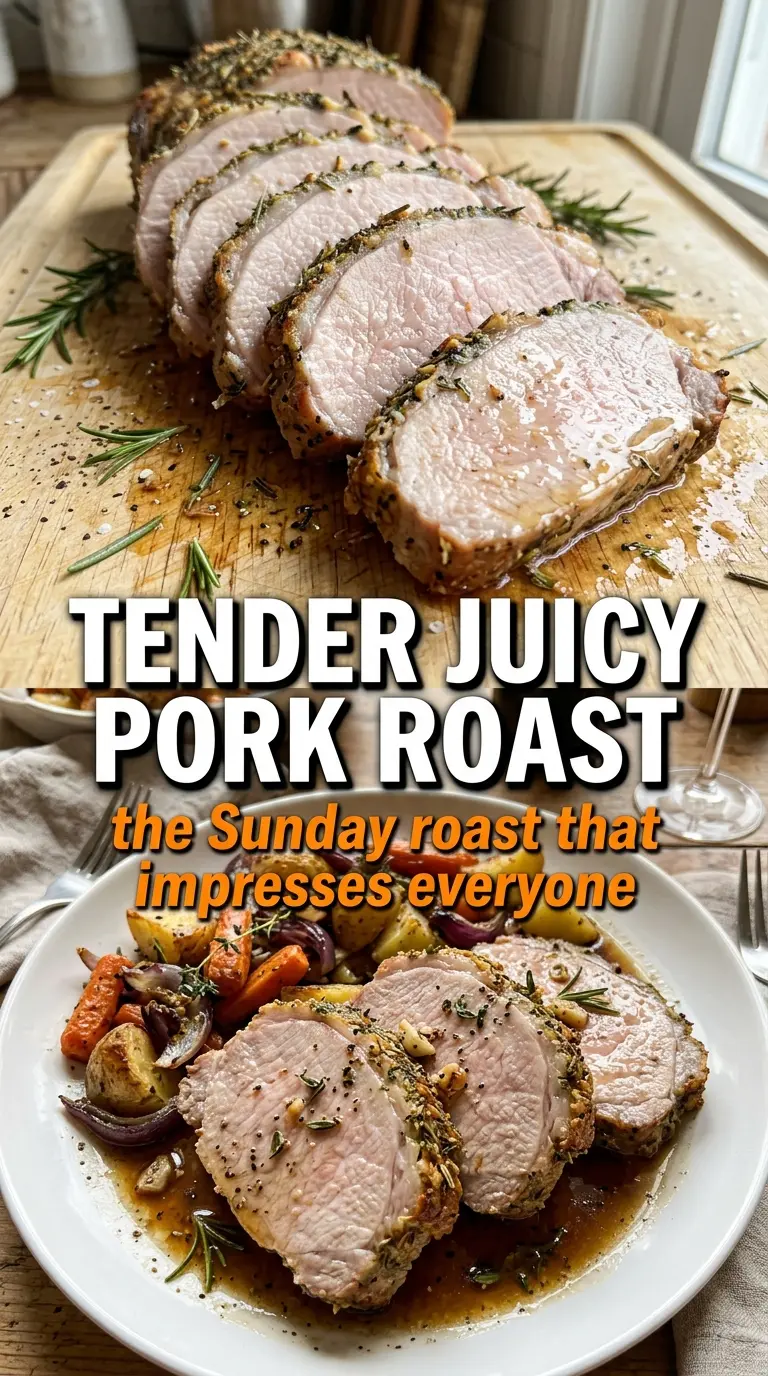
Roasted vegetables are worth planning around because they pick up the pan drippings and turn this into a full dinner without extra work. Anything sturdy — carrots, potatoes, onions, parsnips — can go alongside the roast once the oven is hot.
How to Build the Roast So the Center Stays Juicy
Making the Herb Paste
Stir the olive oil, garlic, rosemary, thyme, paprika, onion powder, salt, and pepper into a thick paste so it clings instead of sliding off. The mixture should look spreadable, not watery. If it’s too loose, it won’t stay on the meat long enough to brown properly in the skillet.
Getting the Sear First
Pat the pork completely dry before it goes into the pan. Moisture on the surface turns into steam, and steam is the enemy of browning. Sear each side until you get a deep golden crust and the pan smells nutty and garlicky, about 2 to 3 minutes per side.
Roasting to the Right Temperature
Add the broth to the pan, then transfer the roast to the oven and cook until the internal temperature reaches 145°F. Start checking early, especially if your roast is on the smaller end of the weight range. Pulling it at the right temperature matters more than chasing a fixed time, because even a few extra degrees can take the meat from juicy to dry.
Resting and Slicing
Let the roast rest for 15 minutes before cutting. This is where the juices settle back into the meat, which is why the slices stay moist instead of flooding the board. Slice against the grain and spoon the pan juices over the top right before serving.
How to Adapt This Pork Roast for Different Tables
Dairy-Free by Default
This roast already fits a dairy-free table, which is one reason it’s such a reliable main dish. Keep the broth and seasoning simple, and the result stays rich from the pan juices alone.
Swap the Herbs for What You Have
If you’re out of rosemary or thyme, use an Italian-style dried herb blend in the same total amount. The flavor shifts a little less piney and a little more rounded, but the crust still browns well and the roast stays savory.
Make It with a Smaller Roast
A 2-pound roast works fine, but it will cook faster, so rely on temperature instead of the clock. The outside still needs the same sear, yet the oven time may drop by 15 to 20 minutes depending on thickness.
Gluten-Free Serving Notes
The roast itself is gluten-free as written, but broth labels vary, so check the chicken broth before you pour it in. Serve with gluten-free sides or roasted vegetables and the whole meal stays safe without changing the method.
Storage and Reheating
- Refrigerator: Store sliced pork in an airtight container for up to 4 days. Keep the pan juices with it so the meat doesn’t dry out.
- Freezer: It freezes well for up to 2 months. Wrap slices tightly and freeze with a little juice in the container so the texture stays better after thawing.
- Reheating: Reheat gently in a covered skillet with a splash of broth over low heat, or warm it in a 300°F oven covered with foil. High heat is what dries out lean pork, so go slow and stop as soon as it’s hot through.
Questions I Get Asked About This Pork Roast
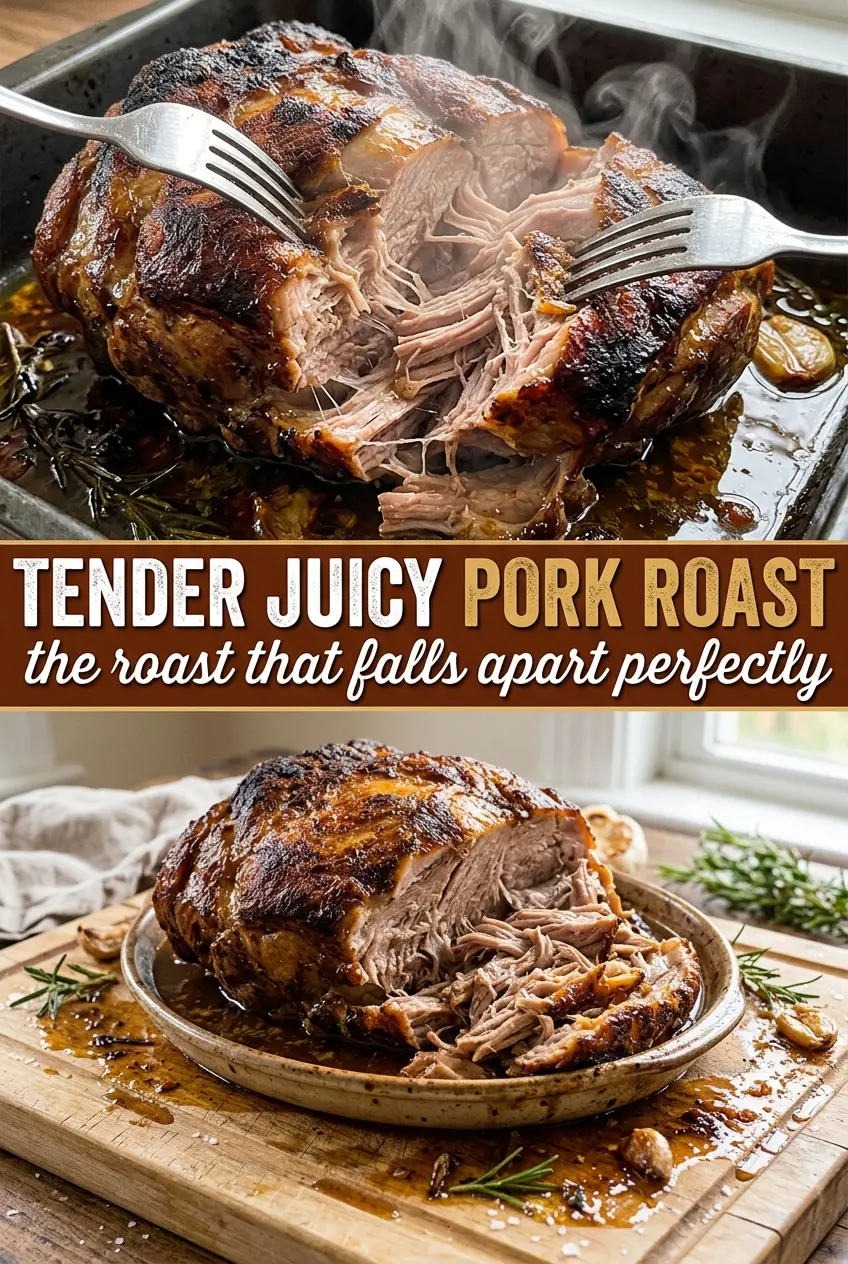
Tender Juicy Pork Roast
Ingredients
Equipment
Method
- Preheat the oven to 375°F.
- Mix olive oil, garlic, dried rosemary, dried thyme, smoked paprika, onion powder, salt, and black pepper into a paste.
- Pat pork roast dry and rub herb paste all over every surface.
- Heat an oven-safe skillet or roasting pan over medium-high heat and sear roast on all sides until golden, about 2–3 minutes per side, with a visibly browned crust.
- Pour chicken broth into the pan and transfer to the oven; roast 60–75 minutes, until the internal temperature reaches 145°F with a firm, browned exterior.
- Rest the pork roast 15 minutes before slicing so the juices settle and the cut surface looks uniformly moist.
- Spoon the pan juices over the sliced pork and serve with roasted vegetables for serving.