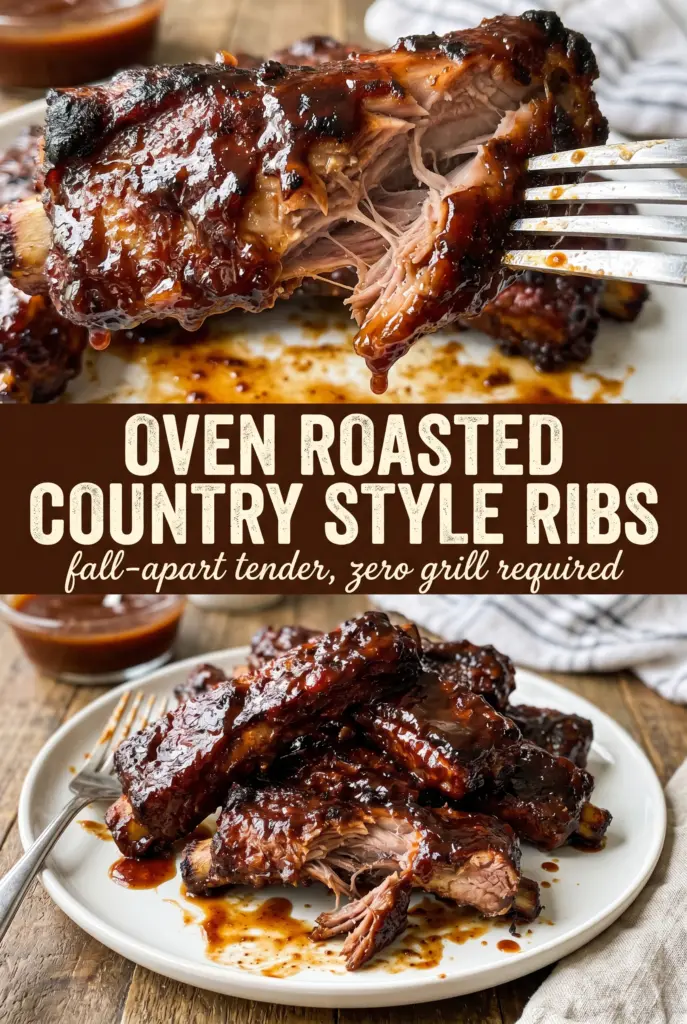
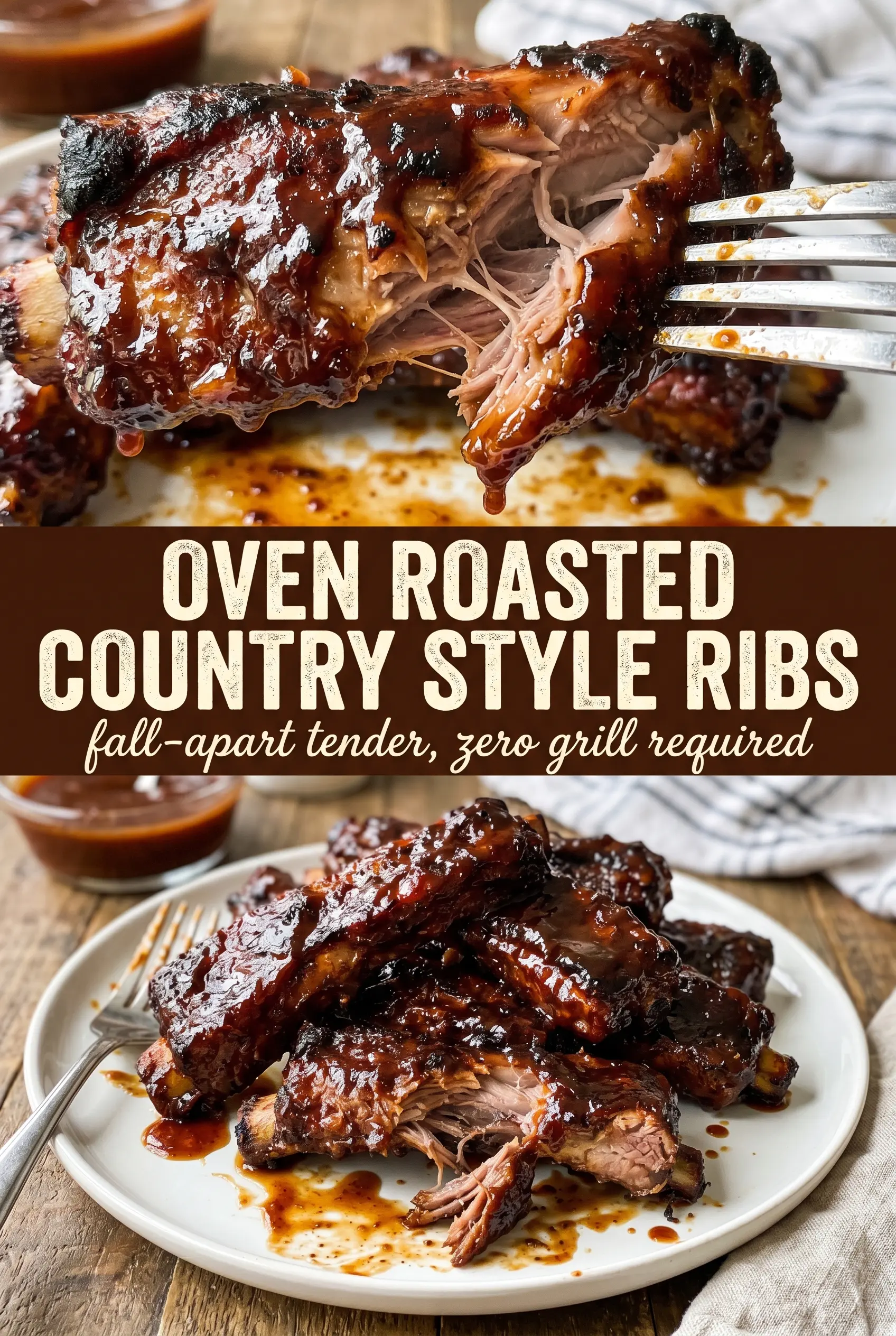
Tender oven roasted country style ribs land on the plate with a caramelized crust, sticky BBQ glaze, and meat that pulls apart in juicy shreds instead of slicing like a chop. The low-and-slow bake does the heavy lifting here, turning a sturdy cut into something that eats like barbecue without needing a smoker or a full afternoon hovering over the oven.
The trick is giving the ribs enough time under foil to soften first, then finishing them uncovered at higher heat so the sauce tightens and clings. Brown sugar in the rub helps the surface darken, smoked paprika brings that cookout backbone, and the final brush of BBQ sauce gives you the lacquered finish people expect from good ribs.
Below, I’ve broken down the part that matters most: how to keep the meat tender, how to avoid drying out the edges during the final bake, and the small timing detail that keeps the glaze sticky instead of burnt.
The ribs were fall-apart tender and the BBQ sauce got sticky and caramelized instead of watery. I covered them for the full two hours and the meat shredded with a fork.
These oven roasted country style ribs turn out fork-tender, sticky, and caramelized — save this one for an easy BBQ-style dinner without the grill.
The Long Foil Bake Is What Turns These Ribs Tender
Country style ribs are built for slow heat. If you rush them, they stay chewy and the glaze on top burns before the meat underneath has a chance to relax. The covered bake is where the transformation happens: the ribs braise in their own moisture and the spice rub melts into the surface, which is why the meat ends up soft enough to pull apart with a fork.
The uncovered finish is the other half of the equation. Once the ribs are tender, the oven needs to go hot enough to tighten the BBQ sauce and give it that sticky edge. If the pan goes uncovered too early, the sugars in the sauce darken before the meat is ready, and you lose both tenderness and a clean glaze.
- Foil traps steam and keeps the ribs from drying out during the long bake.
- Brown sugar helps the crust caramelize and balances the smoke from the paprika.
- Smoked paprika gives the ribs that outdoor-cooked flavor without a grill.
- BBQ sauce belongs at the end, when the meat is already tender and ready to take on color.
What Each Ingredient Is Actually Doing in This Dish
Country style pork ribs are the only ingredient here that really matters for texture. Bone-in ribs bring a little extra richness, but boneless works fine and is often easier to serve because the meat shreds cleanly after the bake. What you want most is a cut with enough marbling to stay juicy through a long cook.
The dry rub is doing more than seasoning the surface. Brown sugar helps the ribs brown and gives the BBQ sauce something to cling to, while smoked paprika, cumin, garlic powder, and onion powder build a savory base that stands up to sweet sauce. Cayenne is there for background heat, not fire, so a little goes a long way.
Use a BBQ sauce you like eating straight from the spoon, because the oven will concentrate it. A thin, overly sweet sauce can turn syrupy fast, while a thicker, tangier sauce stays balanced after the final bake. If your sauce runs on the sweeter side, add a splash of vinegar or a pinch more cayenne before brushing it on.
How to Build the Glaze Without Burning the Sugar
Seasoning the Ribs Generously
Pat the ribs dry first so the rub grabs instead of sliding off. Coat every side until the meat looks deeply seasoned, not lightly dusted, because the long bake mellows everything. If the ribs go into the oven under-seasoned, the sauce at the end has to do all the work, and it won’t.
Cooking Low and Covered
Set the ribs in a single layer and cover the dish tightly with foil. That tight seal matters because loose foil lets steam escape and the ribs can dry out around the edges before the center turns tender. After about two hours, the meat should feel soft when you press it with a fork and start to pull apart at the thickest point.
Finishing Hot for the Sticky Crust
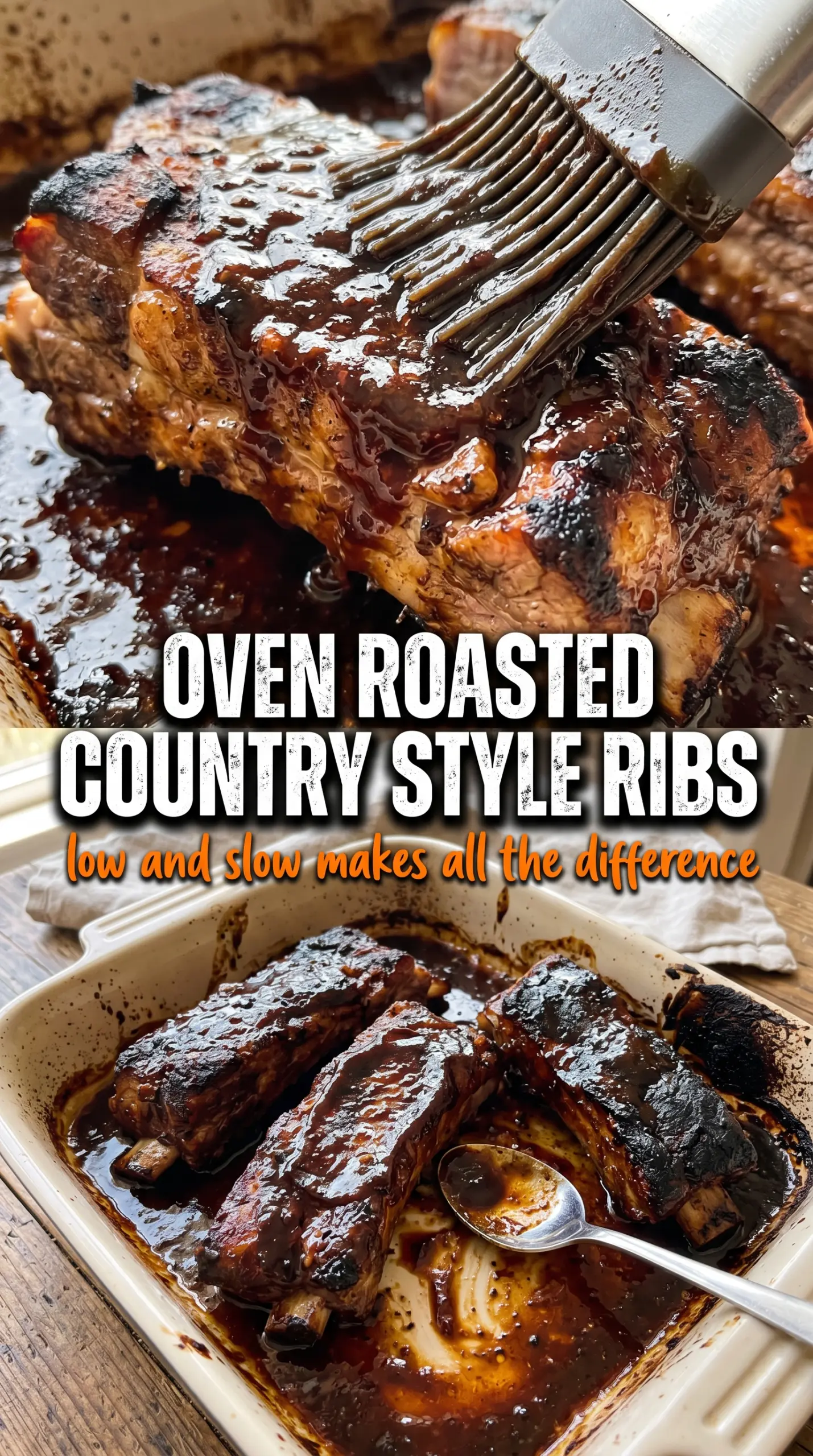
Once the ribs are tender, uncover them and brush on a generous layer of BBQ sauce. Raise the oven to 400°F so the sauce bubbles, darkens at the edges, and tightens into a glaze. Watch the pan during the final minutes; if the sauce starts to look black instead of glossy, it’s been left too long and the sugar has gone past caramelized.
Three Ways to Adjust These Ribs for Your Table
Make Them Spicier
Increase the cayenne or add a little chipotle powder to the rub. That gives the ribs more heat and a deeper smokiness without changing the texture, but it does push the flavor away from classic sweet BBQ and closer to a smoky, peppery finish.
Use a Sugar-Free or Low-Sugar Sauce
Swap in a reduced-sugar BBQ sauce and cut the brown sugar in the rub in half. The ribs will still caramelize, but the glaze will set a little less aggressively, which is a good trade if you want the same sticky finish with less sweetness.
Gluten-Free Version
Use a BBQ sauce labeled gluten-free and check your spice blends for any anti-caking additives. The cooking method stays exactly the same, and since the thickening here comes from reduction and caramelization rather than flour, you don’t lose anything in the final texture.
Serving for a Crowd
Double the ribs and use a larger baking dish or two pans so they stay in a single layer. If they’re stacked on top of each other, the bottom pieces steam instead of browning, and the glaze won’t set evenly.
Storage and Reheating
- Refrigerator: Store leftovers in an airtight container for up to 4 days. The meat stays tender, though the glaze will thicken as it chills.
- Freezer: These freeze well for about 2 months if you pack the ribs with a little extra sauce to protect the meat from drying out.
- Reheating: Cover and warm in a 300°F oven until hot, then uncover for the last few minutes if you want the glaze to tighten again. Microwaving works in a pinch, but it softens the crust and can make the edges stringy.
Answers to the Questions Worth Asking
Oven Roasted Country Style Ribs
Ingredients
Equipment
Method
- Preheat the oven to 300°F. Set a baking dish or sheet pan on the center rack so heat is even.
- Mix the dry rub ingredients in a bowl until evenly combined. Coat the ribs generously on all sides with the rub, pressing lightly so it adheres.
- Place the ribs in a single layer in a baking dish and cover tightly with foil. Bake for 2 hours at 300°F until the meat is very tender and pulls apart easily.
- Uncover the ribs and brush generously with BBQ sauce. Increase the oven to 400°F.
- Bake uncovered for 20–25 minutes at 400°F until the sauce is caramelized and sticky, with darker glazed edges. Serve hot with extra BBQ sauce.