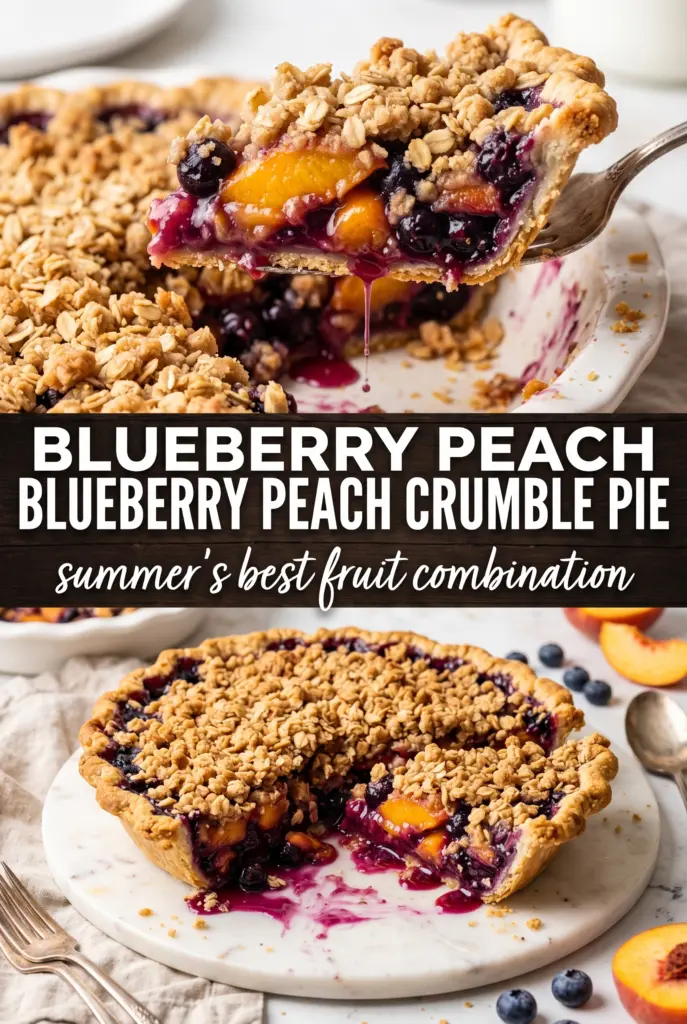
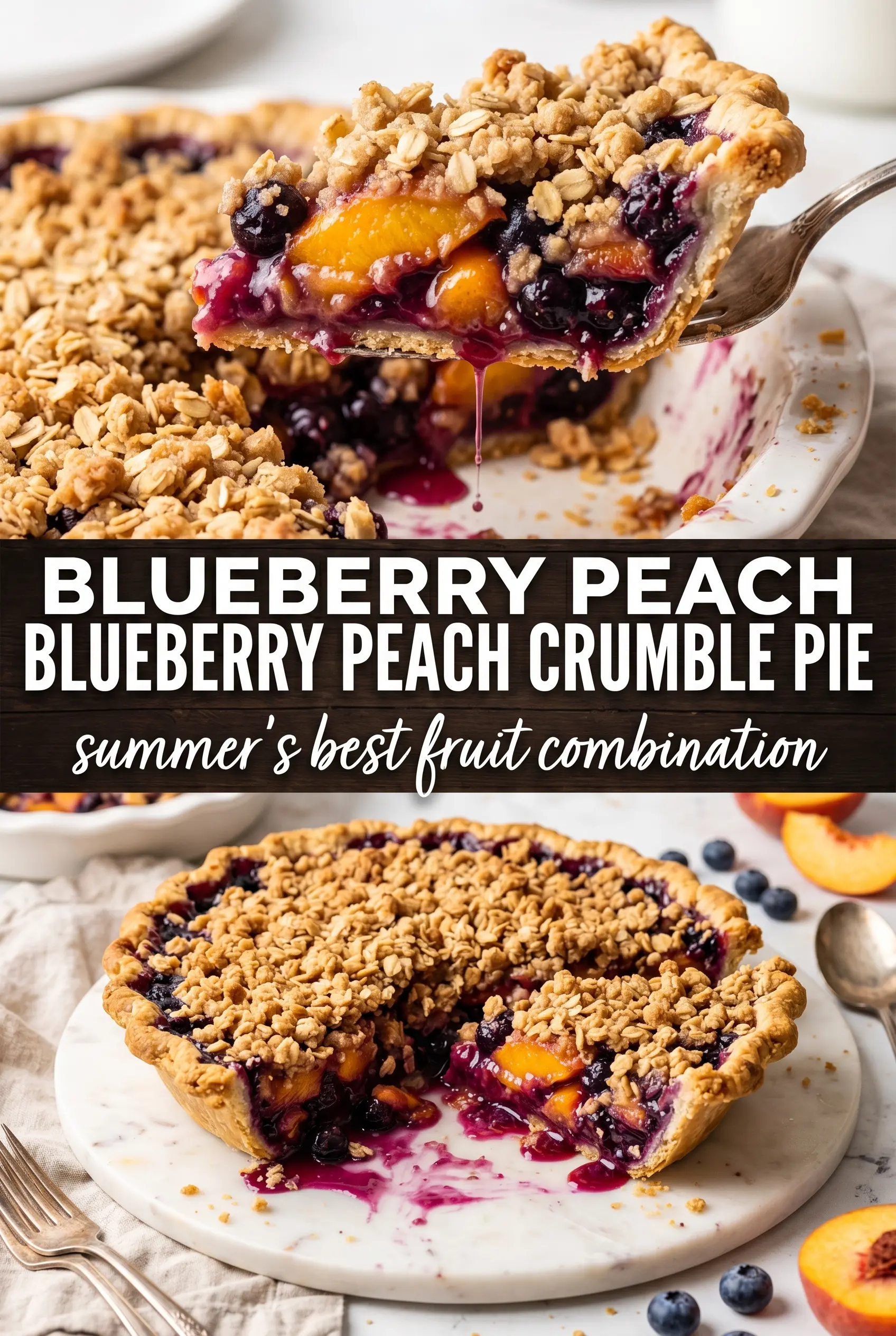
Juicy peaches and blueberries tucked under a brown sugar oat crumble make this pie the kind of dessert people keep going back for after the first slice. The filling turns jammy in the oven, the fruit stays bright instead of mushy, and the topping bakes up with enough crunch to hold its own against the soft fruit underneath. A flaky bottom crust gives every bite a clean finish instead of a soggy one.
What makes this version work is the balance of moisture and structure. Peaches release plenty of juice as they bake, and blueberries add their own syrupy color, so cornstarch does the heavy lifting in the filling. The crumble uses cold butter cut into the dry ingredients, which gives you those uneven golden nuggets instead of a paste-like topping. That texture contrast is what keeps a fruit pie like this interesting from the first forkful to the last.
If you’ve made fruit pies before and ended up with a loose center or a soft topping, the details below will help. The pie needs enough bake time for the filling to bubble all the way through, and that bubbling is what tells you the cornstarch has done its job.
The filling set up beautifully and didn’t run all over the plate. I loved that the crumble stayed crisp on top while the peaches and blueberries baked into a thick, jammy layer underneath.
Love the jammy blueberry-peach filling and buttery crumble topping? Save this pie for the next time you want a fruit dessert that slices cleanly and bakes up golden.
The Bubble You Need to See Before You Pull This Pie
Fruit pies can look done long before the center is actually ready. The crust may be brown, the crumble may look set, and the filling can still be too loose to slice. What you’re waiting for here is active bubbling through the topping, especially near the center of the pie. That bubbling means the cornstarch has reached the temperature it needs to thicken the juices into a real filling instead of a runny one.
The other common mistake is cutting into the pie too soon. Even after it comes out of the oven, the filling keeps setting as it cools. Give it at least 30 minutes before slicing, though longer is better if you want neat wedges. If you cut while the juices are still moving, the pie will taste fine but it won’t hold together on the plate.
- Bubbling filling: Don’t judge doneness by color alone. Wait for visible bubbling through the crumble.
- Foil on the edges: If the crust browns early, shield the rim after about 30 minutes so the top can finish baking without burning the crust.
- Cooling time: The filling thickens as it cools, which is why this pie slices best after a pause on the counter.
What Each Ingredient Is Actually Doing in This Pie
The peaches bring body and perfume, while the blueberries melt down into a deeper, almost syrupy layer of flavor. Fresh fruit works best here because it releases juice in a way that feels bright and clean, but frozen blueberries can step in if that’s what you have. Don’t thaw them first or they’ll water down the filling before the pie even goes into the oven.
- Pie crust: A homemade crust gives the best flavor and flake, but a good store-bought crust still works. The key is getting it pressed firmly into the dish so it doesn’t shrink and pull away as it bakes.
- Peaches: Peel them if the skins feel thick or fuzzy. Sliced peaches should be ripe but still hold their shape; overly soft fruit turns the filling loose.
- Blueberries: These add color and extra juices. If using frozen berries, use them straight from the freezer and add a minute or two to the bake if needed.
- Cornstarch: This is what turns the fruit juices into a sliceable filling. Flour won’t thicken as cleanly here, so cornstarch is the better choice.
- Rolled oats and brown sugar: Together they give the crumble its chew and toasty sweetness. Quick oats will work in a pinch, but the topping will be finer and less rustic.
- Cold butter: The butter has to stay cold so the crumble bakes into crumbs, not a sandy paste. Cut it in until you have uneven pieces about the size of peas.
Building the Filling and Topping So They Bake at the Same Pace
Tossing the Fruit Just Enough
Combine the peaches and blueberries with sugar, cornstarch, lemon juice, and cinnamon until the fruit looks lightly coated and glossy. The fruit should not sit long after mixing, because the sugar starts drawing out juice right away. Straight into the crust is the right move, especially if your peaches are very ripe and already soft.
Making a Crumble That Stays Crumbly
Work the cold butter into the flour, oats, brown sugar, and cinnamon until the mixture forms clumps and coarse crumbs. If the butter melts into the dry ingredients, the topping will bake up dense instead of crisp. You want a mix of fine bits and larger nuggets so the surface turns deeply golden and crunchy.
Baking Until the Center Bubbles
Scatter the crumble over the fruit in an even layer, then bake at 375°F until the top is deeply browned and the filling is visibly bubbling. If the edges of the crust darken too quickly, cover them with foil after about 30 minutes. That keeps the rim from overbaking while the center finishes thickening.
Cooling for a Clean Slice
Let the pie rest at least 30 minutes before serving, and longer if you want firm slices. The filling tightens as it cools, which is why a freshly baked pie can seem loose even when it’s done. A little patience here gives you neat wedges and a crust that holds together under the fruit.
Three Ways to Adapt the Pie Without Losing the Good Part
Use Frozen Fruit When Fresh Peaches Aren’t There
Frozen peaches or blueberries can stand in, but use them straight from the freezer so they don’t dump extra liquid into the filling. The texture will be a little softer, but the flavor stays strong and the pie still sets well if you bake until the center bubbles.
Make It Gluten-Free
Use a gluten-free pie crust and swap the all-purpose flour in the crumble for a cup-for-cup gluten-free blend. The topping may brown a touch faster, so watch the color near the end of baking and cover the edges if needed.
Lean Into the Crumble
If you like a thicker topping, increase the crumble by half and pile it loosely over the fruit. You’ll lose a little visible filling on top, but you’ll gain a deeper buttery crunch that makes the pie feel more dessert-forward.
Storage and Reheating
- Refrigerator: Store covered for up to 4 days. The crust softens a little, but the filling stays tasty.
- Freezer: This pie freezes well after baking and cooling completely. Wrap tightly and freeze for up to 2 months, then thaw overnight in the refrigerator.
- Reheating: Warm slices in a 325°F oven for 10 to 15 minutes. The oven keeps the crumble crisp; the microwave makes the topping soft.
Answers to the Questions Worth Asking
Blueberry Peach Crumble Pie
Ingredients
Equipment
Method
- Preheat oven to 375F so it’s ready when the pie goes in.
- Press pie crust into a 9-inch pie dish and crimp the edges to form a sealed rim.
- Toss fresh peaches and fresh blueberries with granulated sugar, cornstarch, lemon juice, and cinnamon, then pour the mixture into the crust.
- Combine all-purpose flour, rolled oats, brown sugar, and cinnamon, then cut in cold unsalted butter until the mixture looks crumbly.
- Scatter crumble evenly over the fruit filling so it covers most of the surface.
- Bake for 50-55 minutes until the crumble is deeply golden and the filling is bubbling; cover the edges with foil after 30 minutes if they brown too fast.
- Cool at least 30 minutes before slicing so the filling sets and the crumble holds together.