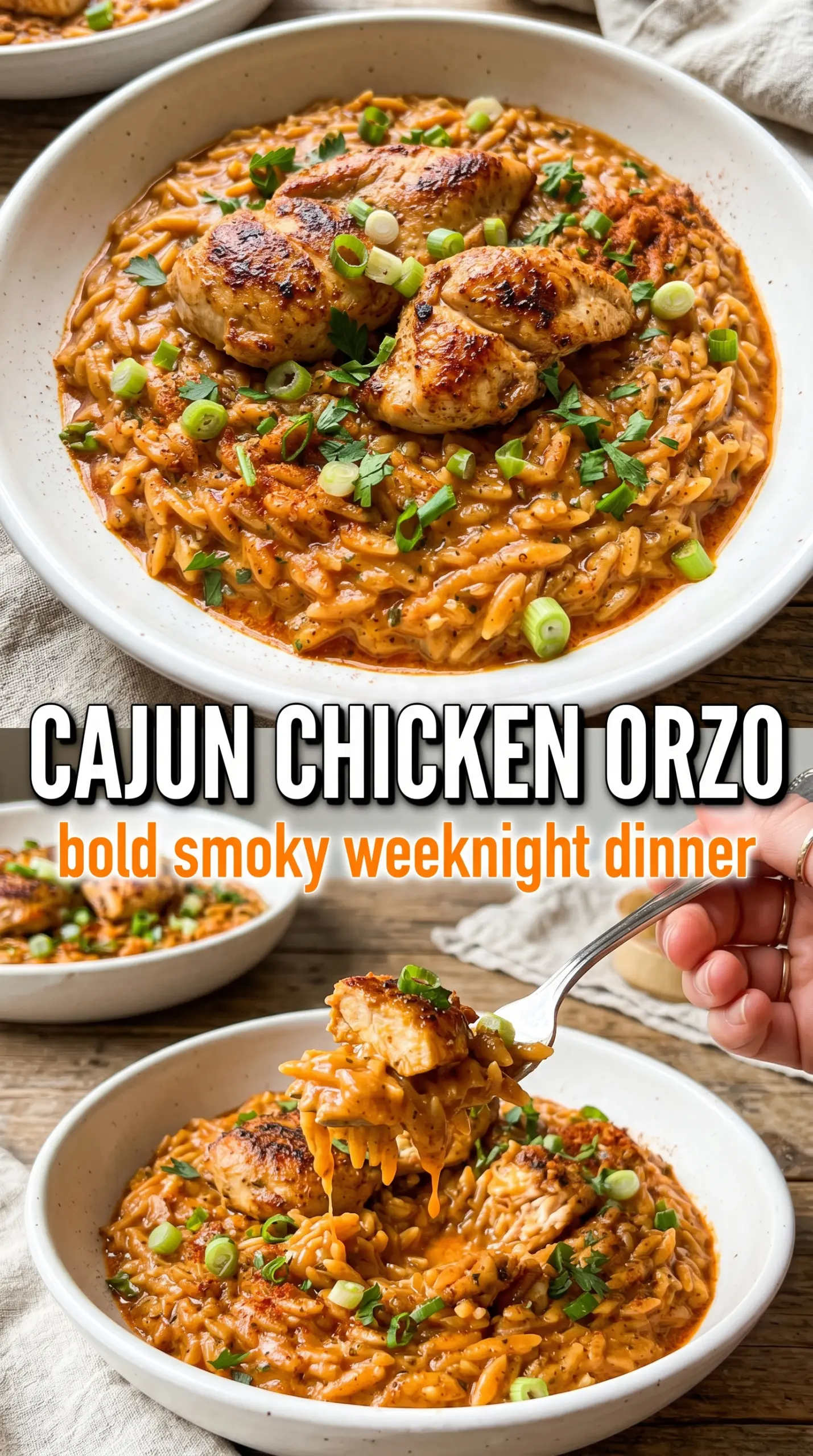
Blackened Cajun chicken over creamy orzo is the kind of skillet dinner that disappears fast because it hits every note at once: smoky, spicy, rich, and just bright enough from the lemon at the end. The chicken gets a deep crust in the pan, then the orzo soaks up the broth, cream, and all those browned bits left behind. That’s what gives this dish its big, bold flavor without needing a long ingredient list or a separate sauce.
The trick is treating the orzo like a risotto-style pasta instead of dumping everything in at once. Toasting it for a minute gives it a little nutty backbone, and stirring often while it simmers keeps it from sticking before it turns tender. I also like using boneless thighs here because they stay juicy under high heat and slice cleanly over the finished pasta.
Below you’ll find the part that matters most: how to get the chicken properly blackened without burning the spices, why the cream goes in after the orzo is cooked, and a few smart swaps if you want to lighten it up or stretch it for a bigger dinner.
The chicken got that dark crust I was hoping for, and the orzo came out creamy without turning mushy. My husband kept going back for “just one more scoop” until the skillet was empty.
Save this Cajun Chicken Orzo for the nights when you want blackened chicken, creamy pasta, and one skillet doing all the work.
The Reason the Orzo Stays Creamy Instead of Clumping Up
The mistake with skillet orzo is treating it like boiled pasta. Once the broth goes in, it needs frequent stirring so the starch can thicken the liquid evenly instead of settling and sticking to the bottom. That stirring also keeps the grains moving through the pan so they cook at the same rate and turn tender at the same time.
The other place people trip up is the cream. If it goes in too early, before the orzo has absorbed enough broth, the pan can feel loose and thin at the end. Let the pasta finish most of its cooking in broth first; then the cream and Parmesan turn the whole skillet glossy and rich instead of soupy.
- Cajun seasoning — This does the heavy lifting on both the chicken and the vegetables. Use a blend you like on its own, because the salt level varies a lot between brands. If yours is very salty, pull back a little and add more at the table.
- Boneless skinless chicken thighs — Thighs stay juicy while the outside gets deeply browned. Chicken breast works in a pinch, but it cooks faster and dries out sooner, so reduce the sear time and pull it right at 165°F.
- Orzo — This pasta gives you a creamy, spoonable finish without needing a separate sauce. Standard orzo is the right choice here; whole wheat can work, but it usually needs a little extra broth and a few more minutes.
- Heavy cream and Parmesan — These finish the dish with body and richness. Half-and-half can work, but the sauce will be thinner. Grate the Parmesan fresh if you can, because pre-shredded cheese doesn’t melt as smoothly.
What Each Ingredient Is Actually Doing in This Chicken Pasta
- Pasta (the vehicle) — Cook to al dente so it doesn’t turn mushy. Reserve water for sauce adjustment.
- Chicken (the protein) — Cut into uniform pieces so they cook evenly. Don’t overcook or it becomes dry.
- Butter or oil (the cooking medium) — This browses the chicken and carries flavors. Don’t skip browning.
- Cream or sauce (the richness base) — This brings everything together and coats the pasta. Balance with acid.
- Cheese (optional umami and binding) — This adds depth and helps sauce cling. Add off heat so it melts smoothly.
- Garlic and herbs (the flavor layers) — Cook with oil first to bloom. These define the dish’s personality.
- Acid (lemon, wine, or vinegar) — This prevents heavy sauces from tasting flat. Add at the end.
- Final toss (the emulsification) — Toss gently so pasta stays al dente and every piece gets coated.
Building the Blackened Chicken and Finishing the Skillet in Order
Get the chicken dark before you touch the vegetables
Rub the thighs with the first tablespoon of Cajun seasoning and sear them in hot olive oil until the surface is deeply browned and the chicken releases cleanly from the pan. Don’t move it too soon; if it sticks, it needs another minute. You want that crust to look almost blackened in spots, with the center cooked through to 165°F. Take the chicken out before it rests on the skillet, or it’ll overcook while you finish the pasta.
Cook the vegetables in the chicken drippings
The peppers and onion go into the same pan, and that’s where the flavor builds. They should soften and pick up the browned bits on the bottom without turning limp. Add the garlic and the rest of the Cajun seasoning only for the last minute, because garlic can scorch fast once the pan is hot. If the pan looks dry, the vegetables aren’t failing — they just need another small drizzle of oil.
Simmer the orzo until it turns silky
Add the orzo and toast it briefly before pouring in the broth. That quick toast gives the pasta a little edge of nuttiness and helps the final dish taste fuller. Keep the simmer gentle and stir often, especially once the liquid starts dropping below the top of the pasta. If the orzo looks tight before it’s tender, add a splash more broth instead of cranking the heat.
Finish with cream, cheese, and the sliced chicken
Once the orzo is tender, stir in the cream and Parmesan and let it bubble for a couple of minutes until the sauce coats the spoon. If it looks too loose, give it another minute off the heat; it thickens fast as it cools. Return the sliced chicken to the top so the juices stay on the surface instead of disappearing into the pasta. Finish with green onions and a squeeze of lemon, because the acidity cuts through the richness and wakes up the whole skillet.
Three Smart Ways to Adapt Cajun Chicken Orzo
Make it dairy-free without losing the creamy texture
Use full-fat coconut milk or an unsweetened dairy-free cooking cream in place of the heavy cream, and swap the Parmesan for a dairy-free hard-style cheese or leave it out entirely. The dish will still feel rich, but the sauce will taste a little less sharp and a little more rounded. Add a squeeze of lemon at the end to keep it from feeling heavy.
Use chicken breast if that’s what you have
Chicken breast works, but it needs a gentler hand. Sear it just until browned and cooked through, then slice it thin so it doesn’t dry out under the orzo. You lose a little of the built-in richness thighs bring, so don’t skip the cream or the lemon at the end.
Make it spicier or milder
For more heat, add a pinch of cayenne or use a hotter Cajun blend. For a milder pan, cut the Cajun seasoning back slightly and lean on smoked paprika for flavor without as much burn. The lemon still matters either way, because it keeps the cream from flattening the spice.
Stretch it for a bigger crowd
Add an extra half cup of broth and a little more cream if you want the skillet to serve more people. The orzo will thicken as it sits, so a splash of broth right before serving can bring the texture back. This is one of those dishes that scales up well as long as you keep enough liquid in the pan.
Storage and Reheating
- Refrigerator: Store leftovers in an airtight container for up to 3 days. The orzo will thicken as it chills.
- Freezer: It freezes, but the cream sauce gets a little less silky after thawing. Freeze in portions for up to 2 months and expect a slightly softer texture.
- Reheating: Reheat gently on the stovetop or in the microwave with a splash of broth or water. The common mistake is blasting it on high heat, which can make the sauce break and the chicken turn dry.
Answers to the Questions Worth Asking

Cajun Chicken Orzo
Ingredients
Equipment
Method
- Rub the chicken thighs with 1 tablespoon Cajun seasoning. Heat olive oil in a large deep skillet over medium-high until hot, then sear the thighs for 4-5 minutes per side until blackened and cooked through to 165°F.
- Remove the chicken from the skillet and slice it. Keep any juices with the sliced chicken for topping.
- In the same skillet, cook the bell peppers and onion over medium heat for 4 minutes, stirring occasionally until softened. Add the garlic and remaining Cajun seasoning and cook for 1 minute to bloom the spices.
- Add the orzo and toast for 1 minute, stirring so the orzo starts to look slightly drier. Pour in chicken broth, bring to a simmer, and cook uncovered for 10-12 minutes, stirring often, until the orzo is tender.
- Stir in heavy cream and Parmesan, then simmer for 2 minutes until the sauce looks creamy and coats the orzo. If needed, adjust thickness with a splash of broth.
- Top the orzo with the sliced Cajun chicken and let it sit briefly so it warms through. Garnish with sliced green onions and serve with lemon wedges.