Peach & guava lemonade punch lands right in that sweet spot where the first sip tastes bright, fruity, and cold enough to wake up a crowd. The peach gives it body, the guava brings that tropical perfume, and the lemonade keeps it from turning candy-sweet. When the sparkling water goes in at the end, the whole bowl turns lively instead of flat.
The trick here is balance. Fresh peach puree gives a rounder, more natural flavor than bottled juice alone, and the lemon juice keeps the guava from taking over. Chilling the base before you add the bubbles matters more than people think, because warm punch drains carbonation fast and leaves you with a soft, dull drink instead of one that pops.
Below you’ll find the ingredient choices that matter most, the order that keeps the fizz alive, and a few easy ways to adjust this punch for a sweeter crowd or a less-sweet one.
I chilled the base for an hour like you said and the sparkle held all through the party. The peach flavor came through without making it too thick, and the guava gave it such a pretty tropical taste.
Like this peach and guava punch? Save it for the next party when you want a bright, bubbly bowl drink that stays fresh-tasting.
The Part That Keeps This Punch Bright Instead of Flat
The biggest mistake with fruit punch is dumping in the bubbly ingredient too early. Once sparkling water or ginger ale sits in the bowl, it starts losing lift, and by the time guests arrive you’ve got sweet juice with a little fizz instead of a punch that feels lively. That’s why the base gets mixed and chilled first, then the carbonation goes in right before serving.
Fresh lemon juice does more than add sourness. It sharpens the peach and keeps the guava from reading syrupy. If the punch tastes heavy, it usually needs more acid, not more sweetness. Add the lemon in stages if your peaches are especially ripe.
What Each Ingredient Is Actually Doing in the Bowl
- Fresh peach puree — This gives the punch its lush body and real peach flavor. Frozen peaches thawed and blended work well when fresh fruit isn’t at its peak, but strain them only if the puree feels fibrous.
- Guava nectar or juice — Guava is the ingredient that makes this taste tropical instead of just peachy. Nectar usually brings a little more sweetness and thickness than straight juice, so taste before adding all the simple syrup.
- Fresh lemon juice — Bottled lemon juice can taste dull here. Fresh juice keeps the punch sharp and clean, which matters because this drink already has a lot of fruit sweetness.
- Simple syrup — This is your control knob. Start with less if your lemonade is sweet or your peaches are very ripe, then add more after chilling when the flavors have settled.
- Lemonade — Use a lemonade you’d drink on its own. If it tastes watery in a glass, it’ll disappear in the punch.
- Sparkling water or ginger ale — Sparkling water keeps the flavor cleaner and lets the fruit stand out, while ginger ale adds extra sweetness and spice. Add either at the last minute so the bubbles stay active.
Building the Punch So the Fizz Stays Alive
Mix the fruit base first
Stir the peach puree, guava nectar, lemon juice, and simple syrup together until the mixture looks uniform and glossy. If the puree is thick, whisk it well so you don’t end up with peachy streaks at the bottom of the bowl. This base should taste slightly stronger than the final drink, because the lemonade and sparkling water will soften it.
Chill before the bubbles go in
Pour in the lemonade, then refrigerate the punch for at least an hour. Cold liquid holds carbonation better, and this is the easiest way to keep the final drink from going limp. If you’re making it farther ahead, stop before adding the sparkling water and keep the base covered in the fridge.
Finish gently at the last minute
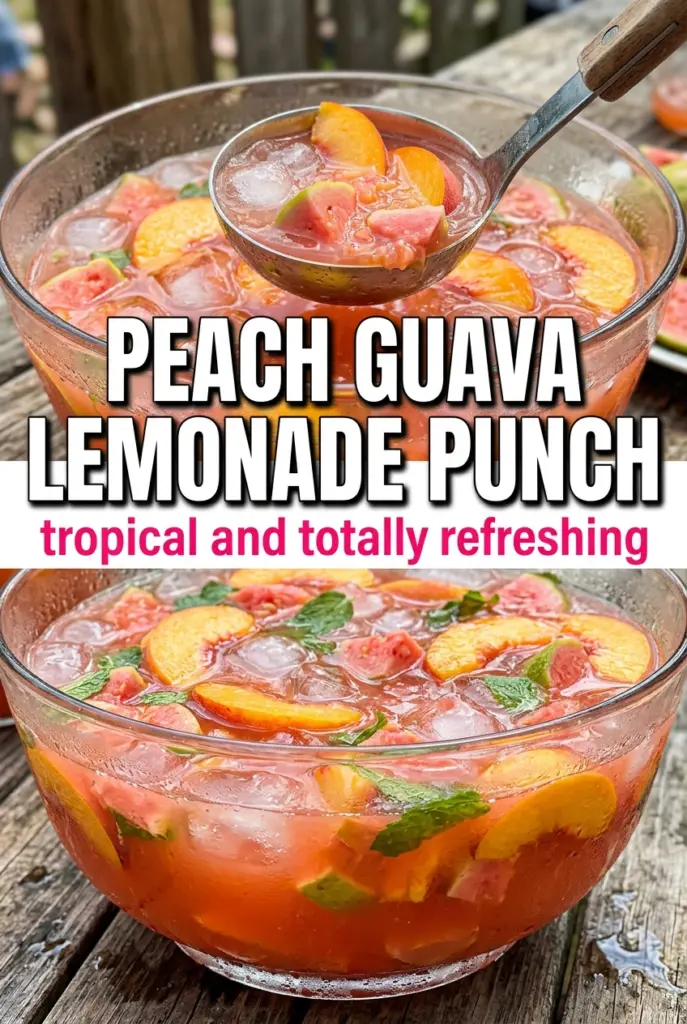
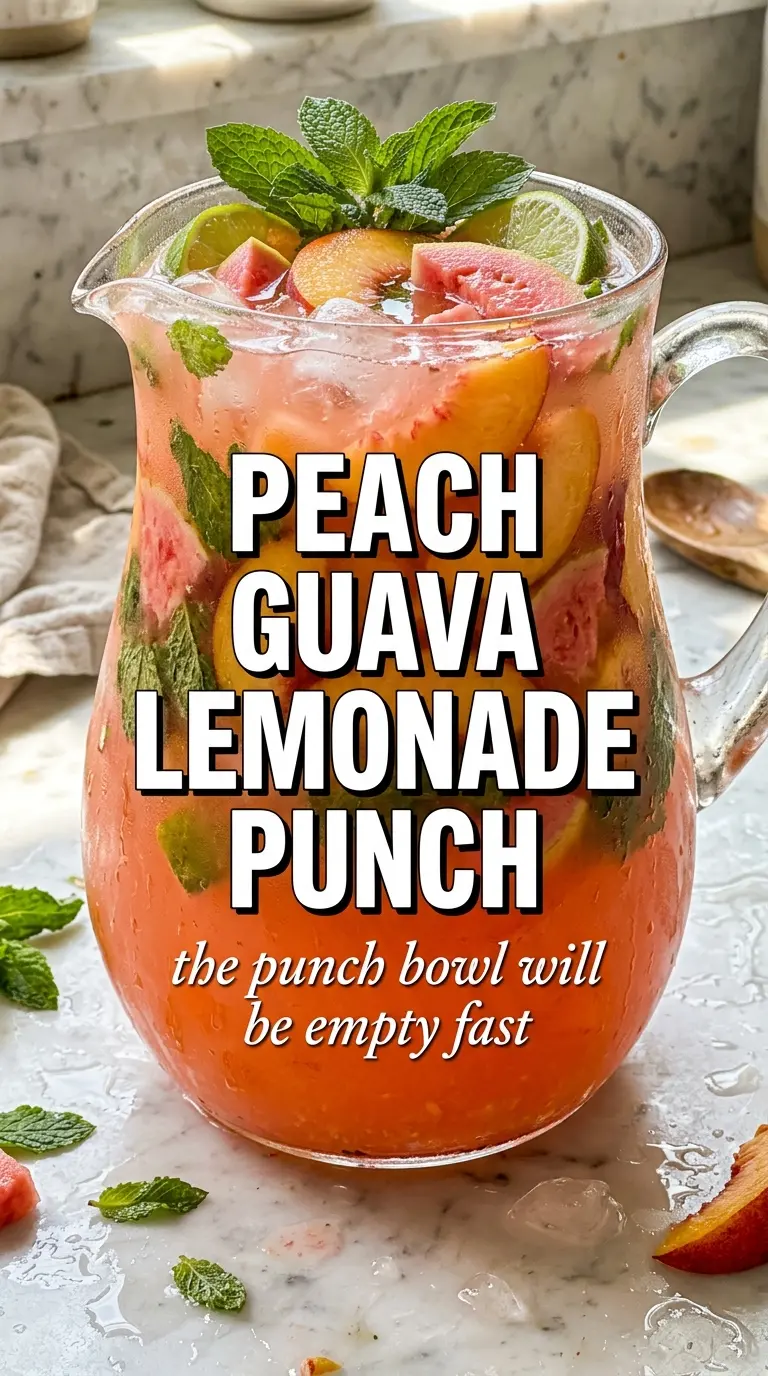
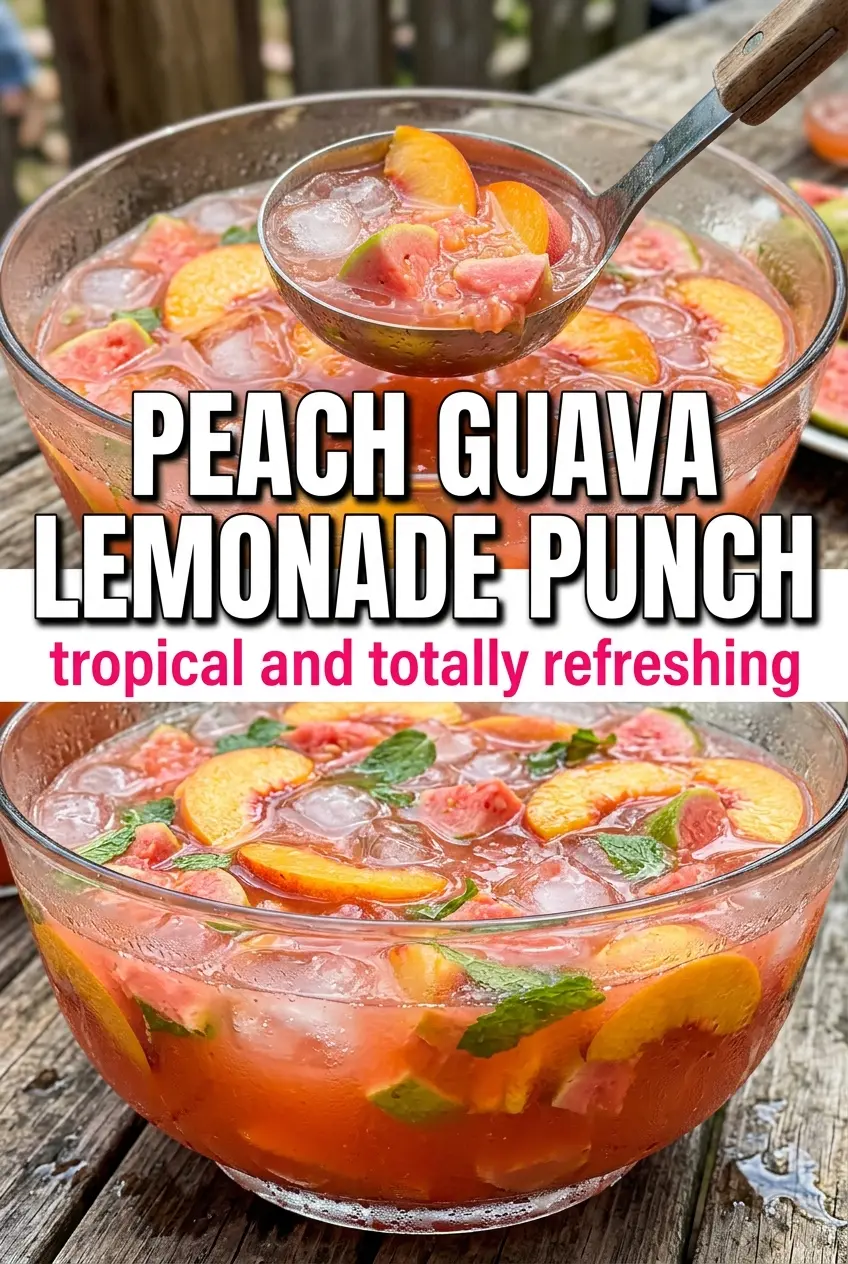
Add the sparkling water or ginger ale just before serving and stir once or twice with a light hand. Hard stirring knocks out the bubbles fast. Add ice after the carbonation goes in, then garnish with sliced peaches, guava, and lemon rounds so the bowl looks as good as it tastes.
Make It Brighter and Less Sweet
Use sparkling water instead of ginger ale and start with only 1/4 cup simple syrup. This version tastes fresher and more citrus-forward, which works well if your peaches are already very ripe or your lemonade is sweet.
Use Ginger Ale for a Softer Party Punch
Swap the sparkling water for ginger ale if you want a rounder, sweeter drink with a little spice. The result is less crisp and a touch more nostalgic, which is great for a kid-friendly table or a brunch spread.
Make It Alcohol-Free and Still Interesting
This punch is already naturally nonalcoholic, but you can make it feel more layered by adding a splash of unsweetened iced tea or a little extra lemon juice. That keeps the sweetness in check without changing the fruit character.
Storage and Reheating
- Refrigerator: The fruit base keeps for 2 days in the fridge before you add the sparkling water. Once mixed with bubbles, it’s best the same day because the fizz fades.
- Freezer: I don’t recommend freezing the finished punch. You can freeze leftover peach puree in small portions and use it to start the base later.
- Reheating: This drink is served cold, so there’s no reheating step. If it loses some chill, pour it over fresh ice and add a little more sparkling water to wake it back up.
Questions I Get Asked About This Recipe
Peach & Guava Lemonade Punch
Ingredients
Equipment
Method
- In a large pitcher or punch bowl, combine fresh peach puree, guava nectar, fresh lemon juice, and simple syrup, then stir until fully blended and smooth.
- Add lemonade to the bowl and stir to combine, until the color looks evenly peach-orange with no visible syrup streaks.
- Refrigerate the punch for at least 1 hour until well chilled, and look for a consistently cold, slightly thickened texture.
- Just before serving, pour in sparkling water or ginger ale and stir gently so bubbles stay lively.
- Add ice to the punch bowl and garnish with sliced peaches, guava, and lemon rounds for a bright, layered look.
- Taste the punch and adjust sweetness with more simple syrup if needed, then stir once more gently to distribute.