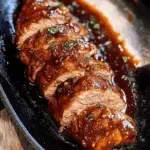
Golden chicken thighs tucked over creamy Parmesan orzo make one of those dinners that disappears fast because every bite gives you something different: browned chicken, tender pasta, a silky sauce, and little pops of sun-dried tomato. The orzo cooks right in the skillet, so it picks up the flavor from the pan instead of tasting like plain pasta stirred into sauce at the end.
The key here is keeping the heat moderate once the broth and cream go in. Orzo releases starch as it cooks, and that starch is what gives you the lush, spoonable texture. Parmesan goes in at the end, off the hottest part of the burner, so it melts smoothly instead of turning grainy. If you’ve ever had a pan sauce tighten up too fast or a cheesy sauce split, this version gives you a calmer, more reliable way through it.
Below you’ll find the small details that matter most: how to get the chicken deeply golden, when to stir the orzo so it doesn’t catch, and what to change if you need a lighter version without losing that creamy finish.
The orzo stayed creamy without getting gluey, and the chicken picked up all those browned bits from the pan. I served it with basil on top and my husband asked if we could add it to the regular rotation.
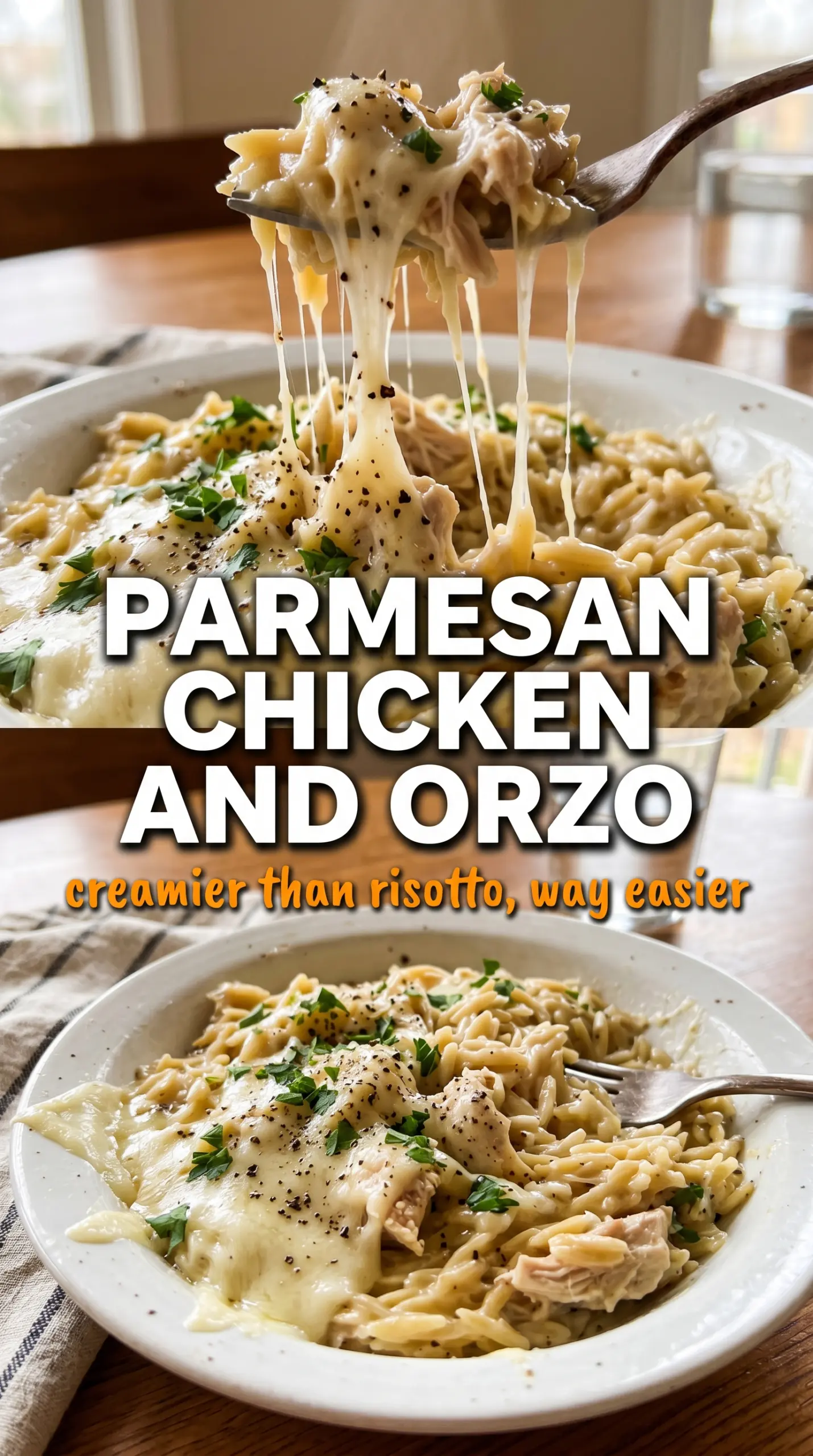
Creamy Parmesan Chicken and Orzo keeps its silky sauce and golden chicken together in one pan, which makes it perfect for a fast dinner that still feels finished.
The Trick to Keeping Orzo Creamy Instead of Sticky
Orzo has a way of going from perfectly saucy to tight and pasty if you walk away from it. The fix is to treat it like risotto’s easier cousin: let it simmer uncovered, stir often, and watch the liquid level instead of the clock alone. If the pan looks dry before the pasta is tender, add a splash of broth. If it looks soupy at the end, keep it on the heat for another minute or two and the sauce will thicken as the starch finishes working.
The other thing that matters is not rushing the sear on the chicken. Those browned bits on the bottom of the skillet are what give the sauce depth. When the garlic goes in, it only needs a short bloom before the orzo follows. Garlic burns fast in a hot pan, and burnt garlic will take the whole dish with it.
- Chicken thighs — Thighs stay juicy and give you a better margin of error than breasts. Boneless skinless thighs brown well and finish quickly, which fits the timing of the orzo.
- Orzo — This tiny pasta releases enough starch to make the sauce creamy without extra thickener. Long pasta won’t give you the same spoonable result.
- Heavy cream — Cream gives the sauce body and keeps it stable while the orzo cooks. Half-and-half will work in a pinch, but the sauce will be looser and needs a little more simmer time.
- Parmesan — Grate it fresh if you can. Pre-grated cheese often has anti-caking agents that can make the sauce a little grainy instead of smooth.
- Sun-dried tomatoes — These bring a concentrated tangy-sweet note that cuts through the cream. If yours are packed in oil, drain them well so the sauce doesn’t get greasy.
What Each Ingredient Is Actually Doing in This Recipe
- Primary ingredient (the star) — Quality matters most. Choose the best you can find.
- Cooking medium (oil, butter, or broth) — This carries flavors and prevents dryness.
- Seasonings (salt, pepper, spices, herbs) — Layer flavors so nothing overpowers. Build depth gradually.
- Aromatics (garlic, onion, herbs) — Cook with fat to bloom flavors. Become the foundation.
- Supporting ingredients — Complement the main ingredient without overpowering it.
- Sauce or liquid (if applicable) — Brings flavors together. Balance richness with acid.
- Acid (lemon, vinegar, wine, or other) — Brightens and prevents flat-tasting results.
- Final finish (garnish, glaze, or sauce) — Prevents one-dimensional taste and adds visual appeal.
Building the Sauce Without Breaking the Cream
Getting a Deep Sear on the Chicken
Season the thighs generously, then lay them into hot olive oil and leave them alone until the first side releases easily and has a deep golden crust. If the pan is crowded or the heat is too low, the chicken will steam and you’ll miss that browned flavor completely. Pull the thighs out once they’re cooked through, because they’ll go back into the pan at the end and finish warming in the orzo.
Waking Up the Garlic and Toasting the Orzo
Once the chicken is out, the garlic only needs about 30 seconds in the residual fat. Stir constantly and add the orzo before the garlic has a chance to darken. The minute of toasting matters more than it sounds like it should; it gives the pasta a nutty edge and keeps the final dish from tasting flat.
Simmering Until the Orzo Turns Silky
Pour in the broth and cream, then bring the pan to a gentle simmer, not a hard boil. Stir often, especially around the edges and across the bottom, because orzo likes to settle and stick. You’re looking for tender pasta with a sauce that still moves slowly in the pan. If it clumps before the pasta is done, add a splash of broth and keep stirring.
Finishing With Cheese and Greens
Stir in the Parmesan off the hottest part of the burner so it melts into the sauce instead of seizing up. Then add the spinach and sun-dried tomatoes and cook just until the spinach collapses into the orzo. Nestle the chicken back on top for a couple of minutes so the juices settle into the pan, then finish with basil right before serving.
How to Adapt This Creamy Chicken Orzo Without Losing the Comfort Factor
For a lighter creamy sauce
Swap half the heavy cream for additional chicken broth. The sauce won’t coat the orzo quite as richly, but it still tastes balanced and creamy. Keep the Parmesan in at the end so the dish still has enough body.
For a gluten-free version
Use a gluten-free small pasta shape that cooks in a similar window, but watch it closely because some versions soften faster than standard orzo. Add liquid gradually and stop when the pasta is just tender, since gluten-free pasta can go from done to mushy fast.
For chicken breasts instead of thighs
Use thinner breasts or slice them in half horizontally so they cook at the same pace as the orzo. Breasts dry out faster than thighs, so pull them as soon as they’re done and let the pasta carry the rest of the meal.
For extra vegetables
Stir in sautéed mushrooms, peas, or chopped zucchini near the end of cooking so they stay distinct instead of disappearing into the sauce. The dish can handle more vegetables, but add them after the orzo is mostly tender or they’ll throw off the liquid ratio.
Storage and Reheating
- Refrigerator: Store leftovers in an airtight container for up to 3 days. The orzo will thicken as it sits.
- Freezer: Not my first choice, since cream sauces and orzo can turn grainy after freezing. If you do freeze it, cool it completely and reheat gently after thawing.
- Reheating: Warm it on the stovetop over low heat with a splash of broth or cream. Microwaving it straight from the fridge without added liquid tends to dry out the pasta and make the sauce seize.
Questions I Get Asked About This Recipe
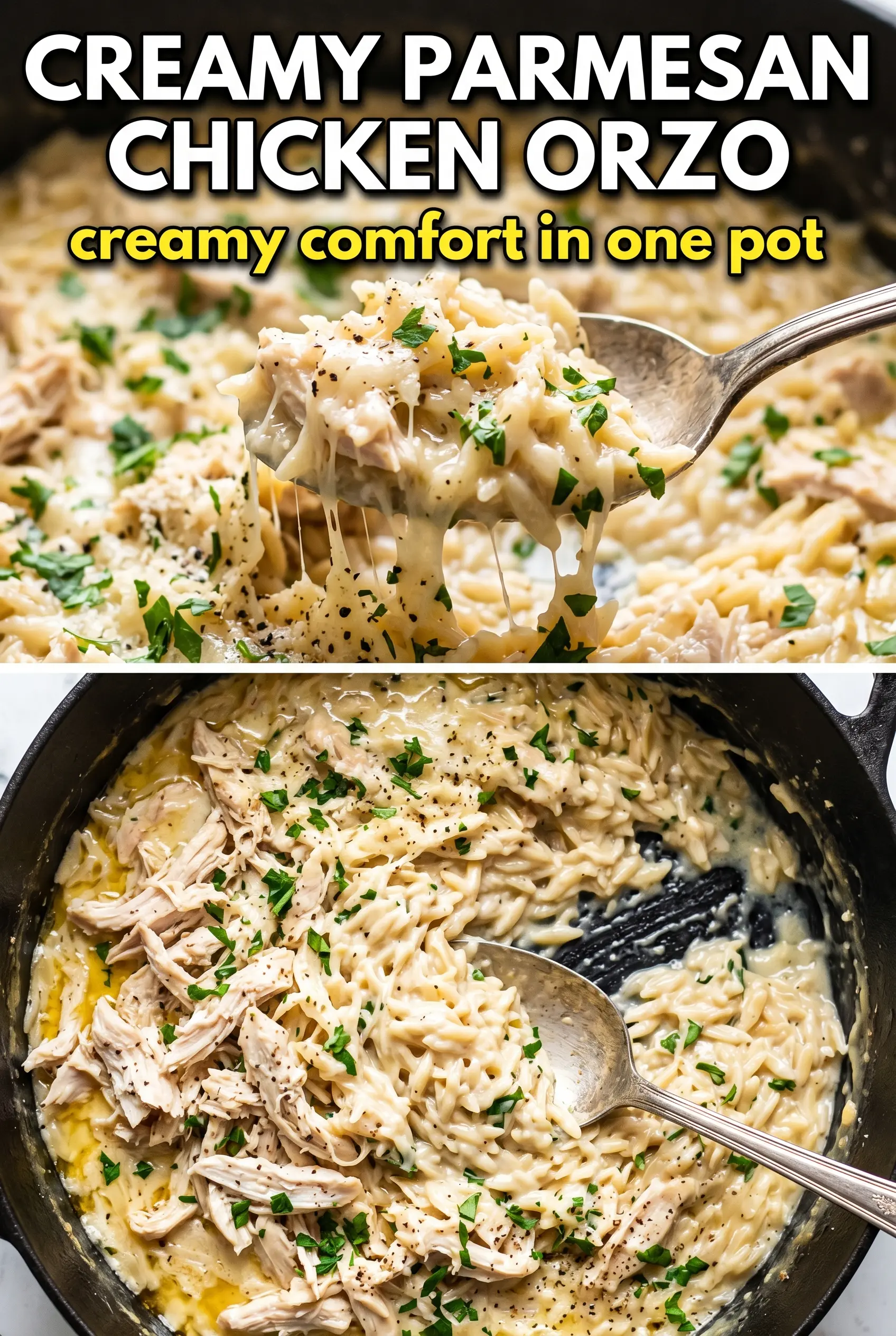
Creamy Parmesan Chicken and Orzo
Ingredients
Equipment
Method
- Season the chicken thighs with salt, pepper, garlic powder, Italian seasoning, and smoked paprika to taste. Heat olive oil in a large skillet over medium-high heat and sear the chicken for 4-5 minutes per side until golden and cooked through, then remove to a plate.
- In the same pan, cook the minced garlic for 30 seconds. Add the uncooked orzo and toast for 1 minute, then pour in chicken broth and heavy cream and bring to a simmer.
- Cook uncovered for 10-12 minutes, stirring often, until the orzo is tender and the sauce is creamy. If it looks too thick, add a splash of broth and stir through.
- Stir in the grated Parmesan, baby spinach, and sliced sun-dried tomatoes and cook until the spinach wilts. Keep stirring until the sauce turns smooth and glossy.
- Nestle the chicken back into the orzo and heat through for 2 minutes. Garnish with fresh basil and serve while the orzo is creamy.