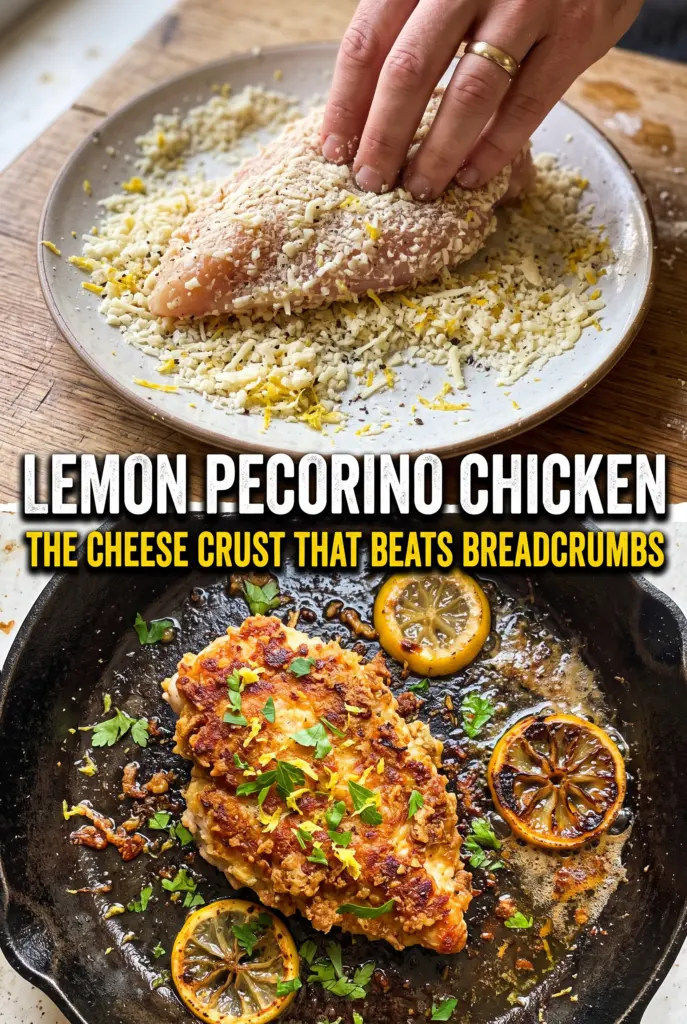
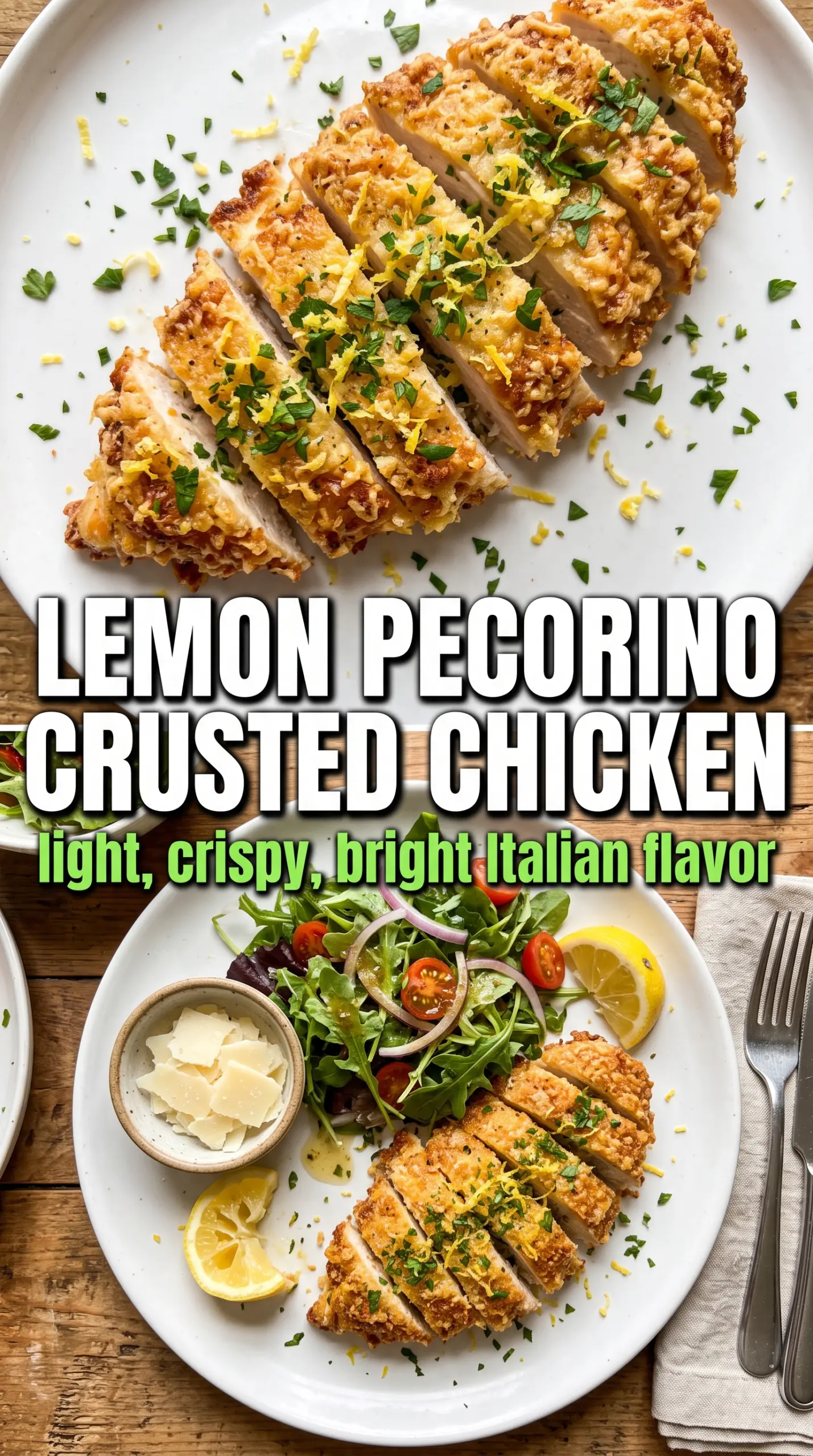
Lemon Pecorino crusted chicken comes out with a crackly, deeply savory topping that clings to the chicken instead of sliding off the moment it hits the oven. The crust turns golden and crisp while the chicken underneath stays juicy, and that mix of sharp cheese, lemon zest, and toasted crumbs gives every bite a bright, salty edge.
The trick is in the layering. Dijon and olive oil act like glue, so the cheese mixture has something to grab onto before it bakes into a sturdy crust. Panko lightens the Pecorino, which matters because Pecorino alone can turn dense and overly salty. Pounding the chicken to an even thickness also keeps the thinner edges from drying out before the center is done.
Below, I’ll show you how to keep the crust on the chicken, what to watch for when it browns, and the swaps that still give you a crisp, flavorful finish.
The lemon zest came through beautifully and the Pecorino crust stayed crisp instead of soggy. I baked it exactly 22 minutes and the chicken was juicy all the way through.
Lemon Pecorino crusted chicken is the one to pin for a crisp, cheesy dinner that bakes in under 25 minutes.
The Reason the Crust Stays Crisp Instead of Sliding Off
Most crusted chicken fails for one simple reason: the coating never gets a chance to set before the chicken starts steaming. A wire rack fixes that by letting hot air move around the chicken, so the bottom stays dry enough to crisp instead of going soft on the pan. The other piece is the mustard layer. It doesn’t just add flavor; it gives the Pecorino mixture a tacky surface to cling to.
Even thickness matters more here than in a plain roasted chicken breast. If one end is thinner, it’ll overcook before the crust has fully browned, and then you lose both juiciness and texture. Pounding the breasts to an even level gives you a cleaner bake and a more even crust color.
- Wire rack — This is what keeps the underside from steaming. If you skip it, the chicken will still cook, but the crust won’t stay as sharp.
- Dijon mustard — It’s the glue in the recipe. You won’t taste it as mustard once it bakes, but it helps the coating stay put.
- Panko — Regular breadcrumbs work in a pinch, but panko gives a lighter, crisper finish that matches the cheese better.
What Each Ingredient Is Doing in the Crust
- Pecorino Romano — This is the backbone of the crust. Its sharp, salty bite gives the chicken its edge, and it browns more aggressively than Parmesan. Use finely grated cheese so it melts into the crumbs instead of clumping.
- Lemon zest — Zest gives you the bright citrus aroma without adding extra liquid. Fresh zest matters here; bottled lemon juice won’t replace the same lift, and too much juice can make the coating damp.
- Panko breadcrumbs — They soften the intensity of the cheese and help the crust stay light. If you need gluten-free, use a gluten-free panko that’s coarse enough to mimic the same texture.
- Dijon and olive oil — Dijon adds tang and moisture, while olive oil helps the topping brown evenly. If you swap the oil for melted butter, the crust browns a little faster and tastes richer, but it also needs a closer eye near the end.
- Parsley and garlic powder — These round out the crust without making it wet. Fresh garlic doesn’t work the same way here because it can burn before the chicken is done.
Getting the Chicken Cooked Through Without Burning the Cheese
Season and Coat the Chicken
Start by seasoning both sides of the chicken with salt, pepper, and garlic powder before adding the Dijon mixture. That first layer of seasoning matters because the crust is flavorful, but it can’t replace seasoning the meat itself. Brush the mustard and oil over the chicken in a thin, even layer; if it pools, the coating can slip. You want the surface tacky, not wet.
Press on the Crust Firmly
Combine the Pecorino, panko, lemon zest, parsley, garlic powder, and pepper, then press it onto the mustard-coated chicken with real pressure. Don’t just sprinkle it on and hope for the best. The more firmly you press, the better it bonds before baking. Any loose patches will toast in the oven and may fall off when you move the chicken.
Bake Until the Edges Turn Deep Gold
Set the chicken on a wire rack and bake at 425°F until the crust is golden and the center reaches 165°F, usually 20 to 22 minutes. The crust should smell nutty and lemony, and the cheese will look deeply browned in spots rather than pale. If the top is coloring too quickly before the chicken is done, lower the oven rack one level. Rest it for 3 minutes before serving so the juices settle and the crust stays intact.
How to Change This Without Losing the Crispy Crust
Gluten-Free Version
Use a coarse gluten-free panko in place of regular panko. The crust still stays light and crisp, and the Pecorino keeps the same sharp finish. A fine gluten-free crumb can work, but it won’t give you the same shattering texture.
Dairy-Free Swap
This one is harder to mimic because Pecorino is the main flavor. For a dairy-free version, use a seasoned dairy-free Parmesan-style topping and add an extra pinch of salt plus a little lemon zest. The result will be crisp and savory, but it won’t have the same sharp, salty depth.
Chicken Thighs Instead of Breasts
Boneless skinless thighs work well if you want more forgiving, juicier meat. They usually need a few extra minutes in the oven, and the crust can get a little darker because thighs stay juicy longer. Watch the internal temperature and pull them once they reach 165°F.
Storage and Reheating
- Refrigerator: Store leftovers in an airtight container for up to 3 days. The crust softens a bit, but the flavor holds up well.
- Freezer: Freeze baked chicken pieces on a sheet pan, then transfer to a freezer bag for up to 2 months. The coating won’t stay as crisp after thawing, but it still reheats well.
- Reheating: Reheat in a 375°F oven or air fryer until hot. The common mistake is using the microwave, which turns the crust soft and steamy before the chicken warms through.
Answers to the Questions Worth Asking
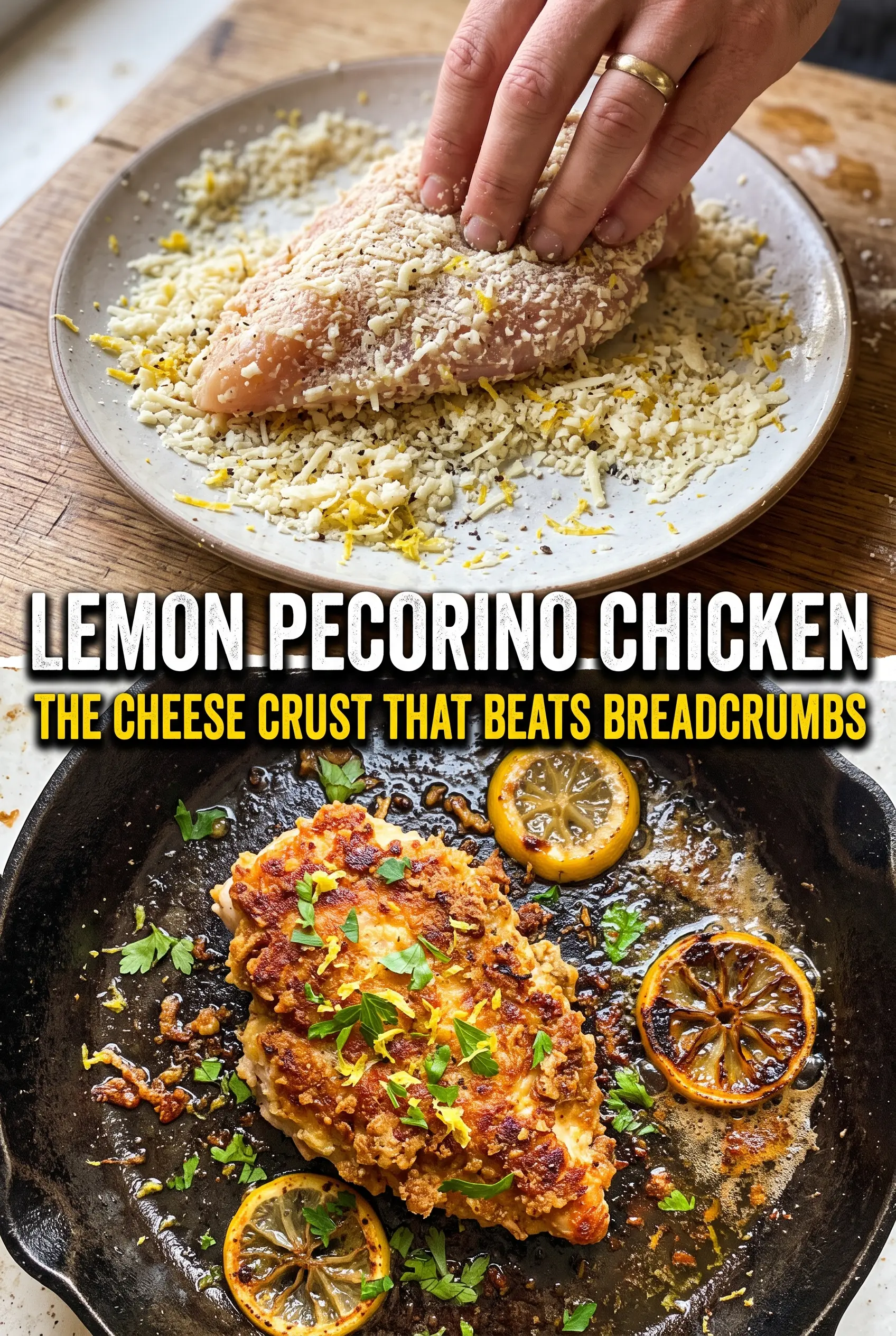
Lemon Pecorino Crusted Chicken
Ingredients
Equipment
Method
- Preheat oven to 425°F and line a baking sheet with a wire rack.
- Season chicken breasts with salt, pepper, and garlic powder on both sides.
- Mix Dijon mustard with olive oil and brush over both sides of each chicken breast.
- Combine Pecorino Romano, panko, lemon zest, parsley, garlic powder, and pepper.
- Press the cheese-panko mixture firmly onto the mustard-coated chicken so it fully adheres.
- Place chicken on the prepared rack and bake for 20-22 minutes until the crust is golden and internal temperature reaches 165°F.
- Rest chicken for 3 minutes so the juices settle and the crust stays crackly.
- Garnish with fresh basil and serve with lemon wedges.