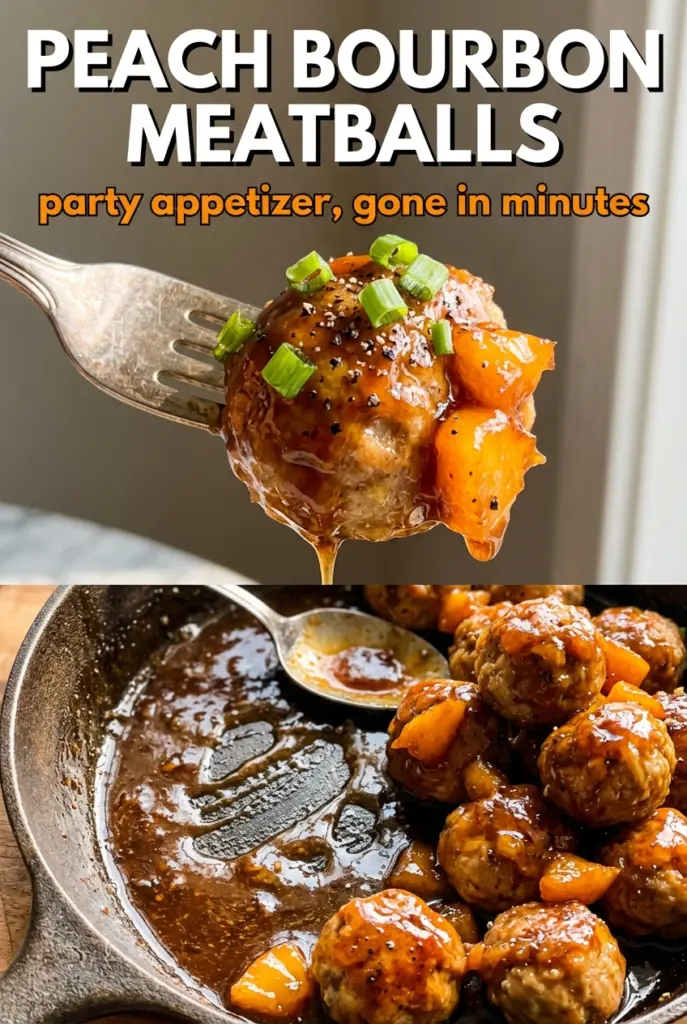
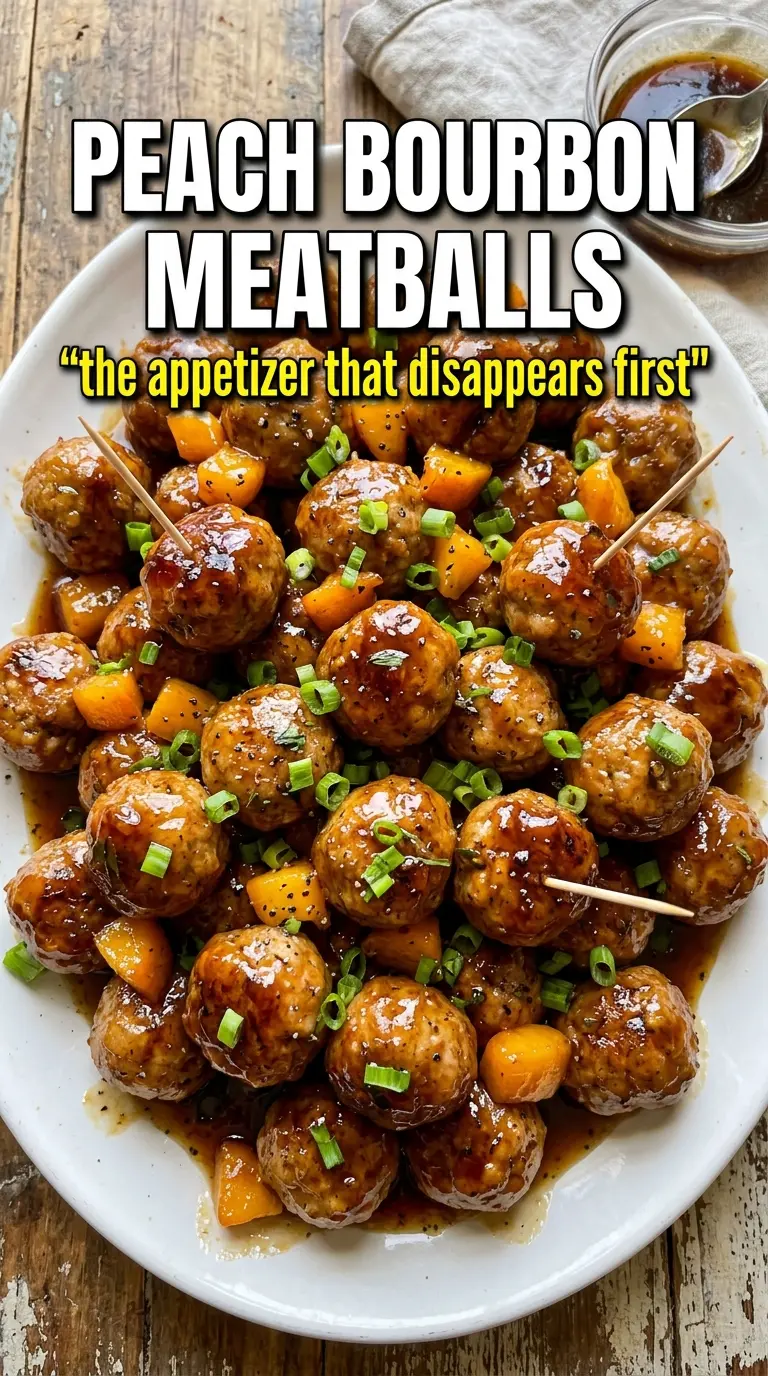
Peach bourbon meatballs land in that sweet spot between party food and the kind of snack people keep circling back to with a toothpick in hand. The meatballs stay tender inside, the edges pick up enough browning in the oven to hold their own, and the peach-bourbon glaze turns glossy and sticky without sliding right off the pan. Every bite gets that mix of savory meat, smoky bourbon, and bright fruit that makes the whole bowl disappear faster than you expect.
The trick is giving the sauce enough time to reduce before the meatballs go in. Peach preserves bring body and fruit flavor right away, but the glaze needs a little simmer to lose its raw sweetness and turn into something that clings. The soy sauce and vinegar keep it from tasting candy-sweet, while smoked paprika adds a quiet depth that makes the bourbon taste intentional instead of boozy.
Below, I’m walking through the parts that matter most: how to keep the meatballs tender, how to cook the sauce until it coats instead of pooling, and what to swap if you want to make these without bourbon or with a lighter touch on the sweetness.
The glaze thickened up beautifully and clung to every meatball instead of turning watery. I used toothpicks for a game day spread and people kept asking what was in the sauce.
Love that sticky peach-bourbon glaze? Save these peach bourbon meatballs for your next party spread or game day appetizer board.
The glaze only works if the sauce has somewhere to go
A lot of meatball recipes go wrong in the last five minutes, not the first twenty. If the sauce is too thin when the meatballs hit the pan, it never really grabs the surface; it just warms around them and leaves you with a puddle at the bottom of the dish. Here, the preserves need that full simmer so the sugar tightens up and the bourbon loses its sharp edge. By the time the meatballs go back in, the sauce should fall off a spoon in a thick sheet, not run like syrup.
The other place people lose texture is overmixing the meat. Work the beef or pork just until the breadcrumbs and egg disappear into the mixture. If you keep pressing and folding after that, the meatballs bake up dense instead of tender. You want them compact enough to hold their shape, but still soft enough to soak up the glaze.
What each ingredient is actually doing in these meatballs
- Ground beef or pork — Beef gives you a meatier, richer bite. Pork is a little softer and plays nicely with the sweet glaze. A mix of the two is excellent if you want both flavor and tenderness.
- Breadcrumbs and egg — These bind the meatballs and keep them from turning crumbly. Fresh breadcrumbs make a slightly softer texture, while dry breadcrumbs give you a firmer finish. If you need gluten-free, use gluten-free breadcrumbs and don’t change anything else.
- Peach preserves or peach puree — Preserves give the glaze its body and shine. If you use fresh peach puree, simmer it a little longer because it starts out looser and less sweet. Preserves are the better choice when you want the sauce to coat cleanly.
- Bourbon — This adds warmth and a little oakiness that deepens the peach flavor. Use a bourbon you’d actually drink, but it doesn’t need to be expensive. If you want to skip it, swap in apple juice plus an extra splash of vinegar; you’ll lose the whiskey note, but the sauce will still taste balanced.
- Soy sauce and apple cider vinegar — These keep the glaze from tipping into jam territory. Soy brings salt and umami, and vinegar sharpens the finish. If the sauce tastes flat, it usually needs one of these two more than it needs more sugar.
- Smoked paprika and garlic powder — These round out the glaze and make it taste like a finished sauce instead of fruit syrup. The smoked paprika matters most because it bridges the peach and bourbon with a savory note that lingers.
Building the glaze and finishing the meatballs without breaking the sauce
Mix the meat just enough
Combine the meat, breadcrumbs, egg, garlic, salt, and pepper until the mixture holds together and no dry spots remain. Stop there. If the bowl starts looking sticky and pasty, you’ve gone too far and the meatballs will lose that soft bite. A light hand makes a bigger difference here than any seasoning tweak.
Brown in the oven, not the skillet
Roll the meatballs into even 1.5-inch portions and space them on the foil-lined baking sheet so they bake instead of steam. You’re looking for browned surfaces and cooked centers after about 18 to 20 minutes. If they’re packed too tightly, they’ll pale instead of brown and won’t have enough structure to hold up in the sauce.
Cook the sauce until it thins into gloss
While the meatballs bake, combine the peach preserves, bourbon, soy sauce, vinegar, smoked paprika, and garlic powder in a saucepan over medium heat. Let it bubble gently for about 8 minutes, stirring often, until the mixture looks thick, glossy, and slightly reduced. If you rush this and pull it too early, the glaze stays loose and won’t cling; if it ever starts sticking hard to the pan, lower the heat immediately.
Toss and finish with the heat on low
Add the baked meatballs to the sauce and turn them gently until every one is coated. Let them simmer together for about 5 more minutes over low heat so the glaze tightens around the meatballs and sinks into the browned edges. This final simmer is what makes them look lacquered in the bowl instead of just sauced. Serve them hot with toothpicks while the glaze is still shiny.
How to change these for different crowds and different pantries
Gluten-free meatballs
Swap the breadcrumbs for a gluten-free breadcrumb blend. The texture stays close to the original as long as you don’t overpack the meatballs. Soy sauce can also be replaced with tamari for a fully gluten-free glaze.
No bourbon version
Use apple juice in place of the bourbon and add an extra teaspoon of vinegar for brightness. You’ll lose the warm, oaky note, but the sauce will still be sticky, balanced, and crowd-friendly. This is the best route if kids are eating or you just want a fully alcohol-free appetizer.
Pork-only meatballs
All pork gives you a softer, richer meatball that pairs nicely with the sweet glaze. It won’t be quite as beefy, but it stays juicy and holds the sauce well. If you use pork, avoid adding extra fat elsewhere in the recipe.
Making them ahead for a party
Bake the meatballs and make the sauce separately up to 2 days ahead. Reheat the sauce gently, then add the meatballs only long enough to warm through and coat. If you simmer them too long on the second pass, the sauce can tighten too much and turn sticky in a dull, pasty way.
Storage and Reheating
- Refrigerator: Store in an airtight container for up to 4 days. The glaze will thicken as it chills.
- Freezer: Freeze the cooked meatballs and sauce together for up to 2 months. Thaw overnight in the fridge before reheating so the sauce stays smooth.
- Reheating: Warm gently in a covered skillet over low heat with a splash of water if the sauce looks too tight. High heat can make the glaze seize and separate, especially once the meatballs have already been cooked.
Questions I Get Asked About This Recipe
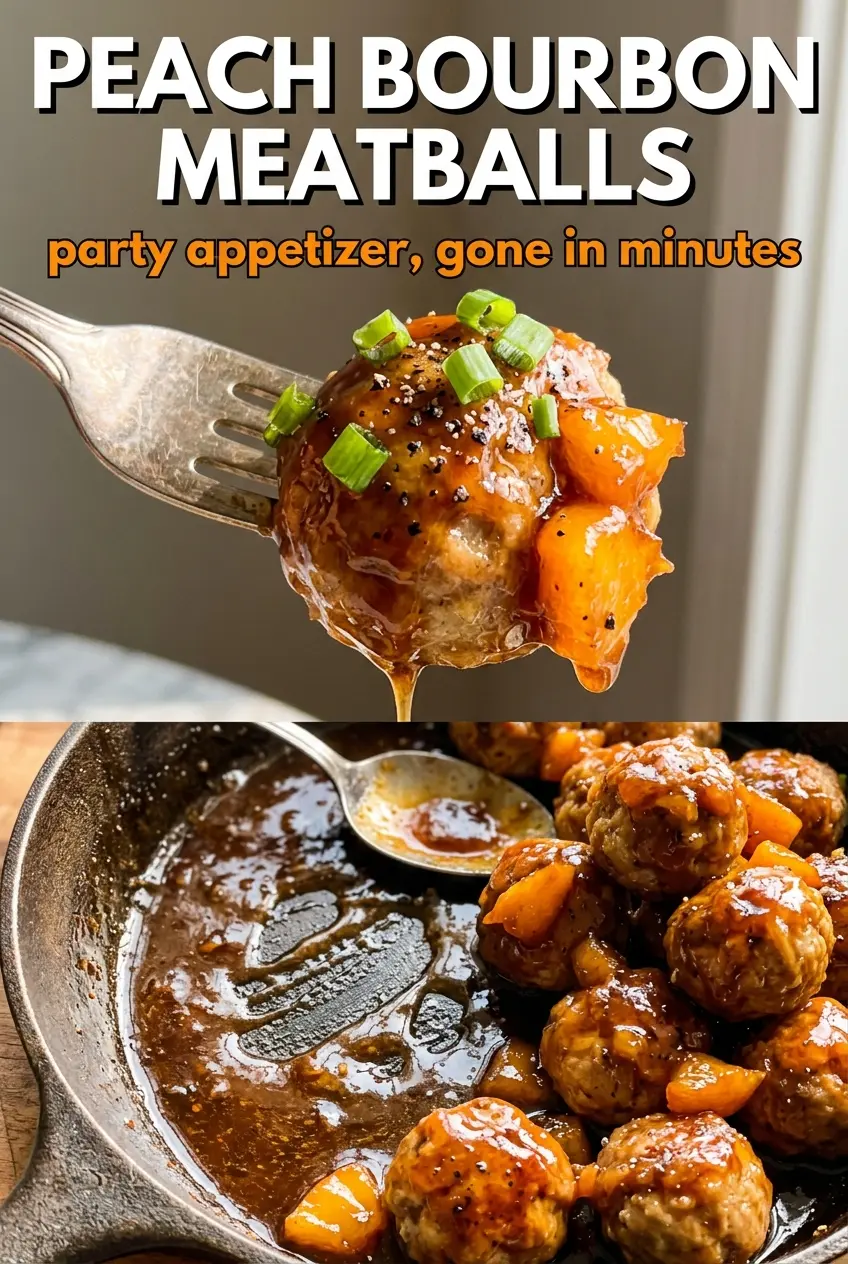
Peach Bourbon Meatballs
Ingredients
Equipment
Method
- Preheat the oven to 400°F and line a sheet pan with foil for easy cleanup.
- Combine ground beef or pork, breadcrumbs, egg, garlic, salt, and black pepper, then roll into 1.5-inch meatballs and place them on the sheet pan.
- Bake at 400°F for 18-20 minutes until the meatballs are cooked through and browned.
- While meatballs bake, add peach preserves or fresh peach puree, bourbon, soy sauce, apple cider vinegar, smoked paprika, and garlic powder to a saucepan over medium heat.
- Simmer for 8 minutes, stirring, until the sauce thickens.
- Transfer baked meatballs to the sauce and toss to coat completely.
- Simmer the coated meatballs in the saucepan for 5 more minutes until the glaze clings to each meatball.
- Serve the peach bourbon meatballs hot with toothpicks.