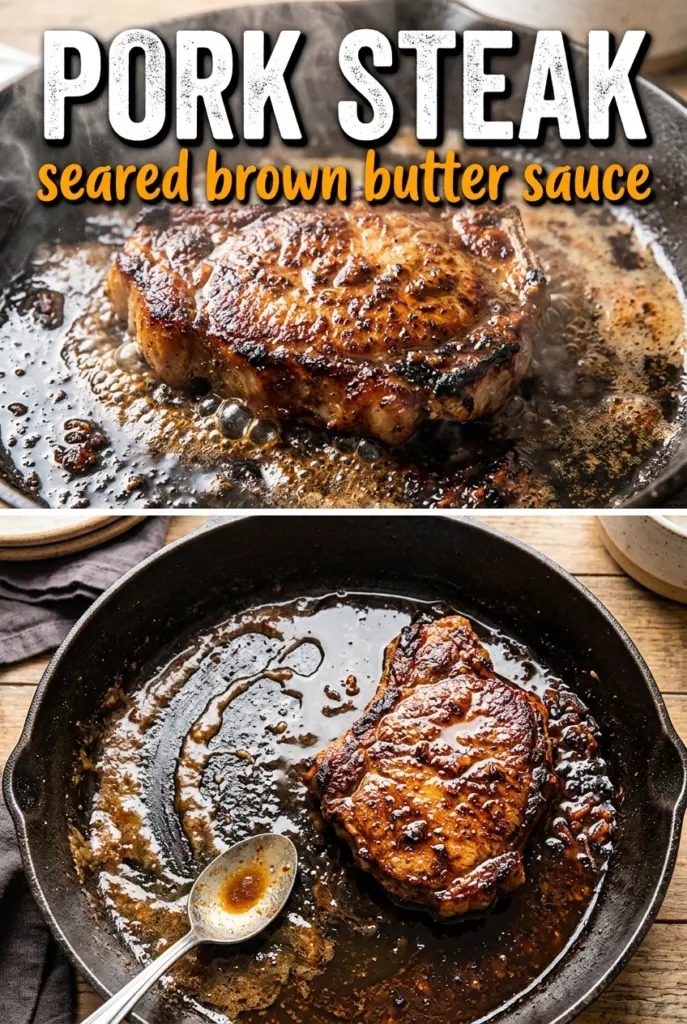
Thick pork steak earns its place in the dinner rotation when the crust goes deep brown and the inside stays juicy. The best versions don’t need a long marinade or a complicated sauce; they need dry meat, a hot skillet, and the patience to leave the steaks alone long enough to brown properly. When that sear lands, the edges turn crisp, the fat renders, and the whole pan smells like garlic, butter, and smoked spice.
What makes this method work is the sequence. First the pork gets seasoned aggressively and dried well, which is what keeps it from steaming in the pan. Then it hits smoking-hot oil so the surface browns before the center overcooks. The butter, thyme, and garlic go in at the end, where they can perfume the meat without burning. A quick splash of Worcestershire adds depth and leaves behind the kind of pan juices that make plain pork taste finished.
Below you’ll find the exact cues that matter most, plus a few ways to use the same method for a smothered version or for grilled pork steak if that’s where your stove or weather sends you.
The steaks browned up beautifully and stayed juicy after the rest. I loved how the butter, garlic, and thyme made the pan sauce taste like a steakhouse dinner with barely any effort.
Save this pan seared pork steak for the nights when you want a hard sear, juicy slices, and garlic-thyme butter in under 30 minutes.
The mistake that keeps pork steak tough
Pork blade steak gets blamed for being dry when the real problem is usually a weak sear or a pan that wasn’t hot enough. This cut has more fat and connective tissue than a lean chop, which means it needs strong heat to build flavor fast. If the skillet is only warm, the steak leaks juices before the surface browns, and you end up with gray pork and a muddy pan instead of a crust.
The other trap is moving the meat too soon. The first side needs a full 4 to 5 minutes untouched so the surface can grab and release on its own. If it sticks, it is not ready yet. Once the browning starts, it will lift cleanly and the pan will already be doing the work for the sauce-like finish from the butter, garlic, thyme, and Worcestershire.
What each ingredient is actually doing in this pork steak
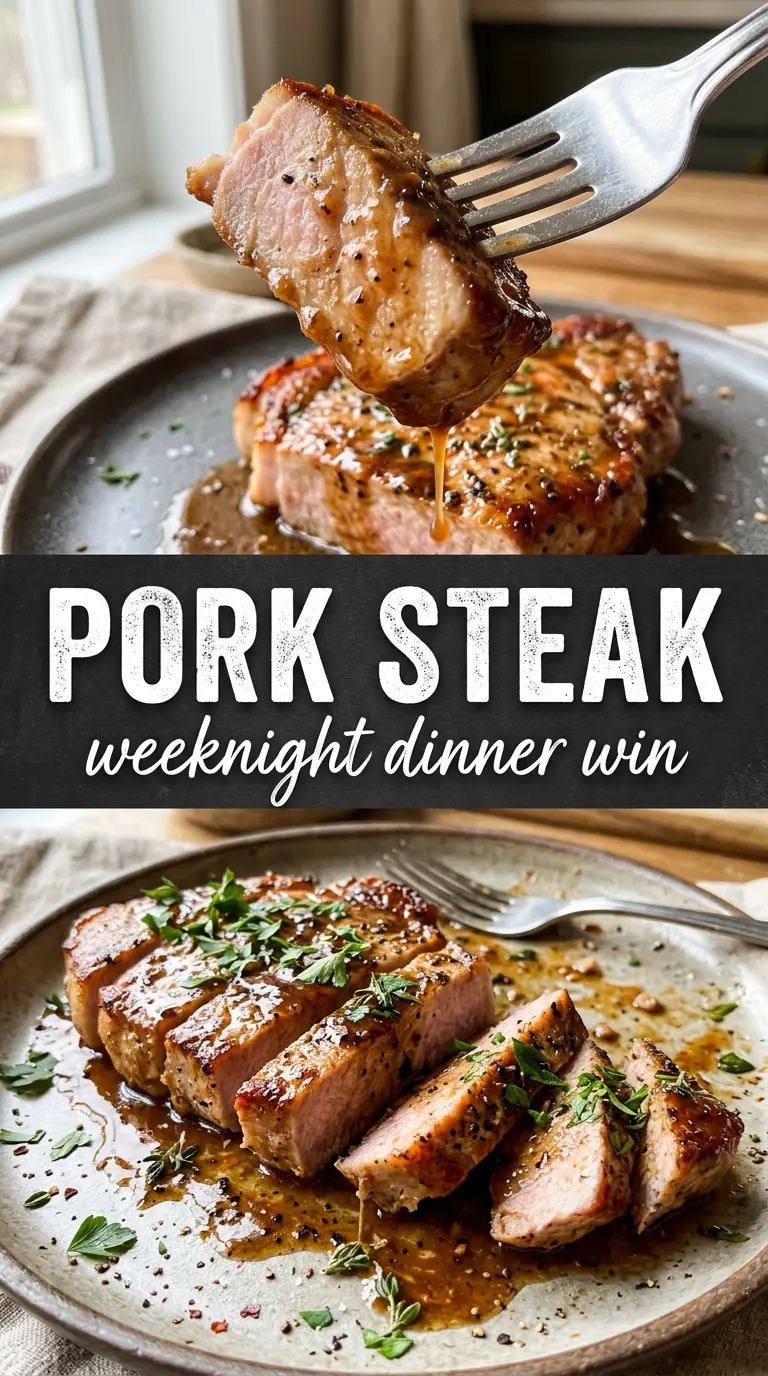
- Pork blade steaks — This cut is the right choice because the extra fat and connective tissue stand up to high heat and turn tender when you sear it hard. Thin loin chops won’t give you the same browned edges or the same juicy bite.
- Smoked paprika — This gives the crust a deeper color and a gentle smoky note that feels right with pork. If you only have sweet paprika, use it, but you’ll lose that campfire edge that makes this taste fuller.
- Vegetable oil — Use a neutral oil with a high smoke point so the skillet can get hot enough for real browning. Olive oil works in a pinch, but it can smoke sooner and cut into the clean sear.
- Butter, garlic, and thyme — These go in after the crust is set, not before, because butter and garlic burn fast over high heat. The butter carries the herb flavor across the meat and helps the pan juices coat every bite.
- Worcestershire sauce — This adds savory depth and a little acidity right at the end. It doesn’t replace the sear, but it rounds it out and makes the pan juices taste finished instead of greasy.
- Lemon wedges — A small squeeze at the table brightens the rich crust and butter without making the dish taste lemony. It wakes up the pork in the same way salt does, just with more lift.
How to build the crust before the butter goes in
Drying and seasoning the meat
Pat the pork completely dry before anything else. Surface moisture is the enemy of browning, and even a little water will make the meat steam in the pan. Season generously on both sides with salt, black pepper, garlic powder, and smoked paprika so the crust has flavor all the way through, not just on top.
Getting the skillet smoking hot
Heat the oil in a cast iron skillet over high heat until it shimmers and just starts to smoke. That’s the signal that the pan is hot enough to sear on contact. If you add the pork before this point, the meat will sit in the oil and dull the crust instead of building it.
Searing without fussing
Lay the steaks in the pan and leave them alone for 4 to 5 minutes. Don’t press them down or keep peeking underneath every 30 seconds. When the first side is ready, it releases naturally and shows a deep golden-brown crust that looks almost lacquered. Flip and sear the other side for another 3 to 4 minutes until the center is cooked through but still juicy.
Finishing with butter and herbs
Turn the heat down just enough to protect the butter, then add it with the smashed garlic and thyme. Spoon the melted butter over the pork constantly for 1 to 2 minutes so the top gets glossy and aromatic. Splash in the Worcestershire sauce for the last minute and let it bubble just long enough to coat the pan; if it cooks too long, the sauce can turn harsh instead of savory.
How to adapt this pork steak for different dinners
Southern smothered pork steak
After searing, remove the pork and build a quick onion gravy in the same skillet with sliced onions, a spoonful of flour, and broth. Return the steaks to the gravy and simmer gently until tender. You’ll trade the crisp crust for a softer finish, but you’ll gain a deeper, more old-school comfort-dinner result.
Grilled pork steak
Use the same seasoning, then grill over medium-high heat until you get good char marks and the center reaches temperature. Brush on the butter mixture at the end instead of during the cook so it doesn’t drip into the flames. This version keeps the smoky edges but loses some of the pan sauce richness.
Dairy-free pork steak
Swap the butter for more oil or a dairy-free butter alternative and keep the garlic and thyme at the end of the cook. You’ll still get a glossy finish, but the pan juices will taste a little leaner and less rich. The sear and seasoning carry most of the dish, so this swap works well.
Making it for a crowd
Sear the pork in batches so the pan stays hot and the steaks brown instead of crowding into steam. Hold the finished steaks on a warm plate and make the butter baste at the very end so every piece gets the same glossy finish. If you try to cook all four at once in a small skillet, the crust will suffer immediately.
Storage and Reheating
- Refrigerator: Store leftovers in an airtight container for up to 3 days. The crust softens a bit, but the pork stays flavorful.
- Freezer: This freezes well for up to 2 months if wrapped tightly and stored with any pan juices. Freeze in flat portions so it thaws evenly.
- Reheating: Warm gently in a covered skillet over low heat with a splash of water or broth. High heat dries pork fast, and the goal is to heat it through without cooking it a second time.
Answers to the questions worth asking
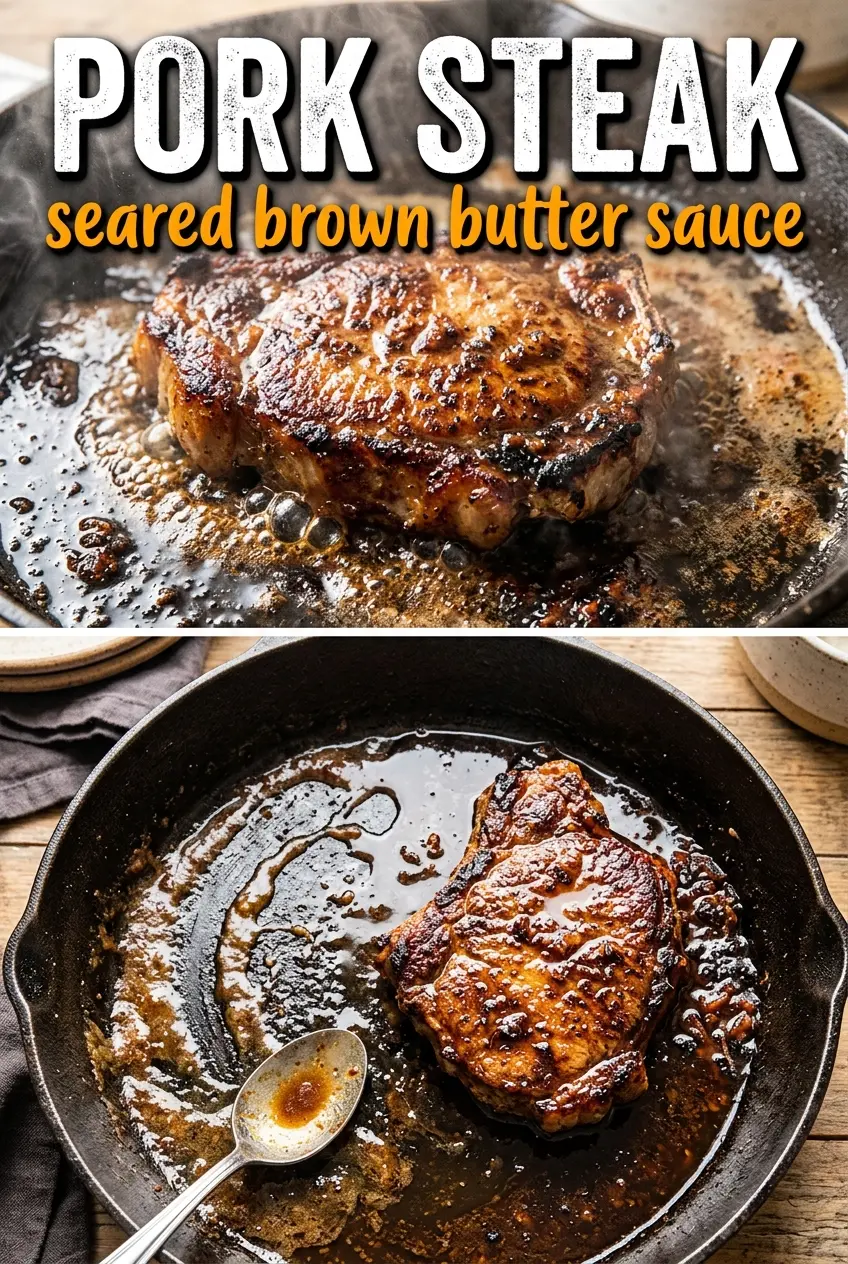
Pan Seared Pork Steak in Cast Iron
Ingredients
Equipment
Method
- Pat pork blade steaks completely dry and season generously with salt, black pepper, garlic powder, and smoked paprika. Keep the surface dry for better browning.
- Heat vegetable oil in a cast iron skillet over high heat until smoking, about 1–2 minutes. The oil should shimmer and look slightly smoky before searing.
- Sear the pork steaks 4–5 minutes without moving. Look for a deeply seared golden-brown crust forming on the first side.
- Flip the steaks and sear 3–4 minutes more. Continue cooking until both sides are deeply golden-brown.
- Add butter, smashed garlic, and fresh thyme to the skillet. Baste continuously for 1–2 minutes until the butter is foaming and the thyme is fragrant.
- Splash Worcestershire sauce over the steaks and cook 1 more minute. You should see a quick sizzle and glossy pan drippings.
- Rest the pork steaks 5 minutes before serving. The juices should redistribute so each slice stays juicy.
- Serve with lemon wedges. Squeeze just before eating for brightness against the rich crust.