Thick grilled pork chops should come off the grates with a deep browned crust, smoky edges, and a juicy center that still has a little give when you press it. The difference between a chop that tastes dry and one that tastes like something you’d happily make again comes down to heat control, a short marinade, and not fussing with the meat while it sears. Get those three things right and you end up with pork that slices cleanly and stays moist all the way through.
This version uses lemon juice, soy sauce, garlic, and dried herbs to season the meat without overpowering it. The marinade does enough work in 30 minutes to add flavor to the surface, but it isn’t so acidic that it starts turning the pork soft and mushy. I also like bone-in chops here because they stay a little more forgiving on the grill and bring better flavor than boneless cuts. Below, you’ll find the grilling cues that matter, the one temperature that keeps pork juicy, and a few smart ways to adapt these chops for a fast weeknight or a bigger cookout.
The chops came off with perfect grill marks and stayed juicy all the way through. I was worried about the lemon in the marinade, but 30 minutes was just enough and the pork tasted bright, smoky, and not at all dry.
Save these grilled pork chops for the nights when you want smoky grill marks, a juicy center, and a simple lemon-garlic finish.
The Part That Keeps Grilled Pork Chops Juicy Instead of Dry
Most dry pork chops happen for one of two reasons: the grill is too hot and the outside scorches before the center catches up, or the cook keeps flipping and pressing until all the juices run out. Thick chops need steady, medium-high heat and a little patience. Let the first side sit undisturbed long enough to build a crust, then flip once and finish the same way on the other side.
The other piece people miss is temperature. Pork doesn’t need to be cooked until it looks completely firm on the plate. Pulling it at 145°F and letting it rest for five minutes gives you a chop that stays tender when you cut into it. If you wait for the juices to run clear, you’ve already gone past the sweet spot.
What the Marinade Is Doing Before the Grill Ever Touches the Meat
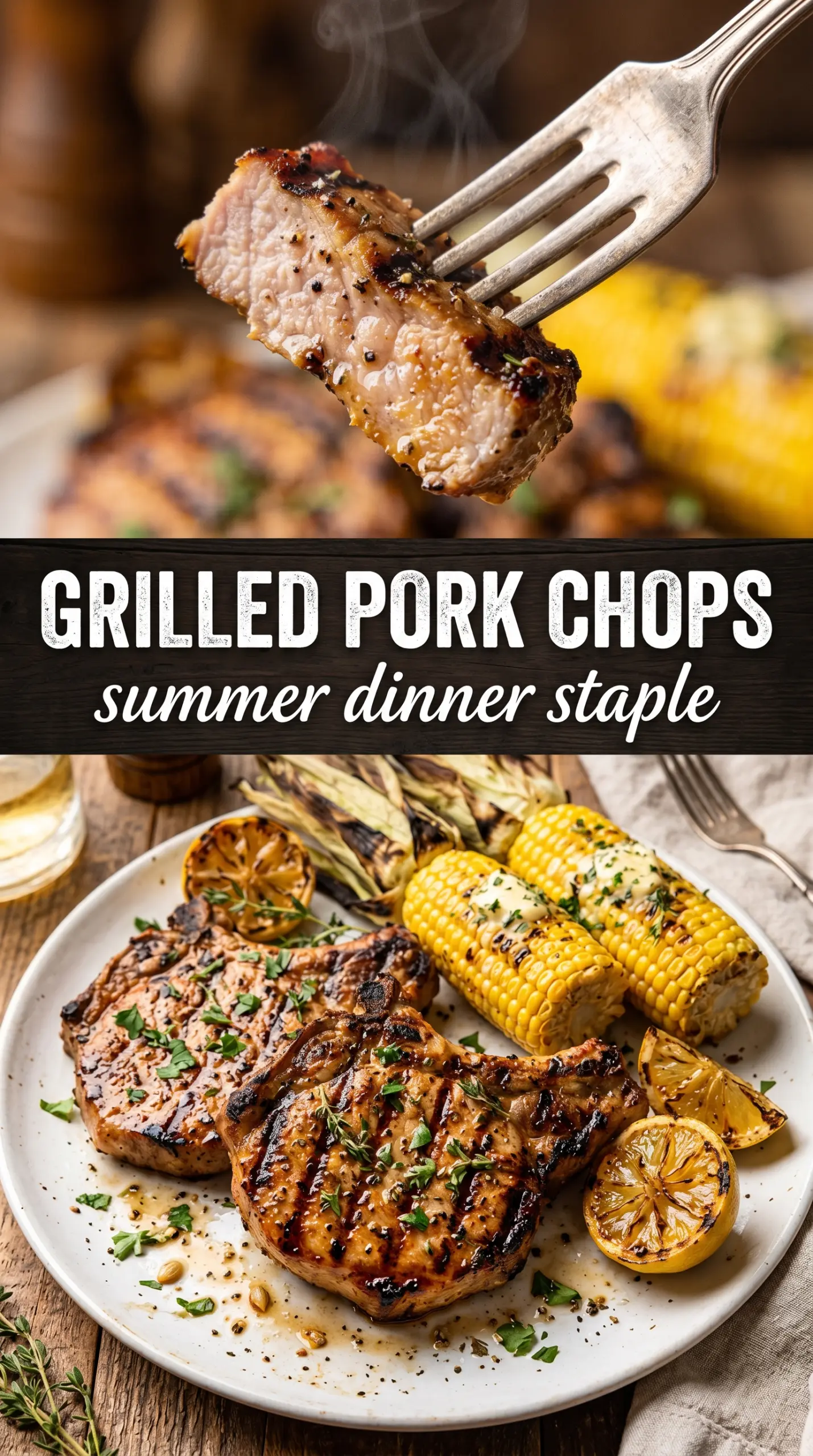
- Bone-in pork chops — A 1-inch chop has enough thickness to handle the grill without drying out. Bone-in cuts also stay juicier than thin boneless chops, which can overcook in a minute or two.
- Olive oil — This carries the garlic and herbs across the surface and helps the chops brown instead of sticking to the grates. You don’t need anything fancy, but a decent oil makes the marinade coat the meat more evenly.
- Lemon juice — This brightens the pork and helps season the surface, but it shouldn’t sit for hours if you want the texture to stay firm. Thirty minutes at room temperature is enough for quick flavor; up to 4 hours in the fridge works if you’re planning ahead.
- Soy sauce — This adds salt and depth in one step, which is why the chops taste seasoned all the way through instead of only on the crust. Low-sodium soy sauce works if that’s what you keep on hand.
- Smoked paprika, thyme, and rosemary — These give the pork its grilled, herb-flecked finish before it even hits the fire. Crush the rosemary a little between your fingers before adding it so the flavor opens up.
Getting the Grill Marks Without Overcooking the Center
Mixing and Marinating
Whisk the marinade until the garlic, oil, lemon juice, soy sauce, and spices look evenly combined, then coat the chops on all sides. Let them sit for at least 30 minutes so the surface picks up flavor, or refrigerate them for up to 4 hours if you’re getting ahead. If the pork comes out of the fridge, give it time to lose the chill before grilling; ice-cold chops take longer to cook through and tend to brown unevenly.
Preheating the Grates
Heat the grill to medium-high and oil the grates once they’re hot. That oil does more than prevent sticking — it helps the chop release cleanly when the crust forms. If the grates aren’t hot enough, the meat steams and drags instead of searing, which is how you lose those sharp grill marks.
Searing the First Side
Set the chops on the grill and leave them alone for 4 to 5 minutes. You’re waiting for them to release naturally and show defined marks on the bottom. If you try to move them too soon, they’ll cling to the grates and tear, which means the crust hasn’t set yet.
Finishing and Resting
Flip the chops and cook 4 to 5 minutes more, until the thickest part reaches 145°F. Take them off the heat and let them rest on a platter for 5 minutes so the juices settle back into the meat instead of running onto the plate. A squeeze of lemon at the end wakes everything up and keeps the pork from tasting heavy.
Three Ways to Make These Grilled Pork Chops Fit the Night
Gluten-Free Version
Swap the soy sauce for tamari or coconut aminos. Tamari gives you the closest match in saltiness and depth, while coconut aminos taste a little sweeter and lighter, so the pork finishes with a softer edge.
Garlic-Herb Pork Chops for a Bigger Crowd
Double the marinade and use it for six to eight chops, but don’t crowd the grill. If the heat drops too much, you’ll lose the sear and end up with pale pork instead of crusted chops.
Lemon-Free Option
Use an equal amount of apple cider vinegar for a sharper finish or skip the acid entirely and add extra olive oil plus a little more soy sauce. You’ll lose some brightness, but the pork still grills well because the seasoning and smoke carry the flavor.
Make-Ahead Dinner Prep
Marinate the chops in the morning and keep them refrigerated until dinner. Let them sit at room temperature for about 20 to 30 minutes before grilling so the centers don’t lag behind the surface and overcook while the outside is finishing.
Storage and Reheating
- Refrigerator: Store leftovers in an airtight container for up to 3 days. The crust softens a bit, but the pork stays tender if you don’t slice it until you’re ready to serve.
- Freezer: Freeze cooked chops for up to 2 months, wrapped tightly and tucked into a freezer bag. Thaw overnight in the refrigerator so they reheat evenly instead of drying out at the edges.
- Reheating: Warm them in a covered skillet over low heat with a splash of water or broth, or in a 300°F oven until just heated through. High heat is the mistake here — it pushes the pork past juicy before the middle has time to warm up.
Questions I Get Asked About This Recipe

Grilled Pork Chops
Ingredients
Equipment
Method
- Mix olive oil, garlic, lemon juice, soy sauce, smoked paprika, dried thyme, dried rosemary, salt, and black pepper in a bowl until combined and pour over the bone-in pork chops.
- Coat the chops thoroughly and let them marinate at room temperature for at least 30 minutes or refrigerate up to 4 hours.
- Preheat the grill to medium-high and oil the grates.
- Remove the chops from the marinade and shake off excess.
- Grill for 4–5 minutes without moving until you see grill marks starting to set and faint smoke at the edges form.
- Rotate the chops 45° for crosshatch marks and cook 1 more minute.
- Flip the chops and grill 4–5 minutes more until the internal temperature reaches 145°F.
- Rest the grilled pork chops on a platter for 5 minutes, leaving the juices to redistribute so the center stays juicy.
- Serve with lemon wedges.