Golden seared chicken breasts over buttery mashed potatoes never need much convincing. The chicken brings a crisp, herb-speckled crust and juicy center, while the potatoes catch every drop of the garlic herb pan sauce. It’s the kind of dinner that looks like you spent far more time on it than you did, which is part of why it keeps landing back on the table.
The trick here is building flavor in layers without making the chicken fussy. The dry seasoning goes on before the pan, so the garlic powder, thyme, rosemary, and smoked paprika can toast right against the hot oil. Then the same pan gets turned into a quick sauce with butter, garlic, broth, and all those browned bits left behind after searing. That’s where the depth comes from.
Below, I’ll walk through the part that matters most: keeping the chicken from drying out and getting the mashed potatoes smooth instead of gluey. There’s also a note on swapping the dairy in the potatoes and a few fixes for the spots where this dinner usually goes sideways.
The chicken stayed juicy and the pan sauce came together in minutes. I love that the mashed potatoes soaked up the garlic butter without turning heavy.
Save this garlic herb chicken breast with mashed potatoes for the night you want a pan sauce dinner that looks polished but still lands fast.
The Chicken Stays Juicy When You Don’t Crowd the Pan
The biggest mistake with boneless chicken breasts is trying to cook them like they’re all the same size. One end is usually thicker, and if you leave it that way, the thin side dries out before the center catches up. A quick pound to even thickness helps the chicken cook at the same rate, which is the difference between tender and stringy.
Equally important is giving the skillet space. If the breasts are packed in too tightly, they steam instead of sear, and the seasoning never gets that toasted edge that makes this dish taste finished. You want a hot pan, the sound of a steady sizzle when the chicken hits the oil, and enough room around each piece for the surface to brown cleanly.
- Even thickness — Pound the chicken breasts to a similar thickness so the center cooks before the outside dries out.
- Hot oil — Olive oil handles the sear well and gives you a clean, savory crust without scorching the garlic powder in the seasoning blend.
- Resting time — Let the chicken sit a few minutes after searing. The juices settle back into the meat, and you’ll slice into something noticeably juicier.
What the Potatoes and Pan Sauce Are Each Doing Here
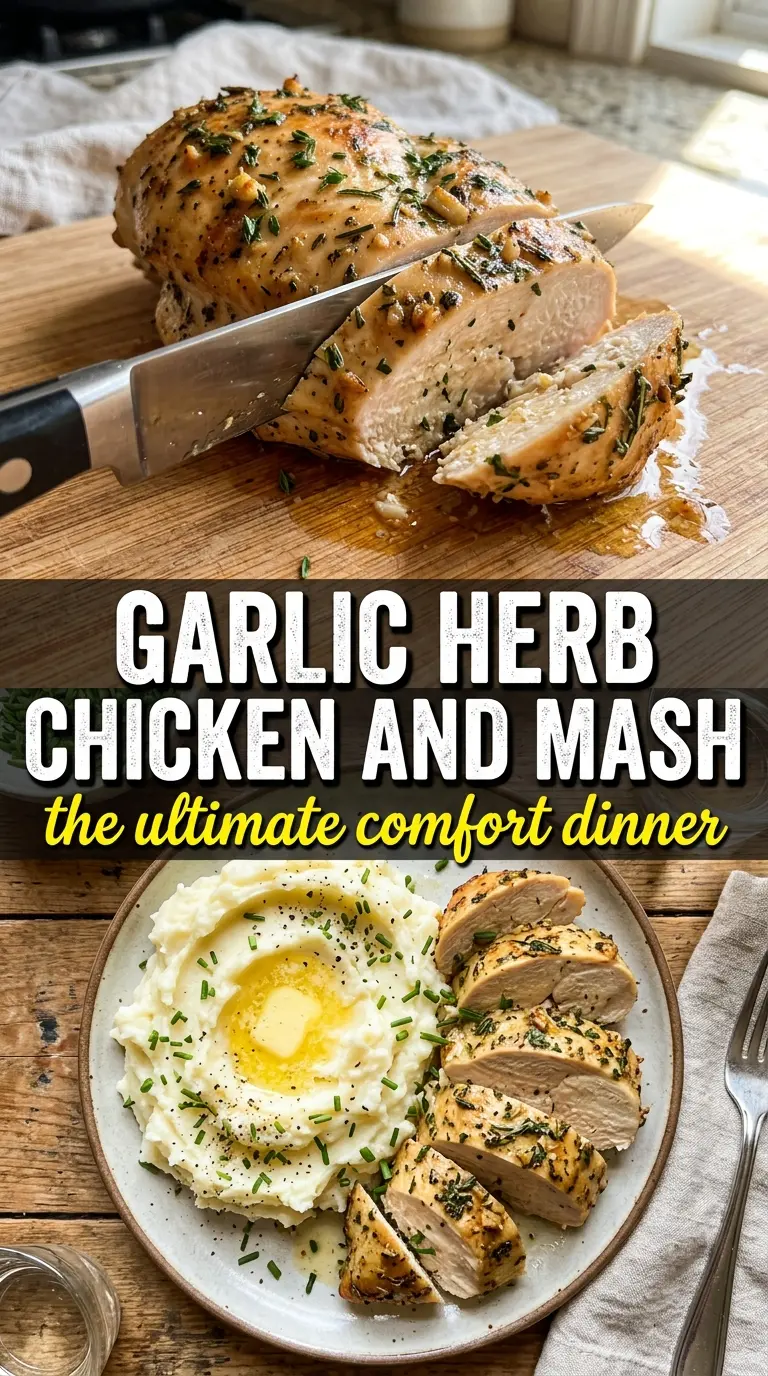
- Yukon Gold potatoes — These mash up creamy and naturally buttery, with enough body to hold the sauce. Russets work in a pinch, but they turn lighter and drier, so you’ll need a bit more cream or butter to get the same plush texture.
- Warm dairy — Warm cream or milk folds into the potatoes smoothly. Cold dairy cools the mash too fast and can leave it dense instead of fluffy.
- Butter in two places — Butter in the potatoes gives richness, while butter in the pan sauce carries the garlic and lifts the browned bits off the skillet. That split use matters because it keeps each part of the dish tasting complete on its own.
- Chicken broth — This is the backbone of the sauce. Water will thin the pan, but it won’t bring enough depth to match the seared chicken and herbs.
From Golden Sear to Garlic Butter Drizzle
Seasoning the Chicken Evenly
Mix the garlic powder, smoked paprika, thyme, rosemary, salt, and pepper directly on the chicken so every bite tastes seasoned, not just the surface. Press the spices into the meat with your hands. That helps them cling when the chicken hits the pan. If the seasoning looks patchy, the crust will taste patchy too.
Building the Potato Base
Boil the potatoes until a fork slides through with no resistance, then drain them well before mashing. Any extra water left in the pot will sneak into the mash and make it loose. Add the butter first so it melts into the hot potatoes, then pour in the warmed cream or milk and mash until smooth and fluffy.
Searing Without Drying Out
Cook the chicken over medium-high heat until the first side is deeply golden and releases easily from the pan. If it sticks hard, it isn’t ready to turn yet. After you flip it, the second side usually takes a little less time. Pull the chicken at 165°F and let it rest while you make the sauce.
Turning the Pan Bits Into Sauce
Once the chicken comes out, keep the same pan on the stove and melt the butter right into the browned bits. Add the garlic and cook it just until fragrant, about a minute, because raw garlic tastes sharp and bitter here. Pour in the broth and scrape the skillet clean; the sauce is thin at first, then it tightens slightly as it simmers and picks up all the roasted flavor from the pan.
How to Adapt This Dinner Without Losing the Point
Dairy-Free Version
Swap the butter for a good plant-based butter and use unsweetened oat milk in the potatoes. The sauce will still pick up the garlic and browned bits, though it won’t taste quite as round as the dairy version. Warm the oat milk before adding it so the potatoes stay smooth.
Thighs Instead of Breasts
Boneless chicken thighs work well if you want a little more margin for error. They stay juicier and take a slightly deeper sear, but they usually need a few extra minutes in the pan. Cook them until they’re fully done and the juices run clear.
Lighter Mashed Potatoes
You can use whole milk instead of cream for a lighter finish. The potatoes will still be silky, just not quite as rich. Don’t go lower than that unless you want a looser mash that won’t hold up as well under the sauce.
Storage and Reheating
- Refrigerator: Store the chicken and mashed potatoes separately in airtight containers for up to 4 days. The potatoes will thicken in the fridge, which is normal.
- Freezer: The chicken freezes well for up to 2 months. The mashed potatoes can freeze, but they may turn a little grainy after thawing, so I only freeze them if I don’t mind a slightly less silky texture.
- Reheating: Reheat the chicken covered in the oven or gently in a skillet with a splash of broth. Warm the potatoes slowly over low heat with a little milk or cream. High heat dries out the chicken and makes the potatoes tighten up fast.
Questions I Get Asked About This Recipe

Garlic Herb Chicken Breast with Mashed Potatoes
Ingredients
Equipment
Method
- Boil the Yukon Gold potatoes in salted water for 15-18 minutes until fork-tender, then drain.
- Mash the potatoes with butter, warmed heavy cream or whole milk, salt, pepper, and garlic powder until smooth and fluffy, then keep warm.
- Pat the chicken breasts dry and season all over with garlic powder, smoked paprika, dried thyme, dried rosemary, salt, and pepper.
- Heat olive oil in a cast iron skillet over medium-high heat and sear the chicken for 5-6 minutes per side until golden and cooked through to 165°F, then remove.
- Melt 2 tablespoons butter in the same pan, then cook the minced garlic for 1 minute until fragrant.
- Add chicken broth and scrape up the browned bits, then simmer for 2-3 minutes until a simple pan sauce forms.
- Place the mashed potatoes on plates and set the seared chicken on top.
- Drizzle the garlic herb pan sauce over the chicken and potatoes.
- Finish with fresh parsley garnish before serving.