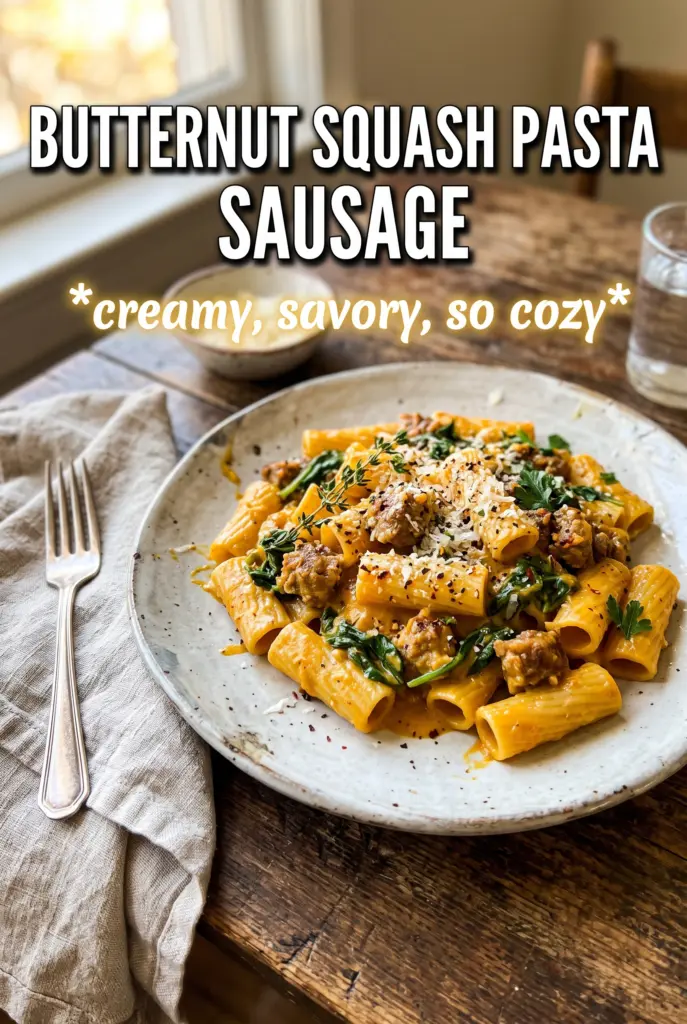
Silky butternut squash sauce clings to every ridge of the pasta, and the sausage brings just enough savoriness to keep the whole bowl from feeling sweet or one-note. The spinach melts into the sauce at the end, so you get a rich, spoon-coating dinner with a little green tucked in without losing that creamy finish.
What makes this version work is the balance: the squash puree gives body, the cream softens the edges, and the parmesan helps the sauce emulsify instead of turning greasy. I like using rigatoni or penne because the sauce settles into the tubes, and I always keep some pasta water back. That starchy water is what helps the sauce loosen just enough to coat cleanly instead of clumping in the pan.
Below you’ll find the small details that matter, including how to keep the sauce smooth, which substitutions hold up, and what to do if you want to make it a little lighter without losing that cozy texture.
The sauce turned out silky and coated the rigatoni beautifully, and the spinach stayed fresh-tasting instead of getting soggy. My husband went back for seconds and said the sausage made it taste like a restaurant meal.
Save this creamy butternut squash pasta with sausage and spinach for a dinner that’s rich, fast, and built on a sauce that coats the pasta instead of sliding off.
The Trick to Keeping Butternut Squash Sauce Creamy Instead of Thick and Gummy
Butternut squash puree can go gluey if it gets cooked down too hard before the cream goes in. The goal here is a smooth, pourable sauce that still feels substantial, so the puree gets warmed gently with the cream and seasoning, then loosened with pasta water only after the parmesan has melted in.
The other place people lose the texture is with heat. Once the cheese goes in, keep the burner low and stir until the sauce looks glossy. If it boils after that, it can get grainy or separate, especially with a heavy hand on the parmesan.
- Butternut squash puree — This is the backbone of the sauce, so use a smooth puree with no stringy bits. Canned puree works well here and saves time. If you roast and puree your own squash, drain off any excess liquid so the sauce doesn’t get watery.
- Heavy cream — This gives the sauce its plush texture and keeps the squash from tasting stiff or overly earthy. Half-and-half can work in a pinch, but the sauce will be thinner and less stable. I wouldn’t swap in milk unless you’re ready for a looser, less rich result.
- Parmesan — Use finely grated parmesan so it melts quickly and disappears into the sauce. Pre-grated cheese can be gritty and slower to melt because of the anti-caking agents. If parmesan is what you’ve got, grate it fresh for the smoothest finish.
- Italian sausage — This is what keeps the dish from leaning too sweet. Hot or mild both work, but I like mild sausage with the red pepper flakes so I can control the heat. Turkey sausage is a decent swap if you want something lighter, though it won’t leave as much flavorful fat in the pan.
What Each Ingredient Is Actually Doing in This Recipe
- Primary ingredient (the star) — Quality matters most. Choose the best you can find.
- Cooking medium (oil, butter, or broth) — This carries flavors and prevents dryness.
- Seasonings (salt, pepper, spices, herbs) — Layer flavors so nothing overpowers. Build depth gradually.
- Aromatics (garlic, onion, herbs) — Cook with fat to bloom flavors. Become the foundation.
- Supporting ingredients — Complement the main ingredient without overpowering it.
- Sauce or liquid (if applicable) — Brings flavors together. Balance richness with acid.
- Acid (lemon, vinegar, wine, or other) — Brightens and prevents flat-tasting results.
- Final finish (garnish, glaze, or sauce) — Prevents one-dimensional taste and adds visual appeal.
Building the Sauce in the Same Pan as the Sausage
Brown the sausage first
Cook the sausage until it has deep brown edges and no pink spots left, then scoop it out and leave the browned bits behind in the pan. Those drippings carry the flavor for the onions and garlic. If there’s an excessive amount of fat, drain it off, but don’t scrub the pan clean.
Cook the onion until it softens
Add the diced onion to the same skillet and cook until it turns translucent and starts to take on a little gold at the edges. That takes about four minutes over medium heat. If the onion is still crunchy later, it means it didn’t soften enough here, and the final sauce will taste sharp.
Warm the squash before the cheese goes in
Stir in the butternut squash puree, cream, nutmeg, and red pepper flakes, then let it simmer gently for about five minutes. You’re looking for small bubbles around the edges, not a hard boil. When the parmesan goes in, lower the heat and stir until the sauce turns smooth and glossy.
Finish with pasta water and spinach
Add the cooked pasta plus a splash of reserved pasta water, then toss in the spinach and keep stirring until it wilts. The pasta water helps the sauce cling to the noodles instead of pooling in the bottom of the skillet. Add the sausage back at the end so it stays meaty instead of overcooking in the sauce.
Make it spicy or keep it mild
Use hot Italian sausage and keep the red pepper flakes for a pasta with more bite, or use mild sausage and cut the flakes in half for a softer, sweeter sauce. The squash will still taste rich either way, but the heat level changes the whole mood of the dish.
Dairy-free version
Swap the cream for full-fat canned coconut milk and use a dairy-free parmesan-style cheese or skip the cheese entirely and add extra salt at the end. The sauce will be a little less tangy and a touch sweeter, but it still turns out creamy and coats the pasta well.
Gluten-free pasta swap
Use a sturdy gluten-free pasta shape with ridges, and undercook it by a minute so it doesn’t fall apart when tossed in the sauce. Gluten-free pasta can soak up more liquid, so keep extra pasta water handy and add it a splash at a time.
No sausage, still hearty
Swap the sausage for browned mushrooms or white beans if you want a vegetarian version. Mushrooms bring savory depth, while beans make the dish creamier and a little lighter. You’ll lose the rendered sausage fat, so add a drizzle of olive oil when cooking the onion.
Storage and Reheating
- Refrigerator: Store leftovers for up to 4 days. The sauce thickens as it chills, and the pasta will soak up some of the cream.
- Freezer: It freezes, but the cream sauce loses a little of its silky texture. Freeze in portions for up to 2 months, and thaw in the fridge before reheating.
- Reheating: Warm it slowly on the stove or in the microwave with a splash of water, milk, or broth. High heat can make the sauce look broken before it has a chance to loosen back up.
Questions I Get Asked About This Recipe
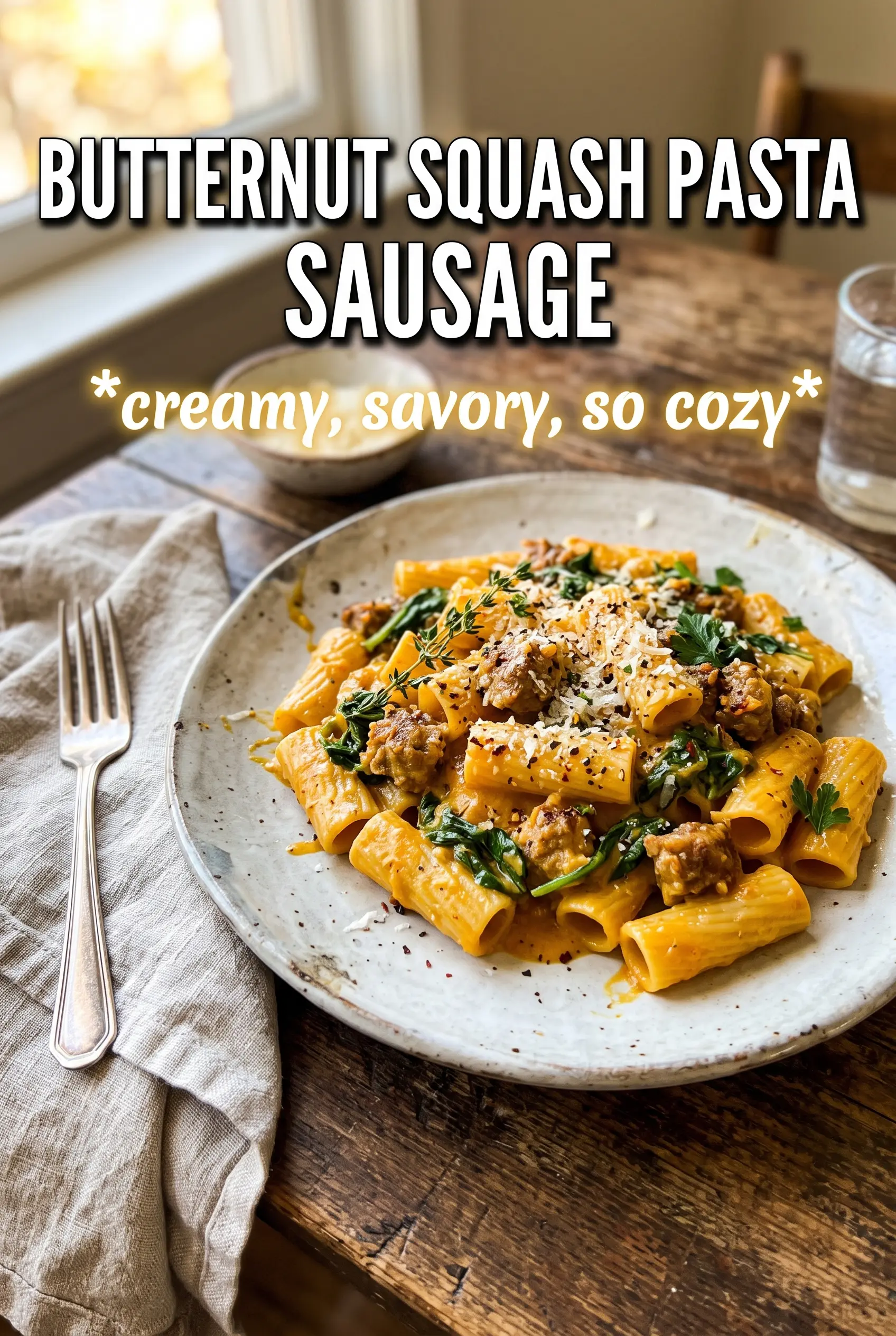
Creamy Butternut Squash Pasta With Sausage And Spinach
Ingredients
Equipment
Method
- Bring a large pot of salted water to a boil, then cook rigatoni or penne until al dente, stirring occasionally. Before draining, reserve 1/2 cup pasta cooking water.
- In a large skillet over medium-high heat, brown the Italian sausage until cooked through and crumbled, about 8–10 minutes. Drain excess fat and set the sausage aside.
- In the same skillet, sauté the diced onion over medium heat until softened, about 4 minutes. Add the minced garlic and Italian seasoning and cook for 2 minutes.
- Stir in butternut squash puree and heavy cream, then add nutmeg and red pepper flakes. Simmer the sauce for 5 minutes, stirring occasionally to thicken.
- Reduce heat to low, then add the grated parmesan and stir until fully melted and smooth. Keep the sauce warm so it stays creamy.
- Add the cooked pasta to the skillet and pour in the reserved pasta cooking water. Toss to coat and loosen the sauce, then add the baby spinach and cook just until wilted.
- Return the browned sausage to the pan and toss to combine. Season with salt and pepper to taste, then serve hot.