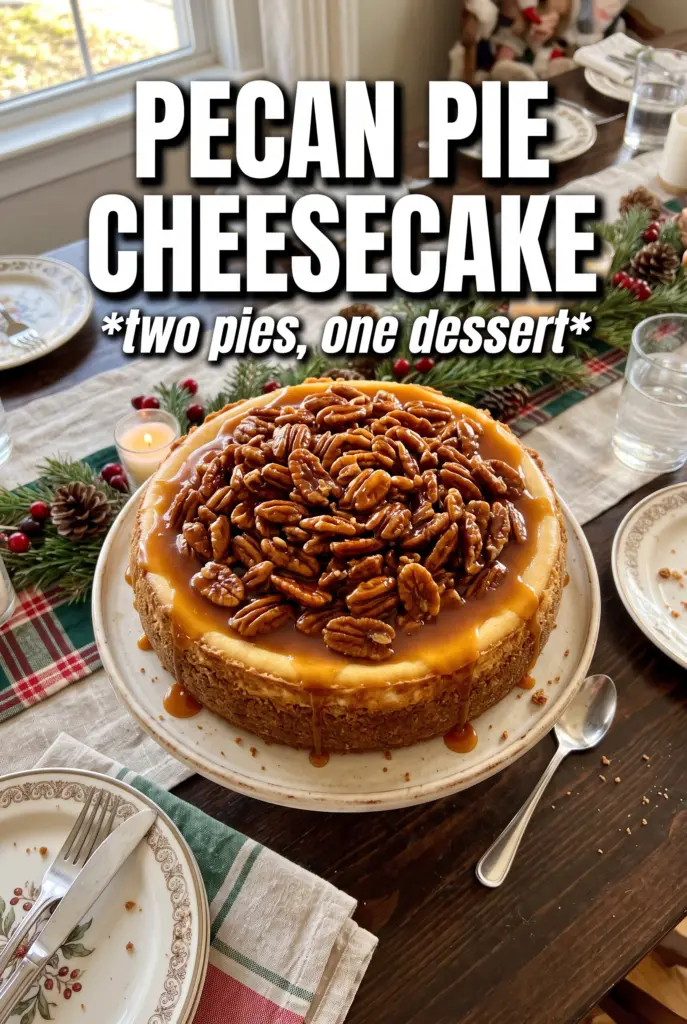
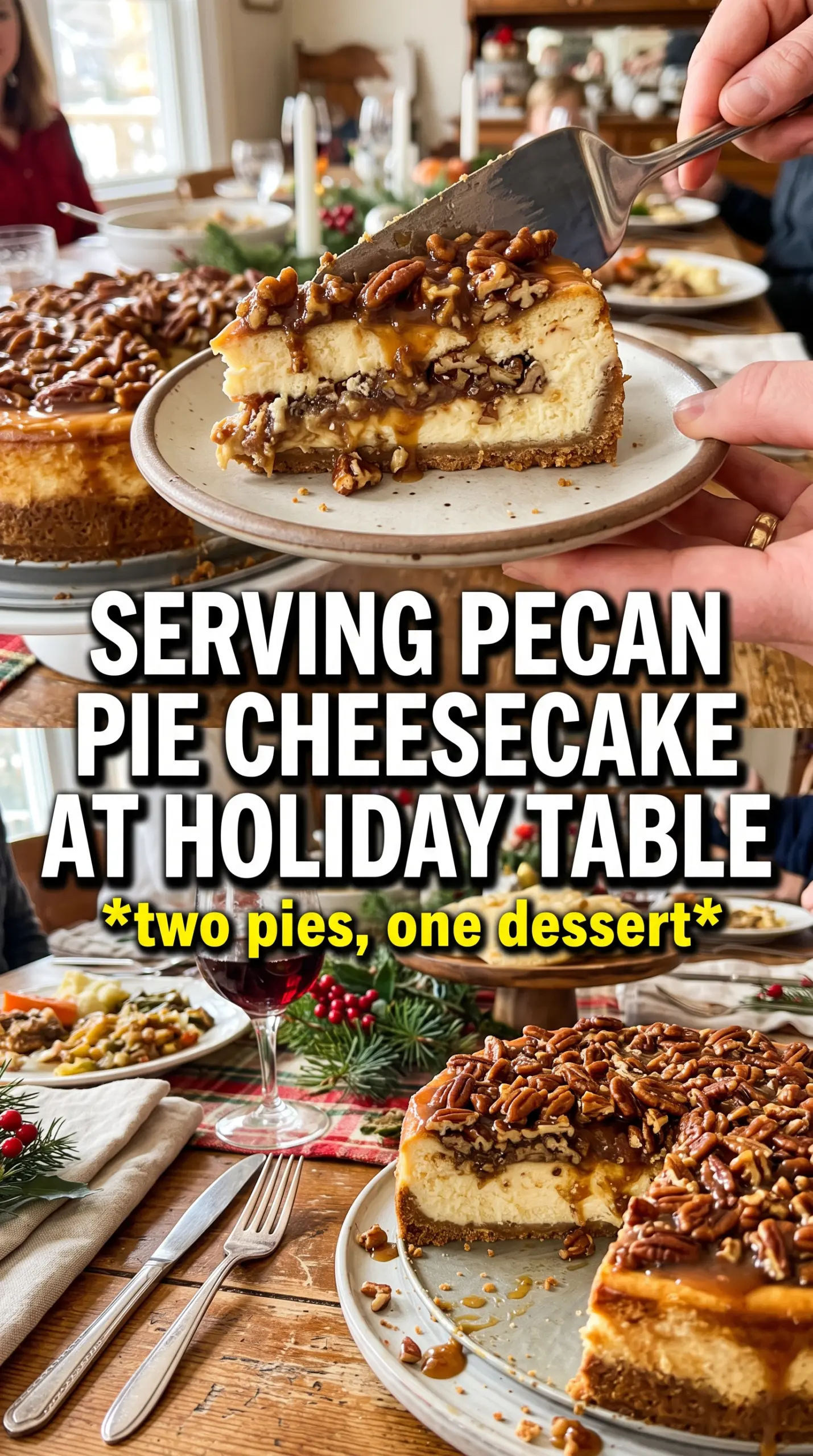
Pecan pie cheesecake delivers that rare dessert payoff where every bite lands with contrast: a crisp graham cracker crust, a dense and creamy cheesecake layer, and a glossy pecan topping that tastes like warm caramel and toasted nuts. The slice holds its shape, but the filling still melts on the tongue. That balance is exactly why this one earns a repeat spot.
The trick is treating it like two desserts that need to respect each other. The cheesecake bakes low and slow in a water bath so it stays smooth instead of puffing and cracking, and the pecan topping gets cooked just enough to thicken before the nuts go in. If you pour it on while it’s hot, it runs off the sides; if you wait until the cheesecake is fully chilled, it settles into that thick, sticky layer that makes the whole thing work.
Below, I’ll walk through the part that matters most: how to keep the cheesecake from overbaking and how to get the topping glossy without turning it grainy. Those two details make the difference between a dessert that slices cleanly and one that falls apart on the plate.
The cheesecake came out silky and the pecan topping set up thick instead of sliding off the sides. I chilled it overnight and the slices were neat and beautiful the next day.
Pecan pie cheesecake with that thick caramel-pecan topping is the kind of dessert that disappears slice by slice.
The Crack-Free Secret Is in the Water Bath, Not the Topping
Pecan pie cheesecake fails for the same reason plain cheesecake does: too much heat too fast. The filling needs a gentle bake so the eggs set without curdling, and the water bath keeps the oven environment humid enough to slow the edges down. That gives you a cheesecake that finishes with a slight wobble in the center instead of a dry, overbaked ring.
The crust also matters more than people think. A quick 10-minute bake sets the butter and keeps the graham layer from going sandy under the filling. If you skip that step, the bottom can soften once the cheesecake chills, and then the whole slice loses its clean edge.
What Each Layer Is Doing in This Dessert
- Graham cracker crumbs — These give you the right sweet, toasty base without competing with the pecans. A fine crumb packs best; if yours are coarse, pulse them a few extra seconds so the crust holds together cleanly.
- Brown sugar — It shows up in every layer because this dessert wants molasses depth, not plain sweetness. Dark brown sugar will push the caramel note a little further, while light brown sugar keeps things cleaner and slightly milder.
- Cream cheese — Full-fat blocks matter here. Tubs are too soft and often too airy, which can throw off the bake and leave the center loose after chilling.
- Sour cream — This keeps the cheesecake filling plush and gives it a slight tang so the topping doesn’t taste one-note. Plain full-fat Greek yogurt can work in a pinch, but the texture comes out a little firmer and less silky.
- Corn syrup — You only need a tablespoon, but it helps the pecan topping stay glossy and prevents the sugar from turning grainy. Honey can stand in, though it brings its own flavor and the topping will set a bit softer.
- Whole pecans — Use good ones here. They’re the whole point of the topping, and halves or pieces won’t give you the same dramatic finish on top of the cheesecake.
Building the Filling and Topping Without Breaking Either One
Press and Prebake the Crust
Mix the graham crumbs, brown sugar, and melted butter until every crumb looks evenly moistened, then press it firmly into the bottom of a 9-inch springform pan. Use the flat bottom of a measuring cup to compact it; a loose crust will crumble when you slice. Bake it until it smells toasted and looks slightly darker around the edges, then set it aside while you work on the filling.
Whip the Filling Until It’s Smooth, Not Airy
Beat the cream cheese first until there are no lumps at all, then add the brown sugar and stop as soon as it looks creamy. Add the eggs one at a time and mix only until each one disappears. If you beat the batter too long after the eggs go in, you’ll trap air and the cheesecake is more likely to puff, crack, and sink in the middle.
Bake Low and Steady
Set the springform pan inside a larger roasting pan and pour in hot water around it so the bath comes partway up the sides. Bake until the edges look set and the center still has a soft wobble when you nudge the pan. If the whole surface looks firm in the oven, it’s already gone too far; cheesecake finishes setting as it cools.
Cook the Pecan Topping Until It Thickens
Melt the butter with the brown sugar, cream, and corn syrup over medium heat, then let it simmer for about 3 minutes while stirring. You’re looking for a thicker, shinier sauce that coats a spoon, not a hard candy stage. Stir in the pecans, vanilla, and salt, then let the topping cool for about 15 minutes so it stays spoonable instead of running off the cheesecake.
Top the Cheesecake at the Right Time
The cheesecake needs to be fully chilled before the topping goes on. If it’s even a little warm, the topping will slide and soften the surface. Spoon the cooled pecan mixture over the center and nudge it toward the edges, leaving a little plain rim if you want that layered bakery look.
How to Adapt This for Different Tables and Pantry Shortcuts
Gluten-Free Crust Swap
Use certified gluten-free graham-style crumbs or finely ground gluten-free cookies in place of standard graham crackers. The texture stays crisp, though the flavor may be a little less toasty depending on the brand you choose.
Dairy-Free Version
Use dairy-free cream cheese, plant-based butter, and coconut cream in place of the sour cream and heavy cream. The cheesecake will still slice well, but the filling tastes a little softer and the topping has a lighter finish than the original.
Extra-Caramel Topping
If you want a deeper caramel note, cook the topping a minute longer before adding the pecans. The sauce will set a little thicker and taste more intense, but don’t push it too far or it can turn chewy once cooled.
Storage and Reheating
- Refrigerator: Cover and chill for up to 5 days. The topping will stay glossy, though the pecans soften a little after the first day.
- Freezer: Freeze the cheesecake without the pecan topping for best results, tightly wrapped for up to 2 months. Thaw overnight in the refrigerator, then add the topping just before serving.
- Reheating: This dessert is served cold, not reheated. If you want a softer slice, let it sit at room temperature for 15 to 20 minutes before cutting so the crust doesn’t shatter and the filling isn’t fridge-hard.
Answers to the Questions Worth Asking
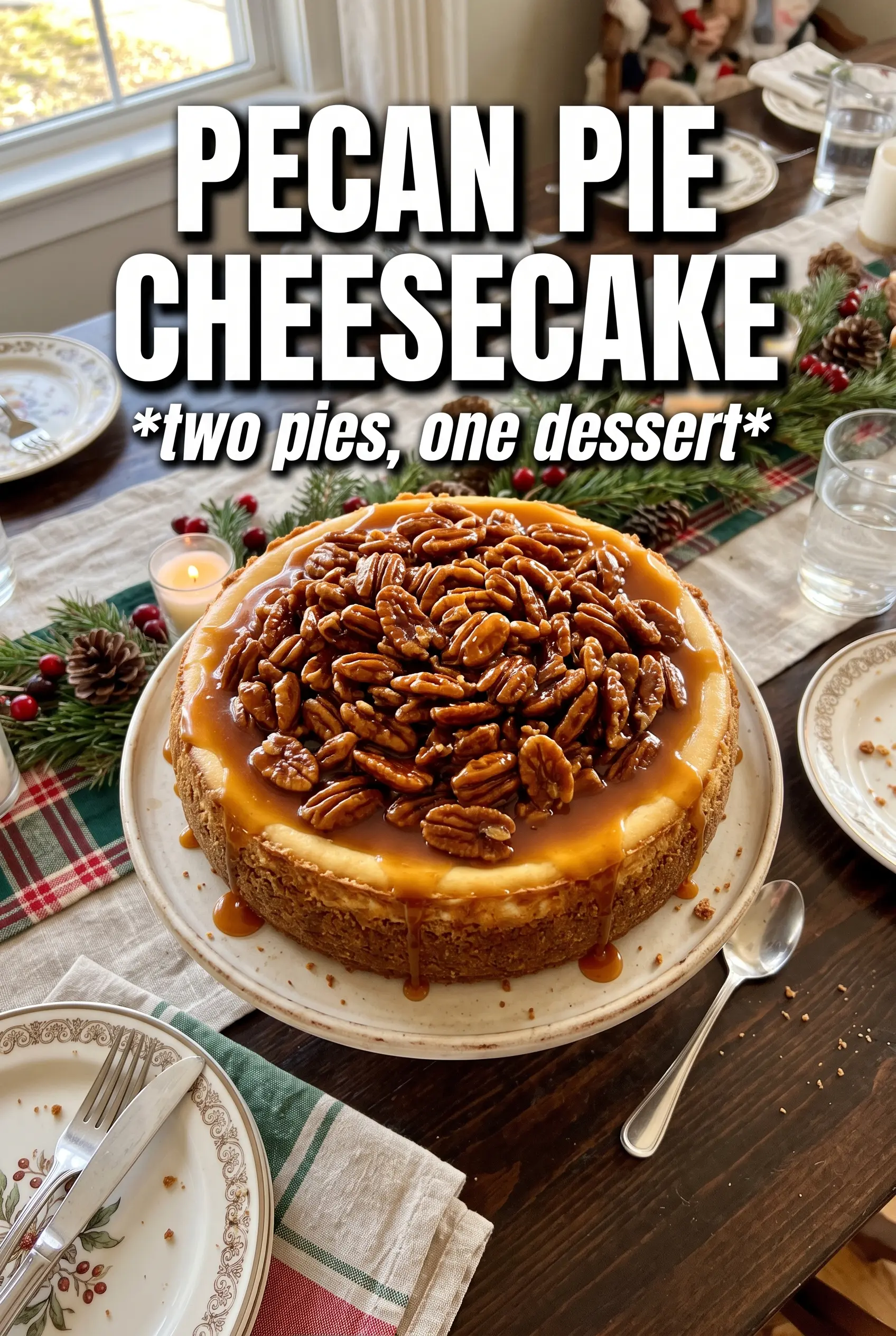
Pecan Pie Cheesecake
Ingredients
Equipment
Method
- Preheat the oven to 325F, then press the graham cracker crumbs, brown sugar, and melted butter into a 9-inch springform pan. Press firmly so the crust holds together in slices.
- Bake the crust at 325F for 10 minutes, until set and lightly fragrant. The crust should look dry on top rather than wet.
- Beat the cream cheese and brown sugar until smooth, then beat in the eggs, sour cream, vanilla, and cinnamon. Stop when the batter is uniform with no visible lumps.
- Pour the cheesecake batter over the pre-baked crust. Tap once to level the surface before baking.
- Bake in a water bath at 325F for 60-65 minutes, until the center is just set. The edges should look set while the middle still has a slight jiggle.
- Cool the cheesecake completely at room temperature. The top should no longer look glossy or loose.
- Refrigerate the cheesecake for 6 hours to fully chill and firm up. It should slice cleanly with a stable texture.
- Melt the unsalted butter with brown sugar, heavy cream, and corn syrup over medium heat in a Dutch oven. Stir until the mixture looks glossy and fully combined.
- Simmer for 3 minutes, stirring to prevent scorching. The mixture should thicken slightly and coat the spoon.
- Stir in whole pecans, vanilla, and salt. The pecans should be evenly covered in the caramel.
- Cool the pecan topping for 15 minutes. It should thicken to a thick pourable consistency.
- Pour the pecan topping over the chilled cheesecake just before serving. Spread gently so the topping forms a thick, even layer.