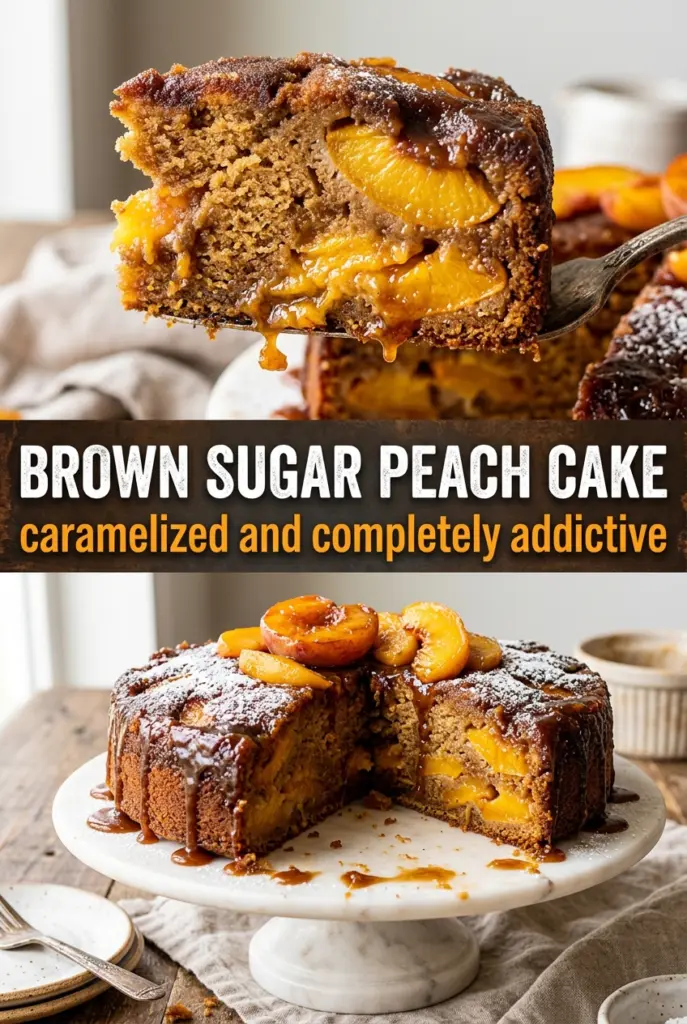
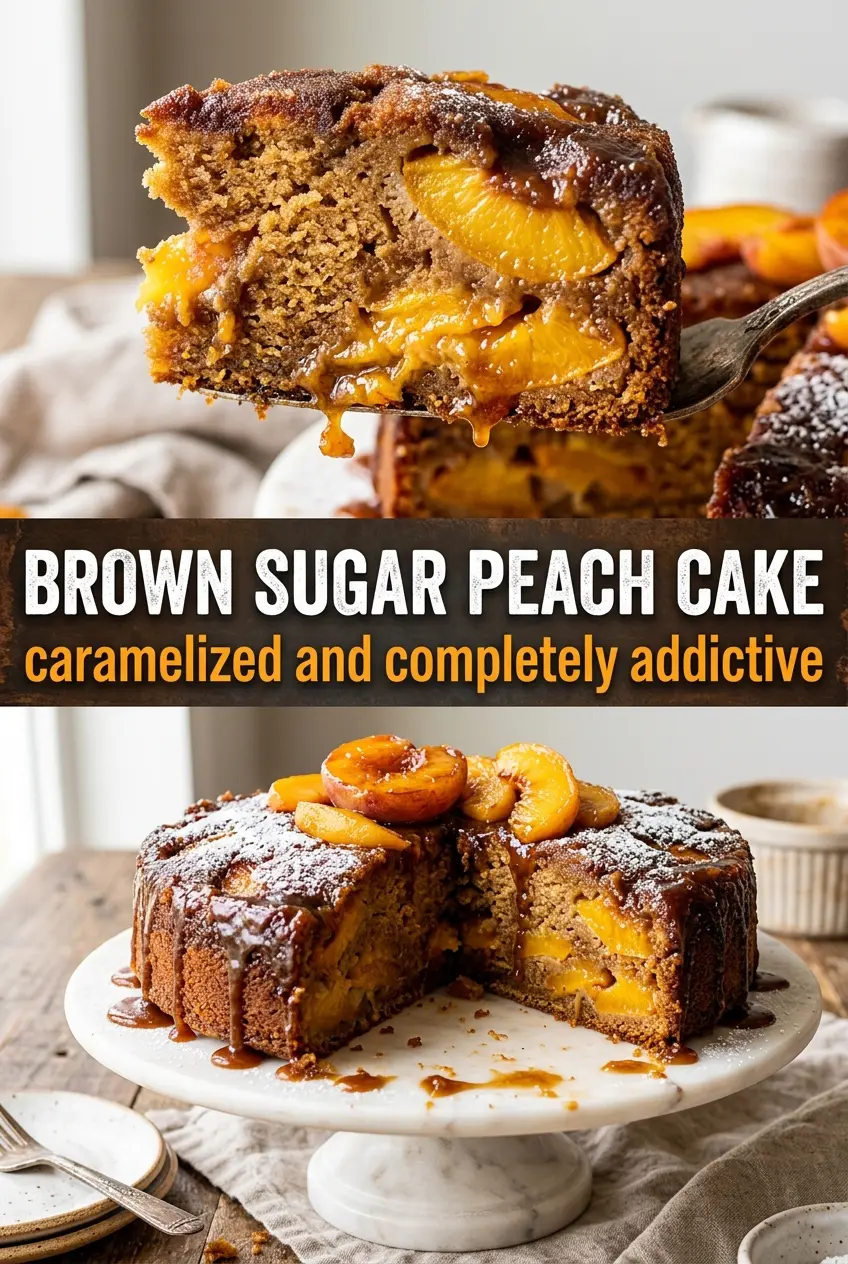
Brown sugar and peaches belong together in the kind of cake that disappears while it’s still a little warm. The crumb stays tender and plush from the sour cream, the brown sugar gives the batter a caramel note instead of plain sweetness, and the peaches bake into soft pockets that taste like jam without turning the cake heavy. The glaze on top sinks into the surface just enough to make every slice glossy and rich.
What makes this version work is the balance. Too many peach cakes lean watery because the fruit gets added without enough structure to support it. Here, the batter starts with a proper butter-and-brown-sugar base, then gets the flour and sour cream added in a way that keeps the crumb tight enough to hold the fruit. Fresh peaches are the right choice here, but they need to be diced small so they scatter evenly instead of sinking into one soggy layer.
Below, I’ve included the one step that keeps the cake from sticking in the pan and the detail that makes the glaze soak in instead of sliding off.
The cake came out so moist and the peaches stayed evenly distributed instead of sinking. That brown sugar glaze soaked into the top and made the edges taste almost caramelized.
Love the caramel-sweet crumb and juicy peach pockets in this brown sugar peach cake? Save it to Pinterest for the next time you want a homemade dessert that slices beautifully and tastes even better the next day.
The Reason This Cake Stays Moist Instead of Heavy
Peach cake can go wrong fast when the fruit brings too much moisture into a batter that’s already soft. The trick here is building enough structure before the peaches go in. That means creaming the butter and brown sugar until the mixture looks lighter and a little fluffy, then alternating the flour mixture with the sour cream so the batter stays smooth and stable. If you dump everything in at once, the cake can bake up dense in the center and gummy around the fruit.
The other thing worth paying attention to is the fruit itself. Dice the peaches small enough that they distribute through the batter without weighing it down. Large chunks sound appealing, but they create pockets that collapse the crumb around them. Fresh peaches are best because they hold their shape and keep the flavor clean; if yours are extremely juicy, let the diced fruit sit in a colander for a few minutes before folding it in.
What Each Ingredient Is Actually Doing in This Cake
- Brown sugar — This does more than sweeten the cake. It gives the crumb a deeper, almost caramel flavor and helps the batter hold onto moisture. Dark brown sugar will push the molasses note even further, while light brown sugar gives a softer finish.
- Sour cream — This is what keeps the cake plush without making it loose. Full-fat sour cream gives the best texture, but plain Greek yogurt works in a pinch. Use the thick kind, not a runny one, or the batter can thin out too much.
- Fresh peaches — This is the ingredient that makes the cake taste like peaches instead of just sweet spice. Peel them if the skins are tough or fuzzy, then dice them small so they bake evenly. Frozen peaches can work if thawed and well-drained, but the crumb won’t be quite as clean.
- Butter — Softened butter gives the cake its tender, rich base and helps the glaze taste lush instead of flat. Don’t melt it. You want it soft enough to beat with the sugar until fluffy, not greasy.
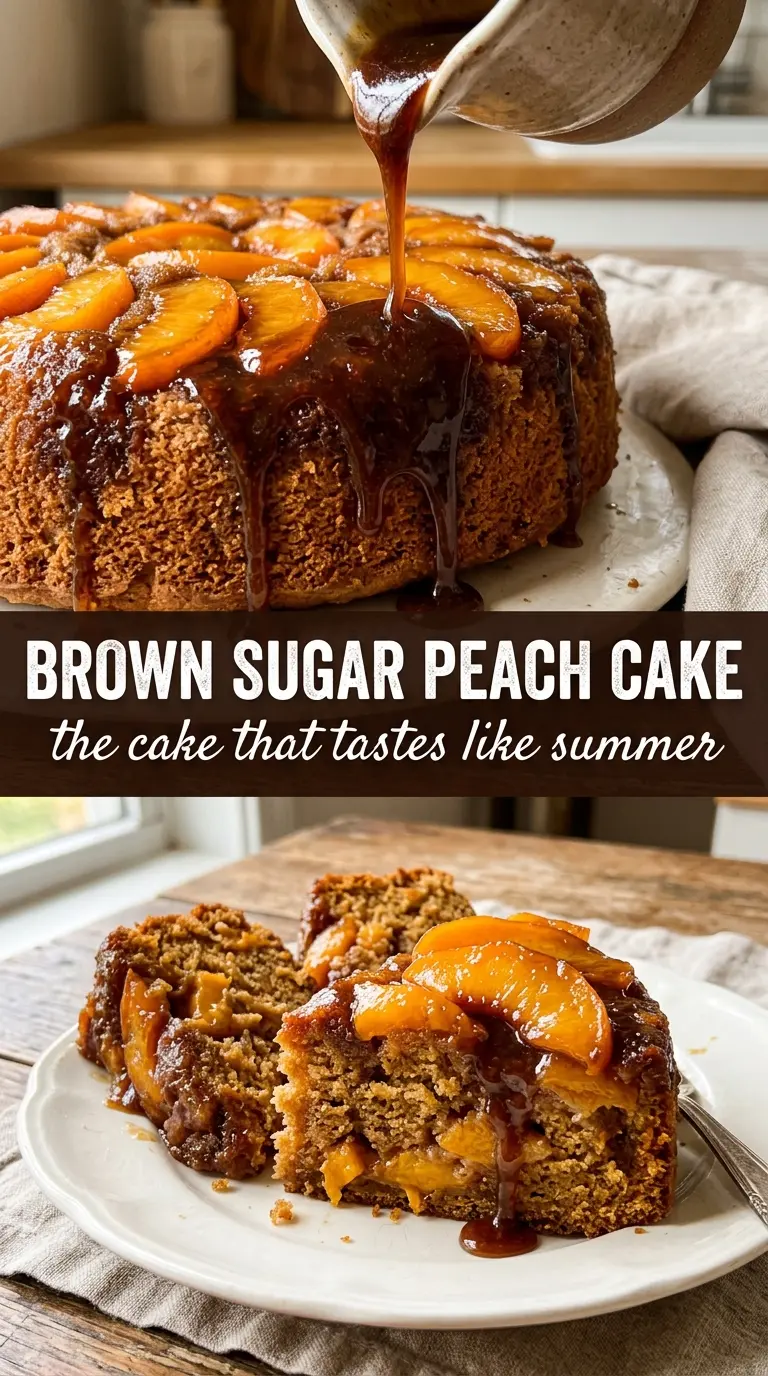
- Brown sugar glaze — This is the finishing move. The butter, brown sugar, and cream cook just long enough to thicken slightly, then it gets poured warm so it settles into the top of the cake instead of sitting like frosting.
How to Build the Batter So the Peaches Don’t Sink
Creaming the Base
Beat the butter and brown sugar for the full three minutes until the mixture looks paler and a little airy. That step traps tiny pockets of air that help the cake rise and stay tender. If the butter is too cold, the sugar won’t cut through it properly; if it’s melted, the cake turns greasy and dense. Add the eggs one at a time so the batter stays smooth instead of looking curdled.
Alternating Flour and Sour Cream
Add the dry ingredients and sour cream in alternating additions, starting and ending with flour. This keeps the batter from breaking and gives you a thick, even mixture that can support the peaches. Stir only until the flour disappears. Overmixing here develops too much gluten, which is how you end up with a tough cake instead of a tender one.
Folding in the Fruit
Fold the diced peaches in by hand at the very end. Use a gentle motion and stop as soon as the fruit looks evenly scattered. If you stir hard, the peaches break down and streak the batter with juice, which can make the finished cake wet in spots. The batter should look thick, dotted with fruit, and ready to spoon into the pan.
Glazing While the Cake Is Warm
Let the cake cool for 15 minutes, then turn it out while it’s still warm. That window matters because the glaze needs a slightly warm surface to soak in. If the cake is too hot, the glaze runs off; if it’s fully cool, it sits on top instead of sinking into the crumb. Warm the glaze just until it’s pourable and spoon it over the cake in slow passes so it settles into the ridges and edges.
Three Smart Ways to Adapt This Peach Cake
Make it dairy-free
Use a high-quality plant butter and replace the sour cream with thick dairy-free yogurt. The cake will still be soft and fragrant, but the glaze will need a little extra attention because non-dairy creamers vary in thickness. Start with a small splash and cook it just until it coats a spoon.
Turn it into a plum or apricot cake
Swap the peaches for the same amount of diced plums or apricots. Plums bring more tartness and a deeper color, while apricots make the cake a little more floral. Keep the fruit pieces small and dense so the crumb still bakes evenly.
Use gluten-free flour
A good 1:1 gluten-free baking blend works here because the batter already has enough fat and moisture to stay tender. The crumb may be a touch more delicate, so let the cake cool in the pan for the full 15 minutes before inverting. That rest helps it set cleanly.
Storage and Reheating
- Refrigerator: Store covered for up to 4 days. The crumb stays moist, though the glaze will absorb more into the cake over time.
- Freezer: This cake freezes well without the glaze. Wrap individual slices tightly and freeze for up to 2 months, then thaw at room temperature before glazing or reheating.
- Reheating: Warm slices briefly in the microwave or a low oven until just heated through. Too much heat dries out the edges and makes the peaches lose their soft texture.
Answers to the Questions Worth Asking
Brown Sugar Peach Cake
Ingredients
Equipment
Method
- Preheat oven to 350°F and grease a 10-inch bundt or tube pan.
- Prepare the ingredients by measuring out flour, baking powder, baking soda, cinnamon, salt, butter, brown sugar, eggs, vanilla, sour cream, and diced peaches.
- Whisk all-purpose flour, baking powder, baking soda, cinnamon, and salt together until evenly combined.
- Beat softened unsalted butter and packed brown sugar for 3 minutes until fluffy.
- Add eggs one at a time, mixing well after each, then beat in vanilla extract.
- Alternate adding the flour mixture and sour cream, starting and ending with flour, mixing just until incorporated after each addition.
- Fold diced fresh peaches gently into the batter to keep pieces from breaking.
- Pour the batter into the prepared bundt or tube pan and bake for 45-50 minutes, until a toothpick comes out clean.
- Cool the cake for 15 minutes, then invert onto a plate.
- Drizzle warm brown sugar glaze over the top so it glistens and soaks into the crumb.