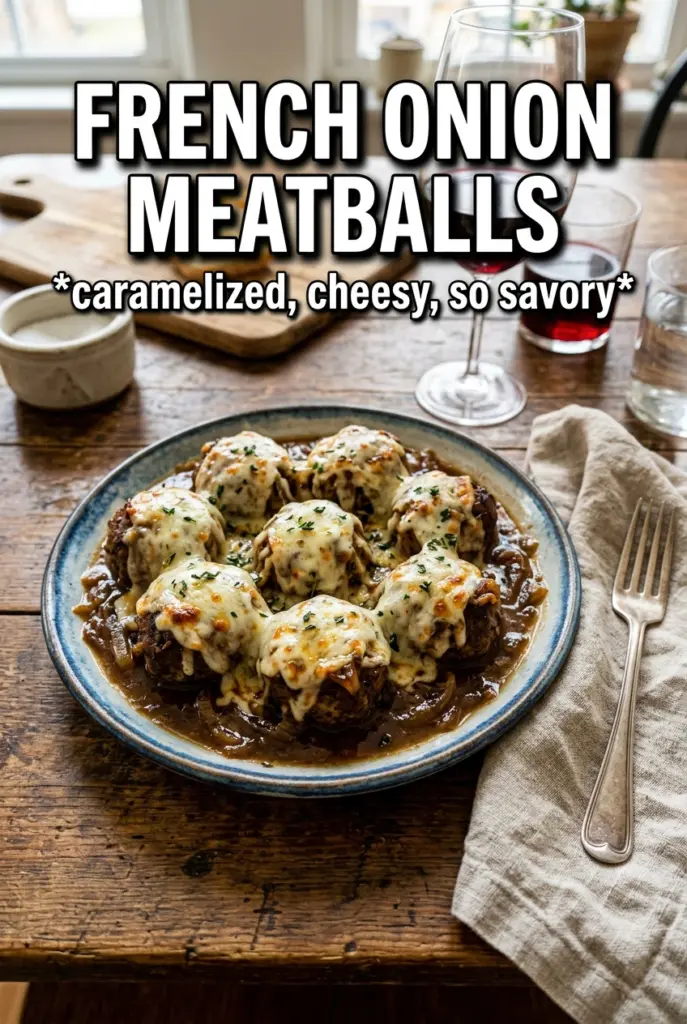
French onion meatballs hit that sweet spot between cozy and a little dramatic: browned beef meatballs tucked into a deep onion gravy, then finished under a blistered lid of Gruyere. The onions turn silky and sweet, the sauce clings to the meatballs instead of pooling around them, and the cheese pulls everything together into one spoonable, bubbling dish. It feels like classic French onion soup got turned into a proper dinner.
What makes this version work is patience with the onions and restraint with the meatballs. The onions need time to lose their sharp edge and go amber, not just soft, because that deep caramelized flavor is the backbone of the whole dish. Browning the meatballs first gives you better texture and leaves fond in the pan, which seasons the sauce as it comes together. Once the broth goes in, the goal is a sauce that tastes rich and savory without getting muddy or thin.
Below you’ll find the exact cues I watch for so the onions don’t scorch, plus the cheese swap I reach for when Gruyere isn’t in the fridge. The little details matter here, and they’re the difference between good meatballs and a pan you’ll keep thinking about all week.
The onions took their full time but never burned, and the sauce got thick and savory enough to coat the meatballs. My husband went back for seconds and asked if I could make it again with mashed potatoes next time.
Save these French Onion Meatballs for the night you want caramelized onions, beefy sauce, and a melted Gruyere top in one pan.
The Part Most People Rush: Turning Onions Deep and Sweet Without Burning Them
The onions are the backbone here, and they need enough time to move past soft and pale into dark gold. That’s where the flavor lives. If you crank the heat to get there faster, the sugars catch before the onions collapse, and you end up with bitter bits instead of a glossy sauce.
Use medium-low heat and keep stirring often enough that nothing sticks in one hot spot. A splash of wine or broth at the end of the caramelizing stage lifts the browned bits from the pan and pulls that flavor into the sauce. If the onions look dry before they’re fully colored, add a small knob of butter, not more heat.
What Each Ingredient Is Actually Doing in This Dish

- Ground beef — Use 80/20 if you can. Leaner beef can work, but it gives you drier meatballs and less richness in the finished sauce.
- Breadcrumbs and egg — These hold the meatballs together and keep them tender. Don’t skip both, or the meatballs tighten up and break apart once they simmer in the sauce.
- Worcestershire — This is doing a lot of the savory heavy lifting. It adds depth to the meatballs and the sauce, and there isn’t a substitute that quite matches its tangy, concentrated flavor.
- Onions — Three large onions may look excessive at first, but they cook down to the amount you need. Yellow onions are the best choice because they caramelize evenly and bring the right balance of sweetness and bite.
- Dry white wine or beef broth — Wine gives the sauce a little lift and brightness. If you use broth instead, the dish turns deeper and rounder, which is still excellent; just expect a less sharp finish.
- Gruyere or provolone — Gruyere melts with that classic nutty pull, while provolone gives you a smoother, milder finish. Pre-shredded cheese works in a pinch, but freshly shredded melts more cleanly and blankets the top better.
Building the Sauce So It Stays Rich, Not Watery
Browning the Meatballs First
Roll the meatballs into even 1.5-inch balls so they cook at the same pace. Brown them in butter until you get a deep crust on at least two sides; you’re not cooking them through yet, just building flavor and setting the shape. If the pan seems crowded, work in batches. Packed meatballs steam, and steamed meatballs don’t brown.
Caramelizing the Onions Without Rushing Them
Use the same skillet and go straight into the onions so all those browned bits stay in the dish. The onions should soften first, then slowly turn golden, then a deeper brown at the edges as they cook down. If they start catching on the bottom, lower the heat and add a splash of water or broth to loosen the fond before it scorches.
Simmering the Meatballs in the Onion Broth
Once the wine or broth goes in, scrape the pan well and let the liquid reduce slightly before the meatballs return. This keeps the final sauce from tasting thin. Simmer gently for about 15 minutes; a hard boil will toughen the meatballs and make the sauce separate instead of settle into that glossy, spoon-coating texture.
Broiling the Cheese to the Right Point
Transfer everything to a baking dish if your skillet isn’t oven-safe, then cover the top generously with cheese. Broil just until the cheese is melted, bubbling, and browned in spots. Stay close to the oven, because the jump from golden to scorched happens fast, especially once the cheese starts to blister.
Three Useful Ways to Bend This Recipe Without Breaking It
Make it gluten-free with one swap
Use gluten-free breadcrumbs in the meatballs and check that your Worcestershire is gluten-free. The texture stays close to the original, though the crumbs may look a little less bouncy when mixed. The finished dish still has the same rich onion-and-cheese payoff.
Use provolone for a milder, stretchier top
Provolone melts smoothly and gives you a lighter, creamier cheese blanket than Gruyere. You lose some nuttiness, but you gain a softer, more familiar flavor that works well if you’re serving people who like a gentler finish.
Turn it into a meal over mashed potatoes or toast
The sauce is thick enough to spoon over mashed potatoes, egg noodles, or toasted bread. That turns it from a skillet dinner into something closer to French onion meatball casserole territory, with every bit of the onion broth soaking into the base underneath.
Storage and Reheating
- Refrigerator: Store covered for up to 4 days. The onions soften a bit more as they sit, which actually helps the sauce taste even deeper the next day.
- Freezer: Freezes well without the cheese topping. Freeze the meatballs and onion sauce in an airtight container for up to 2 months, then add fresh cheese before broiling.
- Reheating: Reheat gently on the stove over low heat or covered in the oven at 325°F until hot. High heat can make the meatballs tough and cause the sauce to separate, so give it time instead of trying to rush it.
Questions I Get Asked About This Recipe
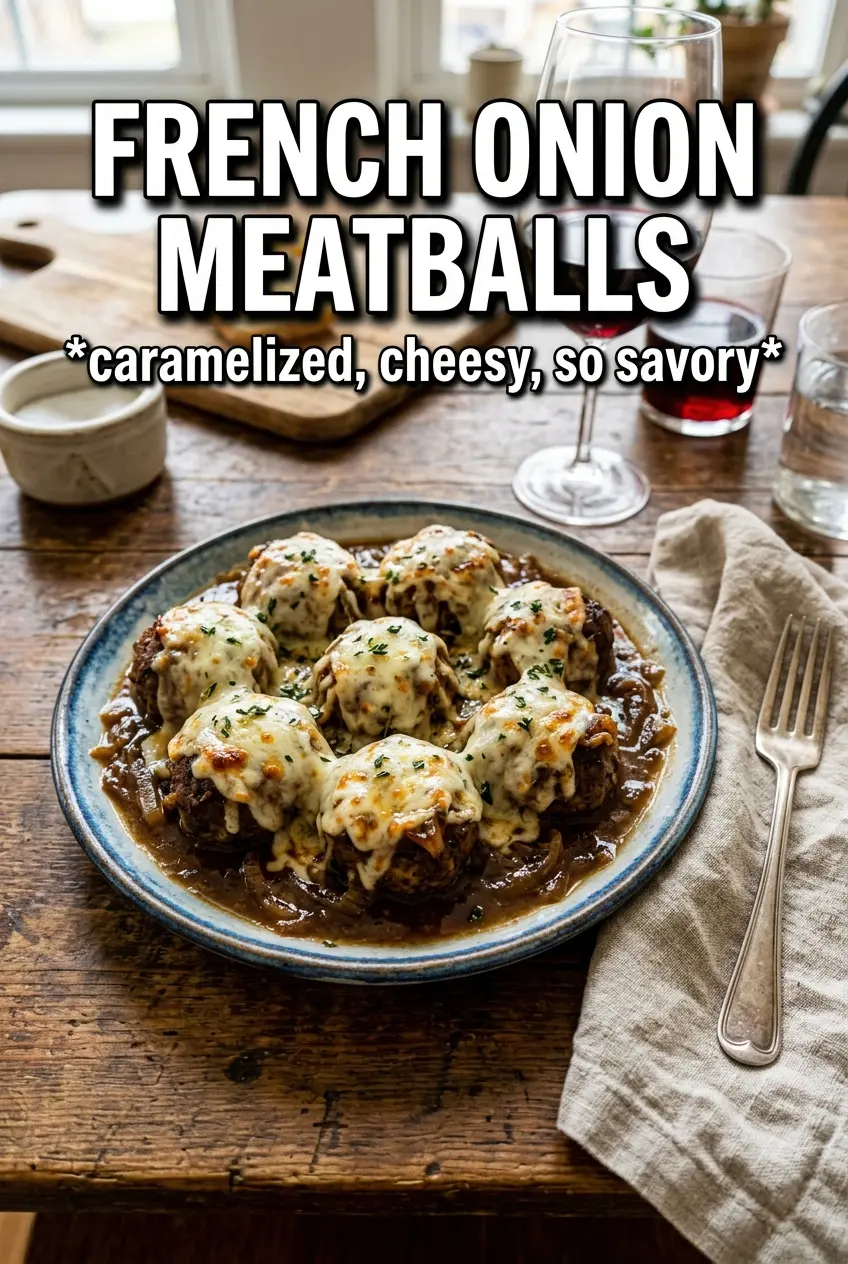
French Onion Meatballs
Ingredients
Equipment
Method
- Mix ground beef, breadcrumbs, egg, Worcestershire, garlic powder, onion powder, salt and pepper, then roll into 1.5-inch balls.
- Heat 2 tablespoons of butter in a skillet over medium-high heat and brown meatballs on all sides; transfer to a plate when browned.
- In the same skillet, melt remaining butter over medium-low heat, add sliced onions, and cook until caramelized, about 30-35 minutes, stirring occasionally until deep golden.
- Pour in the wine or beef broth to deglaze, scraping up browned bits from the pan, and cook 1-2 minutes until slightly reduced.
- Add beef broth, Worcestershire, and fresh thyme, stirring to combine.
- Return browned meatballs to the sauce and simmer until cooked through, about 15 minutes, so the onions become a silky broth.
- Transfer to a baking dish if needed, then scatter shredded Gruyère or provolone evenly over the top.
- Broil at 500°F (260°C) for 3-4 minutes until the cheese is golden and bubbly with crisp edges.