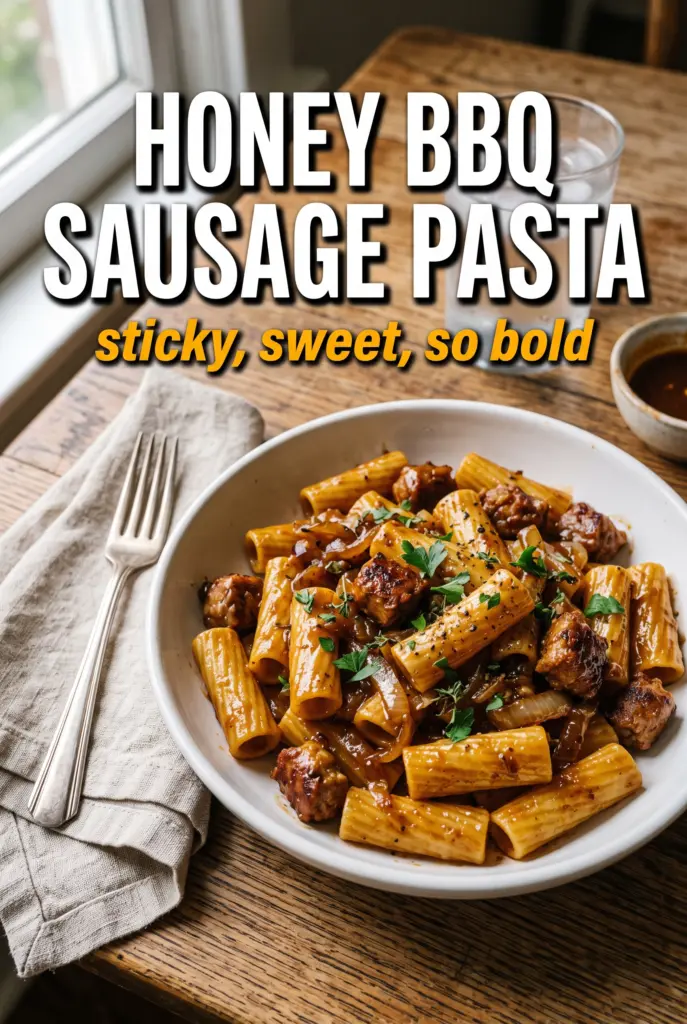
Sticky, smoky Honey BBQ Sausage Pasta hits the pan with caramelized sausage, a glossy sauce, and rigatoni that catches every bit of the sweet-savory coating. The best part is how the whole dish comes together without feeling heavy: the sauce clings, the onions melt into it, and the cheddar pulls everything into a creamy finish without drowning the BBQ flavor.
This version works because it treats the sausage like the main seasoning, not just another ingredient. Browning the slices first builds those dark edges that give the sauce depth, and the little bit of pasta water helps the BBQ mixture turn glossy instead of syrupy. Dijon matters here too; it keeps the honey from tasting flat and gives the sauce a sharper backbone.
Below, you’ll find the one timing detail that keeps the cheese smooth, plus a few smart swaps if you want to change the heat, the pasta shape, or the cheese.
The sauce got glossy fast and clung to the rigatoni instead of pooling at the bottom. I loved the little kick from the Dijon with the honey BBQ, and the sausage stayed caramelized even after everything was tossed together.
Save this Honey BBQ Sausage Pasta for the nights when you want sticky sauce, caramelized sausage, and one skillet that does the work.
The Reason the Sauce Stays Glossy Instead of Gritty
The biggest mistake with BBQ pasta is rushing the sauce after the sausage is browned. You need enough simmer time for the broth, honey, and BBQ sauce to cook down a little before the pasta goes in. That concentration matters; if you toss everything together too soon, the sauce stays thin and the cheese can clump instead of melting into a smooth finish.
The pasta water is the quiet fix here. It brings starch into the skillet, which helps the sauce cling to the rigatoni and keeps the whole dish from feeling greasy. Add it a splash at a time. You want a saucy skillet that coats the back of a spoon, not a loose puddle at the bottom.
What Each Ingredient Is Actually Doing in This Skillet
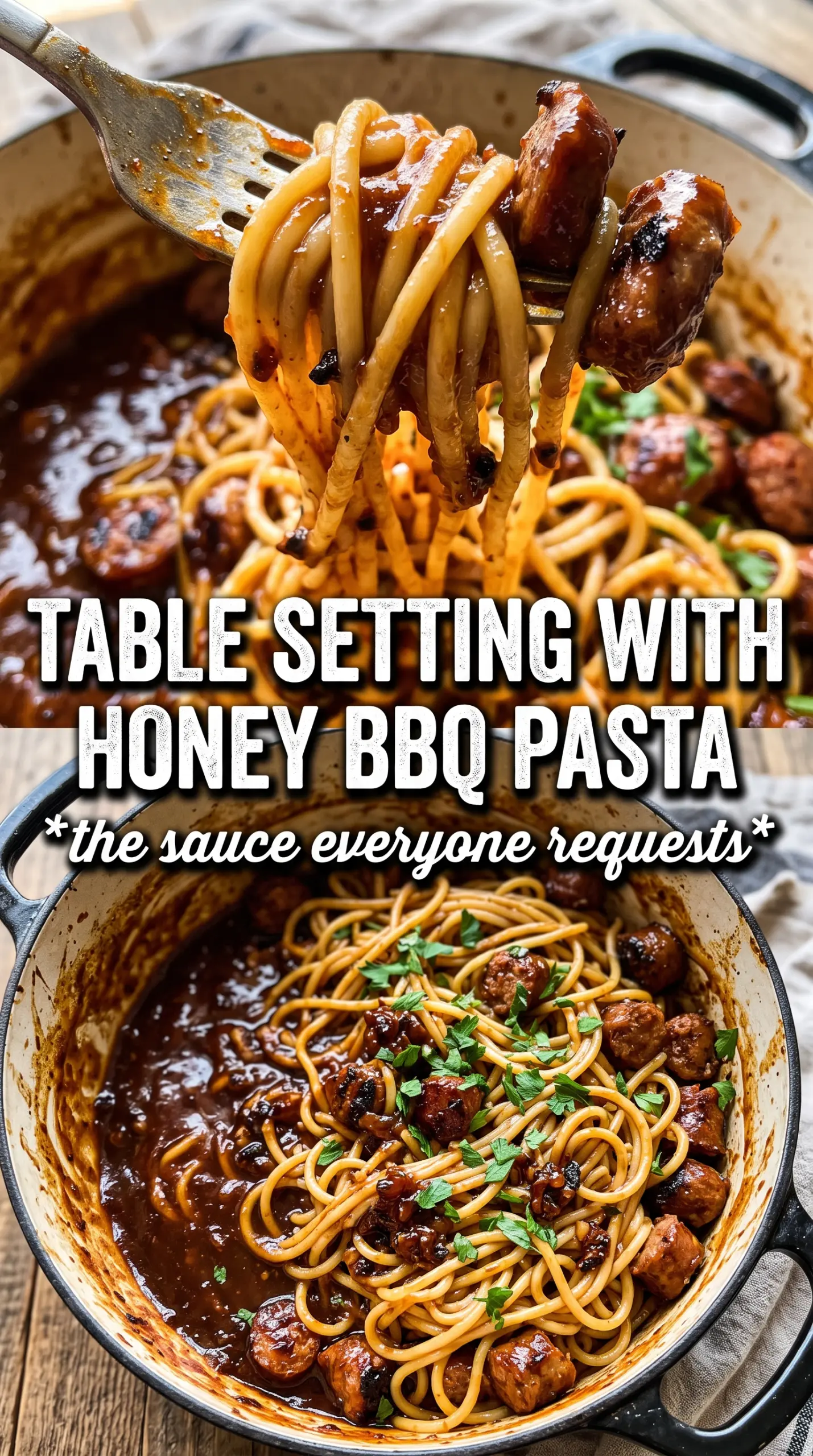
- Smoked sausage — This is where the deep savory flavor comes from. A fully cooked smoked sausage works best because it browns fast and gives you caramelized edges without needing a long cook. Turkey sausage can work, but it won’t give the same richness.
- Rigatoni — The ridges grab the sauce better than smoother pasta shapes. Penne is the closest substitute if that’s what you have, but rigatoni holds the glossy coating a little better and gives each bite more texture.
- BBQ sauce + honey — These build the sticky-sweet base. The honey pushes the glaze toward that lacquered finish, while the BBQ sauce supplies smoke, tang, and body. If your BBQ sauce is already very sweet, cut the honey back a bit so the dish doesn’t lean dessert-adjacent.
- Dijon mustard — This keeps the sauce from tasting one-note. It sharpens the sweetness and helps the sauce feel balanced instead of heavy. Yellow mustard will work in a pinch, but it tastes flatter and less polished here.
- Cheddar — Add it off the direct heat so it melts smoothly. Pre-shredded cheese can be used, but freshly shredded cheddar melts cleaner and gives you a silkier finish.
- Onion, bell pepper, garlic, and smoked paprika — These build the background flavor and give the skillet a little sweetness, a little savoriness, and a gentle smoky note. Let the garlic and paprika cook briefly, just until fragrant, so they bloom instead of turning bitter.
How to Build the Skillet So Nothing Breaks
Brown the sausage first
Start with the sausage in a hot skillet and give it time to develop color on both sides. You’re not just heating it through; you’re building the flavor that the sauce will lean on later. If the pan looks crowded, brown in two batches so the slices sear instead of steam. That caramelized edge is what keeps the final dish from tasting flat.
Cook the vegetables until they soften, not disappear
Once the sausage comes out, use the same skillet for the onion and bell pepper. They should soften and pick up a little color, but not collapse into mush. Add the garlic and smoked paprika at the end of this stage and stir for about a minute. If the garlic goes in too early, it can burn while the onions are still catching up.
Simmer the sauce before the pasta goes in
Whisk the BBQ sauce, honey, broth, and Dijon together, then let it simmer until it thickens slightly and looks shiny. That short simmer cooks off the raw edge from the broth and lets the flavors fuse. If it still looks thin after five minutes, give it another minute or two before adding the pasta. You want a sauce that lightly coats the spoon, not one that runs like dressing.
Finish with pasta water and cheese off the heat
Toss in the cooked rigatoni with a splash of reserved pasta water, then add the sausage back in. The starch helps the sauce cling and gives you a smoother texture. Turn the heat low or off before stirring in the cheddar. If the pan is too hot, the cheese can tighten up and turn grainy instead of melting into the sauce.
How to Adapt This for Different Pans, Preferences, and Leftovers
Gluten-Free Version
Use a sturdy gluten-free rigatoni and keep an eye on the pasta as it cooks, since it can go soft fast. The sauce itself is already gluten-free if your BBQ sauce is, but check the label because some brands hide wheat-based thickeners. Reserve the pasta water as usual; that starch helps the sauce hold together just as well.
Make It Creamier
Stir in an extra handful of cheddar or a splash of cream at the end if you want a richer finish. Cream softens the BBQ edge and gives the sauce a rounder texture, while extra cheese makes it cling harder to the pasta. Keep the heat low so the dairy stays smooth.
Swap the Sausage
Turkey sausage, andouille, or kielbasa all work, but each one changes the balance. Turkey sausage is lighter and needs a touch more salt. Andouille brings extra heat, while kielbasa gives a softer, less smoky finish. Brown any of them well before moving on.
Storage and Reheating
- Refrigerator: Store in an airtight container for up to 4 days. The sauce thickens as it chills, so expect the pasta to absorb some of it.
- Freezer: It freezes well for about 2 months, though the texture softens a bit after thawing. Cool it completely first and freeze in portions for easier reheating.
- Reheating: Warm it gently on the stovetop or in the microwave with a splash of broth or water. The common mistake is blasting it on high heat, which makes the cheese separate and the pasta dry out.