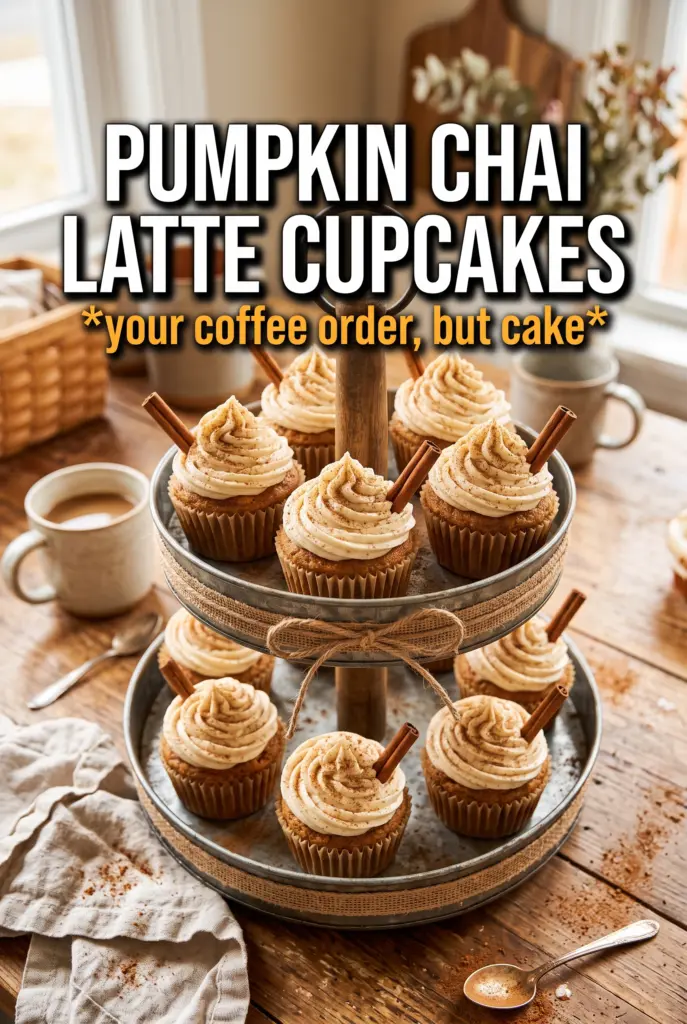
Vanilla chai pumpkin latte cupcakes bake up soft, tall, and warmly spiced with that plush pumpkin crumb people reach for before the tray has even cooled. The chai comes through in a way that tastes layered instead of sharp, and the vanilla frosting smooths out the spice without burying it. What you get is a cupcake that feels cozy and polished at the same time, with a tender crumb that holds its shape under a generous swirl of frosting.
The trick here is using strongly brewed chai tea in two places: inside the batter for a subtle tea flavor and again in the frosting for a clean, fragrant finish. Pumpkin puree adds moisture, but the batter still needs proper creaming so the cupcakes rise instead of baking up dense. The spice blend matters too; cinnamon, cardamom, ginger, and cloves work together like a real chai instead of a one-note pumpkin spice shortcut.
Below, I’ve included the small details that keep the cupcakes light, how to keep the frosting fluffy, and a few swaps that still preserve the chai-pumpkin balance.
The cupcakes stayed incredibly soft for two days, and the chai in the frosting gave them this bakery-style finish without tasting too sweet.
Save these vanilla chai pumpkin latte cupcakes for the days when you want a spiced pumpkin cupcake with a creamy chai frosting.
The Secret Is in the Brewed Chai, Not Just the Spice
Most pumpkin cupcakes lean on dry spice alone, which can taste flat once the cupcakes cool. The brewed chai changes that. It brings tea tannins, warm aromatics, and a softer finish that reads as chai instead of just cinnamon-heavy pumpkin. Using it in the batter and frosting gives you flavor in layers, not one big hit at the front.
The other detail that matters is the butter-and-sugar base. Creaming them until fluffy traps air, which gives the cupcakes lift even with pumpkin puree in the mix. If the batter looks a little thicker than a classic vanilla cupcake batter, that’s normal. It should scoop cleanly into the liners and bake into domed tops with a fine, tender crumb.
- Strongly brewed chai tea — Brew it hotter and stronger than you would for drinking, then cool it completely. Weak tea disappears in the batter, but a concentrated brew stays present without making the cupcakes wet.
- Pumpkin puree — Use plain pumpkin puree, not pumpkin pie filling. Pie filling brings extra sugar and spices that throw off both the structure and the flavor balance.
- Butter — This does the heavy lifting in both the cupcake and the frosting. For the cupcakes, softened butter creams into the sugar for lift; for the frosting, it needs to be soft enough to whip smoothly without turning greasy.
- Powdered sugar — This is what gives the frosting body. If you cut it too much, the chai buttercream will slide instead of piping into a clean swirl.
What Each Ingredient Is Actually Doing in This Recipe
- Primary ingredient (the star) — Quality matters most. Choose the best you can find.
- Cooking medium (oil, butter, or broth) — This carries flavors and prevents dryness.
- Seasonings (salt, pepper, spices, herbs) — Layer flavors so nothing overpowers. Build depth gradually.
- Aromatics (garlic, onion, herbs) — Cook with fat to bloom flavors. Become the foundation.
- Supporting ingredients — Complement the main ingredient without overpowering it.
- Sauce or liquid (if applicable) — Brings flavors together. Balance richness with acid.
- Acid (lemon, vinegar, wine, or other) — Brightens and prevents flat-tasting results.
- Final finish (garnish, glaze, or sauce) — Prevents one-dimensional taste and adds visual appeal.
Building the Batter So the Cupcakes Stay Light
Start with the dry mix
Whisk the flour, baking powder, baking soda, chai spice, and salt together before anything else. That keeps the leaveners and spices evenly distributed, which matters because pumpkin batter is thick enough to trap streaks if you rush it. You want the spice in every bite, not a pocket of cloves in one cupcake and a bland center in the next.
Cream for volume, not just until combined
Beat the butter and brown sugar until the mixture looks pale and fluffy, not just blended. That step builds the air that helps these cupcakes rise. If you stop too early, the crumb turns heavier and more pudding-like. Once the eggs go in, scrape the bowl well so the butter doesn’t stay stuck at the edges.
Fold in the wet ingredients gently
Add the pumpkin, cooled chai tea, and vanilla, then mix in the flour mixture just until you stop seeing dry streaks. Overmixing at this point tightens the crumb and makes the tops tunnel. Fill the liners about two-thirds full so the batter has room to dome without spilling over.
Watch for the set center
Bake until the tops spring back lightly and a tester comes out with only a few moist crumbs. If the tops look done but the center still sinks when touched, give them another minute or two. Let them cool completely before frosting or the buttercream will melt and slide off.
What the Chai Frosting Needs to Whip Properly
The frosting is simple, but the details matter. The chai tea should be reduced or at least strongly concentrated so it adds flavor without thinning the buttercream. If you pour in too much liquid, the frosting turns soft and hard to pipe. A teaspoon at a time is how you keep control.
- Reduced chai tea — This concentrates the tea flavor and keeps the frosting thick enough to hold peaks. If your chai is already strong from the brew step, simmer a little extra down until you have just the amount you need.
- Vanilla — Vanilla rounds out the spice and keeps the frosting from tasting like sweet butter with tea in it. It gives the cupcakes that latte-like finish.
- Cinnamon for the finish — A small amount in the frosting is enough. Too much cinnamon can take over and flatten the chai character, so let it accent instead of dominate.
Three Ways to Make These Cupcakes Fit Your Kitchen
Dairy-Free Version
Use a good plant-based butter in both the cupcakes and frosting. The texture stays close to the original, but the frosting may be a touch softer, so chill it briefly before piping. The flavor still lands, especially if your dairy-free butter has a neutral taste.
Gluten-Free Swap
A 1:1 gluten-free baking flour blend can work here if it already includes xanthan gum. The cupcakes may bake up slightly more delicate, so let them cool in the pan for a few minutes before moving them. That little pause keeps the tops from tearing.
Less Sweet Frosting
Reduce the powdered sugar a bit if you want a softer, less sweet topping, but stop before the frosting loses structure. You’ll get more butter-and-chai flavor and a slightly rustic finish instead of a tall bakery-style swirl.
Mini Cupcakes for a Crowd
Bake the batter in mini tins for bite-size cupcakes with the same chai-pumpkin balance. Cut the baking time down and start checking early, because mini cupcakes go from perfect to dry fast. They’re ideal when you want a softer frosting-to-cake ratio.
Storage and Reheating
- Refrigerator: Store frosted cupcakes in an airtight container for up to 4 days. The crumb stays moist, though the frosting firms up in the fridge.
- Freezer: Freeze unfrosted cupcakes tightly wrapped for up to 2 months. Thaw at room temperature before frosting so the buttercream doesn’t seize on a cold surface.
- Reheating: These are best served at room temperature, not warmed. If you refrigerate them, let them sit out until the frosting softens; microwaving will melt the frosting and make the crumb gummy.