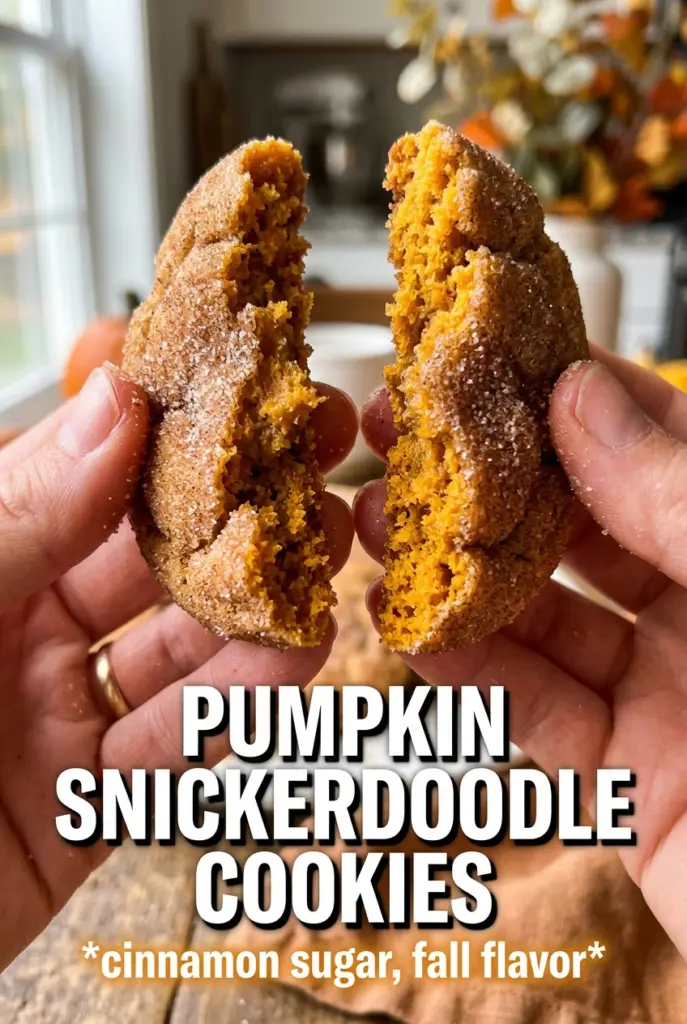
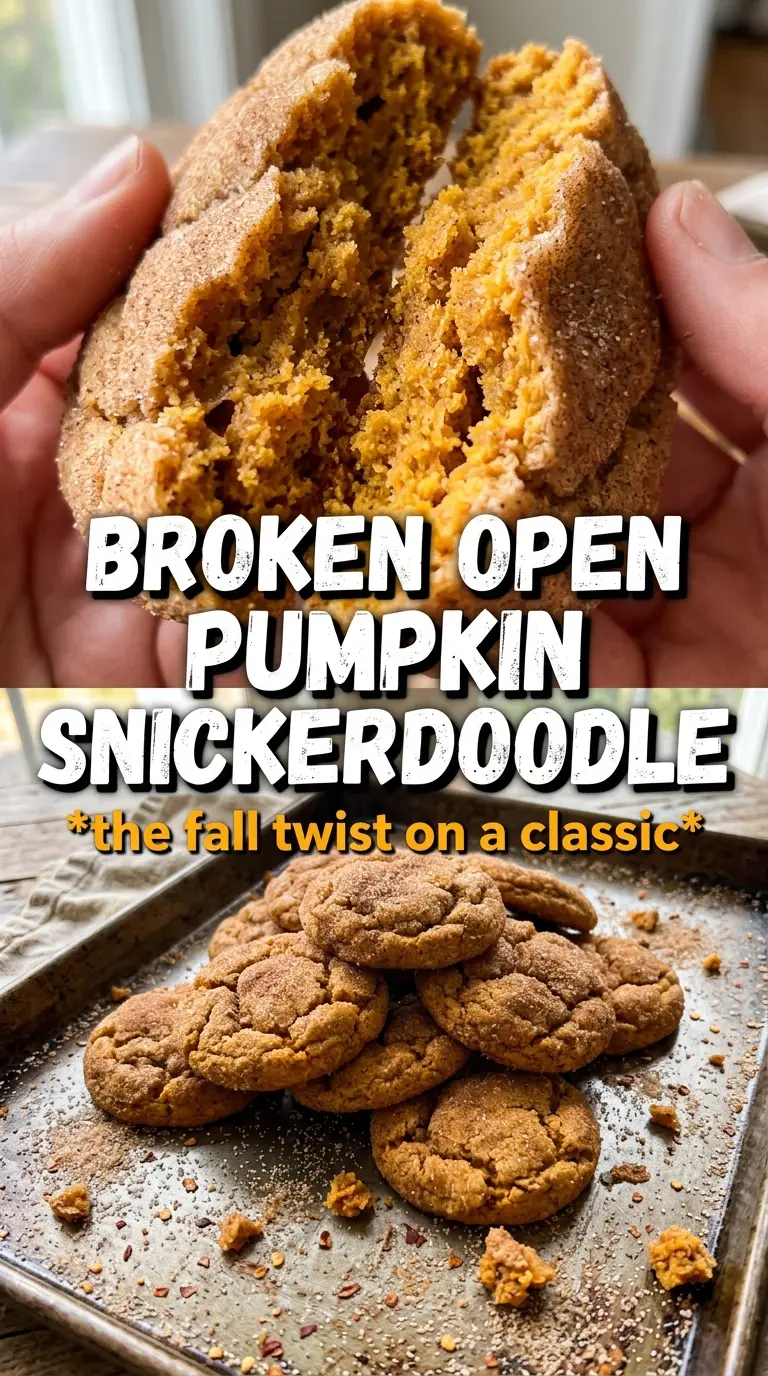
Warm pumpkin snickerdoodle cookies bake up soft in the center with crinkly tops, caramelized edges, and that familiar cinnamon-sugar shell that cracks just a little when you bite in. The pumpkin brings a gentle earthiness and a plush texture, but the cookies still keep the snickerdoodle personality that makes people reach for a second one before they’ve finished the first.
The trick is drying the pumpkin puree first. Pumpkin carries a lot of water, and if you stir it in straight from the can, the dough spreads too much and the edges stay cakey instead of set. Cream of tartar gives these cookies their classic tang and helps the tops wrinkle the way a good snickerdoodle should, while the spice blend keeps the pumpkin from tasting flat or one-note.
Below, I’ve included the one step that matters most for crisp edges, plus the small rolling trick that gives every cookie that evenly coated, bakery-style finish.
The pumpkin flavor came through without making the cookies cakey, and the cinnamon-sugar coating stayed crisp even the next day. I chilled the dough for 30 minutes and they baked up with those perfect crinkled tops.
Save these pumpkin snickerdoodle cookies for the days when you want soft centers, crinkled tops, and a cinnamon-sugar finish that stays snappy.
The pumpkin puree is what makes these cookies tricky
The biggest mistake with pumpkin snickerdoodles is treating the pumpkin like just another flavoring. It isn’t. Pumpkin puree adds moisture, and moisture changes the whole cookie: the dough gets softer, the cookies spread more, and the edges lose that clean, lightly crisp finish. Blotting the pumpkin on paper towels sounds fussy, but it makes the difference between a cookie that bakes up plush and one that turns slack.
Cream of tartar matters here too. It gives the cookies that classic snickerdoodle tang, but it also works with baking soda to encourage lift and those little crinkles on top. If you skip it, the cookies still taste fine, but they lose the sharp, recognizable snickerdoodle texture that sets them apart from a basic pumpkin sugar cookie.
- Blotted pumpkin puree — Use plain canned pumpkin, then press it between layers of paper towel until it looks noticeably drier. That one step keeps the dough manageable and helps the cookies bake with set edges instead of soft, damp ones.
- Cream of tartar — This isn’t a throwaway ingredient. It adds the tang snickerdoodles are known for and helps the cookies rise and crack in the oven.
- Butter at room temperature — Soft butter creams properly with the sugar, which gives you a lighter cookie. Cold butter won’t trap enough air, and melted butter will make the dough greasy and flat.
- The spice mix in the dough and the roll — Cinnamon, nutmeg, ginger, allspice, and pumpkin pie spice in the coating keep the pumpkin from tasting muted. The rolling sugar should be generous enough that every cookie gets a visible crust.
What each ingredient is doing in the dough
- All-purpose flour — This gives the cookies their structure without making them heavy. Spoon and level it instead of packing it into the cup, because too much flour will dry out the dough and mute the pumpkin.
- Butter — Unsalted butter lets you control the salt, and its flavor carries the cinnamon-sugar coating. If your butter is too soft, the dough can spread before the cookies set, so it should give slightly when pressed, not look oily.
- Egg — The egg binds the dough and adds enough richness to keep the cookies tender. A second egg would push them toward cake, so one is enough here.
- Pumpkin puree — Use plain puree, not pumpkin pie filling. Pie filling already contains sugar and spice, which throws off the balance and makes the cookies sweeter and softer than intended.
- Vanilla extract — Vanilla rounds out the spice and keeps the pumpkin from tasting one-dimensional. The amount here is modest, but you would notice if it were missing.
- Cinnamon-sugar coating — This is what gives the outside its snickerdoodle character. The little bit of pumpkin pie spice in the roll makes the crust smell warm as soon as the cookies hit the oven.
How to get the crinkle, the lift, and the soft center
Dry the pumpkin first
Lay the pumpkin puree between several layers of paper towel and press gently to pull out as much moisture as you can. You want it thick and paste-like, not watery. If you skip this, the dough turns loose and the cookies spread before they have a chance to set. This is the step that protects the edges.
Cream the butter and sugar until it looks lighter
Beat the butter and sugar until the mixture turns pale and fluffy, not just combined. That extra air helps the cookies puff slightly before they settle into those crinkled tops. Once the egg, vanilla, and pumpkin go in, the mixture may look a little curdled, and that’s normal. The flour brings it back together.
Stop mixing as soon as the flour disappears
Fold in the dry ingredients until no streaks remain, then stop. Overmixing develops the flour and makes the cookies tough, which is the opposite of what you want from a soft snickerdoodle. The dough should be sticky but scoopable. If it feels loose enough to slump off the spoon, chill it before shaping.
Roll generously and bake just until set
Use a shallow bowl for the cinnamon-sugar coating and press each dough ball in until it’s fully covered. Bake until the edges are set and the tops are crinkled, but the centers still look soft. They finish on the pan, so don’t wait for them to look dry in the oven or you’ll lose that tender middle.
Three ways to adjust these cookies without losing what makes them work
Dairy-free version
Swap the butter for a plant-based stick butter that’s meant for baking. Avoid tub-style spreads because they carry more water and can make the dough spread too much. The cookies will still be soft and spiced, though the flavor will be a little less rich.
Gluten-free adaptation
Use a 1:1 gluten-free baking flour with xanthan gum already included. The dough may need the full 30-minute chill, sometimes a little longer, because gluten-free flour blends often start softer. The cookies bake up a touch more delicate, but the pumpkin-spice crust still works.
Extra-spiced bakery style
Add another 1/4 teaspoon cinnamon to the dough if you want the spice to come through more strongly. That deepens the warm flavor without changing the texture, and it works especially well if your pumpkin puree tastes mild.
Storage and Reheating
- Refrigerator: Store in an airtight container for up to 5 days. The cinnamon-sugar coating softens a bit by day two, but the cookies stay tender.
- Freezer: Freeze baked cookies for up to 2 months, layered with parchment. You can also freeze the dough balls before rolling, then thaw just enough for the coating to stick before baking.
- Reheating: Warm baked cookies in a 300°F oven for 3 to 4 minutes. Don’t use the microwave unless you want a soft, almost damp texture.