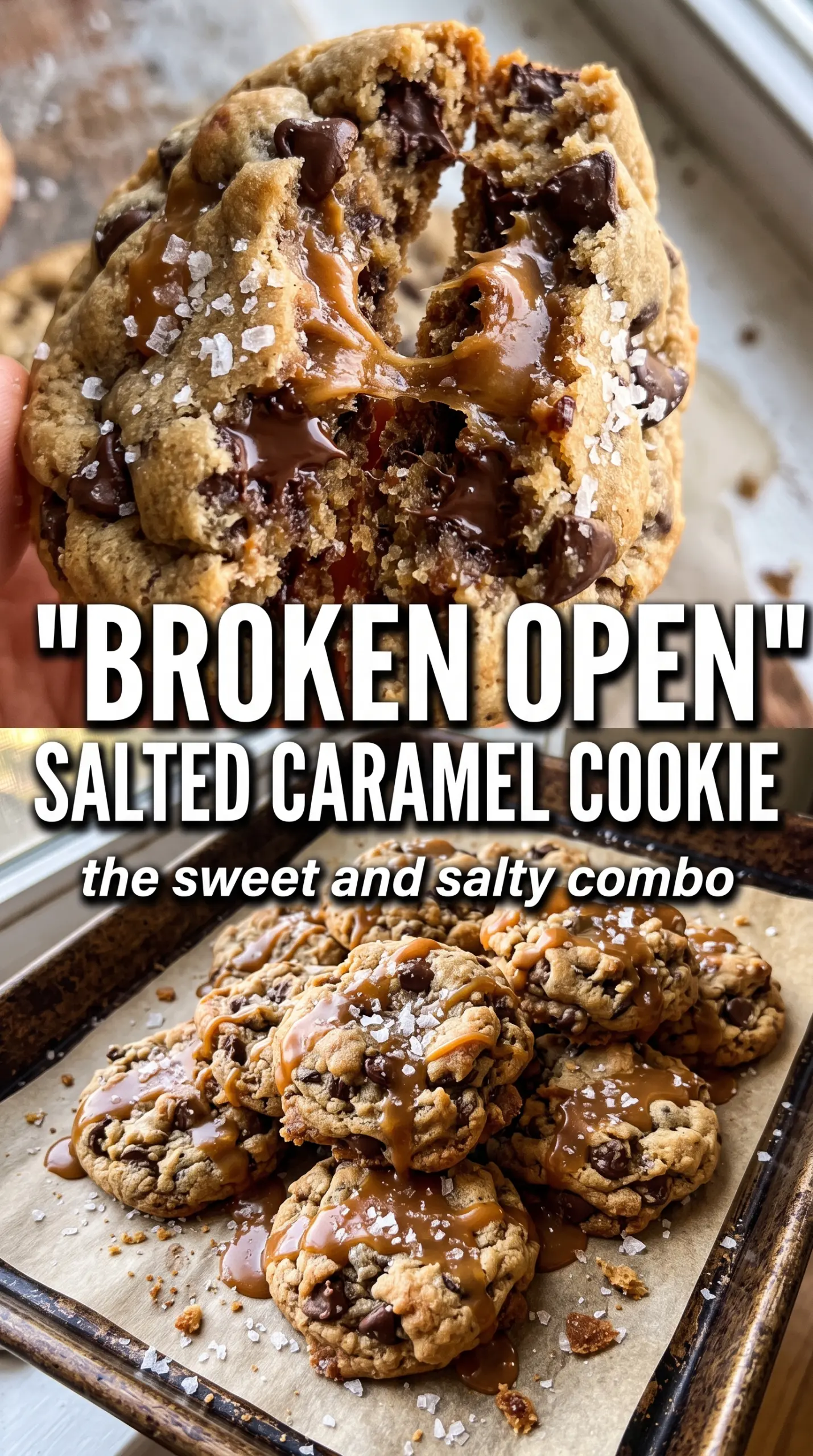
Salted caramel chocolate chip cookies earn their place fast: crisp edges, soft centers, melted chocolate, and little pockets of caramel that turn sticky and rich as they cool. The sea salt on top keeps the sweetness in check and gives each bite that bakery-style finish people notice right away.
What makes this version work is the balance. Cornstarch keeps the texture tender instead of dry or tough, while brown sugar brings chew and depth. The caramel bits need to be soft enough to fold in cleanly; hard caramel won’t melt the same way and can leave sharp little bits instead of those glossy pockets you want.
Below, I’ve included the timing cue that matters most, plus a couple of small tweaks that help the cookies stay thick, chewy, and full of caramel instead of spreading thin.
The centers stayed soft for days, and the caramel melted into those little gooey pockets instead of disappearing into the dough. I baked mine for 11 minutes and the salt on top was perfect.
Like these salted caramel chocolate chip cookies? Save them for the next time you want thick, chewy cookies with gooey caramel pockets and flaky sea salt on top.
The Trick to Keeping the Caramel in Pockets, Not the Dough
Caramel can disappear into cookie dough if it gets too warm or too finely chopped. The goal here is to keep distinct little pockets that melt into the cookie as it bakes, not a fully blended mass that turns the whole cookie sticky and flat. Soft caramel bits work best because they hold their shape long enough to survive the scoop and then melt into those glossy spots in the oven.
The other thing that matters is bake time. Pull these when the edges are set and the centers still look a little underdone. That slight underbake is what keeps the middle chewy after cooling, and it gives the caramel time to settle instead of overcooking into a hard candy texture.
What the Key Ingredients Are Doing Here
- All-purpose flour — This gives the cookie its structure without making it cakey. Weighing it helps, but if you measure by cups, fluff it first and level it off so you don’t pack in too much and end up with dry dough.
- Cornstarch — This is one of the small differences that keeps the texture soft and tender. It lightens the crumb just enough that the cookies stay chewy instead of turning dense.
- Brown sugar — This is where the chew and caramel-like depth come from. If you swap in more white sugar, the cookies spread more and lose that soft center.
- Soft caramel bits or chopped soft caramels — Use something that melts smoothly. Hard caramel candies stay too firm and can create sharp bites or uneven melting, while soft bits give you the gooey pockets these cookies are known for.
- Flaky sea salt — This isn’t garnish here. It sharpens the chocolate, cuts through the caramel, and makes the whole cookie taste more balanced instead of just sweeter.
How to Mix and Bake Them So the Centers Stay Chewy
Whipping the Butter and Sugars
Beat the butter with both sugars until the mixture turns pale and fluffy. That step traps air, which helps the cookies bake up thick instead of dense. If the butter is too warm and greasy, the dough won’t hold that structure, and the cookies will spread before the centers set.
Folding in the Dry Ingredients
Add the flour mixture and mix just until the dough comes together. Overmixing after the flour goes in builds toughness, and you can usually see it happen when the dough starts looking elastic instead of soft. Fold in the chocolate chips and caramel bits at the end so they stay evenly distributed without getting crushed.
Baking to the Right Finish
Scoop the dough into 2-tablespoon rounds and bake just until the edges look golden and the centers still look soft and slightly glossy. They’ll keep cooking on the hot pan, which is why the five-minute rest matters. If you wait until the centers look fully baked in the oven, the cookies will end up dry once they cool.
How to Adapt These Cookies Without Losing the Good Part
Use chocolate chunks instead of chips
Chunks melt into wider pools than chips, which gives the cookies a more bakery-style look and a softer chocolate bite. The tradeoff is a little less structure, so don’t overload the dough or the cookies can get messy as they bake.
Make them gluten-free
Use a cup-for-cup gluten-free flour blend that includes xanthan gum. The texture will be a little more delicate and less chewy than the original, but the caramel and chocolate still carry the cookie well.
Make them nutty without changing the base dough
Fold in up to 3/4 cup chopped toasted pecans or walnuts along with the chocolate chips. The nuts add crunch and a deeper toasted note, but they also compete with the caramel, so keep the amount moderate.
Storage and Reheating
- Refrigerator: Store in an airtight container for up to 5 days. The caramel stays soft, but the cookies firm up a bit as they chill.
- Freezer: Freeze baked cookies for up to 2 months, or freeze scooped dough balls and bake straight from frozen with 1 to 2 extra minutes.
- Reheating: Warm a baked cookie for 8 to 10 seconds in the microwave to loosen the caramel. Don’t overheat it or the chocolate will get greasy and the caramel can turn hard around the edges.
Questions I Get Asked About This Recipe

Salted Caramel Chocolate Chip Cookies
Ingredients
Equipment
Method
- Preheat the oven to 375°F and line baking sheets with parchment.
- Whisk the all-purpose flour, baking soda, cornstarch, and salt until evenly combined.
- Beat the softened unsalted butter, brown sugar, and granulated sugar until very light and fluffy.
- Add the eggs one at a time, then mix in the vanilla extract.
- Fold in the flour mixture until no dry streaks remain.
- Fold in the semi-sweet chocolate chips and soft caramel bits or chopped soft caramels.
- Scoop the dough into 2-tablespoon rounds and place them on the prepared sheets.
- Bake for 10–12 minutes at 375°F until the edges are golden but the centers still look slightly underdone.
- Immediately press extra semi-sweet chocolate chips and caramel onto the tops if desired.
- Sprinkle generously with flaky sea salt, then cool on the pan for 5 minutes.