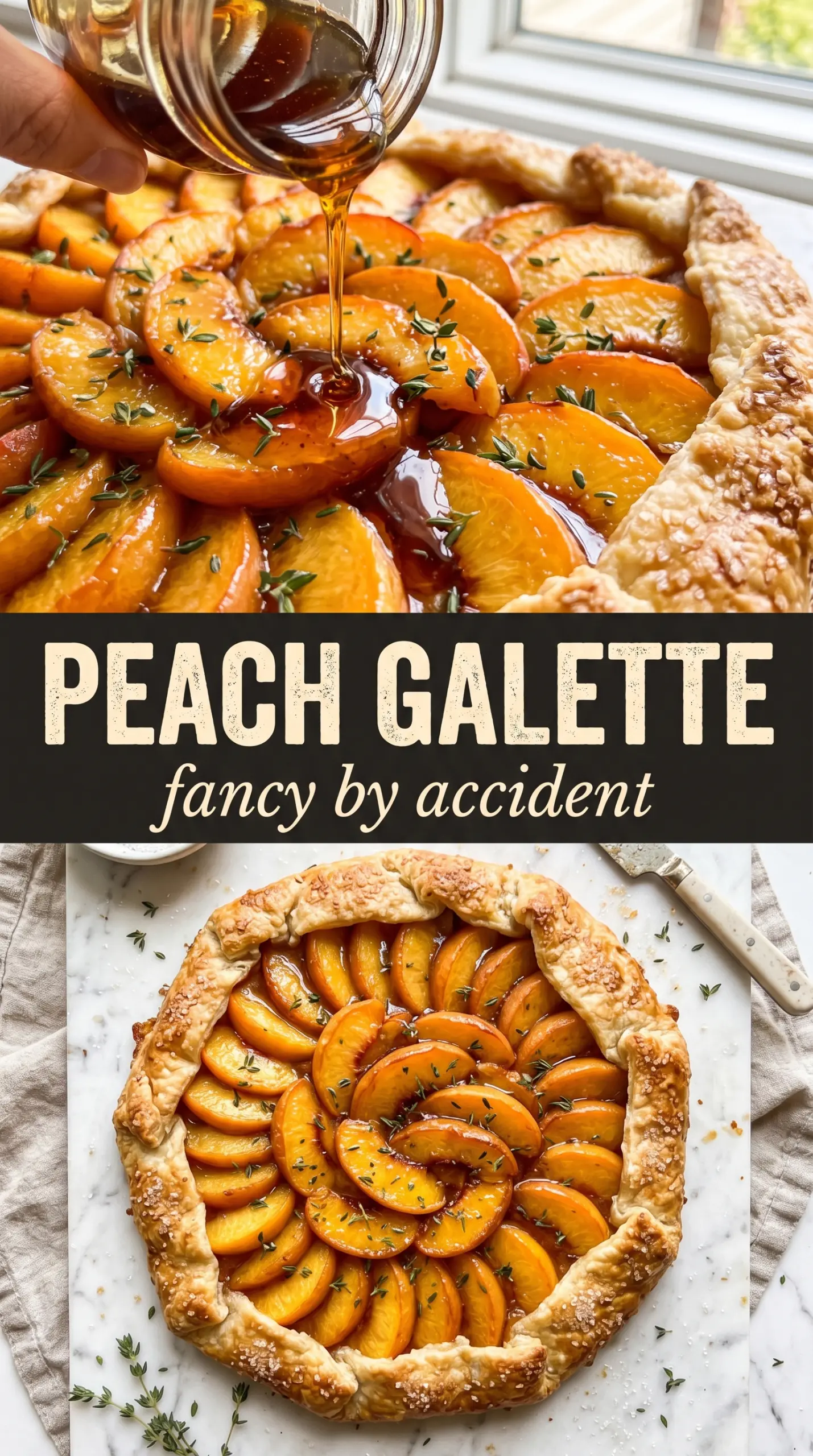
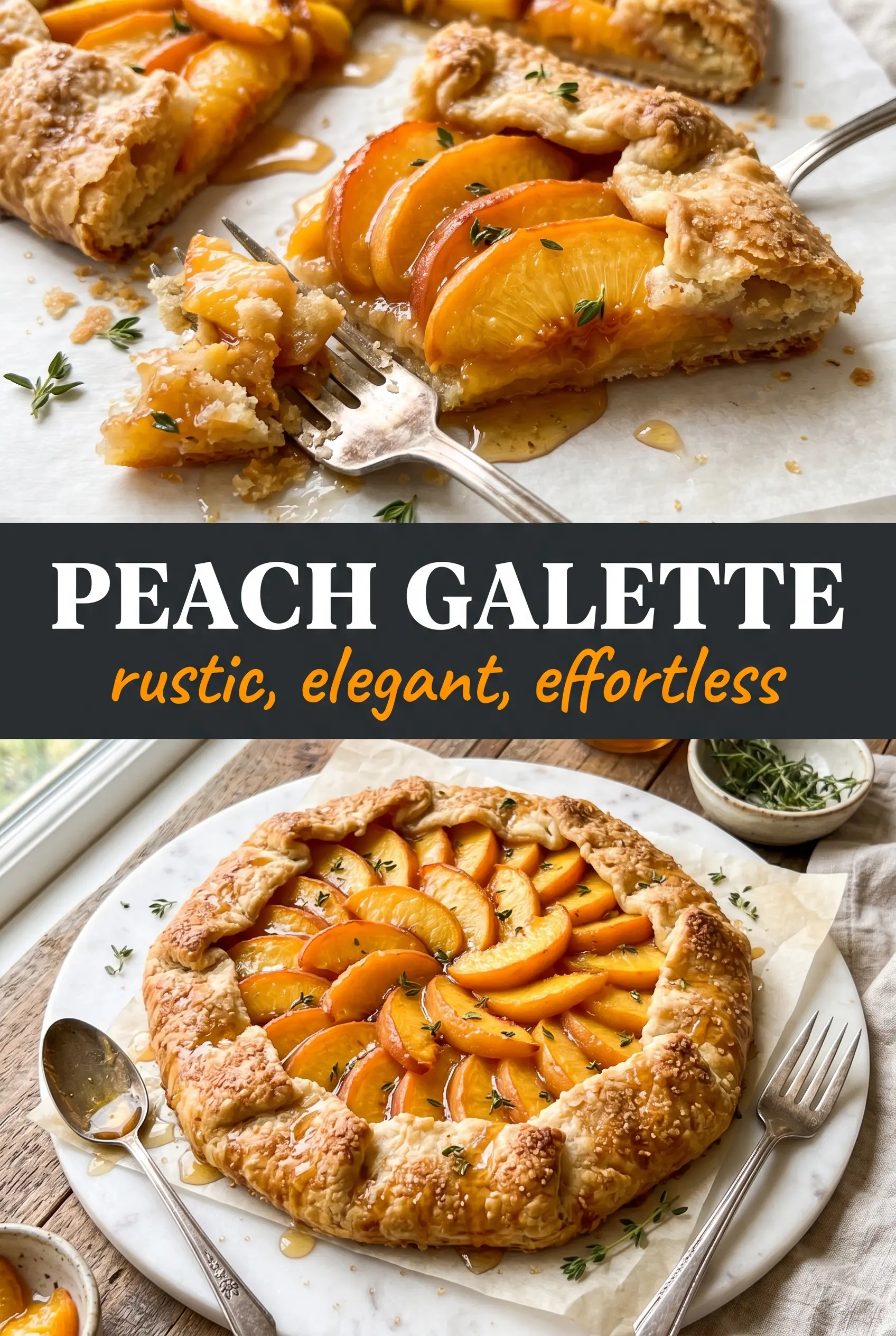
Flaky, juicy, and just rustic enough to feel effortless, a peach galette gives you all the payoff of pie without the fussy crimping or blind baking. The crust bakes into shattering layers under a fan of peaches that slump into their own syrup, and the edges turn deeply golden before the fruit dries out. It’s the kind of dessert that looks casual on purpose, which is exactly why it works so well.
The trick is keeping the butter cold and the dough handled only until it barely comes together. That short chill before rolling gives the gluten time to relax, so the crust bakes tender instead of tough. The filling also needs a little structure: cornstarch catches the peach juices before they run all over the pan, and a brush of apricot jam or honey at the end gives the fruit a glossy finish that tastes as good as it looks.
Below, you’ll find the small details that keep the bottom from turning soggy, plus a few easy ways to adapt this galette when peaches are at their best or when you need to work with what’s in the kitchen.
The crust came out shattery and the peaches held their shape instead of turning mushy. I brushed the jam on while it was hot and it gave the whole galette that bakery look.
Save this peach galette for the day you want a flaky crust, syrupy peaches, and a dessert that looks impressive with almost no fuss.
The Reason Peach Galettes Stay Crisp When Other Fruit Pies Go Soft
The biggest mistake people make with a galette is treating it like a free-form dump-and-bake pie. Peaches release a lot of juice, and if the filling sits too long before baking, that juice soaks straight into the dough. The answer is to keep the peaches coated with cornstarch and get the assembled galette into the oven while the butter in the crust is still cold.
Rolling the dough on parchment helps too. You can lift the whole thing onto a sheet pan without stretching it, and stretched dough shrinks back hard in the oven. That loose fold-up border is there for structure, but it also gives the filling a shallow bowl so the juices stay contained while the edges puff and brown.
What Each Ingredient Is Actually Doing in This Peach Galette
- All-purpose flour — This gives the crust enough structure to fold without cracking, but it still bakes tender. A pastry flour will make it a little softer; all-purpose is the best balance for a galette that needs to hold juicy fruit.
- Cold unsalted butter — This is what creates the flaky layers. If the butter softens before it hits the oven, the crust turns sandy instead of crisp, so cube it first and keep it cold right up until you cut it in.
- Ice water — You only need enough to bring the dough together. Too much water makes the crust tougher, and a shaggy dough that just holds when squeezed is exactly right.
- Fresh peaches — Ripe peaches matter here because they soften and caramelize in the oven, but they shouldn’t be collapsing before they go in. If your peaches are very juicy, let them sit with the sugar mixture for a few minutes, then drain off a spoonful of excess liquid before filling the crust.
- Cornstarch — This is the insurance policy against a watery center. It thickens the peach juices as the galette bakes, so the filling stays glossy instead of sliding apart.
- Lemon juice — It wakes up the peaches and keeps the filling from tasting flat. Don’t skip it; peaches need acid to taste like themselves once they’ve been heated.
- Turbinado sugar — This is for the crust edges, where it melts into a crunchy finish. Regular sugar works in a pinch, but turbinado gives you that little crackle when you bite in.
- Apricot jam or honey — The glaze goes on after baking and adds shine without making the crust soggy. Apricot jam is a little more classic and tart; honey is softer and more floral.
Building the Galette So the Bottom Stays Flaky and the Fruit Stays Put
Mixing the Dough Without Overworking It
Start with the flour, sugar, and salt, then cut in the cold butter until you have pea-sized pieces with some larger flakes still visible. Those bigger bits are what melt into steam pockets and create layers. Add the ice water a tablespoon at a time and stop as soon as the dough clumps when pressed; if you keep mixing until it looks smooth, the crust will bake up tough.
Shaping the Fruit Without Flooding the Center
Toss the sliced peaches with sugar, cornstarch, cinnamon, and lemon juice, then build the galette quickly. The mixture should look glossy, not soupy. Fan the slices in the center and keep the border clear so you have room to fold; if fruit juices run onto the edge before baking, they can glue the dough to the parchment and keep it from lifting properly.
Baking Until the Crust Is Deeply Golden
Brush the folded crust with egg wash and shower it with turbinado sugar, then bake until the pastry is deeply golden and the peach juices are bubbling in the center. Pale crust means underbaked butter, and underbaked butter means a soft bottom. If the edges are browning too fast before the center is done, tent them loosely with foil for the last few minutes.
Finishing With Shine
Warm the apricot jam or honey just enough to brush easily, then glaze the peaches while the galette is still hot. That final layer catches the light and makes the fruit taste fuller. Let it cool for at least 15 minutes before slicing, or the filling will run all over the pan instead of settling into neat slices.
Three Ways to Make This Peach Galette Fit What You Have
Use gluten-free flour for the crust
A good 1:1 gluten-free baking blend can work here, but the dough will be a little more delicate and may crack at the edges. Chill it well, roll it between parchment sheets, and expect a slightly more tender crust rather than the same shattery snap you get with wheat flour.
Swap in nectarines or plums
Nectarines behave almost exactly like peaches, so the method stays the same. Plums give you a deeper, tarter filling, but they can release more juice, so keep the cornstarch and don’t overload the center with fruit.
Make it dairy-free
Use a solid plant-based butter that’s meant for baking. The crust won’t taste exactly the same, but you’ll still get the layered texture as long as the substitute stays cold and firm enough to cut into the flour.
Storage and Reheating
- Refrigerator: Store covered for up to 3 days. The crust softens a little from the peach juices, but it still tastes great.
- Freezer: Freeze the baked galette wrapped tightly for up to 1 month. Thaw in the fridge overnight; the fruit will be a little softer after freezing, so this works best for leftovers rather than the original presentation.
- Reheating: Warm slices in a 325F oven for 10 to 12 minutes. The microwave makes the crust limp and steamy, which is the fastest way to lose the texture you worked for.
Questions I Get Asked About This Peach Galette
Peach Galette
Ingredients
Equipment
Method
- Combine all-purpose flour, sugar, and salt, then cut in cold unsalted butter until pea-sized crumbs form with a sandy texture.
- Add ice water 1 tablespoon at a time and mix just until the dough comes together, avoiding overworking.
- Wrap the dough and refrigerate for 30 minutes so it firms up for a flaky foldable crust.
- Toss sliced fresh peaches with granulated sugar, cornstarch, cinnamon, and lemon juice until the peaches look coated and glossy.
- On parchment paper, roll the dough into a rough 12-inch circle and transfer it to a baking sheet.
- Fan the peaches in the center, leaving about a 2-inch border so the filling stays contained.
- Fold the dough edges up and over the peaches, pleating as you go for a rustic shape.
- Brush the folded crust with beaten egg and sprinkle turbinado sugar over the edges for crunch and color.
- Bake at 400°F for 35-40 minutes until the crust is deeply golden and the peaches are caramelized, with syrup pooling beneath.
- Warm apricot jam or honey and brush it over the hot peaches for a glaze, then cool for 15 minutes before serving.