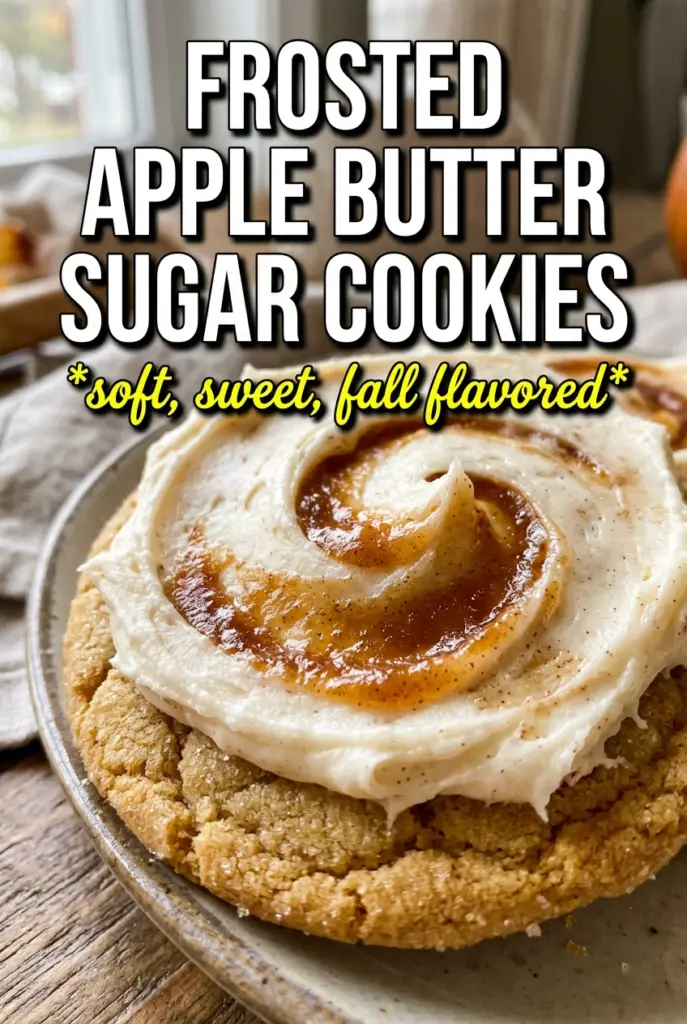
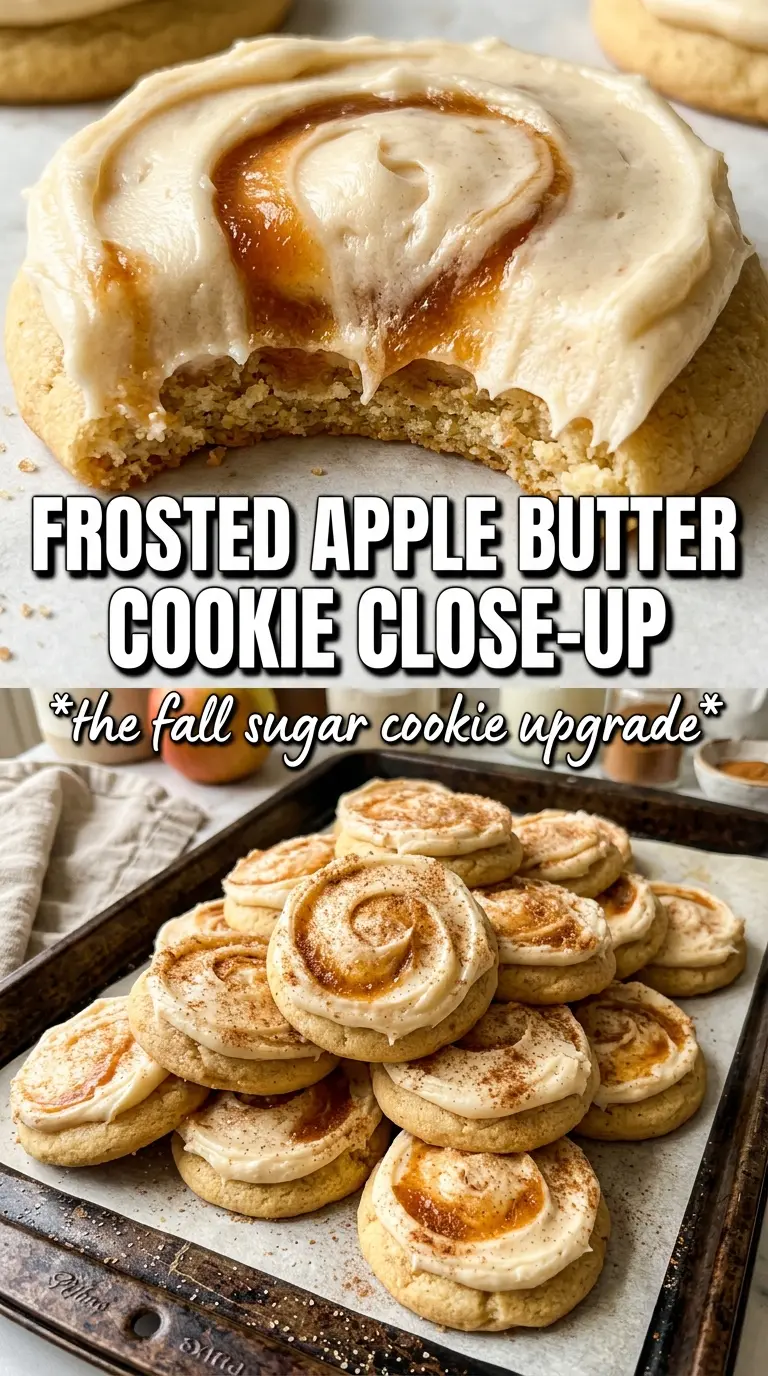
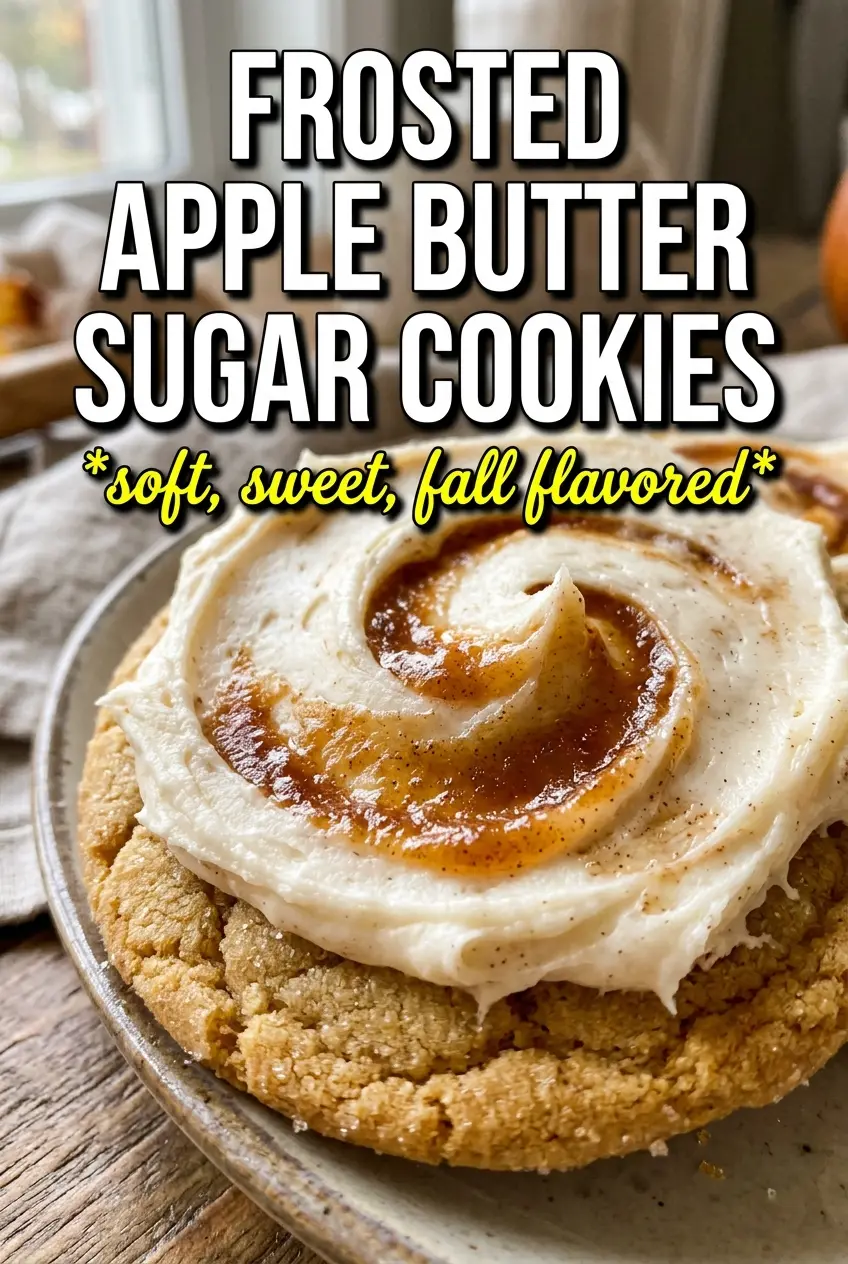
Frosted apple butter sugar cookies bake up soft in the middle with gently crisp edges, then get finished with a tangy cream cheese frosting that tastes like apple pie in cookie form. The apple butter does more than add flavor here; it gives the dough a deeper color and a mellow fruit note that keeps the cookies from tasting plain. Once they’re frosted, the cinnamon sugar and caramel drizzle make each bite land somewhere between a holiday cut-out cookie and a bakery-style dessert.
The dough is built to roll cleanly after a short chill, which keeps the cookies from spreading too much and losing their shape. Creaming the butter with the sugar and apple butter first helps the dough stay tender, while a little cinnamon in both the cookie and the frosting ties everything together without making the spice feel heavy. The frosting stays smooth because the cream cheese and butter are softened before the powdered sugar goes in, so it spreads instead of tearing the cookies.
Below, I’ve included the small details that matter most, from getting the dough easy to handle to keeping the frosting thick enough to hold its shape. If you’ve ever had cut-out cookies turn puffy, dry, or bland, this version fixes all three problems.
The dough rolled out without sticking after the chill, and the cookies stayed soft with just enough edge to hold the frosting. The apple butter flavor came through even after baking, and the caramel drizzle made them taste like a cross between a sugar cookie and apple pie.
Save these frosted apple butter sugar cookies for the days when you want soft cut-outs with cream cheese frosting and a caramel finish.
The Chill That Keeps These Cookies from Spreading
Most cut-out sugar cookies fail in the oven because the dough starts too warm. When that happens, the edges slump before the centers set, and you lose the clean shape you worked for. The hour in the fridge firms up the butter and gives the flour time to hydrate, which makes the dough easier to roll and helps the cookies bake with neat edges instead of turning into puffy blobs.
The other thing working in your favor here is the apple butter. It adds moisture, but not so much that the dough gets sticky if you chill it properly. If your dough feels soft after mixing, that’s normal. Don’t add extra flour too early or the cookies will bake up dry and blunt tasting.
- Chilling the dough — This is the step that protects the shape. If the dough feels tacky after mixing, wrap it and chill it until it rolls without dragging on the counter.
- Rolling to 1/4-inch thickness — Thicker dough gives you a softer center and a better frosting-to-cookie ratio. Go thinner and they’ll bake up more like crisp tea cookies.
- Baking just until set — Pull them when the edges look set and the centers still look pale. They finish on the pan, and that’s what keeps them tender.
What the Apple Butter and Cream Cheese Are Really Doing Here
- Apple butter — This is the ingredient that gives the cookies their personality. It brings concentrated apple flavor and a little extra moisture, so the cookies taste fuller than plain sugar cookies. Applesauce won’t do the same job; it’s thinner and gives a different texture.
- Butter — Use unsalted butter so you control the salt level. Softened butter creams smoothly and traps air, which helps the cookies bake up light instead of dense.
- Cream cheese — The frosting needs the tang and body of cream cheese to balance the sweetness. A plain buttercream would be too one-note here. Let it soften fully so the frosting turns silky instead of lumpy.
- Powdered sugar — This thickens the frosting without making it gritty. Add it gradually so you can stop at spreadable, not stiff; too much and the frosting turns heavy and pasty.
- Cinnamon — There’s cinnamon in both the dough and the frosting for a reason. It keeps the apple butter from tasting flat and makes the whole cookie read as one complete dessert instead of two separate parts.
Rolling, Baking, and Frosting Without Losing the Shape
Mix the Dough Until It Just Comes Together
Cream the butter, sugar, and apple butter until the mixture looks smooth and a little fluffy, then add the egg and vanilla. Once the dry ingredients go in, mix only until you stop seeing streaks of flour. If you overmix here, the cookies can turn tough and a little bready instead of soft and tender.
Chill Before You Cut
Cover the dough and refrigerate it for an hour. That rest is what makes the dough cooperative on the counter and keeps the cut shapes sharp in the oven. If the dough warms up while you roll it, slide it back into the fridge for 10 to 15 minutes before cutting more cookies.
Bake Until the Edges Set
Roll the dough to 1/4-inch thickness and cut your rounds or apple shapes, then bake at 350°F for 8 to 10 minutes. You’re looking for edges that are just set and tops that still look pale, not browned. If they color deeply in the oven, they’ll cool dry, and you’ll lose that soft sugar cookie bite.
Frost After Cooling Completely
Beat the frosting ingredients until smooth and spreadable, then wait until the cookies are fully cool before you spread it on. Even a little warmth will melt the frosting and make it slide off the cookie. Finish with cinnamon sugar and a light caramel drizzle so each cookie gets that sweet, spiced top note without becoming messy.
How to Change These Cookies for Different Kitchens and Crowds
Dairy-Free Version
Swap in a plant-based butter for the dough and frosting, and use a dairy-free cream cheese that’s meant for baking. The cookies will still hold their shape, but the frosting may be a touch softer, so chill it for 10 minutes before spreading if needed.
Gluten-Free Cut-Out Cookies
Use a 1:1 gluten-free flour blend that includes xanthan gum. The dough may be a little more delicate when rolling, so chill it fully and roll between two sheets of parchment to keep it from cracking.
Extra Cinnamon, Less Caramel
If you want the apple butter to lead, skip the caramel drizzle and use a heavier dusting of cinnamon sugar instead. The cookies will taste a little less rich and sticky-sweet, which works well if you’re serving them with coffee or packing them for a lunch treat.
Storage and Reheating
- Refrigerator: Store frosted cookies in an airtight container for up to 5 days. The frosting stays soft, and the cookies get a little more tender by day two.
- Freezer: Freeze the unfrosted baked cookies for up to 2 months. Layer them with parchment so the tops don’t stick, then thaw at room temperature before frosting.
- Reheating: These don’t need reheating. If you want the cookies a little softer, let them sit at room temperature for 20 to 30 minutes before serving instead of warming them, which can melt the frosting.
Questions I Get Asked About This Recipe
Frosted Apple Butter Sugar Cookies
Ingredients
Equipment
Method
- Beat the softened butter, granulated sugar, and apple butter until smooth, then add the egg and vanilla extract and beat again until combined. Scrape down the bowl so no streaks remain.
- Fold in the all-purpose flour, baking powder, salt, and cinnamon just until no dry flour shows. Stop mixing as soon as the dough comes together to keep it tender.
- Refrigerate the dough for 1 hour while you prepare to bake. This firms the dough for cleaner cut-outs.
- Preheat your oven to 350°F while the dough finishes chilling. Line a sheet pan so the cookies bake without sticking.
- Roll the chilled dough to about 1/4-inch thickness and cut into rounds or apple shapes. Keep the thickness even for uniform bake time.
- Bake at 350°F for 8-10 minutes until the edges are just set. You should still see soft centers when you pull the pan.
- Cool the cookies completely before frosting. This prevents the frosting from melting or sliding off.
- Beat the cream cheese, unsalted butter, apple butter, powdered sugar, and cinnamon until smooth and spreadable. Add 2-3 tablespoons milk as needed to reach a thick but spreadable consistency.
- Frost each cooled cookie, then dust with cinnamon sugar and drizzle with caramel. Let the frosting set briefly so the caramel drizzle stays put.