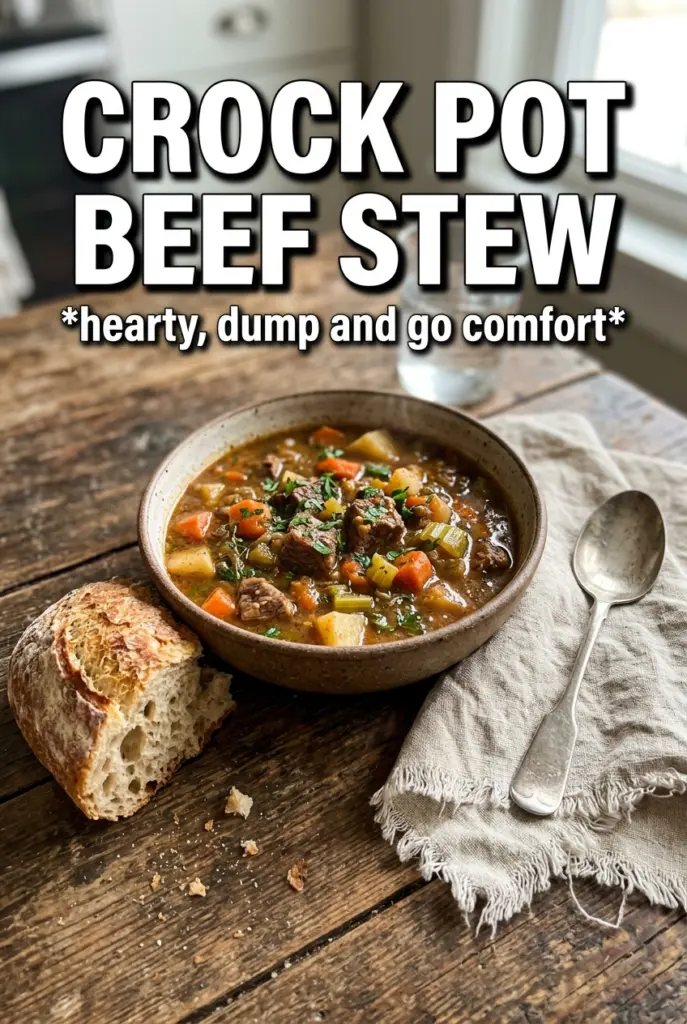
Crock Pot beef stew earns its spot in the dinner rotation because the beef turns spoon-tender while the broth cooks down into something dark, savory, and deeply satisfying. The potatoes hold their shape, the carrots soften without turning mushy, and every bowl tastes like it took far more effort than it did.
What makes this version work is the layering. The vegetables go in first so they can sit in the liquid and catch all the flavor as the beef slowly breaks down on top. Tomato paste, Worcestershire, and a little red wine give the broth enough backbone to taste rich instead of thin, and the cornstarch slurry goes in at the end so the stew thickens cleanly instead of turning cloudy and pasty. If your stew has ever come out bland or watery, the fix is usually in the order, not the ingredients.
Below, I’ll show you how to keep the beef tender, what to do if you want to skip the wine, and the small finish that gives the broth that glossy, stewhouse texture.
The beef got that fall-apart texture without drying out, and the broth thickened up beautifully after the slurry went in. I liked that the potatoes stayed intact instead of turning to mush.
Save this Crock Pot beef stew for a hands-off dinner with tender beef, rich broth, and vegetables that hold their shape.
The Slow Cooker Trick That Keeps the Beef Tender
The biggest mistake with beef stew is crowding everything in and expecting the slow cooker to fix it. It won’t. The beef needs to sit above the vegetables so it braises instead of steaming, and the low, slow heat has time to soften the chuck’s connective tissue without squeezing the meat dry. That’s what gives you those soft, shreddable chunks instead of tough cubes.
Chuck is the right cut here because it has enough fat and collagen to turn silky over time. Lean stew meat can work, but it’s less forgiving and often turns stringy by the time the vegetables are done. If you only remember one thing, remember this: long cooking is good, but overcooking on high heat can still make the beef collapse into dry strands before the broth has any body.
What Each Ingredient Is Actually Doing in the Pot

- Beef chuck — This is the backbone of the stew. It’s marbled enough to stay moist through the long cook, and that connective tissue is what melts into tenderness. Cut it into even pieces so it finishes at the same time.
- Baby potatoes — These hold up better than peeled russets, which tend to break apart and cloud the broth. Halving them helps them absorb flavor without turning mealy.
- Carrots, celery, and onion — This trio builds the base flavor and keeps the stew from tasting flat. Cut the carrots thick so they don’t disappear, and keep the celery sliced but not too thin or it will soften away.
- Red wine or extra broth — Wine adds depth and a little acidity, which keeps the stew from tasting heavy. If you skip it, use more broth and the stew will still work; it just won’t have quite the same edge.
- Tomato paste and diced tomatoes — These give the broth color, body, and a quiet sweetness that balances the beef. Tomato paste especially needs to be stirred in well so it dissolves instead of sitting in little red streaks.
- Worcestershire, thyme, rosemary, and bay leaves — These are the flavor builders that make the stew taste round and finished. Don’t skip the bay leaves; they don’t taste like much on their own, but they smooth everything out in the background.
- Cornstarch slurry — This is the cleanest way to thicken the broth at the end. If you add cornstarch directly to hot liquid, it clumps. Mixing it with cold water first gives you a silky finish instead of a lumpy one.
How to Build the Stew Without Ending Up With Watery Broth
Season the Beef First
Salt and pepper the beef before it goes into the crock pot. That first layer of seasoning matters because the meat is the main source of flavor, and the slow cooker won’t pull salt in fast enough if you wait until the end. Tossing it well also helps every piece taste seasoned instead of just the liquid around it.
Layer the Vegetables Under the Meat
Put the potatoes, carrots, celery, and onion on the bottom, then nestle the beef on top. The vegetables can sit in the broth and soften evenly, while the meat stays slightly above the wettest part of the pot and braises gently. If the beef sinks too deeply, it can turn softer than you want and lose some shape.
Let the Broth Cook Down Before Thickening
Cook on low until the beef breaks apart easily with a fork. Don’t rush this part by cranking the heat higher than you need; the stew needs time for the beef to relax and for the broth to take on that dark, meaty color. Once the meat is tender, remove the bay leaves and stir in the cornstarch slurry, then cook on high until the broth turns glossy and lightly coats a spoon.
Finish With Salt After the Thickening
Taste after the stew thickens, not before. As the liquid reduces, the salt level concentrates, and a stew that tasted mild at the start can land too salty at the end. Add the final seasoning in small pinches so you can stop at that deep, savory point instead of pushing it over the edge.
Three Ways to Make This Stew Fit Your Kitchen
No-Wine Version
Use extra beef broth instead of red wine. The stew will still be rich, but it loses a little acidity and depth, so the Worcestershire and tomato paste matter even more. If you want to bring back some brightness, add a tiny splash of vinegar at the end instead of more salt.
Gluten-Free Stew
This recipe is naturally close to gluten-free, but check that your Worcestershire sauce and broth are certified gluten-free. The cornstarch slurry is a good thickener for gluten-free cooking because it gives you body without needing flour, and it keeps the broth clear and clean-tasting.
Add Mushrooms or Parsnips
A handful of sliced mushrooms or chopped parsnips fits in well with the existing vegetables. Mushrooms add a deeper savory note, while parsnips bring a little sweetness. Add them with the other vegetables at the start so they have time to soften and flavor the broth.
Storage and Reheating
- Refrigerator: Store in an airtight container for up to 4 days. The broth thickens as it chills, and the potatoes soften a little more overnight.
- Freezer: This freezes well for up to 3 months. Cool it completely first, then freeze in portions so the vegetables don’t get crushed when you reheat it.
- Reheating: Warm it gently on the stovetop over medium-low heat or in the microwave in short bursts. Add a splash of broth if the stew has tightened up too much, and don’t boil it hard or the beef can get stringy.
Questions I Get Asked About This Recipe
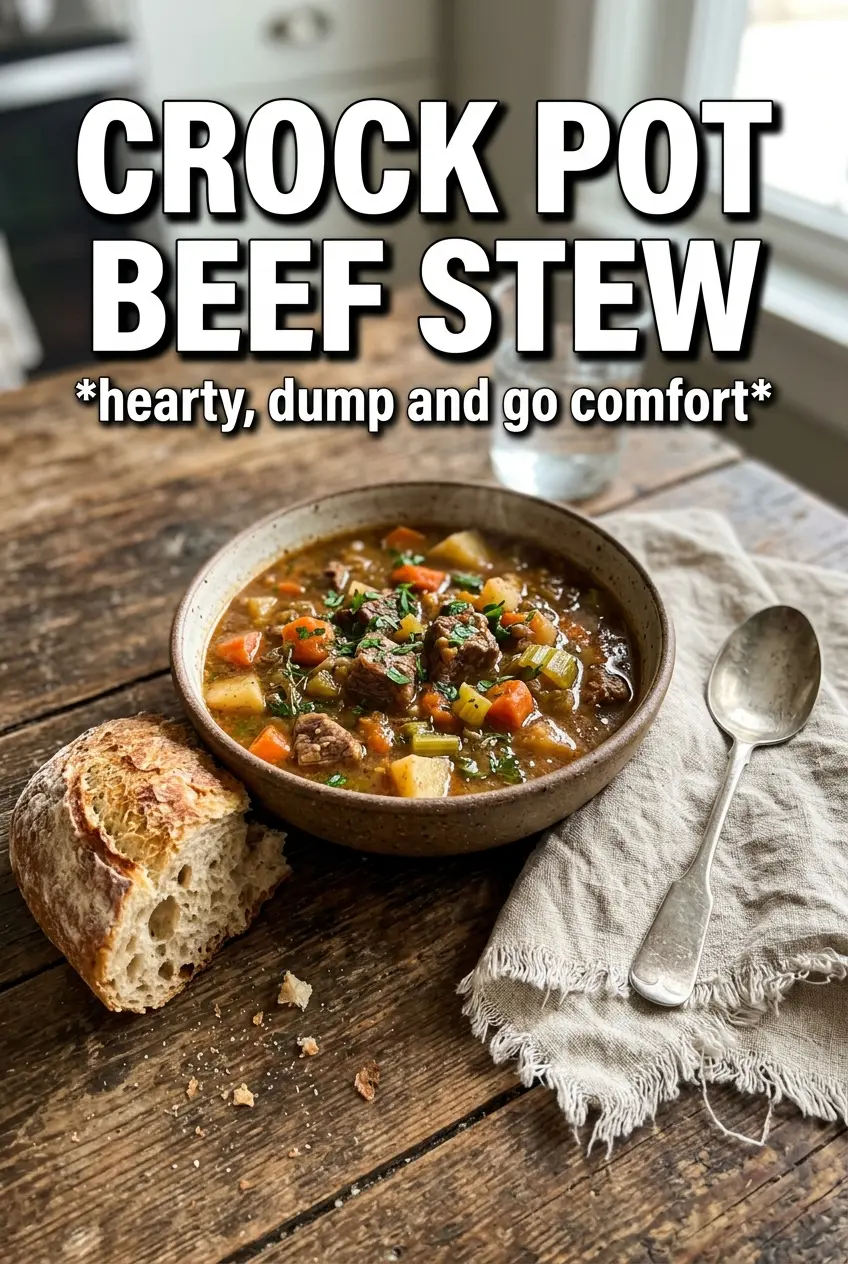
Crock Pot Beef Stew
Ingredients
Equipment
Method
- Season the beef generously with salt and pepper.
- Place the potatoes, carrots, celery, and onion in the bottom of the Crockpot and nestle the beef on top.
- Add garlic, beef broth, red wine or extra broth, diced tomatoes, tomato paste, Worcestershire sauce, dried thyme, dried rosemary, and bay leaves.
- Cook on Low 8-10 hours, or High 4-5 hours, until the beef is fall-apart tender.
- Remove the bay leaves, then stir in the cornstarch slurry.
- Cook on High 20-30 minutes until the broth thickens and looks glossy.
- Season with salt and pepper to taste before serving.