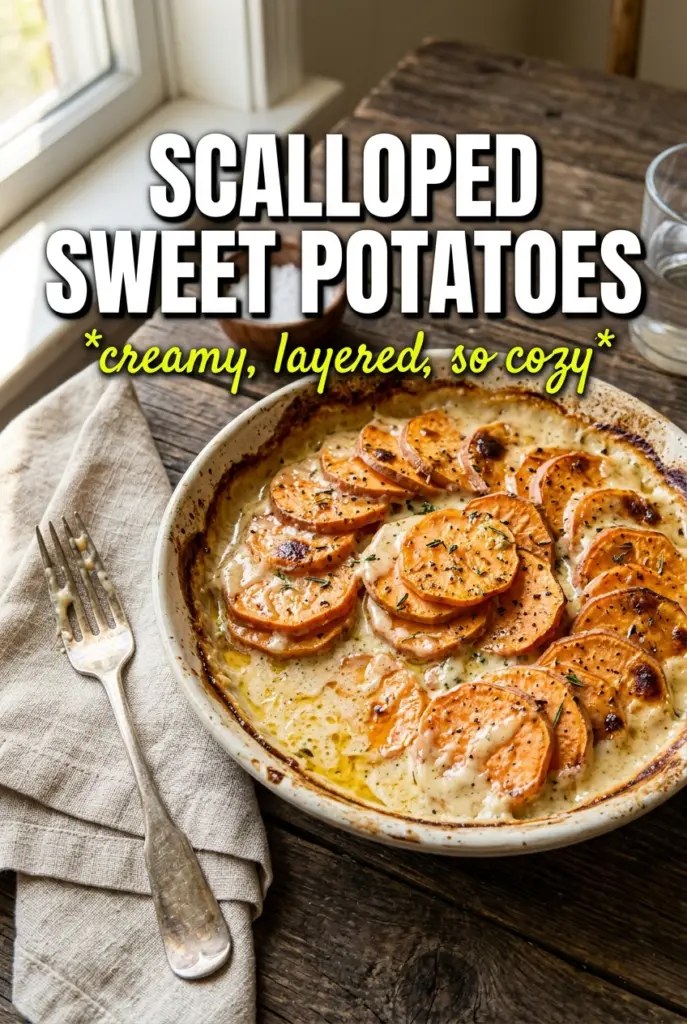
Scalloped sweet potatoes bake up tender in the middle with crisp, browned edges and a bubbling cheese crust on top. The sweet potatoes hold their shape instead of turning to mash, and the maple-scented cream pulls everything together with just enough sweetness to balance the Gruyere and parmesan. It’s the kind of side dish that looks special on the table but still feels grounded and homey.
What makes this version work is the way the cream mixture is seasoned before it ever hits the pan. Garlic, thyme, cinnamon, and nutmeg infuse the sauce so every layer gets flavor, not just the top. The foil-covered bake gives the potatoes time to soften without drying out, and the cheese goes on only after that first covered bake so it can melt and brown instead of disappearing into the sauce.
If you’ve ever had scalloped potatoes split, scorch, or come out bland in the center, the notes below will help. The layering method, the rest time, and the best swaps for the cheese all matter here.
The cream stayed silky, the sweet potatoes cooked through without falling apart, and the Gruyere on top browned into the best crust. I made it exactly as written and there wasn’t a spoonful left.
Like these scalloped sweet potatoes? Save them to Pinterest for the nights when you want a golden cheese crust and maple-kissed layers on the table.
The Layering Trick That Keeps Sweet Potatoes Tender, Not Watery
The biggest mistake with scalloped sweet potatoes is crowding the dish without giving the cream enough room to move through the layers. Thin slices matter here because they soften evenly, but they still need to be arranged in overlapping rows, not dumped in a loose pile. That structure helps the sauce settle between the slices while the top stays exposed enough to brown once the foil comes off.
The first covered bake is doing the heavy lifting. It steams the potatoes gently in the seasoned cream, which is what keeps the edges from drying out before the centers are tender. If you skip the foil or uncover too early, the top will darken before the middle has a chance to cook through.
What the Cream, Maple, and Cheese Each Bring to the Pan
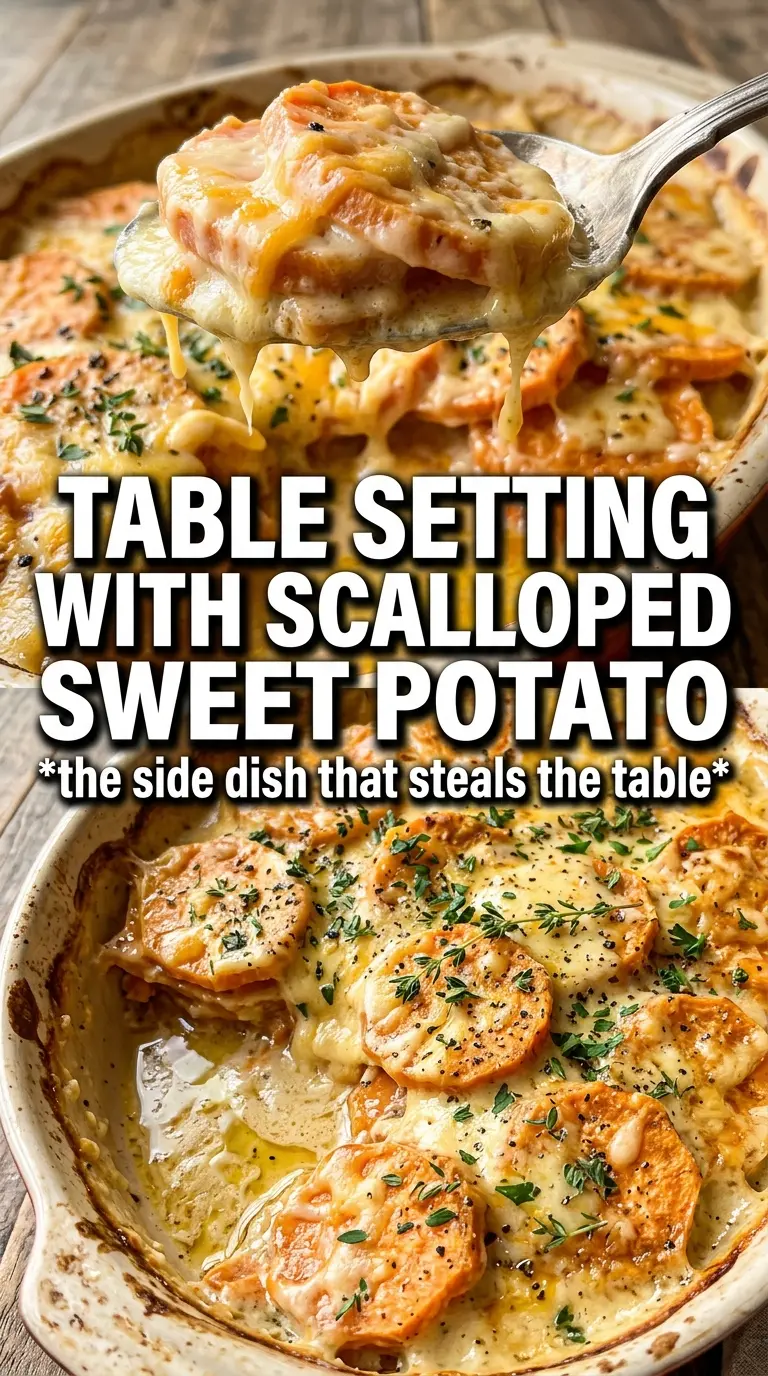
- Sweet potatoes — Peel them and slice them thin and even. A mandoline gives the cleanest result, but a sharp knife works if you keep the slices close in thickness so they finish cooking at the same time. Thick slices leave you with a firm center after the top has already browned.
- Heavy cream and whole milk — This combination gives the sauce enough richness without turning it into straight cream, which can feel heavy once baked. If you use all milk, the sauce tastes thin; if you use only cream, it can bake up greasy around the edges. The balance here keeps the dish spoonable and silky.
- Gruyere and parmesan — Gruyere melts smoothly and brings that nutty, savory finish that belongs in a dish like this. Parmesan adds salt and helps the top brown. Pre-shredded cheese will melt, but freshly shredded cheese gives a cleaner, more even crust.
- Maple syrup, cinnamon, and nutmeg — These don’t make the dish sweet in a dessert way. They deepen the natural sweetness of the potatoes and give the cream a warm background note that keeps the whole pan from tasting flat.
Building the Sauce Before It Hits the Potatoes
Whisk the Cream Mixture Until It Smells Aromatic
Combine the cream, milk, garlic, maple syrup, thyme, cinnamon, nutmeg, salt, and pepper before you touch the potatoes. You want the garlic evenly distributed and the spices fully dissolved so every pour carries the same seasoning. If the garlic clumps in one spot, that bite will taste sharp while the rest of the dish tastes underseasoned.
Layer the Slices So the Sauce Can Slip Between Them
Arrange the sweet potato slices in overlapping rows in the buttered dish, then pour the cream mixture over slowly and evenly. Use a spoon to nudge liquid into the corners and down the sides of the dish, because those outer edges dry out first. The potatoes should look well coated, with the top slices just peeking above the cream instead of floating on top of it.
Cover, Bake, Then Brown the Top
Tight foil is important here because steam helps the potatoes soften before the cheese goes on. After 40 minutes, check for partial tenderness with a knife; it should slide in with some resistance, not hit a hard center. Once the cheese is added, the final bake is about color and bubbling, not just time. Pull it when the top is deeply golden and the edges are caramelized.
Let It Rest Before Serving
The 10-minute rest gives the sauce time to settle back into the layers. If you cut in too soon, the dish runs loose and looks wetter than it really is. Resting firms up the texture and makes it easier to serve neat portions that hold together on the plate.
How to Adapt These Scalloped Sweet Potatoes Without Losing the Structure
Dairy-Free Version With Coconut Cream
Use full-fat coconut milk or coconut cream in place of the dairy, and swap the Gruyere and parmesan for a good melting dairy-free cheese if you have one you trust. The flavor shifts a little, with a faint coconut note, but the texture stays rich and silky. Don’t use thin carton milk here; it won’t give the sauce enough body.
A More Savory, Less Sweet Finish
Cut the maple syrup in half and add a pinch more thyme plus a little extra black pepper. That keeps the potatoes from leaning too sweet and lets the cheese come forward. This is the version I’d serve with ham or roast chicken.
Make-Ahead for a Crowd
Assemble the dish up to a day ahead, cover it, and refrigerate before baking. Let it sit on the counter while the oven preheats so the chill comes off a bit, then add a few extra minutes to the covered bake if the center still feels cold. The cheese goes on only after the first bake, just like the original method.
Storage and Reheating
- Refrigerator: Store covered for up to 4 days. The sauce thickens as it chills, so the leftovers slice a little more firmly than the fresh bake.
- Freezer: It freezes, but the texture softens a bit after thawing. Wrap tightly in portions and thaw overnight in the refrigerator before reheating.
- Reheating: Warm covered in a 350F oven until heated through. The best mistake to avoid is blasting it in the microwave, which makes the cheese greasy and the potatoes uneven.