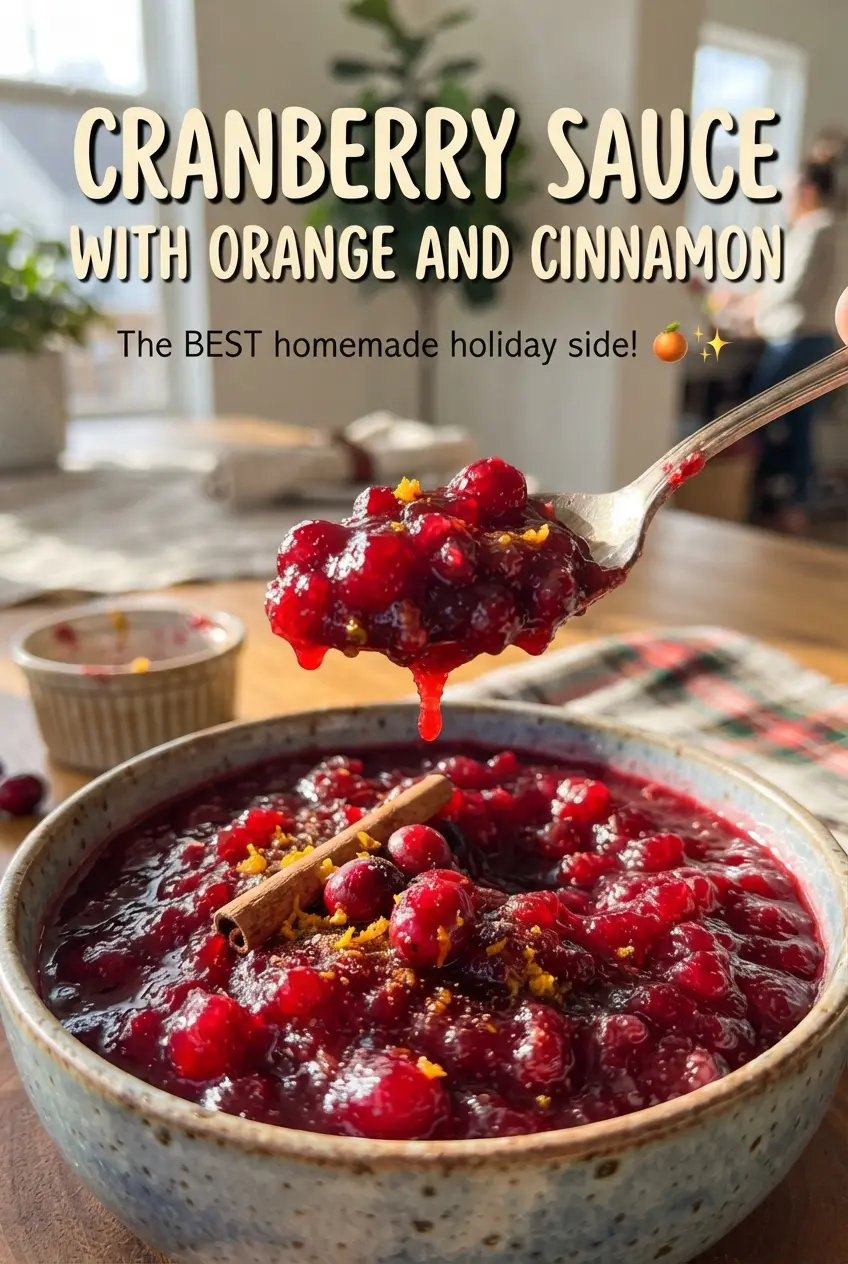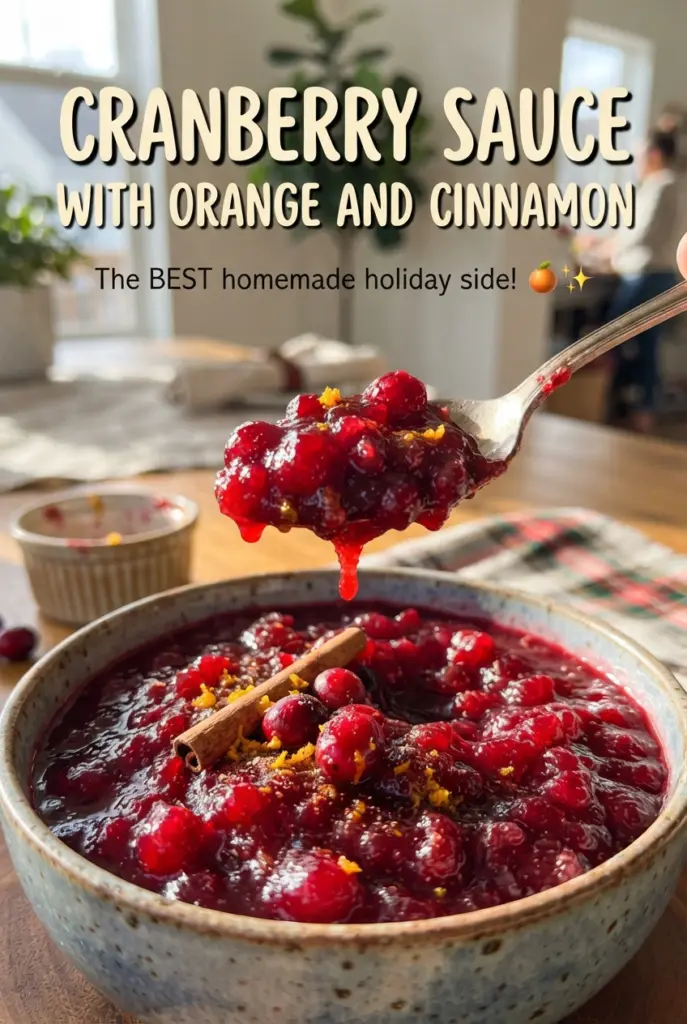
Bright cranberry sauce turns glossy and spoonable when the berries burst into a tangy jam, and the orange-cinnamon combination keeps it from tasting flat or one-note. This version lands in that sweet spot where the sauce is thick enough to mound on a plate but still loose enough to slide across turkey, biscuits, or a leftover sandwich without feeling stiff.
The trick is starting with the sugar, juice, water, and spices before the cranberries go in. That gives the cinnamon time to infuse the liquid, and it keeps the fruit from scorching while it cooks. The orange zest goes in at the end so the aroma stays fresh instead of getting buried under heat.
Below, you’ll find the small timing details that matter, plus a few ways to adjust the sweetness and texture depending on how tart your cranberries are.
I usually end up with cranberry sauce that’s either too runny or way too sweet, but this thickened beautifully as it cooled. The orange zest at the end made it taste fresh, and the cinnamon sticks gave it that warm spice without overpowering the cranberries.
Love the glossy texture and orange-cinnamon warmth of this cranberry sauce? Save it to Pinterest for Thanksgiving, roast chicken, or any meal that needs a bright make-ahead side.
The Reason This Cranberry Sauce Thickens Without Turning Gloppy
Cranberry sauce looks simple, but the texture can go wrong fast. If you start with too much heat or walk away too long, the berries collapse into a loose syrup that never quite sets. The fix is in the simmer: once the cranberries hit the pot, keep the heat at a steady bubble and stop cooking as soon as most of the berries have burst and the liquid looks slightly glossy and thick around the edges.
The sauce will still seem a little loose in the pan. That’s normal. Cranberries contain a lot of pectin, and the mixture tightens as it cools, so pulling it off the heat at the right moment matters more than chasing a thick look while it’s hot. The cinnamon sticks also need time in the pot, which is why they go in at the beginning instead of stirred in at the end.
What Each Ingredient Is Doing in the Pot
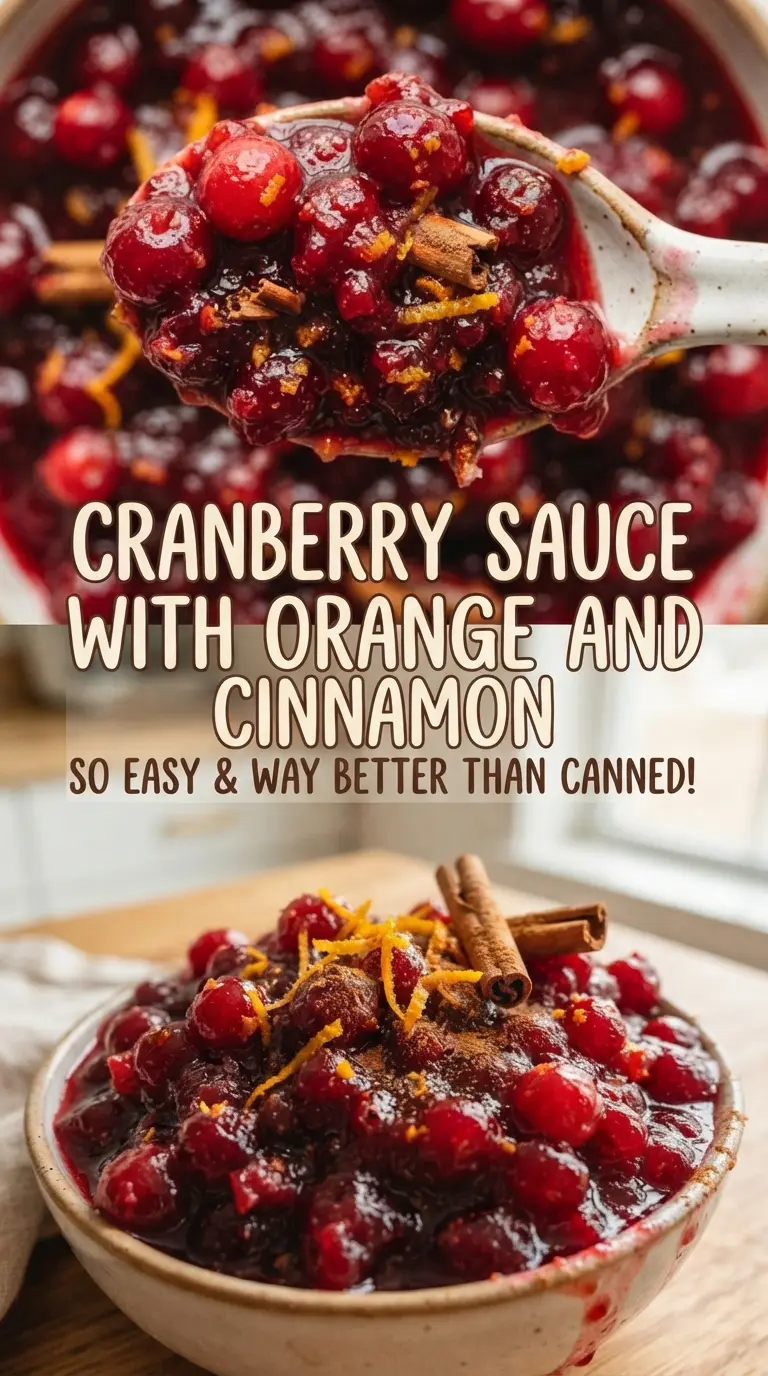
- Fresh cranberries — These are the structure of the sauce. They burst, release pectin, and give you that classic tart finish. Frozen cranberries work too; use them straight from the freezer and add a minute or two to the simmer.
- Orange juice and zest — Juice softens the tartness and gives the sauce a rounder sweetness, while zest brings the sharp citrus aroma that makes the whole pot smell finished. Bottled juice works in a pinch, but fresh orange gives cleaner flavor.
- Cinnamon sticks and ground cinnamon — The sticks infuse the liquid gently, and the ground cinnamon gives immediate warmth. If you only have one or the other, use both if possible; just the powder can taste dusty, and just the sticks can be too subtle.
- Sugar — This balances the cranberries instead of making the sauce taste candy-sweet. You can cut it back a little if your oranges are sweet, but don’t skip it entirely or the sauce turns harsh.
- Water — A small amount keeps the mixture from sticking before the cranberries start releasing juice. Orange juice alone can work, but the sauce cooks more evenly with a little water in the base.
The 15 Minutes That Turn Fruit Into Sauce
Warming the Base
Combine the sugar, orange juice, water, cinnamon sticks, ground cinnamon, and salt in a saucepan and bring it to a boil. The sugar should dissolve completely before the cranberries go in, and the liquid should smell warmly spiced. If the pot looks grainy at this stage, keep stirring for another minute or two before adding the fruit.
Cooking Until the Berries Burst
Add the cranberries and lower the heat to a steady simmer. You’ll hear the berries pop and crack open as they cook, which is exactly what you want. Stir often enough to keep the bottom from catching, but not so much that you mash the berries into a puree before they have a chance to soften and split on their own.
Finishing for Fresh Aroma
When the sauce has thickened and most of the berries have burst, remove the pan from the heat and stir in the orange zest. Leave the cinnamon sticks in while the sauce cools so the spice keeps infusing, then pull them out once the sauce is no longer hot. Chill before serving, because the texture only reaches its proper spoonable consistency after it cools.
How to Adjust the Sweetness, Spice, and Texture
Less Sweet, More Tart
Drop the sugar by 2 to 3 tablespoons if you like a sharper cranberry sauce. The texture will still set, but the finished sauce will taste brighter and less dessert-like, which works well next to rich roasted meats.
Alcohol-Free Holiday Fruit Sauce With Deeper Citrus
Swap half of the orange juice for water and add an extra teaspoon of zest if you want a lighter citrus note without changing the structure. The sauce will taste less sweet and a little more tart-forward, but it still thickens the same way.
Make-Ahead Cranberry Sauce
This sauce is better after it chills, which makes it an easy make-ahead side for a big meal. Cook it a day or three in advance, let it cool fully, and cover it once it’s no longer steaming so condensation doesn’t water down the surface.
Storage and Reheating
- Refrigerator: Store in a covered container for up to 1 week. It will firm up as it chills, which is exactly what you want.
- Freezer: Freeze for up to 2 months in an airtight container, leaving a little headspace. Thaw overnight in the refrigerator.
- Reheating: Cranberry sauce is usually best served cold or at room temperature, but if you want it warm, use low heat and stir gently. High heat can thin it out and push it past the spoonable stage.