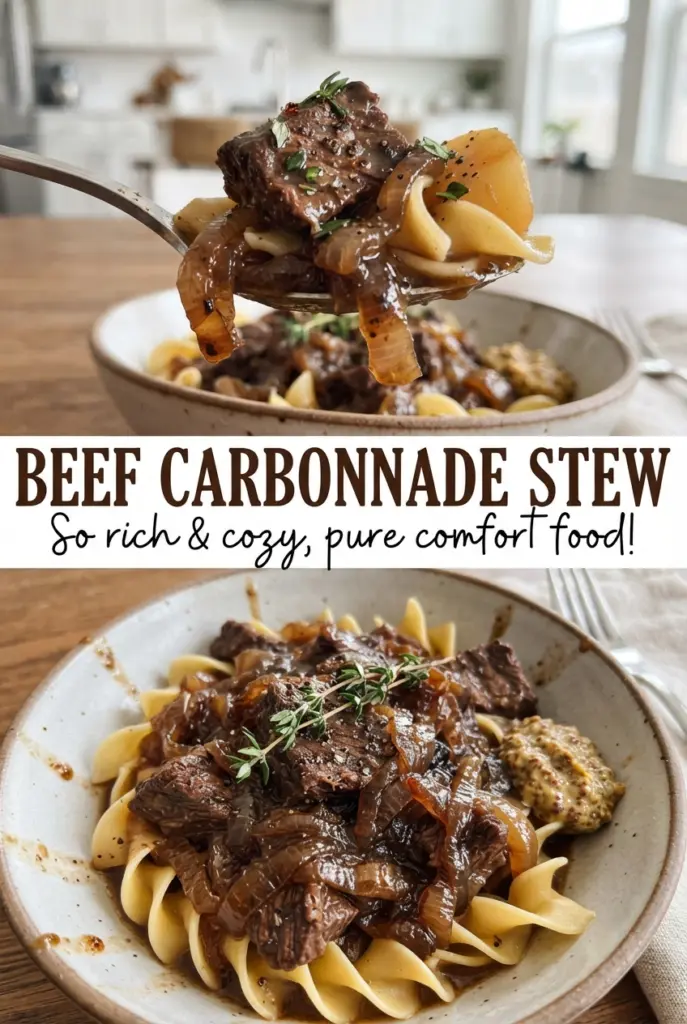
Beef carbonnade stew turns humble chuck into something dark, glossy, and deeply savory, with onions that practically melt into the broth and give the whole pot a sweet edge. The beer doesn’t just add liquid here; it builds the stew’s backbone, giving the sauce a malty depth that plain stock can’t match. After a long, slow bake, the beef comes out spoon-tender and the broth clings to it instead of running thin on the plate.
The part that makes this version work is the onion base. They need time to cook past soft and into a deep golden stage before the flour goes in, because that’s where the stew gets its color and rounded flavor. The mustard bread on top sounds unusual, but it dissolves into the sauce and helps thicken it while adding just enough sharpness to keep the richness in check.
Below, I’ve broken down the step that keeps the onions from tasting flat, what kind of beer gives the best result, and the small technique choices that make this stew taste like it’s been simmering in a Belgian kitchen all afternoon.
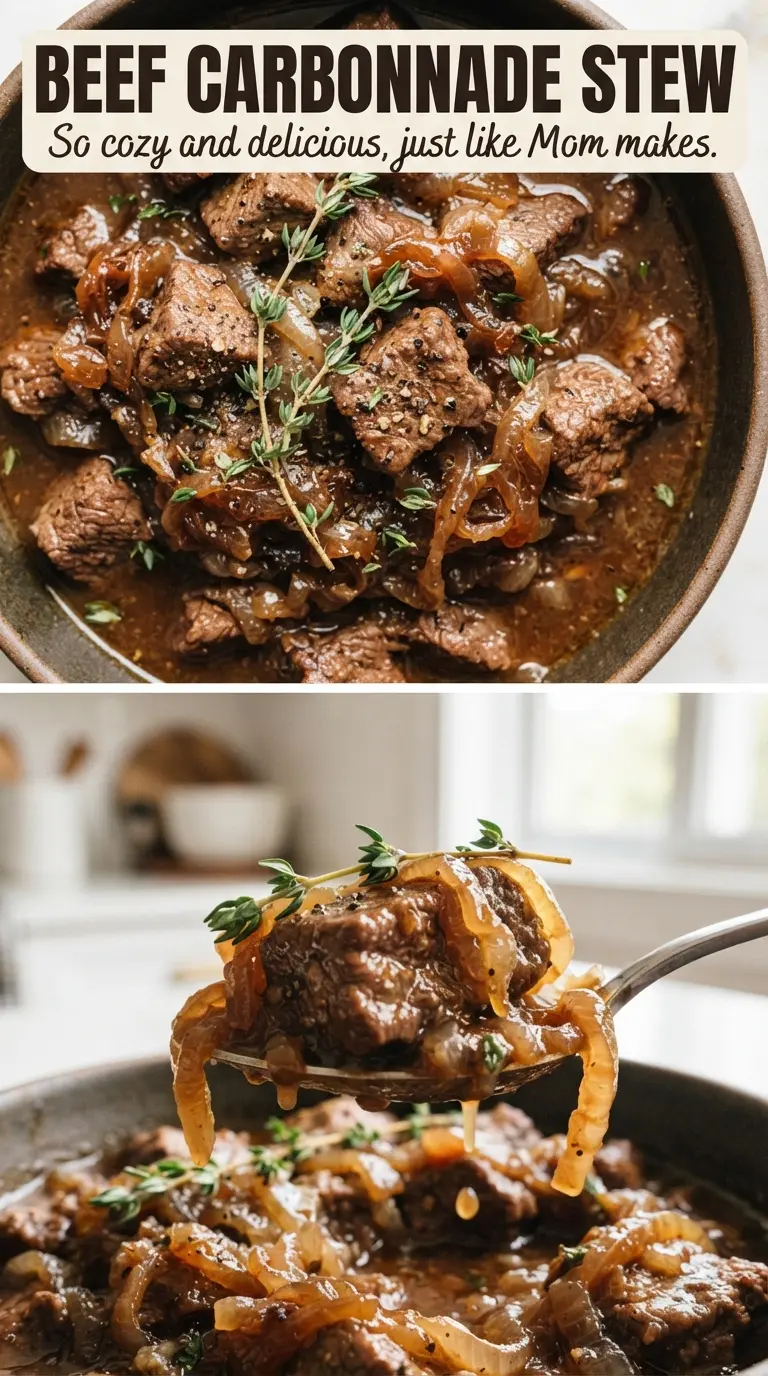
The onions cooked down into this jammy layer and the sauce turned rich without getting heavy. I let it go the full bake time and the beef was falling apart, just like a good stew should be.
Save this Belgian beef carbonnade for a stew that gets its richness from dark ale, slow onions, and that mustard bread on top.
The Part Most Stews Get Wrong: Building Sweetness Before the Beer Goes In
Carbonnade lives or dies on the onions. If they’re just softened, the stew tastes thin and sharp. If they’re cooked until deep golden and almost sticky, they give the broth the kind of rounded sweetness that lets the beer and vinegar taste balanced instead of harsh.
The flour goes in after the onions have taken on color, not before. That keeps it from tasting raw and lets it coat the onions and beef juices instead of forming a pasty layer at the bottom. The other thing that matters is scraping the pot when the beer goes in. Those browned bits are concentrated flavor, and once they dissolve, the stew gets its dark color and real depth.
What Each Ingredient Is Actually Doing in This Belgian Stew
- Beef chuck — This cut has the collagen needed for a long braise. It starts tough, then turns silky and tender in the oven. Don’t swap in lean stew meat if you can avoid it; it tends to dry out before the sauce has time to deepen.
- Belgian brown ale — This is the backbone of the sauce. A malty brown ale gives you depth without bitterness, which matters because the stew is already getting sharpness from vinegar and mustard. If you can’t find Belgian ale, use another dark, malty beer rather than anything too hoppy.
- Onions — Four large onions look like a lot, but they cook down into the body of the dish. This is where the stew gets sweetness, color, and that almost jammy texture. Slice them thin so they break down evenly.
- Dijon mustard bread — The bread on top isn’t garnish; it’s a thickener and a flavor layer. As it dissolves, it gives the stew body and a little tang. Rustic bread works best because it holds together long enough to do its job before breaking down.
- Apple cider vinegar — A small amount keeps the stew from tasting heavy. It doesn’t make the broth sour; it brightens the beer and onions so the finished pot tastes balanced.
How to Braise It So the Beef Turns Silky, Not Dry
Brown the beef in patient batches
Season the chuck well, then brown it in batches so each piece has room to make contact with the pot. Crowding the pan traps steam and leaves you with gray meat and weak flavor. You want a dark crust on the outside and browned bits stuck to the bottom of the Dutch oven, because that’s the start of the stew’s sauce.
Cook the onions until they change color, not just texture
Add the butter and onions after the beef comes out, then give them the time they need. They should turn deep golden and smell sweet, with a little stickiness at the bottom of the pot. If they start to scorch, lower the heat and keep stirring; burnt onions will make the whole stew taste bitter.
Let the oven do the slow work
Once the beer, broth, vinegar, herbs, and beef go in, the liquid should come up partway around the meat, not bury it completely. Set the bread on top mustard-side down, cover the pot, and bake until the beef gives easily when pierced. If the sauce looks loose when it comes out, give it a few minutes to settle before serving; it thickens as it rests.
How to Adapt the Pot When You Need a Different Route
Gluten-Free Carbonnade
Replace the flour with a gluten-free all-purpose blend that includes xanthan gum, and use gluten-free bread for the mustard topping. The sauce will still thicken nicely, but it may stay a little looser than the wheat version, so give it a few extra minutes uncovered after baking if needed.
No Alcohol Version
Use extra beef broth plus 1 tablespoon molasses and 1 tablespoon balsamic vinegar in place of the ale. You won’t get the same malty edge, but you’ll still get a dark, savory stew with enough sweetness and acidity to keep it balanced.
Make It Ahead
This stew gets even better after a night in the fridge because the onions, beer, and beef settle into one flavor. Cook it fully, cool it, and reheat gently the next day; the sauce will taste fuller and the beef will stay tender.
Storage and Reheating
- Refrigerator: Store for up to 4 days in a sealed container. The sauce will thicken as it chills.
- Freezer: Freezes well for up to 3 months. Cool completely before freezing, and leave a little space for expansion.
- Reheating: Reheat gently on the stovetop over low heat with a splash of broth if needed. High heat can tighten the beef and make the sauce separate.
Answers to the Questions Worth Asking
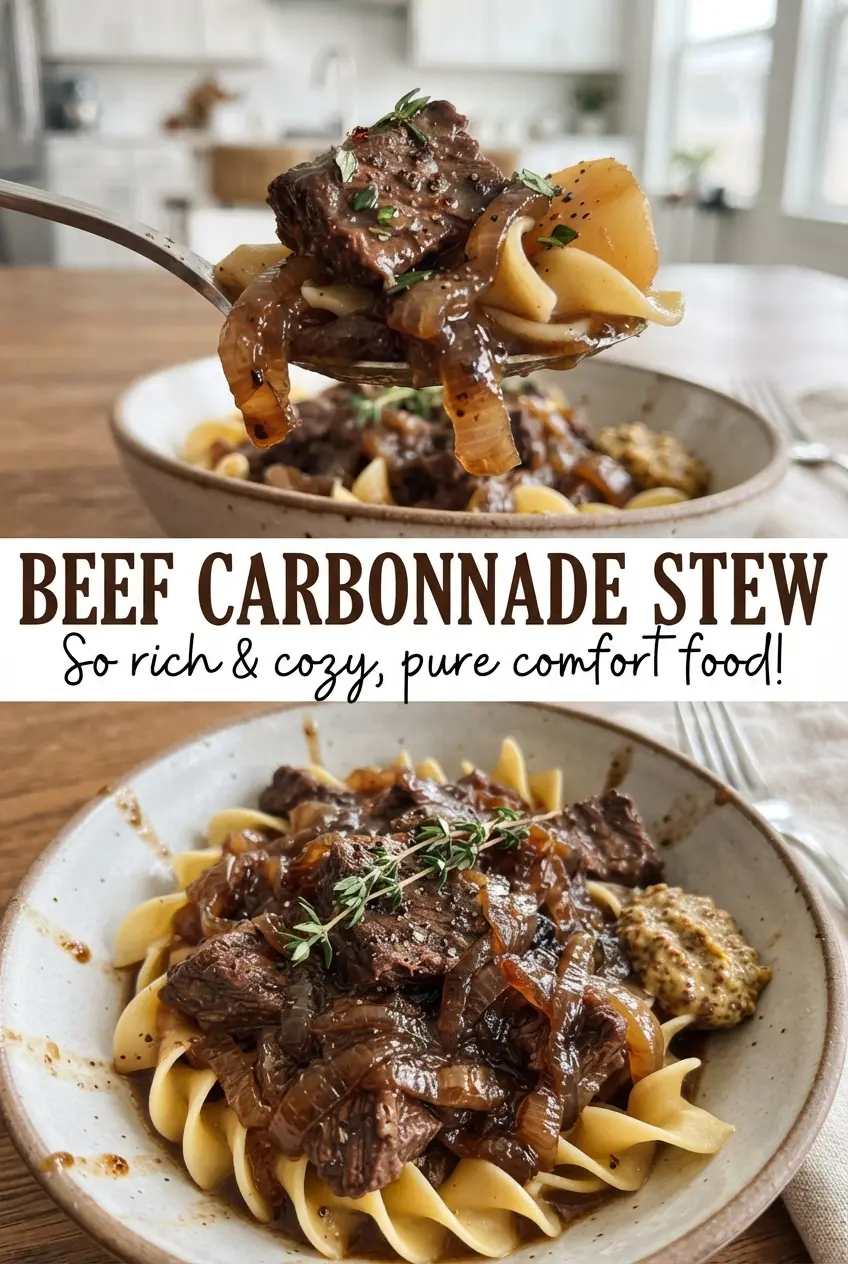
Beef Carbonnade Stew
Ingredients
Equipment
Method
- Preheat oven to 325F. Season the beef with salt and black pepper, then brown in batches in a Dutch oven with 2 tablespoons butter.
- Continue browning until the beef is browned on all sides, working in batches to keep color. Add browned beef to the pot as you go.
- Add remaining butter and the thinly sliced onions to the Dutch oven. Cook for 20 minutes until deep golden, stirring as needed for even browning.
- Stir in the brown sugar and all-purpose flour until the onions are coated and the mixture looks slightly thickened. Keep stirring for 1 minute so the flour loses raw taste.
- Pour in the Belgian brown ale, beef broth, and apple cider vinegar, scraping the bottom of the Dutch oven. Bring to a simmer and stir to combine, then the browned bits should dissolve into the liquid.
- Add the fresh thyme and bay leaves, then return the beef to the pot. Make sure the beef is mostly submerged.
- Lay the mustard-spread rustic bread on top of the stew with the mustard side down. Tuck it gently so it sits against the surface.
- Cover and bake for 2 1/2 hours at 325F, stirring once when the bread starts to dissolve. Bake until the beef is very tender and the sauce is dark and glossy.
- Remove the thyme sprigs and bay leaves before serving. Taste and serve hot with fries or mashed potatoes.