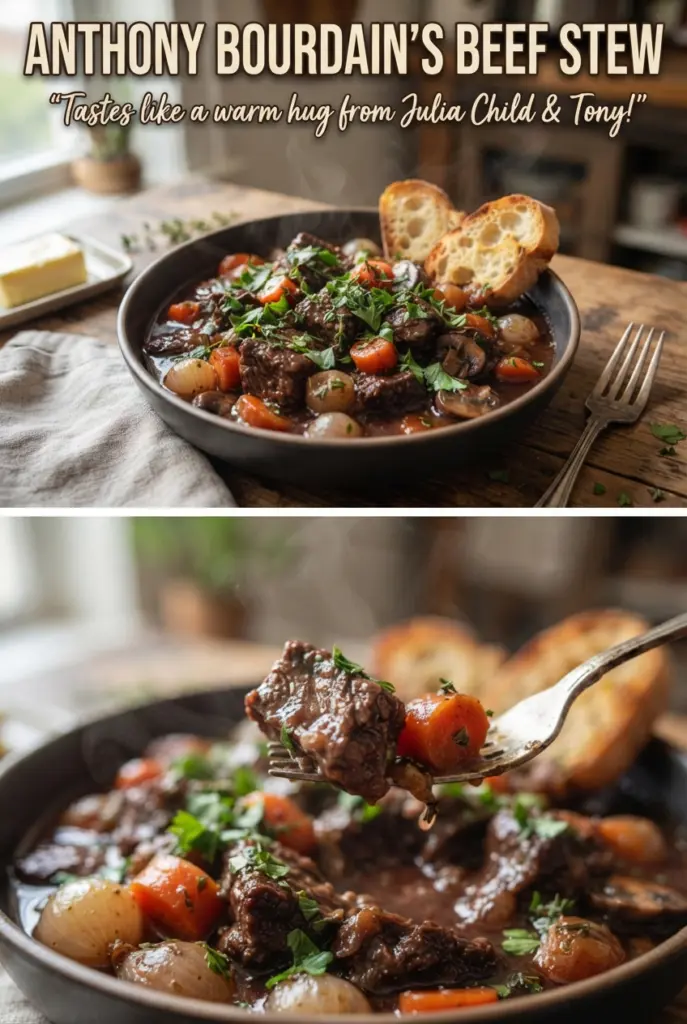
Deeply browned beef, sweet onions, and a wine-rich sauce give this stew the kind of flavor that tastes like it took all day, because the pot does the hard work for you. The broth turns glossy and dark, the beef goes spoon-tender, and the carrots soak up just enough of the wine and stock to taste like they belong there from the start.
What makes this version stand out is the order of operations. The beef gets a hard sear in batches, which builds the base flavor instead of steaming the meat in its own juices. The onions cook in the same pot, so they pick up every browned bit from the bottom, and the flour cooks before the liquid goes in, which keeps the sauce from tasting raw or turning thin and muddy.
Below, I’ll walk through the part that matters most: getting a proper brown crust, then building a sauce that stays silky instead of greasy or broken. I’ve also included the swaps that still work if you don’t have Burgundy wine or want to make it ahead.
The beef got that deep browned crust and the sauce thickened up perfectly after the simmer. I used a good Burgundy like you suggested, and the onions melted into the broth in the best way.
Save this Burgundy-braised beef stew for the night you want a dark, glossy sauce and fall-apart beef with almost no fuss.
The Part Where Most Beef Stews Turn Flat
The biggest mistake in beef stew is rushing past the browning. If the meat goes into the pot in a crowd, it steams, and steam gives you gray beef and a thin, dull broth. Browning in batches creates the dark crust that turns into flavor once the wine hits the pan.
The second trap is adding the flour too late or too early without letting it cook. Here, the flour goes in after the beef returns to the pot and cooks for a few minutes before the liquid is added. That step thickens the sauce and gets rid of the raw flour taste, which is what makes the finished stew taste rounded instead of pasty.
- Batch searing matters — Give each piece of beef room to actually brown. If the pan looks crowded, stop and do another round.
- The fond is the point — Those browned bits stuck to the bottom are what the wine loosens. Don’t scrub them away; dissolve them into the sauce.
- Gentle simmer only — A hard boil tightens the beef and clouds the broth. You want small, lazy bubbles around the edges.
What Each Ingredient Is Actually Doing in the Pot
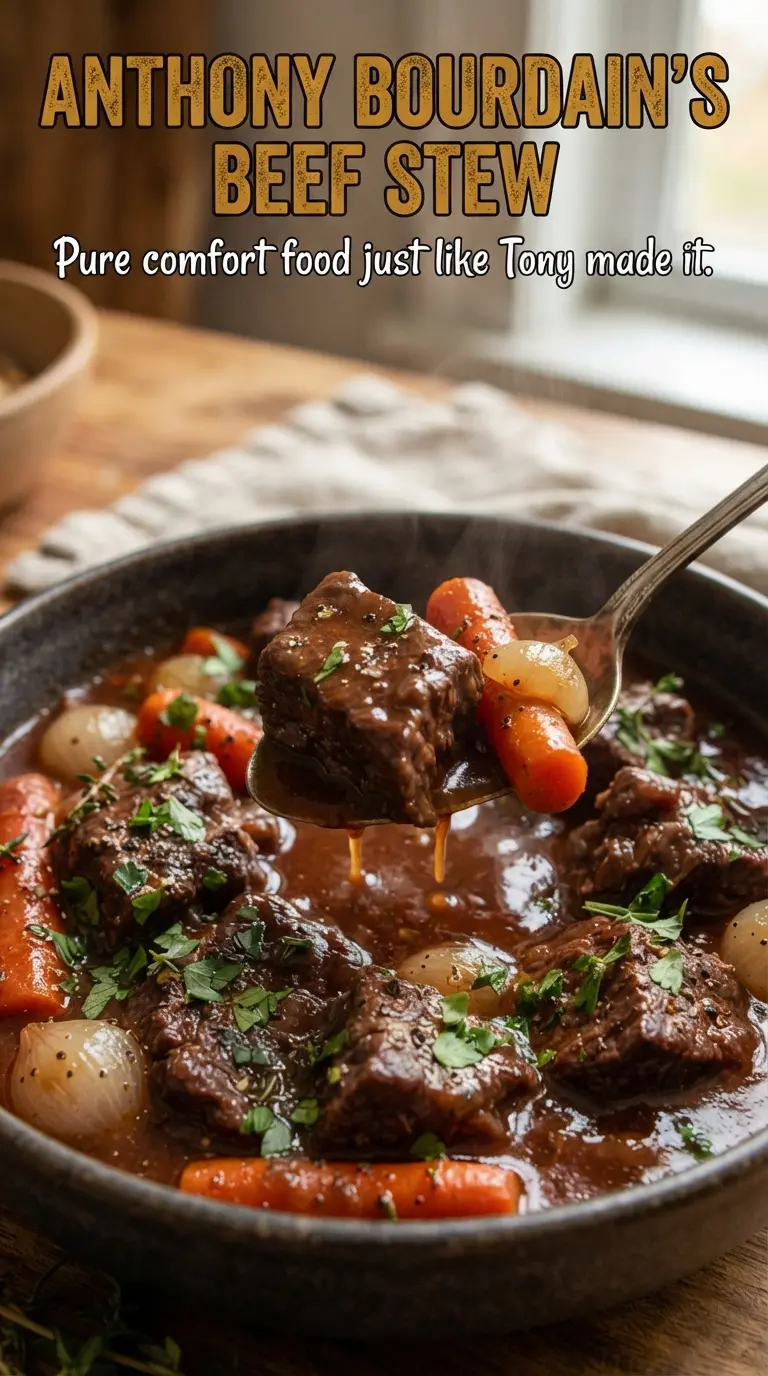
- Beef chuck — This is the cut that makes sense here. It has enough connective tissue to turn tender during the long simmer, and cheaper lean cuts won’t give you the same plush texture.
- Red Burgundy wine — The wine is not just liquid; it’s part of the flavor structure. Use something dry and drinkable, because harsh wine stays harsh after two hours in the pot.
- Onions — They cook down into the body of the sauce and help it turn silky. Slice them thin so they melt instead of staying in sharp pieces.
- Flour — This is the built-in thickener. If you skip the cooking time on the flour, the stew can taste dusty instead of rich.
- Stock or water — Stock gives you a deeper base, but water works if your wine and browning are strong. Either way, add just enough to barely cover the beef so the sauce doesn’t get thin.
- Bouquet garni — This brings herb flavor without leaving little woody bits all through the stew. Tie it tight so it comes out cleanly at the end.
How to Build the Stew So the Sauce Stays Glossy
Seasoning and Searing the Beef
Pat the beef dry before it hits the oil, because damp meat will never brown properly. Season it with salt and pepper, then sear in very hot oil until each side is deep brown, not just tan. If the pan starts to smoke a little, that’s fine; if the meat is releasing liquid, the heat is too low or the pan is overloaded.
Softening the Onions in the Same Pot
Add the onions to the same pot and let them cook down in the beef drippings and browned bits. They should turn soft and golden, with the edges just starting to take on color. If they start sticking hard, the pan may be too hot, so lower the heat and keep stirring until they release.
Using the Flour and Wine to Build Body
Return the beef, sprinkle over the flour, and stir long enough for it to lose its raw look. The pot should smell nutty before the wine goes in. Pour the wine in and scrape the bottom of the pan well; that’s where the stew gets its depth. Once the carrots, garlic, bouquet garni, and liquid are in, the beef should be just covered, not swimming.
The Slow Simmer and Final Finish
Let the stew bubble gently, partly covered, for about two hours until the beef gives easily when pressed with a spoon. If the sauce looks thin near the end, keep simmering uncovered for a few more minutes; if it looks too tight, add a splash of stock or water. Pull out the bouquet garni before serving, then finish with parsley for a fresh edge that cuts through the richness.
How to Adapt This for a Different Pantry or a Smaller Stove
Make it without Burgundy
A dry Pinot Noir, Côtes du Rhône, or another medium-bodied red will work. Avoid sweet wine or anything heavily oaked, because those flavors get louder as the stew reduces.
Gluten-free version
Use a gluten-free all-purpose flour blend that can thicken in a simmer. Stir it into the beef the same way, but keep the heat moderate so the blend doesn’t clump before the wine goes in.
Make it ahead
This stew tastes even better the next day. The beef relaxes, the onions disappear into the sauce, and the wine softens into the background instead of standing out.
Add mushrooms or extra carrots
A handful of mushrooms gives the stew a deeper, earthier edge, while extra carrots make it slightly sweeter. Add either one during the simmer so they pick up the braising liquid instead of turning mushy.
Storage and Reheating
- Refrigerator: Store covered for up to 4 days. The sauce will thicken as it chills.
- Freezer: Freezes well for up to 3 months. Cool it completely first, then freeze in portions.
- Reheating: Reheat gently on the stove over low heat with a splash of water or stock. Don’t boil it hard or the beef can tighten and the sauce can separate.
Answers to the Questions Worth Asking
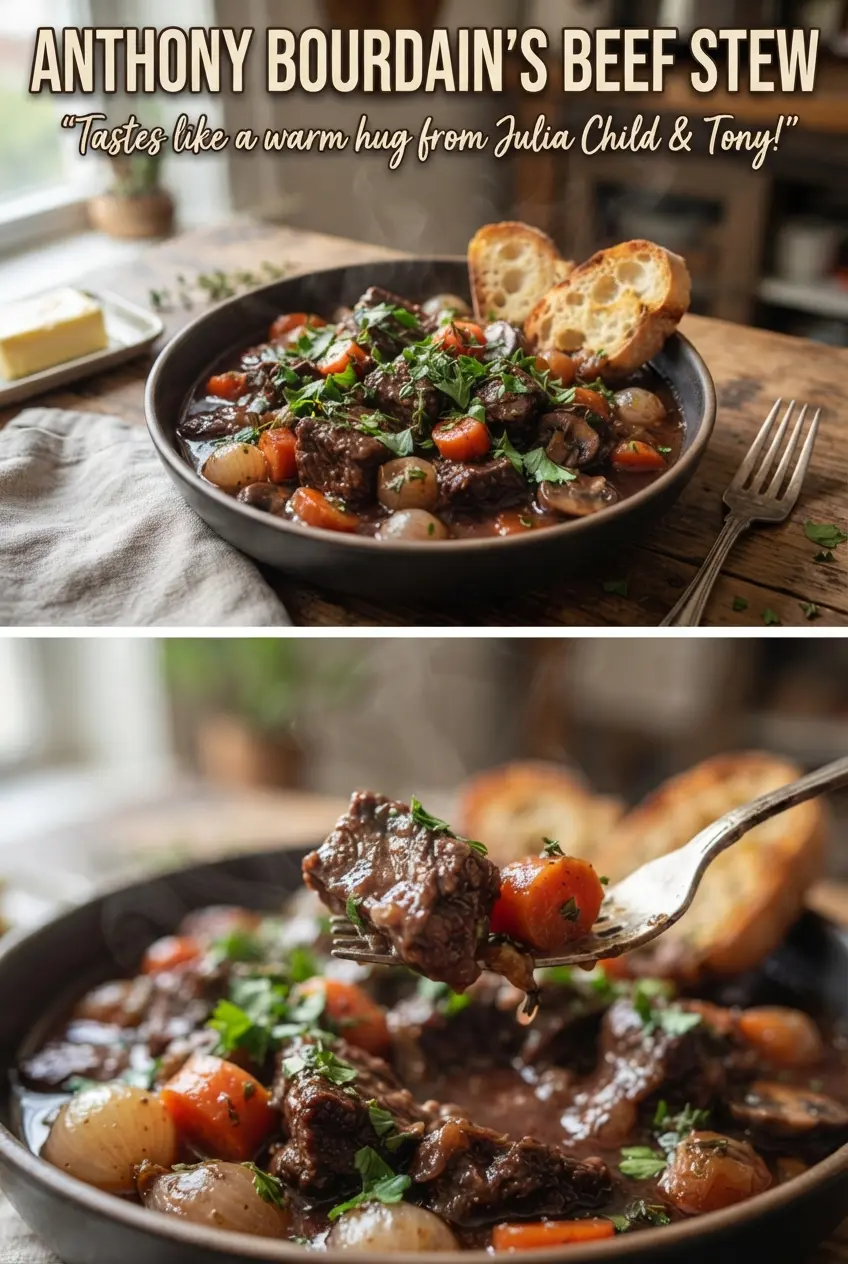
Anthony Bourdains Beef Stew
Ingredients
Equipment
Method
- Season the beef chuck cubes with salt and black pepper, then sear in very hot olive oil in batches until deeply browned, turning as needed so the cubes develop color on multiple sides, about 6-10 minutes total. Transfer the browned beef to a plate or bowl and set aside while you brown the rest.
- In the same Dutch oven, cook the thinly sliced onions over medium-high heat for 10 minutes until soft and golden, stirring occasionally so they don’t scorch. Scrape up any browned bits to keep flavor in the pot.
- Return the beef to the pot, sprinkle with all-purpose flour, and stir for 3-4 minutes until browned and lightly coating the meat. Keep stirring so the flour cooks through and loses its raw taste.
- Pour in the red Burgundy wine and scrape the bottom of the Dutch oven to release the fond, then cook for 1-2 minutes to reduce slightly. The surface should look glossy with browned streaks dissolving.
- Add the carrots, garlic, and bouquet garni, then pour in water or beef stock just to cover the beef. Bring to a gentle simmer, partially cover, and ensure the liquid bubbles steadily but not aggressively.
- Simmer the stew gently, partly covered, for 2 hours until the beef is very tender and the sauce is thick, stirring occasionally to prevent sticking. When you press a cube with a spoon it should break apart easily.
- Remove the bouquet garni and finish with chopped fresh parsley, stirring to distribute through the sauce. Taste and serve hot with crusty bread if desired.