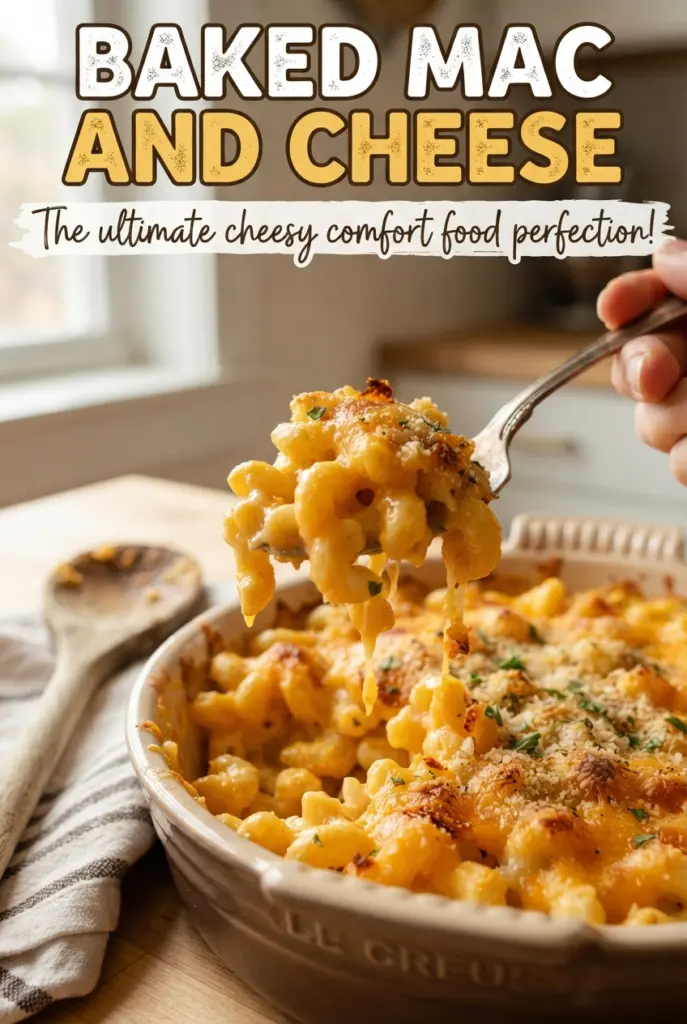
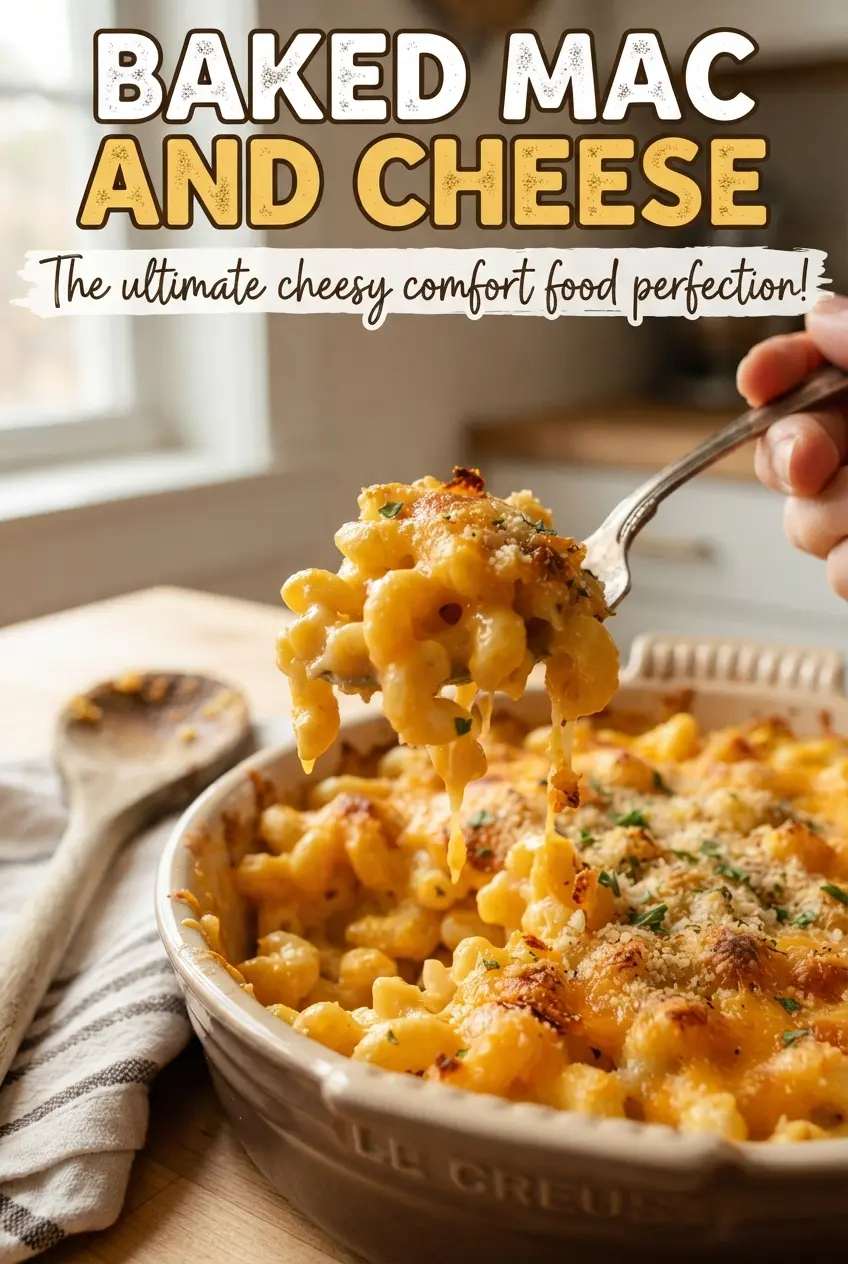
Golden baked mac and cheese lands on the table with a bubbling top, a creamy center, and those sharp little edges where the sauce meets the pan and turns almost custardy. The best versions don’t dry out in the oven, and they don’t turn gluey on the stove. This one stays silky because the sauce starts with a proper roux, gets thinned with both whole milk and evaporated milk, and only then takes on the cheese.
The real trick is undercooking the pasta by a couple of minutes and pulling the sauce off the heat before the cheese goes in. That keeps the noodles from collapsing in the oven and keeps the dairy from separating under high heat. Sharp cheddar gives you that familiar bite, while Gruyere or Colby Jack smooths the edges and helps the casserole melt into one cohesive dish instead of a dry tangle of pasta.
Below, you’ll find the small timing details that keep baked mac and cheese creamy from the first scoop to the last. The rest time matters here, and so does the way you layer the cheese on top.
The sauce stayed smooth, the pasta held its shape, and the top baked up with that browned cheese crust everyone fought over. I used the rest time exactly as written and it sliced instead of running all over the pan.
Save this baked mac and cheese for when you want a creamy center, a crisp browned top, and those stretchy cheese pulls.
The Reason Baked Mac and Cheese Stays Creamy Instead of Turning Grainy
The part that ruins most baked mac and cheese recipes is rushing the cheese into a sauce that is too hot. Once dairy gets close to a boil after the cheese has gone in, the fat can separate and the texture turns grainy. This version avoids that by building a thick base first, then lowering the heat before the cheese is added. The sauce should look glossy and coat the back of a spoon, not bubble aggressively.
Undercooking the pasta matters just as much. It keeps the noodles from over-softening in the oven, which is what makes a casserole turn heavy and pasty instead of creamy. The final bake is short on purpose; the oven is there to brown the top and bring everything together, not to keep cooking the pasta from scratch.
What the Cheese Blend Is Doing in This Dish

- Sharp cheddar — This is the backbone of the flavor. It gives the sauce the tangy bite people expect from baked mac and cheese, and it also browns well on top. Use a block and shred it yourself if you can; pre-shredded cheese is coated with starches that can make the sauce less smooth.
- Gruyere or Colby Jack — Gruyere brings nuttiness and a cleaner melt, while Colby Jack gives you a softer, milder cheese pull. Either one helps balance the sharpness of the cheddar. If you want the dish a little more kid-friendly, Colby Jack is the easier swap.
- Evaporated milk — This gives the sauce body without making it heavy. It helps the cheese melt into a stable sauce instead of thinning out in the oven. Whole milk still matters here; using lower-fat milk makes the final texture less rich and less protective against curdling.
- Dry mustard and smoked paprika — These don’t make the dish taste like mustard or smoke. They sharpen the cheese flavor and keep the sauce from tasting flat. Leave them in, even if you usually treat seasoning as an afterthought in mac and cheese.
Building the Sauce Before the Oven Takes Over
Cooking the Pasta Just Short of Done
Boil the macaroni until it still has a firm center, about two minutes less than the package says. That extra bite matters because the pasta keeps softening in the oven while it absorbs sauce. If you cook it all the way through first, the finished dish will be soft and a little gummy instead of creamy with structure.
Making the Roux
Melt the butter, whisk in the flour, and cook it for a full minute before adding the dairy. The roux should smell a little nutty and look smooth, not sandy. That quick cook takes away the raw flour taste and gives the sauce the thickness it needs to hold the cheese.
Thickening the Milk Base
Whisk in the whole milk and evaporated milk slowly so the sauce stays smooth. At first it will look thin, then it will turn velvety and lightly thick enough to coat a spoon after a few minutes of simmering. If you dump the dairy in all at once, the flour can lump and you’ll spend the rest of the time chasing those clumps around the pan.
Melting the Cheese Without Breaking It
Pull the pan off the heat before the cheese goes in, then stir in the cheddar and Gruyere a handful at a time. Residual heat is enough to melt it. If the sauce starts looking oily or grainy, the heat is too high; stop stirring over the burner and let the pan cool for a minute before continuing.
Gluten-Free Baked Mac and Cheese
Use a 1:1 gluten-free flour blend in place of the all-purpose flour and cook it the same way in the butter. The sauce should still thicken well, though some blends set a little softer after baking. If the blend is heavy on rice flour, whisk the milk in extra slowly to keep the sauce smooth.
Dairy-Free Version
Swap in plant-based butter, unsweetened oat milk, and dairy-free shreds that melt well. The flavor will be less sharp and the texture a little softer, but it still bakes into a scoopable casserole. Choose a brand that melts cleanly; some dairy-free cheeses turn waxy instead of creamy.
Adding Bacon or Ham
Fold in cooked chopped bacon or ham with the pasta before baking. This makes the dish saltier and a little heavier, so hold back a pinch of salt until the cheese is mixed in and taste the sauce first. The smoky meat works especially well with the paprika already in the base.
Make-Ahead for a Crowd
Assemble the casserole up to the point of baking, cover it, and refrigerate it for up to a day. Add a few extra minutes in the oven if it goes in cold. The pasta will keep absorbing sauce as it sits, so if it looks very thick before baking, loosen it with a splash of milk before adding the final cheese on top.
Storage and Reheating
- Refrigerator: Store leftovers covered for up to 4 days. The sauce will thicken as it chills.
- Freezer: It freezes, but the texture is softer after thawing. Wrap portions tightly and thaw overnight before reheating.
- Reheating: Reheat covered in the oven at 325F with a splash of milk stirred in, or microwave single servings in short bursts. Don’t blast it on high heat or the sauce can separate before the center is warm.
Answers to the Questions Worth Asking
Baked Mac and Cheese
Ingredients
Equipment
Method
- Preheat the oven to 350F and butter a 9x13-inch baking dish with a thin, even coat for easy release.
- Cook the macaroni 2 minutes less than package directions, then drain it so it finishes cooking in the oven without turning mushy.
- Melt the butter in a Dutch oven, whisk in the flour, and cook for 1 minute to form a smooth roux with no dry streaks.
- Slowly whisk in the whole milk and evaporated milk, keeping the mixture smooth as it heats.
- Simmer for 5-6 minutes until thickened, then season with salt, black pepper, dry mustard, and smoked paprika for a balanced flavor.
- Stir in 3 cups of the cheddar and 1 1/2 cups of the Gruyere or Colby Jack until fully melted, creating a glossy sauce.
- Fold the cooked pasta into the sauce so every piece is coated, then pour into the buttered baking dish.
- Top with the remaining cheese to help form a golden browned crust during baking.
- Bake at 350F for 25-30 minutes until bubbly at the edges and the top is golden, with visible cheese pull when stirred.
- Rest the mac and cheese for 10 minutes before serving so the sauce thickens and slices lift cleanly.