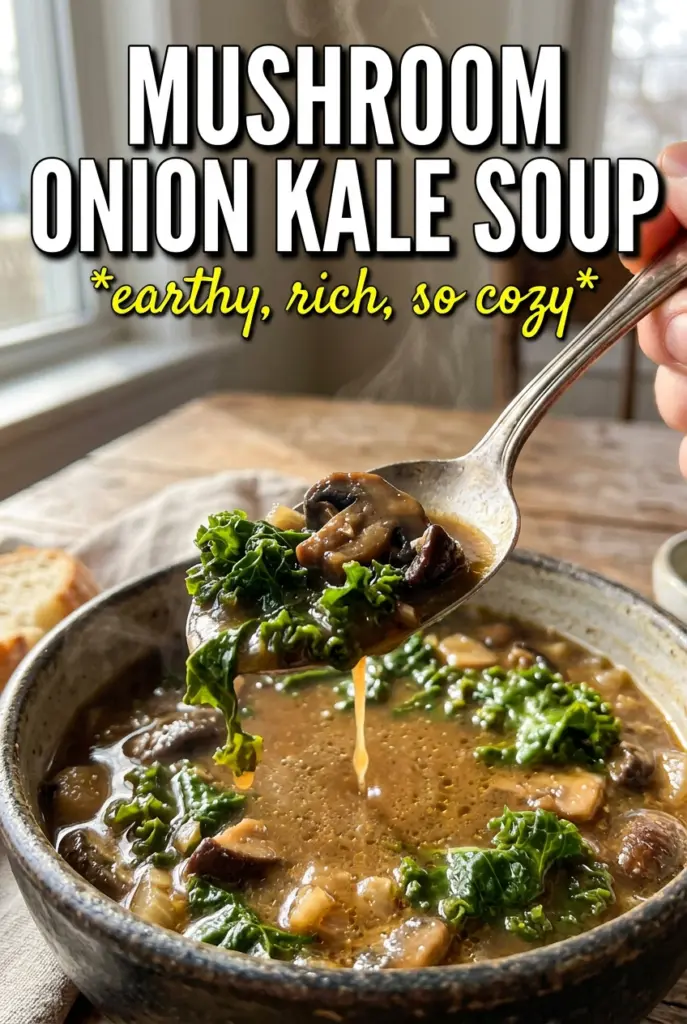
Deep, savory broth, sweet caramelized onions, and a tangle of wilted kale make this soup taste like it simmered all afternoon, even though the hands-on work is straightforward. The mushrooms bring meatiness, the sherry lifts everything up, and a final splash of balsamic ties the whole pot together without making it taste sharp. It’s the kind of bowl that feels substantial enough for dinner and still leaves you wanting one more spoonful.
What makes this version work is patience at the beginning and restraint at the end. The onions need enough time to turn mahogany and jammy before anything else goes in, because that slow browning is what builds the broth. The porcini soaking liquid adds a deep, woodsy backbone, but it has to be strained so you don’t pour grit into the pot. Kale goes in near the finish so it stays tender instead of collapsing into a dull green mess.
Below, you’ll find the small choices that matter most: how dark the onions should get, why the mushrooms should brown before the broth goes in, and how to finish the soup so it tastes polished instead of muddy.
The onions got that deep sweet edge and the porcini broth made it taste like it had simmered for hours. I loved that the kale stayed tender without turning mushy.
Save this wild mushroom caramelized onion and kale soup for the nights when you want a deep, earthy bowl with real body and a glossy finish.
The Onion Step That Gives the Broth Its Backbone
The onions are not a background task here. They’re the base of the whole soup, and if they only turn translucent, the broth tastes thin and one-note. Let them cook until they’re deeply golden, soft, and almost spreadable; that’s when their natural sweetness starts carrying the savory mushroom flavor instead of getting buried under it.
The most common mistake is rushing this stage over heat that’s too high. The onions will brown on the edges before they soften through, and the pot will taste sharp instead of rich. Keep the heat at medium, stir often enough to prevent scorching, and scrape up any browned bits as they form — that’s flavor, not stuck food.
What the Mushrooms, Porcini, and Balsamic Each Bring to the Pot

- Mixed wild mushrooms — Shiitake, cremini, and oyster give the soup layers of texture and a deeper flavor than one mushroom alone. If you can’t find all three, use whatever mix looks best at the store; the important part is using more than one type so the soup tastes rounded, not flat.
- Dried porcini mushrooms — These are the shortcut to a deeper, woodsy broth. Soak them in hot water, then strain that liquid through a fine sieve or coffee filter-lined strainer; the soaking liquid is valuable, but any grit left behind will ruin the texture.
- Dry sherry or white wine — This deglazes the pot and lifts the browned mushroom bits off the bottom. Sherry gives a little more nutty depth, but a dry white wine works well if that’s what you have open.
- Balsamic vinegar — Just a tablespoon is enough to wake up the onions and mushrooms without making the soup taste sweet. Add it near the end so the brightness stays clean.
- Parmesan and truffle oil — Parmesan adds salty finish, and truffle oil adds a strong perfume on top. Use a light hand with the truffle oil; too much and it takes over the whole bowl.
How to Build the Soup in Layers Without Clouding the Flavor
Caramelizing the onions slowly
Melt the butter and olive oil together, then add the sliced onions and keep them moving often enough that they don’t catch on the bottom. After 35 to 40 minutes, they should be deep golden, soft, and glossy, not pale and dry. If the heat is too high, they’ll brown before they sweeten, and the broth will come out harsh. If the pot starts looking dry, add a splash of water and keep going.
Brown the mushrooms before the broth goes in
Add the garlic and sliced mushrooms and cook until the mushrooms release their moisture, then shrink and pick up some color. You want browned edges and a dry-ish pan, not a puddle of mushroom liquid. That browning is what gives the soup its meaty backbone. If you dump in the broth too soon, the mushrooms will steam and the flavor stays shallow.
Deglaze, then build the broth
Pour in the sherry or wine and scrape the bottom of the pot while it bubbles for a minute or two. The liquid should smell nutty and a little sharp at first, then settle down as it reduces. Add the strained porcini liquid, the chopped porcini, broth, thyme, and balsamic, then bring everything to a steady simmer. Don’t boil hard; a hard boil can muddle the flavor and make the broth taste less clean.
Finish with the kale at the end
Once the soup has simmered and the flavors have come together, stir in the kale and cook just until it turns tender and dark green. You’re looking for wilted leaves with a little structure left, not soggy ribbons. Season with salt and pepper only after the final simmer, because the broth and cheese can make the soup taste saltier than you expect. Ladle it hot and finish with Parmesan and a few drops of truffle oil if you want that extra earthy aroma.
How to Adapt This for a Lighter Bowl or a Bigger Pantry
Make it vegetarian
Use vegetable broth instead of beef broth and keep the rest the same. The soup will taste a little lighter, so lean on the porcini liquid and balsamic for depth. This version still feels rich because the onions and mushrooms do most of the heavy lifting.
Skip the wine if you don’t cook with alcohol
Replace the sherry or wine with extra broth plus a teaspoon of additional balsamic vinegar. You’ll lose a little of the sharp lift that wine brings, but the soup will still have enough acidity to stay balanced.
Use cremini if wild mushrooms are expensive
A full pound of cremini mushrooms will still give you a good, earthy soup. The flavor won’t be quite as varied, but the caramelized onions and porcini liquid make up a lot of that difference. Slice them thick enough that they keep some texture after simmering.
Storage and Reheating
- Refrigerator: Keep covered for up to 4 days. The kale softens a bit more as it sits, but the flavor gets deeper by the next day.
- Freezer: Freezes well for up to 2 months if you leave out the Parmesan garnish. Cool it completely, portion it into containers, and thaw overnight in the fridge.
- Reheating: Warm gently on the stovetop over medium-low heat until steaming. Don’t boil it hard, or the kale can turn dull and the broth can taste flat; if it has thickened in the fridge, loosen it with a splash of broth or water.
Answers to the Questions Worth Asking
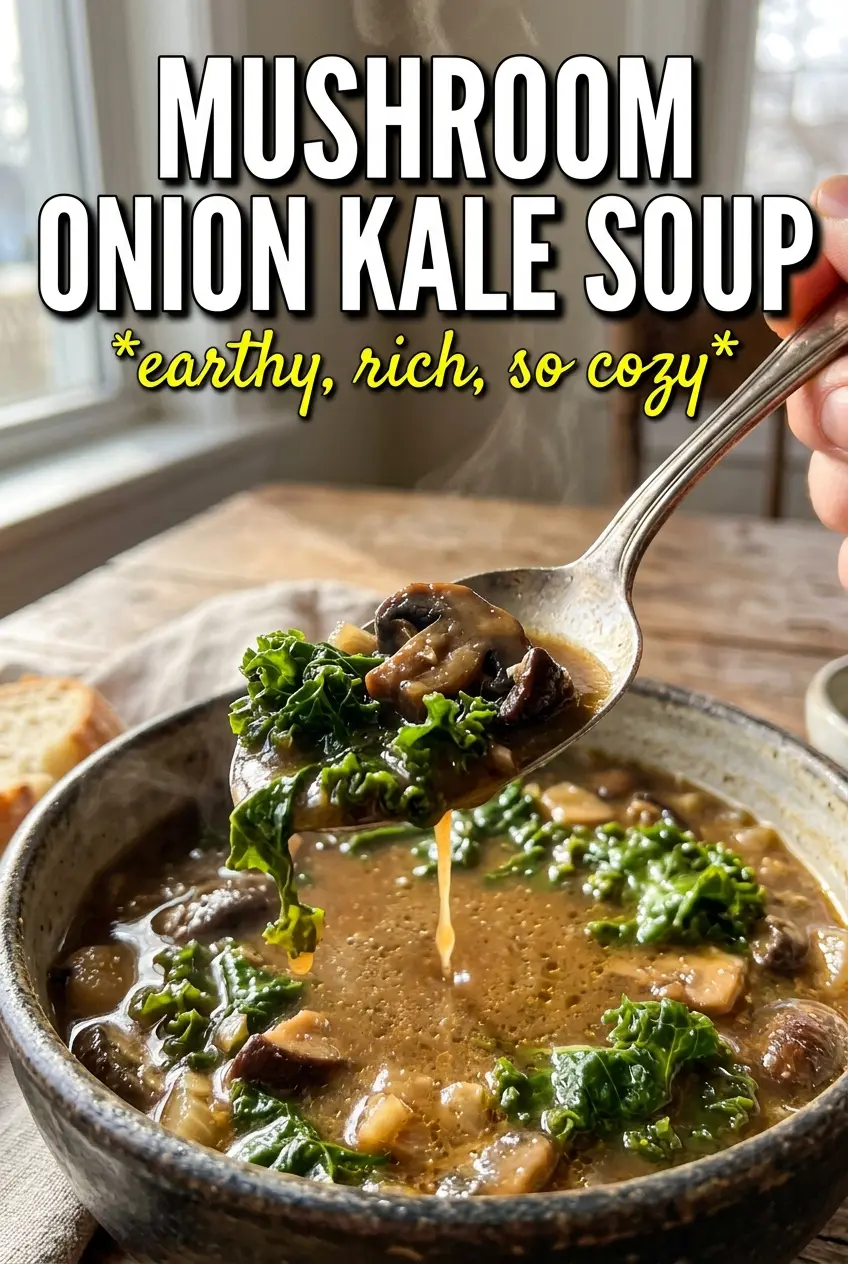
Wild Mushroom Caramelized Onion and Kale Soup
Ingredients
Equipment
Method
- Melt butter with olive oil in a large heavy pot over medium heat. Cook the onions 35-40 minutes, stirring occasionally, until deeply golden and caramelized.
- Add garlic and sliced mixed wild mushrooms to the pot. Cook for 8 minutes, stirring occasionally, until the mushrooms are browned.
- Pour in the sherry (or white wine) and deglaze the pot. Cook for 2 minutes, scraping up the browned bits.
- Drain the soaked porcini (reserve the soaking liquid), then add the porcini and strained soaking liquid to the pot. Add the broth, thyme, and balsamic vinegar and simmer for 15 minutes.
- Add the chopped kale and cook for 5 minutes until wilted and tender. Season with salt and pepper, then top with parmesan shavings and a drizzle of truffle oil.