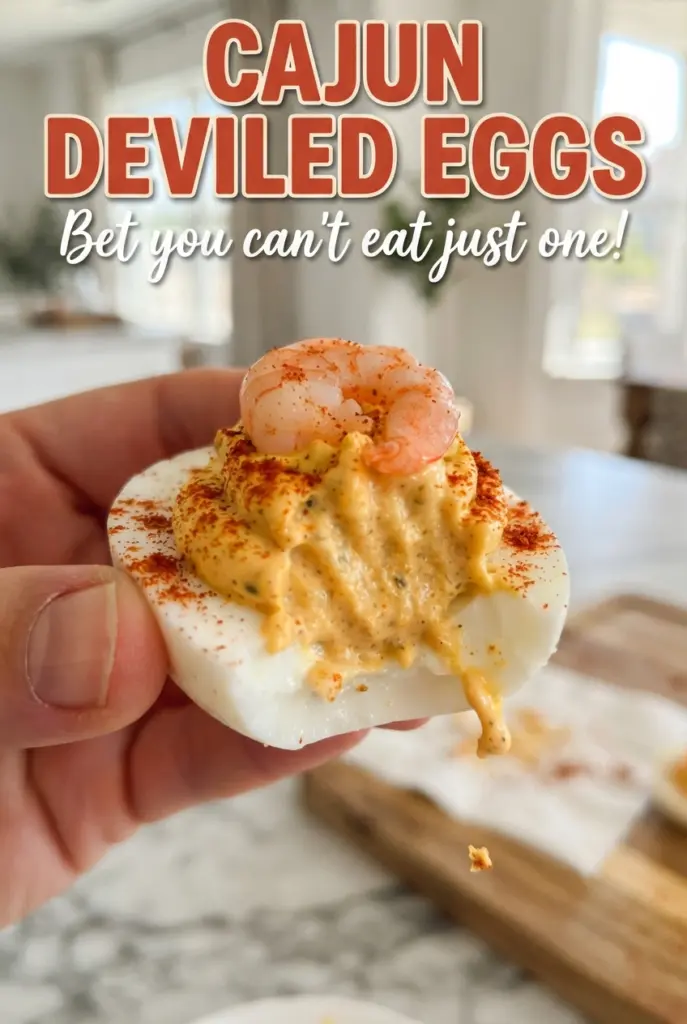
Cajun deviled eggs land with a sharper, bolder bite than the classic version, and the shrimp on top turns them from a party tray staple into the first platter people hover over. The filling stays creamy, but the Creole mustard, hot sauce, and Cajun seasoning give it enough backbone to stand up to the richness of the yolks and mayonnaise.
The trick is balancing heat and tang without making the filling watery. Sweet pickle relish adds a little sweetness and texture, while the mustard keeps the flavor lively. The shrimp are seared separately so they stay springy and lightly caramelized instead of turning rubbery from sitting in the filling.
Below, I’ll walk through the part that keeps the yolks pale and smooth, plus the small handling details that make these look neat on a platter. There’s also a few smart variations if you want to make them ahead or skip the shrimp.
The filling was ultra smooth and the shrimp stayed tender with a little crust on the outside. I made them in the morning and they were still perfect by dinner.
Save these Cajun deviled eggs with shrimp for a platter that brings creamy filling, a little heat, and a crisp seared topping.
The Part That Keeps the Filling Smooth Instead of Grainy
The biggest mistake with deviled eggs is overworking the yolks or adding too much dry seasoning before the mayo has done its job. You want the yolks broken down first, then the mayonnaise and mustard stirred in until the mixture turns creamy and holds its shape. If it looks dusty or stiff, the filling will pipe badly and taste flat.
Cajun seasoning brands vary a lot in salt level. Start with the amount listed, then taste before adding more. The relish matters here because it gives the filling a little sweetness and moisture without thinning it out the way extra mayo can. That balance is what keeps each bite rich but not heavy.
- Eggs — Older eggs peel more cleanly than very fresh ones. After boiling, the ice bath matters because it stops the cooking fast and helps the whites release from the shell.
- Creole mustard — This gives the filling a sharper, more textured bite than yellow mustard. If you need a swap, use Dijon, but the finished eggs will be less Louisiana in character.
- Sweet pickle relish — It cuts through the richness and adds a little crunch. Drain it briefly if it looks watery so the filling stays pipeable.
- Shrimp — These are the part that changes the recipe from classic to crowd-stopping. Dry them well before seasoning so they sear instead of steam.
What Each Ingredient Is Actually Doing in This Recipe
- Primary ingredient (the star) — Quality matters most. Choose the best you can find.
- Cooking medium (oil, butter, or broth) — This carries flavors and prevents dryness.
- Seasonings (salt, pepper, spices, herbs) — Layer flavors so nothing overpowers. Build depth gradually.
- Aromatics (garlic, onion, herbs) — Cook with fat to bloom flavors. Become the foundation.
- Supporting ingredients — Complement the main ingredient without overpowering it.
- Sauce or liquid (if applicable) — Brings flavors together. Balance richness with acid.
- Acid (lemon, vinegar, wine, or other) — Brightens and prevents flat-tasting results.
- Final finish (garnish, glaze, or sauce) — Prevents one-dimensional taste and adds visual appeal.
Building the Eggs, Then Topping Them at the Last Second
Boiling and Peeling Without the Gray Ring
Put the eggs in cold water first, then bring them up to a boil so the whites set evenly. Once the pot comes off the heat, leave the lid on and let the eggs stand for 12 minutes. That gentle finish gives you a set yolk without the chalky, dry center that makes deviled eggs taste dull.
The ice bath is not optional. It stops carryover cooking and makes peeling easier, especially if you crack each egg all over before slipping off the shell.
Mixing the Filling Until It Pipes Cleanly
Mash the yolks until they’re broken down before adding the mayo, mustard, hot sauce, relish, and seasoning. Stir until the filling looks glossy and smooth, with no dry pockets hiding in the bottom of the bowl. If it seems loose, let it sit for a few minutes; the relish and seasoning will settle in and thicken slightly.
Searing the Shrimp for the Finish
Toss the shrimp with the remaining Cajun seasoning, then sear them in butter just until they turn pink and curl into a loose C shape. Two minutes per side is plenty for medium shrimp. If they stay in the pan too long, they’ll tighten up and won’t sit neatly on top of the eggs.
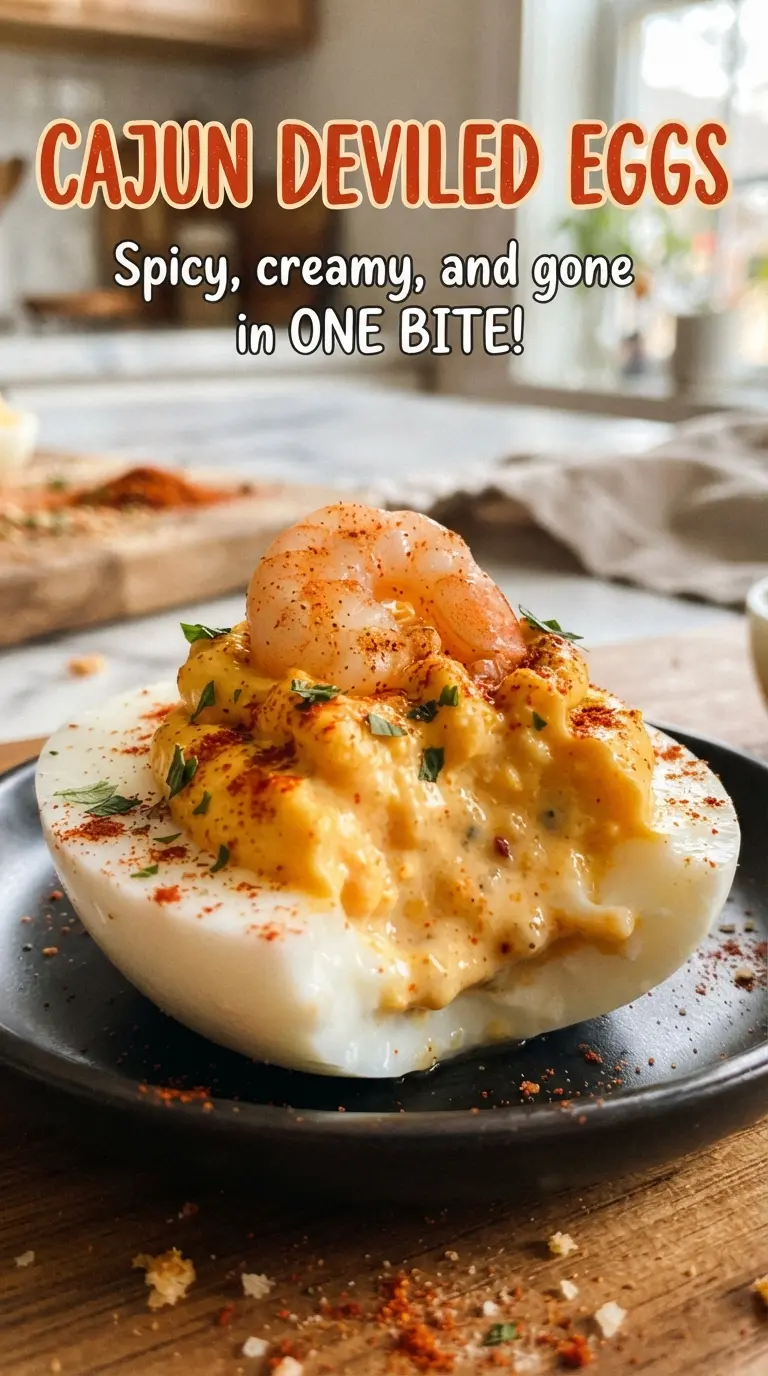
Pipe or spoon the filling into the egg whites, then top each one with a shrimp half and a few sliced green onions. Add the shrimp at the end so they stay warm and look fresh, not wilted or soggy.
How to Adapt These Cajun Deviled Eggs for Different Crowds
Dairy-Free and Still Creamy
These are already naturally dairy-free as written because the filling uses mayonnaise instead of cream cheese or sour cream. Just check your Cajun seasoning and mustard labels if you’re cooking for someone with sensitivities, since some blends include additives or trace dairy.
Make Them Without the Shrimp
Skip the shrimp and finish each egg with extra green onion and a tiny pinch of Cajun seasoning. You’ll get a more classic deviled egg with the same Creole-style filling, and it’s easier to transport if you’re bringing them to a potluck.
Dial the Heat Up or Down
Use a mild Cajun seasoning and reduce the hot sauce if you want a gentler version. For more heat, add a little extra hot sauce or a pinch of cayenne, but taste as you go so the filling stays balanced instead of sharp.
Storage and Reheating
- Refrigerator: Store assembled eggs covered in the fridge for up to 2 days. The whites stay fine, but the shrimp is best the first day.
- Freezer: Don’t freeze deviled eggs. The whites turn rubbery and the filling separates after thawing.
- Reheating: These are meant to be served cold or cool, not reheated. If you’re making them ahead, keep the filling and shrimp separate, then assemble just before serving so the shrimp keeps its seared texture.
Questions I Get Asked About This Recipe
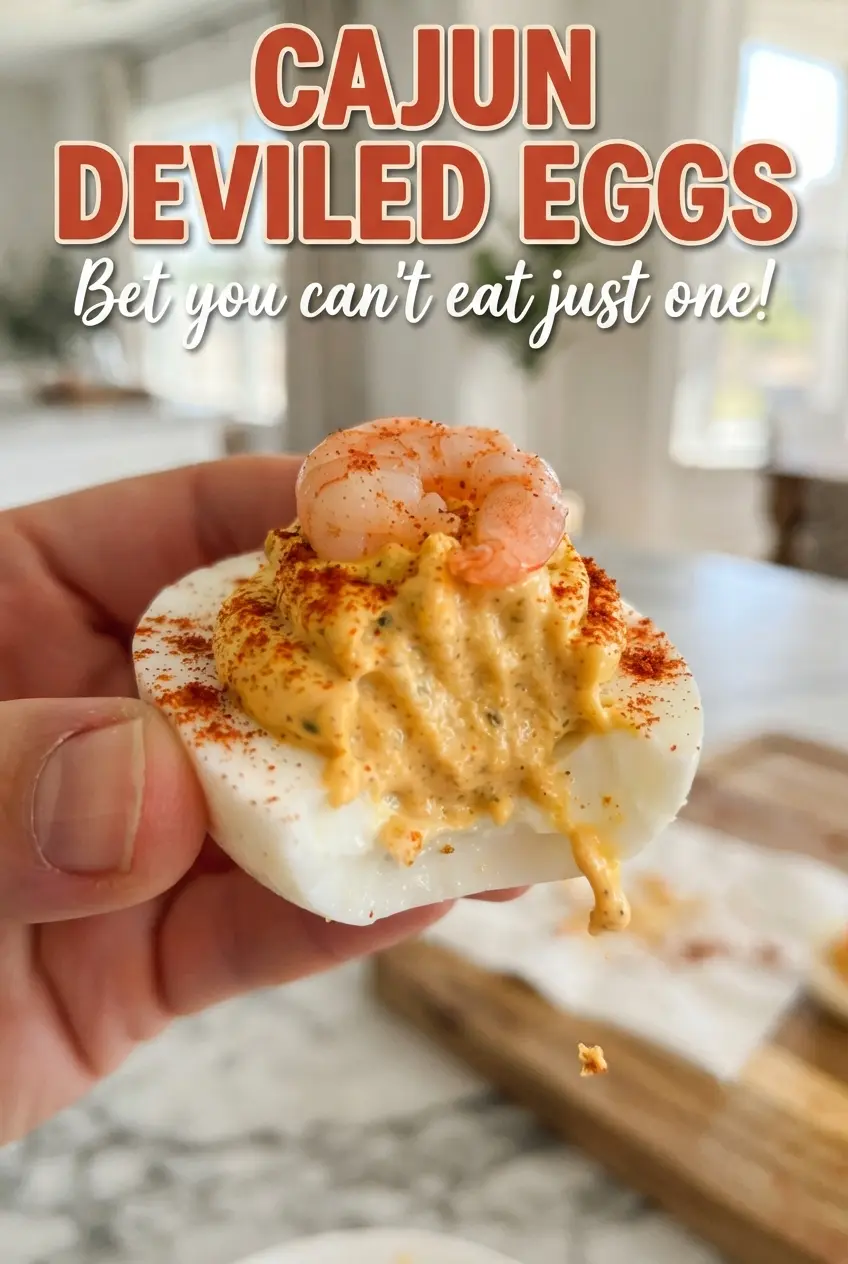
Cajun Deviled Eggs
Ingredients
Equipment
Method
- Place the eggs in a pot, cover with cold water, and bring to a boil. Cover the pot, remove from heat, and let stand for 12 minutes.
- Chill the eggs in an ice bath for 10 minutes. Peel them and halve lengthwise.
- Mash the yolks with mayonnaise, Creole mustard, hot sauce, relish, and 1 teaspoon Cajun seasoning until smooth. Mix just enough to get a creamy, pipeable texture.
- Toss the shrimp with the remaining Cajun seasoning. Heat butter in a skillet and sear the shrimp for 1-2 minutes per side until pink.
- Pipe the filling into the egg whites. Keep the filling level so it holds a neat mound.
- Top each egg with a shrimp half and sliced green onions. Serve right away for the best contrast between warm shrimp and cool filling.


