Carbonara deviled eggs bring all the salty, peppery drama of the pasta bowl into a bite-sized appetizer. The filling lands rich and silky instead of heavy, and the crispy pancetta on top gives each egg the kind of crunch that keeps people reaching back for another one. They disappear fast because they taste familiar and a little unexpected at the same time.
The trick is treating the yolk filling like a tiny carbonara sauce. Pecorino brings the sharp, salty backbone, Dijon helps the mixture stay lively, and a little reserved pancetta fat ties everything together without making it greasy. Grated garlic goes in sparingly, just enough to echo the sharpness you want in the background without taking over the whole bite.
Below, I’ve included the easiest way to keep the filling smooth, how to avoid rubbery eggs, and a few swaps that still keep the carbonara character intact. If you’ve ever had deviled eggs turn bland or pasty, this version fixes both problems.
The filling was creamy and held its shape, and that little bit of pancetta fat made the yolks taste richer without turning them oily. I piped them for a dinner party and they were gone before the main course hit the table.
Save these Carbonara Deviled Eggs for your next appetizer spread when you want creamy yolks, crispy pancetta, and lots of black pepper in one bite.
The Trick to Keeping the Filling Carbonara-Rich, Not Heavy
Deviled eggs can go flat fast when the yolks are overloaded with mayonnaise and not enough seasoning. Carbonara deviled eggs need balance: enough mayo to make the filling pipeable, enough Pecorino to bring salt and depth, and just a touch of reserved pancetta fat to carry the flavor without making the mixture slick. If the filling tastes dull before it goes into the whites, it will taste dull on the plate too.
The other thing that matters is texture. A smooth, fluffy filling comes from mashing the yolks while they’re still slightly warm from the ice bath, then whisking everything together until the mixture goes from grainy to creamy. If you stop too soon, you’ll get little yolk crumbs instead of that rich, cohesive center.
What the Pecorino, Pancetta, and Black Pepper Are Doing Here
- Eggs — Older eggs peel more cleanly than very fresh ones, which matters here because neat whites make the eggs look finished instead of torn. Cold eggs from the fridge are fine; the ice bath does most of the work.
- Pancetta or guanciale — This is the part that makes the filling taste like carbonara instead of standard deviled eggs. Pancetta is easier to find and still gives you crisp edges and rendered fat, while guanciale brings a deeper pork flavor if you can get it.
- Pecorino Romano — Parmesan won’t give you the same sharp, salty bite. Pecorino melts into the yolks with a punchier finish, so use the real thing if you want the filling to taste distinctly carbonara-like.
- Mayonnaise — This keeps the filling smooth and stable. If you want to use a lighter hand, swap in Greek yogurt for part of it, but the texture will be tangier and less lush.
- Black pepper — Don’t skip the pepper or reduce it too far. Carbonara lives on pepper, and the cracked pepper on top gives each bite a little heat and a clean finish.
- Garlic — A tiny grated clove is enough. It should round out the filling, not turn it into garlic aioli.
Building the Eggs So the Filling Stays Smooth
Cooking and Peeling the Eggs
Set the eggs in cold water, bring the pot to a boil, then cover and pull it off the heat for 12 minutes. That steady, off-heat cook gives you set whites and yolks that are cooked through without turning chalky. Move them straight into an ice bath for at least 10 minutes, because the cold stop is what keeps the yolks from developing that gray ring and makes peeling easier. If the shells cling, crack them all over and let the eggs sit in the water for another minute before trying again.
Rendering the Pancetta
Cook the pancetta slowly enough that the fat can render before the edges scorch. You want crisp pieces, not hard nuggets, because they’ll sit on top of the eggs and give you contrast with the soft filling. Drain it on paper towels, but save about a teaspoon of the fat for the yolk mixture. That tiny bit adds a savory depth that makes the filling taste more complete.
Mashing the Yolk Filling
Break the yolks down first, then add the mayonnaise, Pecorino, mustard, garlic, pepper, and reserved fat. Mash until the mixture looks creamy and no dry yolk bits remain. If it looks thick or pasty, add a small spoonful of mayo rather than extra fat, because too much fat will make the filling separate. Taste it before piping; the mixture should be boldly seasoned since the egg whites mute flavor.
Filling and Finishing
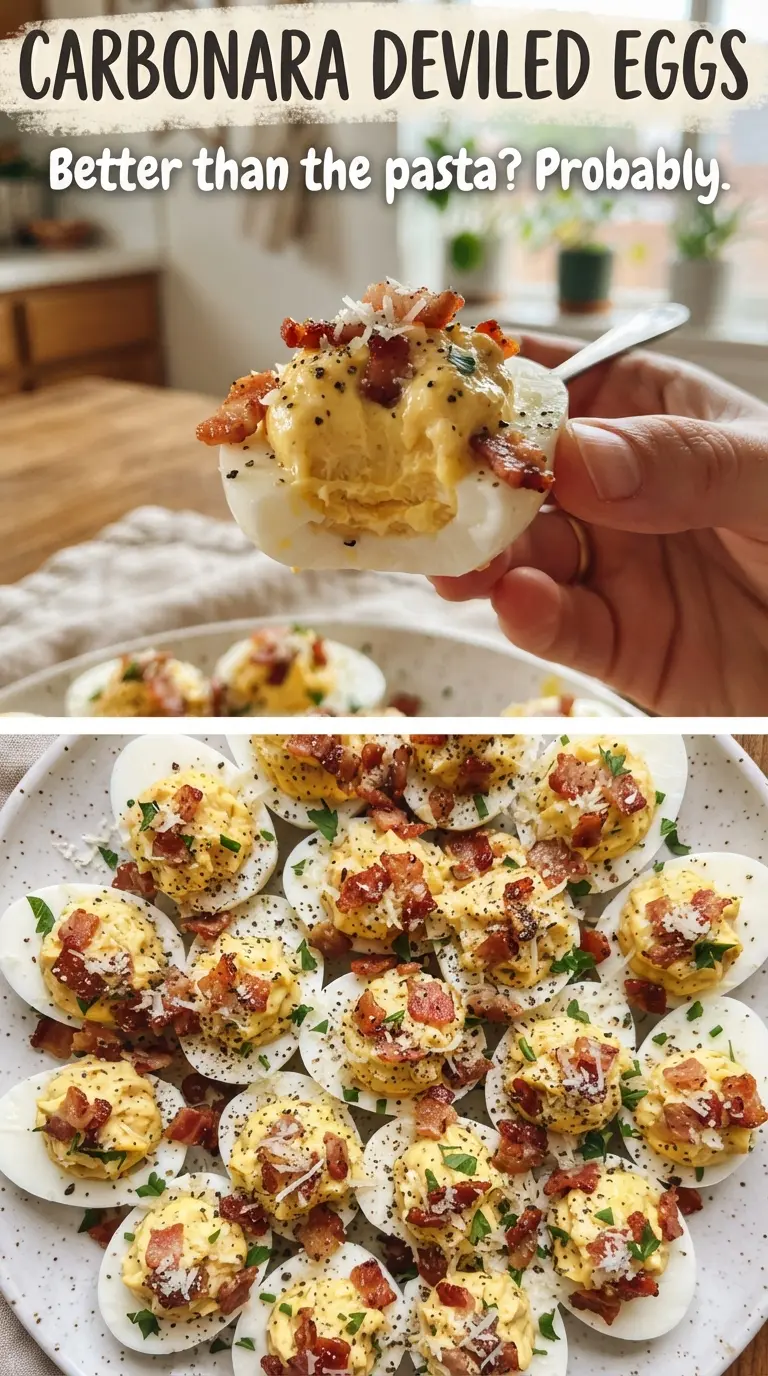
Pipe or spoon the filling into the whites with a light hand so the centers look full but not overstuffed. Add the pancetta first so it sticks, then finish with shaved Pecorino, a few extra cracks of black pepper, and parsley. The cheese should catch on the top of the filling and the pepper should be visible. That’s what makes the platter look as good as it tastes.
How to Adapt These Without Losing the Carbonara Character
Guanciale Swap for a More Authentic Carbonara Bite
Use guanciale in place of pancetta if you want a deeper pork flavor and a little more richness in the fat. It renders into a softer, silkier crisp and gives the eggs a more traditional carbonara edge. The tradeoff is availability, so pancetta is still the best practical substitute.
Dairy-Free Adjustment That Still Tastes Savory
Skip the Pecorino and replace the mayo with a dairy-free version, then add a little extra salt and a pinch of nutritional yeast for roundness. You won’t get the same sharp, salty finish, but the filling will still be creamy and peppery. This version leans more on the pancetta and black pepper for character.
Make-Ahead Party Tray
Boil, peel, and halve the eggs a day ahead, then keep the whites and filling separate until you’re ready to serve. The whites stay cleaner and the filling keeps its texture better when it isn’t sitting inside the eggs for hours. Assemble within a few hours of serving so the pepper stays bold and the pancetta stays crisp.
Storage and Reheating
- Refrigerator: Store assembled eggs in a single layer in an airtight container for up to 2 days. The filling stays fine, but the pancetta softens after a few hours.
- Freezer: Don’t freeze assembled deviled eggs. The whites turn watery and the filling separates after thawing.
- Reheating: These are best served cold or cool from the fridge. If you need to refresh them, let them sit at room temperature for 10 to 15 minutes so the filling loses its chill without warming enough to sweat.
Answers to the Questions Worth Asking

Carbonara Deviled Eggs
Ingredients
Equipment
Method
- Place the eggs in a pot, cover with cold water, and bring to a boil. Cover the pot, remove from heat, and let stand for 12 minutes.
- Chill the eggs in an ice bath for 10 minutes. Peel and halve them lengthwise.
- Cook the pancetta until crispy, 6-8 minutes. Drain, reserving 1 teaspoon of the fat.
- Mash the yolks with mayonnaise, Pecorino Romano, Dijon mustard, grated garlic, cracked black pepper, and the reserved pancetta fat until smooth.
- Pipe the filling into the egg whites. Top with crispy pancetta, shaved Pecorino Romano, cracked pepper, and parsley.