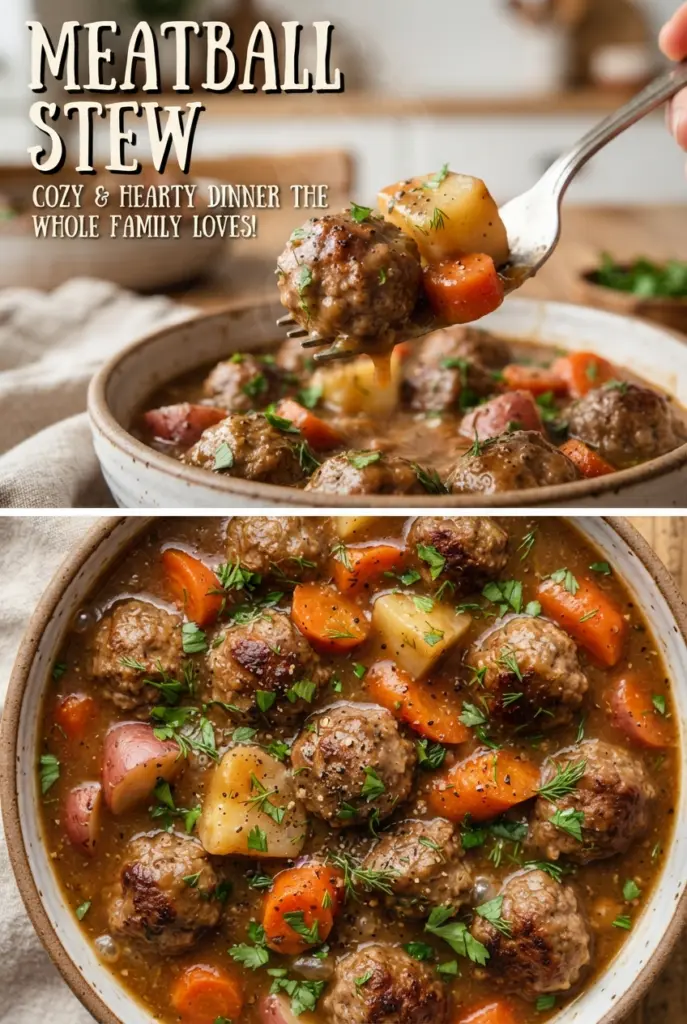
Hearty meatball stew lands in the bowl with the kind of comfort that feels old-fashioned in the best way: tender meatballs, soft potatoes, sweet carrots, and a rich brown gravy that clings instead of pooling thinly at the bottom. The meatballs stay juicy, the vegetables soak up the broth, and the peas give the whole pot a little pop at the end. It eats like a full meal, which is exactly why it earns a place in the rotation.
The difference here is in the order. Browning the meatballs first gives the stew depth before a drop of broth goes in, and that browned fond on the pot becomes the base of the gravy. A quick flour step with the onions thickens the liquid without turning it pasty, and the tomato paste plus Worcestershire add that savory backbone that makes the broth taste cooked, not just seasoned.
Below, I’ve broken down the one step that keeps the gravy from tasting flat, plus the ingredient swaps that still give you a good pot when you need to work with what’s in the kitchen.
The meatballs held together beautifully and the gravy thickened right up after the flour cooked with the onion. My kids ate around the peas at first, then went back for seconds.
Save this meatball stew for a thick, savory one-pot dinner with tender meatballs, potatoes, and a gravy that actually coats the spoon.
The Part That Keeps the Gravy from Turning Thin and Flat
Meatball stew lives or dies by the base. If you dump everything into the pot at once, you get broth with meatballs floating in it. Browning the meatballs first builds flavor on the surface and leaves browned bits behind, and those bits dissolve into the broth once the onions go in. That’s where the stew gets its deep, cooked-through taste.
The flour needs a full minute with the onions before the broth goes in. If it goes in too fast, you end up with raw flour taste or little lumps that never quite disappear. Let it coat the onions and cook until it looks a little dusty and smells nutty, then whisk in the broth gradually so the stew thickens smoothly as it simmers.
What Each Ingredient Is Actually Doing in This Pot
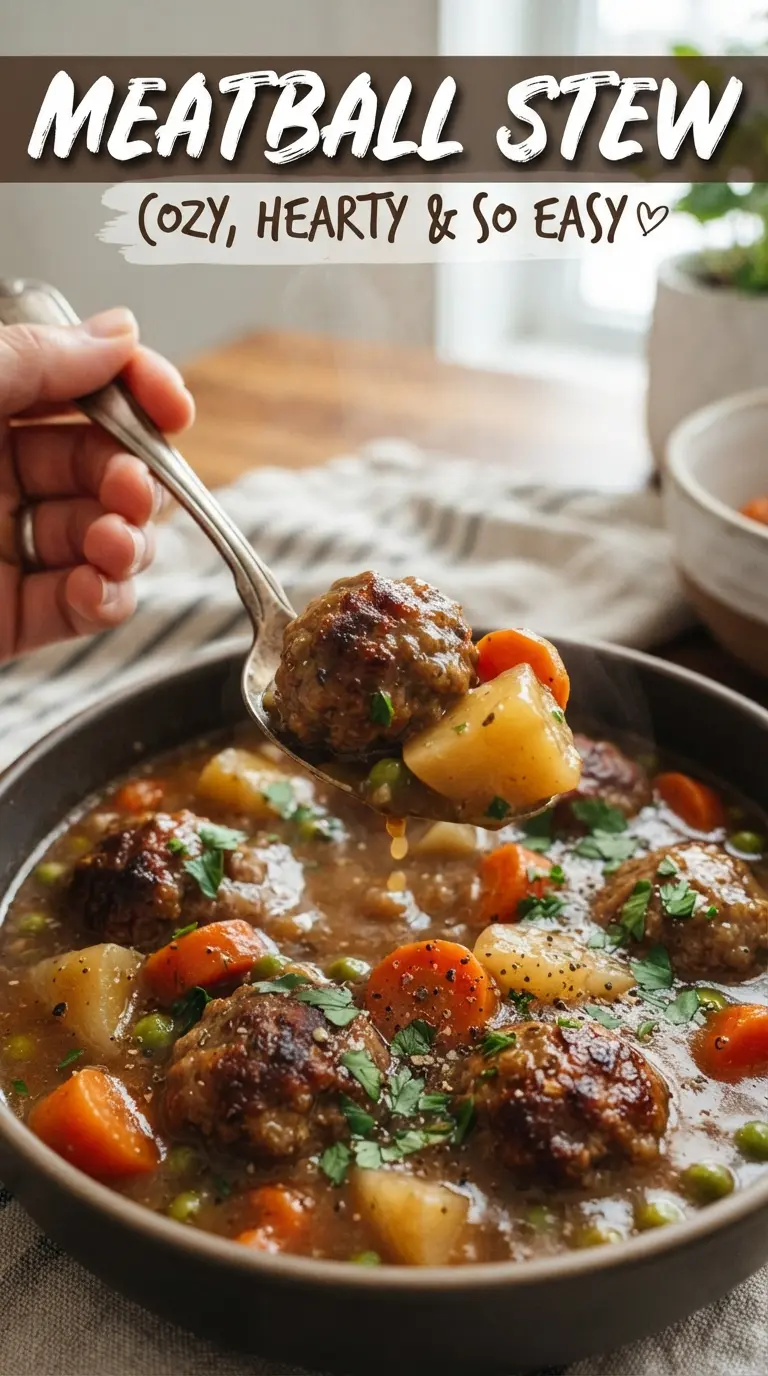
- Ground beef — An 80/20 mix gives the meatballs enough fat to stay tender after simmering. Leaner beef works, but the texture is a little firmer and less juicy.
- Breadcrumbs, egg, and milk — This trio keeps the meatballs soft instead of dense. If you need a swap, crushed saltines or panko work well in place of regular breadcrumbs, and the milk can be whole milk, 2%, or even evaporated milk.
- Tomato paste and Worcestershire sauce — These are the quiet flavor builders. Tomato paste adds body and a little sweetness, while Worcestershire deepens the broth with savory, fermented notes you can’t get from broth alone.
- Potatoes and carrots — These are not just filler. The potatoes absorb the gravy and help thicken the pot slightly, while the carrots bring sweetness that balances the beefy broth.
- Frozen peas — They go in at the end so they stay bright and tender. If they simmer too long, they turn dull and mealy.
Building the Stew So the Meatballs Stay Tender
Mix the Meatballs Gently
Combine the beef, breadcrumbs, egg, milk, salt, and garlic powder just until the mixture looks even. Overmixing tightens the meat and gives you firm, bouncy meatballs instead of tender ones. Roll them into 1 1/2-inch rounds with light pressure; if they’re packed hard, they’ll turn dense after simmering.
Brown Before the Simmer
Heat the oil until it shimmers, then brown the meatballs in batches. Crowding the pan makes them steam, and steaming steals the crust that gives the stew its best flavor. You’re not cooking them through here, just getting a deep brown surface that can handle the long simmer.
Thicken the Base in the Same Pot
After the meatballs come out, cook the onion in the same pot until soft and translucent. Stir in the flour and let it cook for a minute before adding liquid. If the flour looks clumpy, keep stirring and scrape the bottom of the pot; that’s where the flavor is, and it’s also where stubborn lumps like to form.
Simmer Until the Vegetables Give In
Whisk in the broth, tomato paste, Worcestershire sauce, and thyme, then add the potatoes and carrots. Slide the meatballs back in and keep the pot at a steady simmer, not a hard boil. A boil can break the meatballs apart and make the potatoes mealy on the outside before the centers soften.
Finish with the Peas
Stir in the peas during the last few minutes. They only need enough heat to thaw and turn tender, and any longer will dull their color. Taste the broth at the end and adjust the salt if needed after the vegetables have finished softening, since they absorb some of the seasoning along the way.
How to Adapt Meatball Stew for Different Kitchens and Schedules
Make It with Ground Turkey
Ground turkey works, but it needs the breadcrumb, egg, and milk mixture to keep it from drying out. Use 93% lean turkey for the best balance, and don’t skip browning since turkey needs that extra flavor from the pan.
Gluten-Free Version
Use gluten-free breadcrumbs in the meatballs and swap the all-purpose flour for a 1:1 gluten-free flour blend. The stew stays thick and hearty, though the gravy may look a touch less silky than the original.
Dairy-Free Shortcut
Swap the milk in the meatballs for unsweetened oat milk or plain broth. The texture stays close to the original, and the stew itself is already dairy-free, so this is an easy adjustment without changing the finished flavor much.
Storage and Reheating
- Refrigerator: Store in an airtight container for up to 4 days. The gravy will thicken as it chills.
- Freezer: It freezes well for up to 3 months. Cool it completely first and leave a little space in the container, since the broth expands as it freezes.
- Reheating: Reheat gently on the stovetop over medium-low with a splash of broth or water. High heat can overcook the potatoes and make the meatballs tough before the center warms through.
Answers to the Questions Worth Asking
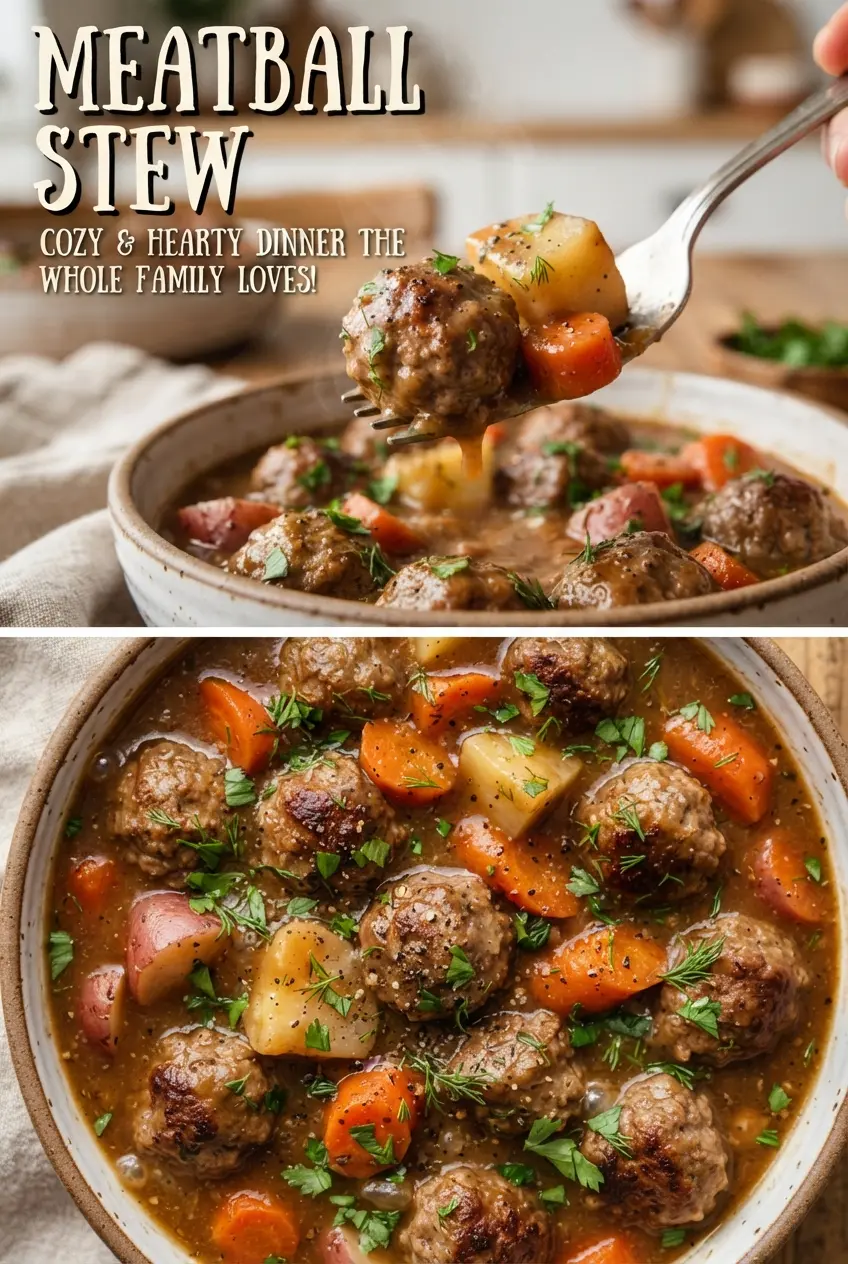
Meatball Stew
Ingredients
Equipment
Method
- Mix ground beef, breadcrumbs, egg, milk, salt, and garlic powder until evenly combined, then roll into 1 1/2-inch meatballs (about the same size for even cooking).
- Heat vegetable oil in a Dutch oven and brown the meatballs in batches, then set aside as they finish.
- Cook the diced onion for 4 minutes in the remaining drippings, then sprinkle in all-purpose flour and stir for 1 minute (coat the onion and remove raw flour smell).
- Whisk in beef broth, tomato paste, Worcestershire sauce, and dried thyme until smooth, then add the potatoes and carrots.
- Return the browned meatballs to the pot and simmer covered for 25-30 minutes, until the vegetables are tender (look for active bubbling and soft edges on potatoes).
- Stir in frozen peas and simmer for 5 minutes, until bright green and hot, then serve.