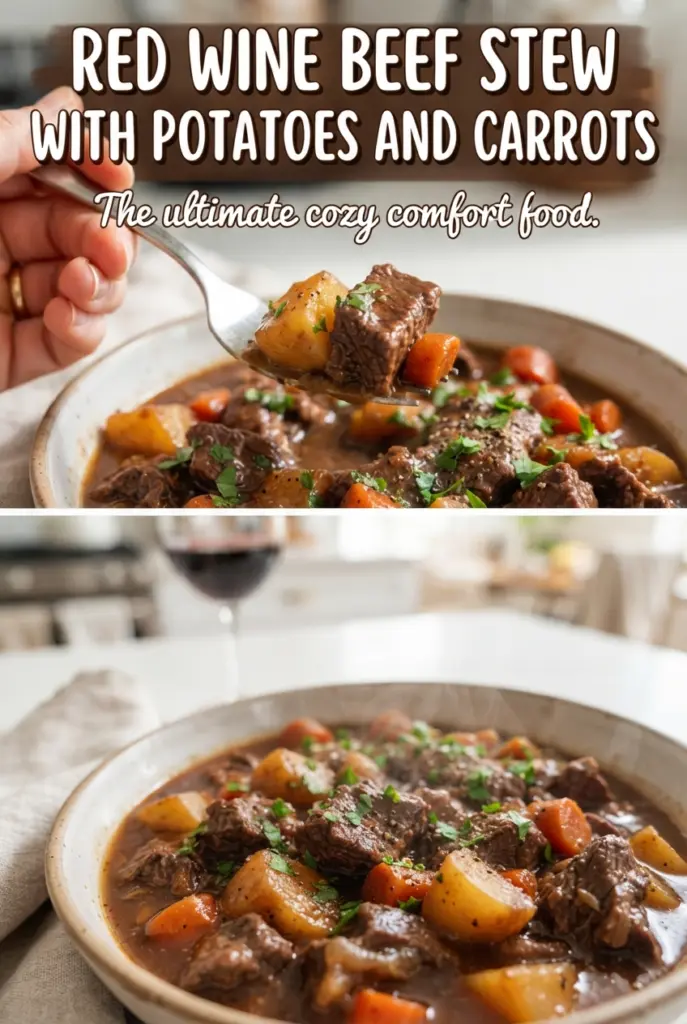
Deep, dark beef stew earns its place on the table when the broth turns glossy and the beef breaks apart with almost no effort. The potatoes soak up the red wine gravy without turning mushy, the carrots keep enough bite to give the spoonfuls shape, and the whole pot tastes richer on day two than it does the night you cook it. That’s the kind of stew I want in rotation.
The difference here is in the build: browning the beef in batches, cooking off the tomato paste, and reducing the wine before the braise starts. That step pulls the sharp edge out of the wine and leaves behind the kind of depth that makes the broth taste slow-cooked instead of just boozy. The flour on the beef also helps the liquid thicken as it simmers, so the finished stew coats the back of a spoon instead of pooling thinly at the bottom of the bowl.
Below, I’ve included the timing trick that keeps the potatoes intact and the easiest way to tell when the stew is ready to come out of the oven. If you’ve ever ended up with beef that’s tough or vegetables that collapse, the section on process will help straighten that out.
The wine sauce turned silky and the beef was fall-apart tender after exactly the braise time you gave. I added crusty bread and my husband went back for seconds before I even sat down.
Save this red wine beef stew for the night you want tender beef, potatoes that soak up the gravy, and carrots that hold their shape.
The Part That Keeps the Beef Tender Instead of Stringy
Beef chuck is the right cut here because it has enough connective tissue to turn silky during a long braise. The mistake people make is rushing the browning or crowding the pan, which steams the meat instead of building the fond that gives the stew its depth. Brown it in batches and let each side get a real crust before it comes out of the Dutch oven.
The other thing that matters is heat management after the liquid goes in. Once the stew is in the oven, it needs a gentle, steady braise, not a hard boil, or the beef fibers tighten before the collagen has time to relax. That’s why the oven does the work here instead of the stovetop.
- Beef chuck — This is the cut that softens into spoon-tender pieces over a long cook. A lean stew meat swap won’t give you the same richness or texture.
- Flour — The flour on the beef helps the sauce thicken as it braises. If you need to skip it, the stew will still work, but the broth will stay thinner.
- Dry red wine — Pick something you’d drink, even if it doesn’t need to be expensive. The wine gets reduced first, so cheap, overly sweet wine will show up in the final flavor.
- Yukon gold potatoes — They hold their shape better than russets and turn creamy at the edges without falling apart.
What the Wine, Tomato Paste, and Long Braise Are Doing Together
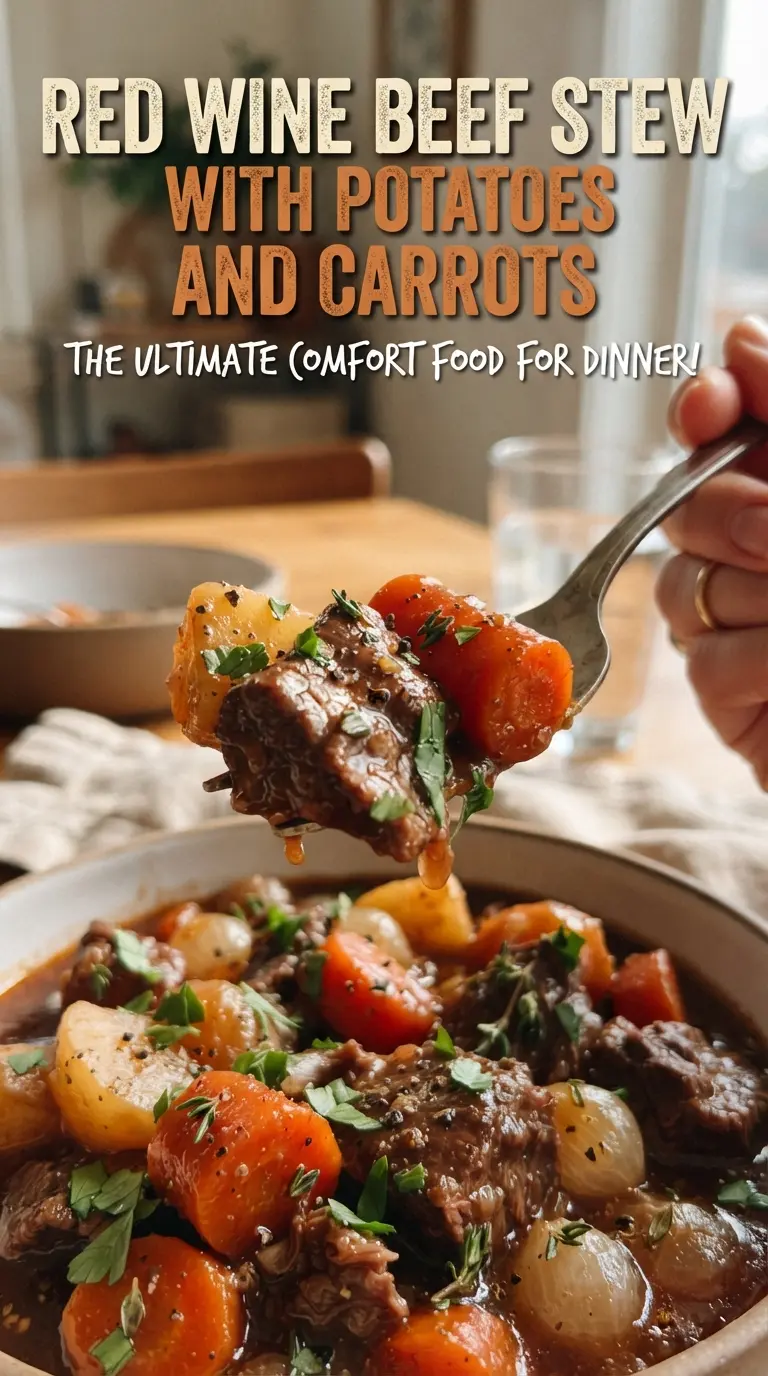
- Tomato paste — This deepens the base and adds a subtle savoriness once it cooks for that full minute with the onions and garlic. Raw tomato paste tastes flat; cooked tomato paste tastes round and concentrated.
- Balsamic vinegar — Just a tablespoon sharpens the stew at the end and makes the wine taste fuller. You can skip it in a pinch, but the broth will taste a little flatter.
- Fresh thyme and bay leaves — These are not background noise. They give the broth that classic French-inspired backbone, and dried thyme won’t give quite the same clean herbal note if you can avoid it.
- Carrots and potatoes — Adding them halfway through keeps them from dissolving into the braise. If they go in at the start, they’ll taste cooked out before the beef is done.
How to Build the Braise So the Sauce Stays Rich
Browning the Beef in Batches
Season the beef, toss it with the flour, and brown it in a single layer. You want a dark crust on the outside and a little resistance when you move the pieces in the pan. If the pot starts filling with liquid, pull the meat out and keep going in smaller batches, because pale, wet beef won’t give you the same deep stew flavor.
Cooking Down the Onion Base
After the beef comes out, cook the onion until it softens and starts to turn golden at the edges. Add the garlic and tomato paste for just a minute, stirring constantly so the paste darkens slightly and loses its raw edge. If the garlic starts to brown hard, lower the heat right away; burnt garlic will show up in every spoonful.
Reducing the Wine Before the Oven
Pour in the red wine and scrape up every browned bit from the bottom of the pot. Let it simmer until it’s reduced by about a third and smells less sharp and more rounded. This step matters because it cooks off the harsh alcohol note before the broth and herbs go in, which keeps the finished sauce deep instead of sour.
Finishing the Braise with Potatoes and Carrots
Once the beef has braised for two hours, add the potatoes and carrots and return the pot to the oven. They need less time than the beef, and this staggered timing keeps them from turning mealy. The stew is done when the beef yields easily with a fork, the potatoes are tender all the way through, and the broth has a glossy, lightly thickened look.
Three Ways to Make This Stew Fit Your Table
Gluten-Free Stew
Skip the all-purpose flour and brown the beef without it, then whisk 1 tablespoon cornstarch with 1 tablespoon cold water and stir it into the simmering stew at the end if you want a thicker broth. The texture will still be rich, just a little lighter and less rustic.
No-Wine Version
Replace the wine with an equal amount of extra beef broth plus 1 tablespoon red wine vinegar or a little more balsamic at the end. You’ll lose some of the classic braised depth, but the stew will still have a savory, rounded broth.
Make It Dairy-Free and Naturally Dairy-Free
This stew is already dairy-free, which makes it an easy crowd-friendly main. Serve it with olive oil toast or mashed potatoes if you want something extra under the gravy.
Add Mushrooms for a Deeper Earthy Note
Brown sliced cremini mushrooms after the onion and before the tomato paste, then carry on with the recipe. They add another layer of savoriness and make the stew taste even more substantial without changing the cooking method.
Storage and Reheating
- Refrigerator: Store for up to 4 days. The flavor deepens overnight, and the broth will thicken as it chills.
- Freezer: Freezes well for up to 3 months. Cool it completely first and leave a little space at the top of the container for expansion.
- Reheating: Warm gently on the stovetop over low heat, covered, with a splash of broth if needed. Don’t boil it hard or the beef can tighten and the potatoes may start to break apart.
Answers to the Questions Worth Asking
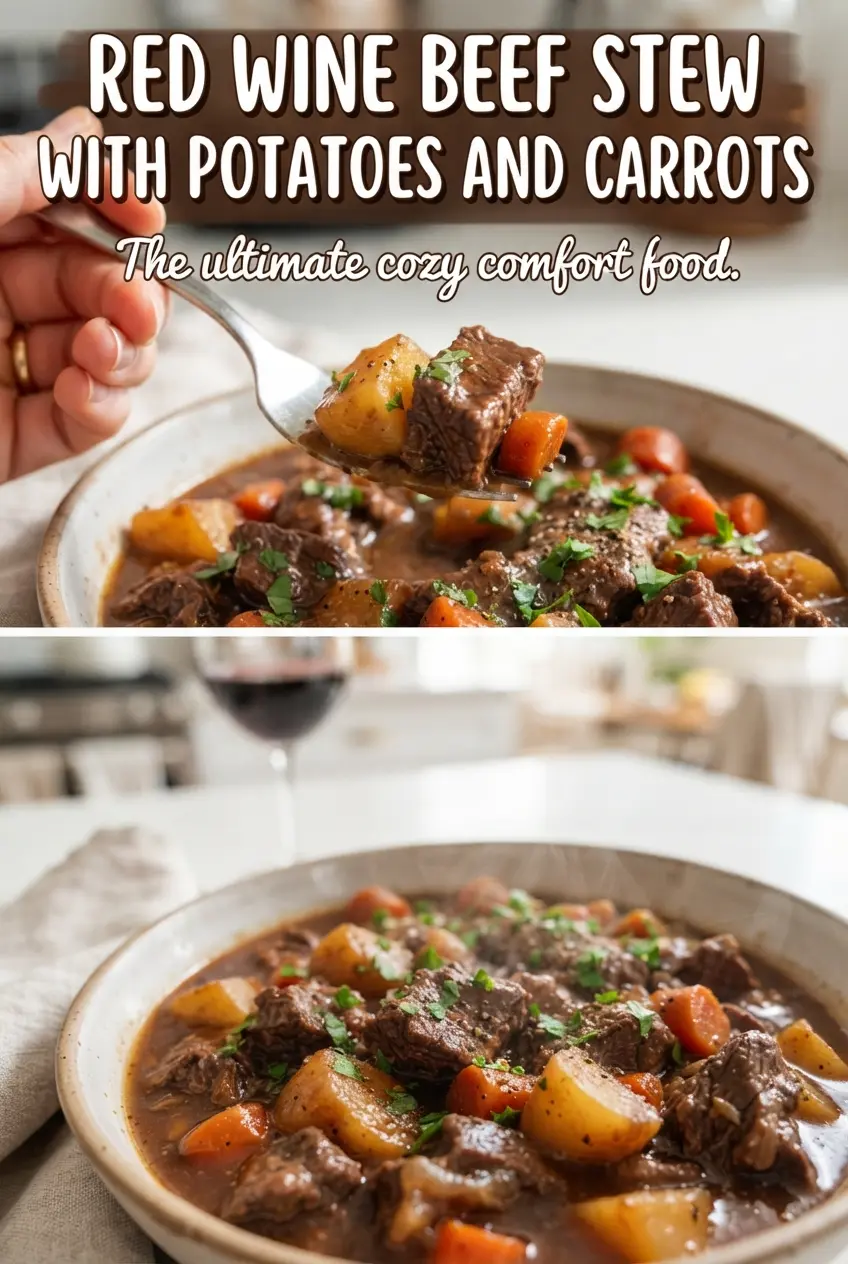
Red Wine Beef Stew with Potatoes and Carrots
Ingredients
Equipment
Method
- Preheat the oven to 325°F. Season the beef with salt and black pepper, toss with the all-purpose flour, and brown in batches in a Dutch oven.
- Cook the onion for 5 minutes in the Dutch oven. Stir in the garlic and tomato paste and cook for 1 minute.
- Pour in the dry red wine and simmer for 5 minutes, scraping the bottom. Continue until the wine reduces by about a third.
- Add the beef broth, balsamic vinegar, thyme sprigs, bay leaves, and the browned beef to the Dutch oven. Cover and braise in the oven for 2 hours at 325°F.
- Add the Yukon gold potatoes and carrots to the Dutch oven. Cover and braise for 1 hour more at 325°F until everything is tender.
- Remove the thyme and bay leaves, then stir in chopped fresh parsley. Serve hot.