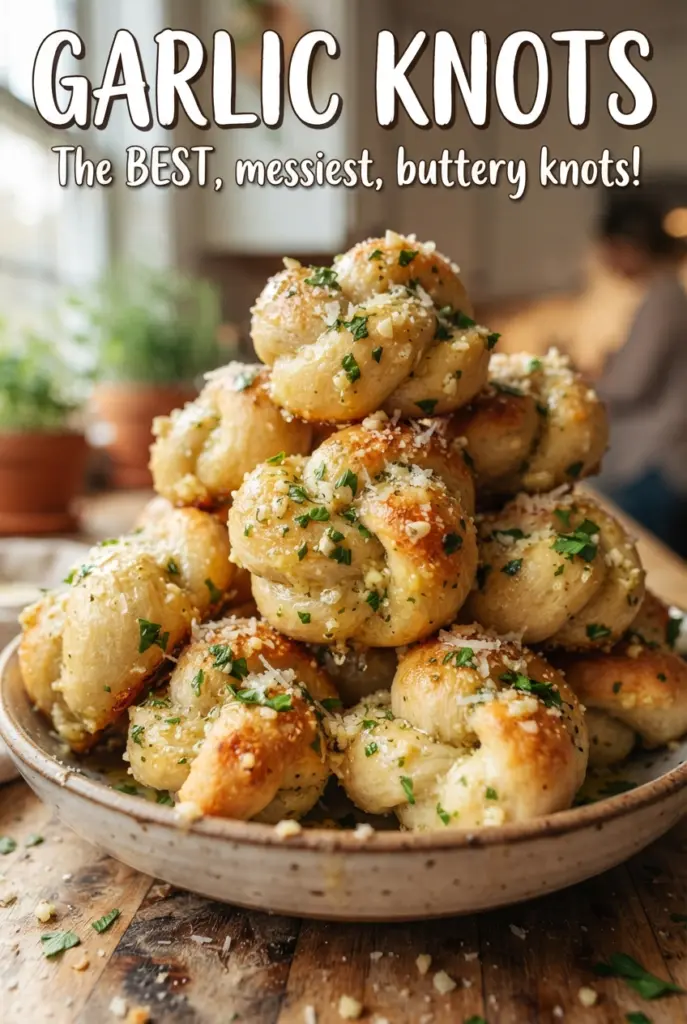
Garlic knots disappear fast because they hit every note people want from a bread side: soft centers, golden edges, and a glossy garlic butter finish that clings to every twist. The best ones don’t taste like plain dough with something brushed on top. They taste layered, with the garlic and parsley sinking into the warm bread instead of sitting on the surface.
This version keeps the dough work simple by using refrigerated pizza dough, but the shaping matters more than people think. Cutting the dough into even pieces helps them bake at the same rate, and tying each rope into a loose knot creates more surface area for browning and more crevices for butter to settle into. The garlic butter gets added after baking, which keeps the garlic fresh and sharp instead of cooked flat in the oven.
Below, I’ve included the small details that keep the knots tender, plus the one timing trick that makes the butter soak in without turning the tops greasy. If you’ve ever had garlic knots come out pale, dense, or bland, this version fixes all three.
I’ve made garlic knots before, but these baked up with a softer middle and a much better buttery finish. Brushing the garlic butter on after they came out of the oven kept the garlic from tasting burnt, and the Parmesan stuck to the warm tops perfectly.
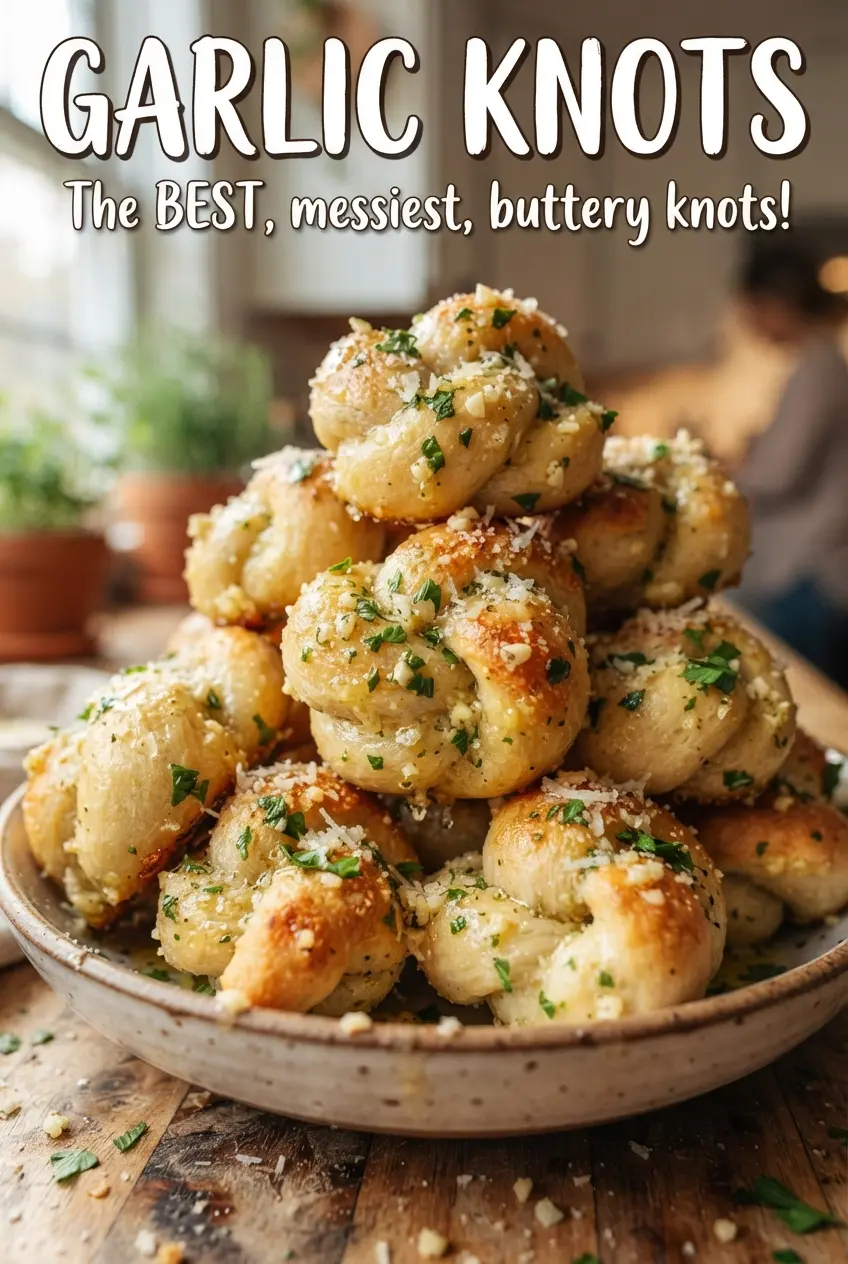
These garlic knots come out soft, golden, and glossy with garlic butter in every twist.
The Part That Keeps Garlic Knots Soft Instead of Tough
The biggest mistake with garlic knots is overworking the dough while shaping. Pizza dough needs just enough handling to become a rope and a knot; if you keep rolling and tugging, the gluten tightens up and the knots bake up chewy instead of tender. A loose knot is better than a tight one here. It gives the dough room to expand and brown without splitting open.
The other thing that matters is using the oven as the place where structure happens, then finishing with butter after baking. Garlic can turn bitter and parsley can lose its freshness if they go in too early. Brushing on the seasoned butter while the knots are hot lets it soak into the bread instead of sliding off the surface.
- Refrigerated pizza dough — This is the shortcut that makes the recipe fast without sacrificing texture. Let it come to room temperature first or it will fight you and spring back while you shape it.
- Butter — Melted butter is the base for both the bake-time brush and the garlic finish. Use real butter here; margarine won’t give you the same clean, rich coating.
- Garlic — Fresh minced garlic is what gives the final brush its bite. Garlic powder won’t taste the same, though you can use a small pinch in a pinch if that’s all you have.
- Parmesan — The cheese adds saltiness and a little dry, savory finish that helps the knots taste complete. Grate it finely so it sticks instead of falling into the pan.
What Each Ingredient Is Actually Doing in This Recipe
- Primary ingredient (the star) — Quality matters most. Choose the best you can find.
- Cooking medium (oil, butter, or broth) — This carries flavors and prevents dryness.
- Seasonings (salt, pepper, spices, herbs) — Layer flavors so nothing overpowers. Build depth gradually.
- Aromatics (garlic, onion, herbs) — Cook with fat to bloom flavors. Become the foundation.
- Supporting ingredients — Complement the main ingredient without overpowering it.
- Sauce or liquid (if applicable) — Brings flavors together. Balance richness with acid.
- Acid (lemon, vinegar, wine, or other) — Brightens and prevents flat-tasting results.
- Final finish (garnish, glaze, or sauce) — Prevents one-dimensional taste and adds visual appeal.
How to Shape, Bake, and Finish the Knots So They Come Out Glossy
Cutting Even Pieces
Divide the dough into 16 pieces so each knot bakes at the same pace. If some pieces are much bigger than others, the small ones will dry out before the larger ones are done. Keep the cuts clean and don’t flour the work surface heavily, since too much flour can keep the dough from sealing when you knot it.
Tying the Knot
Roll each piece into a rope about 7 inches long, then tie it loosely. The goal is a shape with a few open ridges, not a tight knot that collapses into a lump. If the dough keeps shrinking, let it rest for a couple minutes and it’ll relax enough to shape without tearing.
Baking to the Right Color
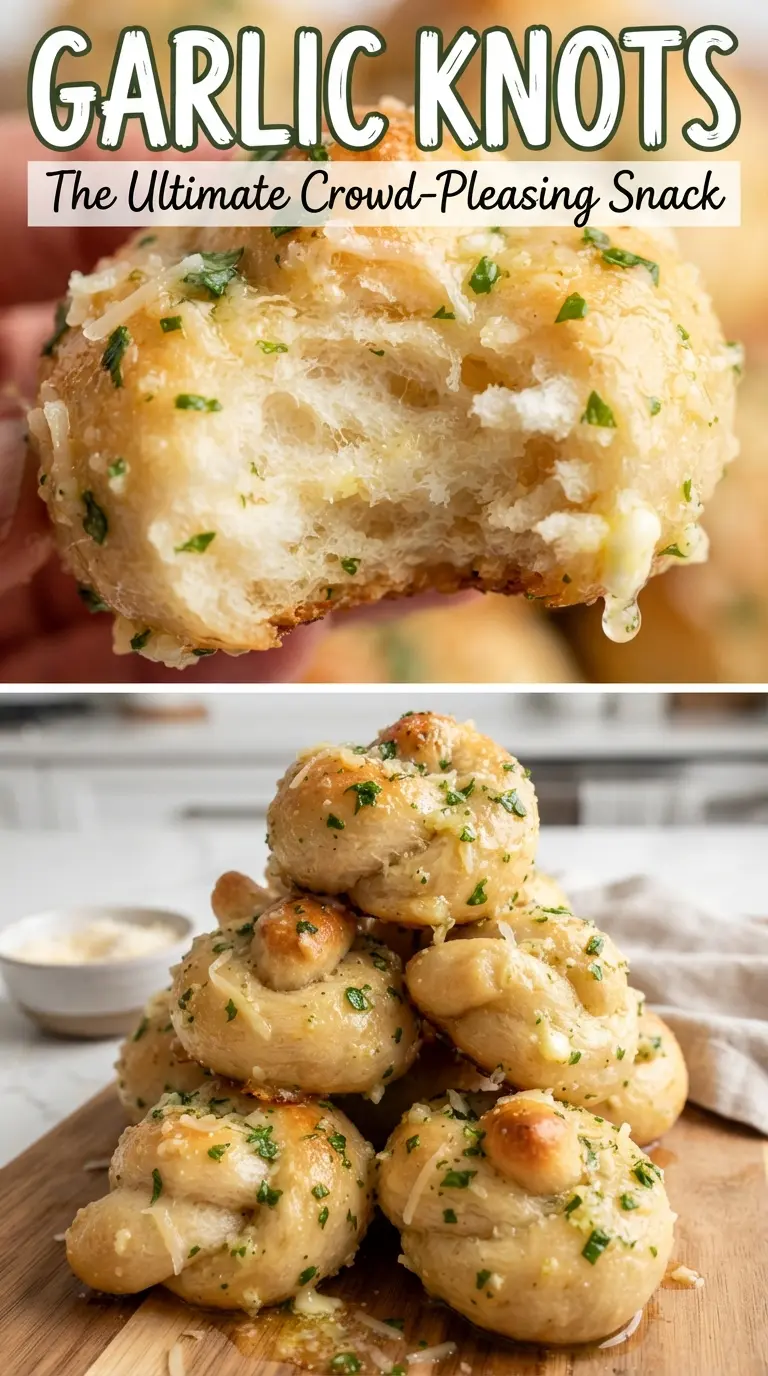
Brush the knots lightly with melted butter before they go into the oven, then bake until they’re golden brown on top and feel set when you lift one. Pale knots taste underdone even if the timer has run out, while dark knots start to lose their softness. You want the bottoms browned enough to give structure, but not so dark that they turn dry.
The Garlic Butter Finish
Stir the garlic, parsley, and salt into the remaining butter, then brush it over the knots the second they come out. The heat from the bread softens the garlic just enough and helps the butter soak into the creases. Finish with Parmesan while the surface is still hot so it clings instead of bouncing off.
Three Ways to Adjust These Garlic Knots Without Losing the Texture
Dairy-Free Garlic Knots
Swap the butter for a good dairy-free butter substitute with a similar fat content, then keep the rest of the process the same. You’ll lose a little of the dairy richness, but the garlic and parsley still carry the flavor. Skip the Parmesan or use a dairy-free hard cheese if you have one that melts and sticks well.
Extra-Cheesy Garlic Knots
Add a little shredded mozzarella to the center of each rope before tying if you want a softer, pull-apart middle. Don’t overfill them or the cheese will leak and burn on the pan. This version is best served immediately while the cheese is still stretchy.
Garlic Herb Knots with More Bite
Add a pinch of red pepper flakes or a little extra parsley to the butter for a sharper finish. The heat won’t change the structure, but it will make the knots feel less one-note next to a rich pasta or soup. Keep the garlic amount steady so the flavor stays balanced.
Storage and Reheating
- Refrigerator: Store leftovers in an airtight container for up to 3 days. The knots will soften a little as they sit, especially where the butter coats the crust.
- Freezer: Freeze baked knots without the final butter and Parmesan for up to 2 months. Wrap them well so they don’t dry out, then finish with fresh garlic butter after reheating.
- Reheating: Warm in a 350F oven for 6 to 8 minutes. The mistake to avoid is microwaving them too long, which makes the dough rubbery and drives the butter into a greasy layer instead of reviving the crust.
Answers to the Questions Worth Asking
Garlic Knots
Ingredients
Equipment
Method
- Preheat the oven to 400F and line a baking sheet with parchment.
- Cut the refrigerated pizza dough into 16 pieces and roll each into a 7-inch rope, then tie into a knot.
- Place the knots on the baking sheet and brush lightly with the melted butter.
- Bake for 13-15 minutes, until golden brown.
- Stir the minced garlic, chopped parsley, and salt into the remaining butter, then brush over the hot knots.
- Sprinkle the Parmesan over the knots and serve with marinara for dipping.