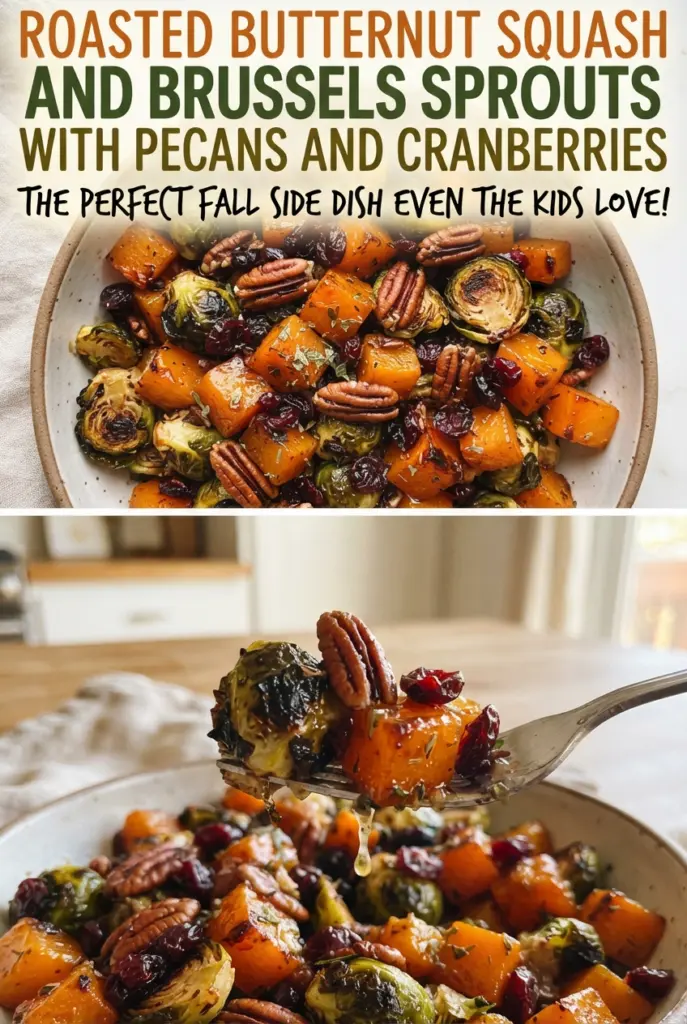
Caramelized butternut squash and crispy-edged Brussels sprouts belong together on a sheet pan. The squash turns soft and sweet in the middle, the sprouts pick up nutty browned edges, and the cranberries and pecans bring just enough chew and crunch to keep every bite moving. A quick maple-balsamic drizzle ties it all together without burying the vegetables under a heavy sauce.
The trick here is high heat and space on the pan. If the vegetables are crowded, they steam instead of roast, and you lose the deep color that makes this dish worth making. I also like to add the maple-balsamic after roasting, not before. That keeps the sprouts from turning soggy and lets the glaze cling to the hot vegetables instead of disappearing into the pan.
Below, I’ve included the small details that make a real difference: how to cut the squash so it cooks at the same pace as the sprouts, what to do if your pecans are already salted, and a few easy ways to adapt this side dish for different meals.
The squash got those caramelized edges and the Brussels sprouts stayed crisp instead of getting mushy. The maple-balsamic at the end pulled everything together, and even my picky eater went back for seconds.
Roasted butternut squash and Brussels sprouts with maple balsamic, pecans, and cranberries is the side dish worth pinning for holiday meals and weeknight dinners alike.
The Secret to Getting Both Vegetables Caramelized at the Same Time
Butternut squash and Brussels sprouts don’t roast at exactly the same pace, so the cut size matters more than most people think. Keep the squash in even cubes and halve the sprouts through the stem so they stay intact on the pan. That gives you tender centers without broken, mushy pieces by the time the edges brown.
The other big difference here is air. A crowded pan traps moisture, and moisture is the enemy of browning. Use the biggest sheet pan you have, and if the vegetables look piled up, split them between two pans instead of forcing everything onto one. You’ll get better color, better texture, and a sweeter finish from the vegetables themselves.
What the Maple, Balsamic, Pecans, and Cranberries Are Really Doing
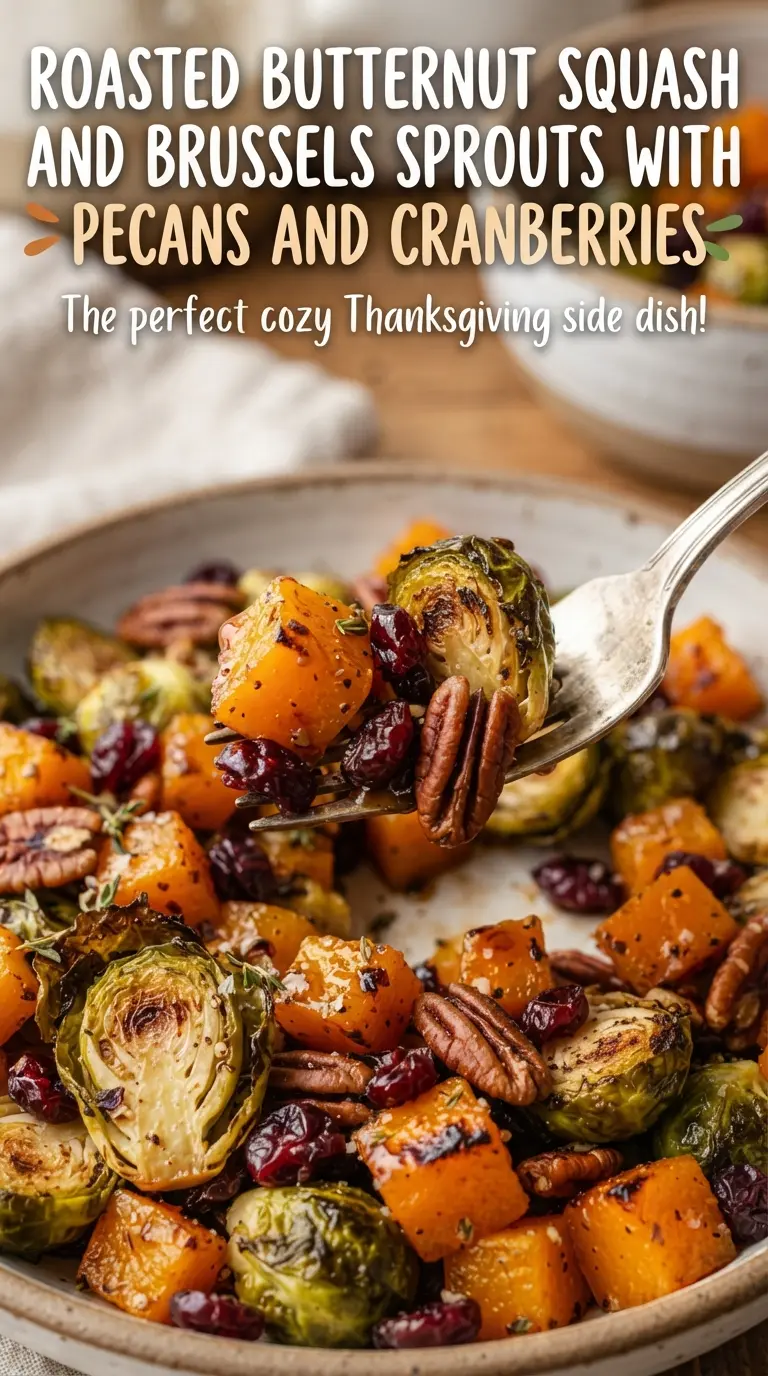
- Butternut squash — This is the sweet, soft base that caramelizes beautifully at high heat. Fresh squash works best here because frozen cubes usually release too much water and soften before they brown.
- Brussels sprouts — These bring the savory edge and crisp bits that keep the dish from tasting one-note. Trim the stems and remove any loose outer leaves so the cut sides can hit the pan directly and brown well.
- Maple syrup — Just enough sweetness to echo the squash and help the glaze cling. Pure maple syrup matters here; pancake syrup won’t give you the same clean, rounded flavor.
- Balsamic vinegar — This sharpens the whole dish and keeps the sweetness in check. If yours is very thick or syrupy already, use a light hand so the glaze doesn’t turn sticky.
- Pecans — Toasted pecans add crunch and a deep, buttery note. If they’re already toasted, add them at the very end so they stay crisp instead of tasting stale or overdone.
- Dried cranberries — They bring tart chew and a little color contrast. Stir them in after roasting so they plump slightly from the heat but don’t turn hard or scorched.
The 30 Minutes That Turn This Into a Real Side Dish
Coating the Pan Vegetables
Toss the squash and Brussels sprouts with olive oil, salt, and pepper until every cut surface looks lightly coated. The oil helps with browning, but too much creates slick vegetables that soften before they color, so stop once everything looks evenly glossy. Spread them in a single layer with the Brussels sprouts cut side down where possible. That contact with the pan is where the best crust happens.
Roasting Until the Edges Darken
Roast at 425°F for 25 to 30 minutes, tossing halfway through so the pieces that started face-down get a chance to brown on another side. You’re looking for deep golden edges on the squash and Brussels sprouts that are tender when pierced but still hold their shape. If the vegetables look pale at 25 minutes, give them more time instead of pulling them early. Undercooked squash tastes flat, and underbrowned sprouts lose the nutty flavor that makes this dish work.
Finishing With the Glaze and Crunch
Whisk the maple syrup and balsamic vinegar together, then toss it with the hot vegetables along with the cranberries and pecans. Add the glaze after roasting so it coats the vegetables instead of steaming them in the oven. The heat from the pan softens the cranberries just enough and wakes up the pecans without burning them. Serve it warm while the glaze still clings and the textures are at their best.
Three Practical Ways to Bend This Side Dish to the Meal You’re Making
Make It Vegan and Naturally Dairy-Free
This recipe already lands dairy-free, so nothing needs to change. That’s useful because the maple-balsamic glaze stays bright and clean without butter or cheese getting in the way. Serve it as written and it still feels complete.
Swap the Pecans for Another Crunch
Walnuts, pepitas, or sliced almonds all work if that’s what you have. Pecans bring the most buttery flavor, while pepitas add a cleaner, toasty bite and keep the dish nut-free for guests who need that swap.
Turn It Into a Heartier Fall Salad Base
Pile the roasted vegetables over arugula or baby kale and add goat cheese if you want something richer. The warm vegetables wilt the greens just enough, and the sweet-tart glaze works like a built-in dressing. It stops being a side and starts holding its own as lunch.
Storage and Reheating
- Refrigerator: Store leftovers in an airtight container for up to 4 days. The pecans will soften a bit, but the flavor stays good.
- Freezer: The roasted vegetables freeze, but the texture turns softer after thawing. I’d only freeze them if you plan to use them later in a grain bowl or hash.
- Reheating: Warm in a 375°F oven or a skillet over medium heat until heated through. The mistake to avoid is microwaving too long, which makes the sprouts limp and the squash watery.
Answers to the Questions Worth Asking
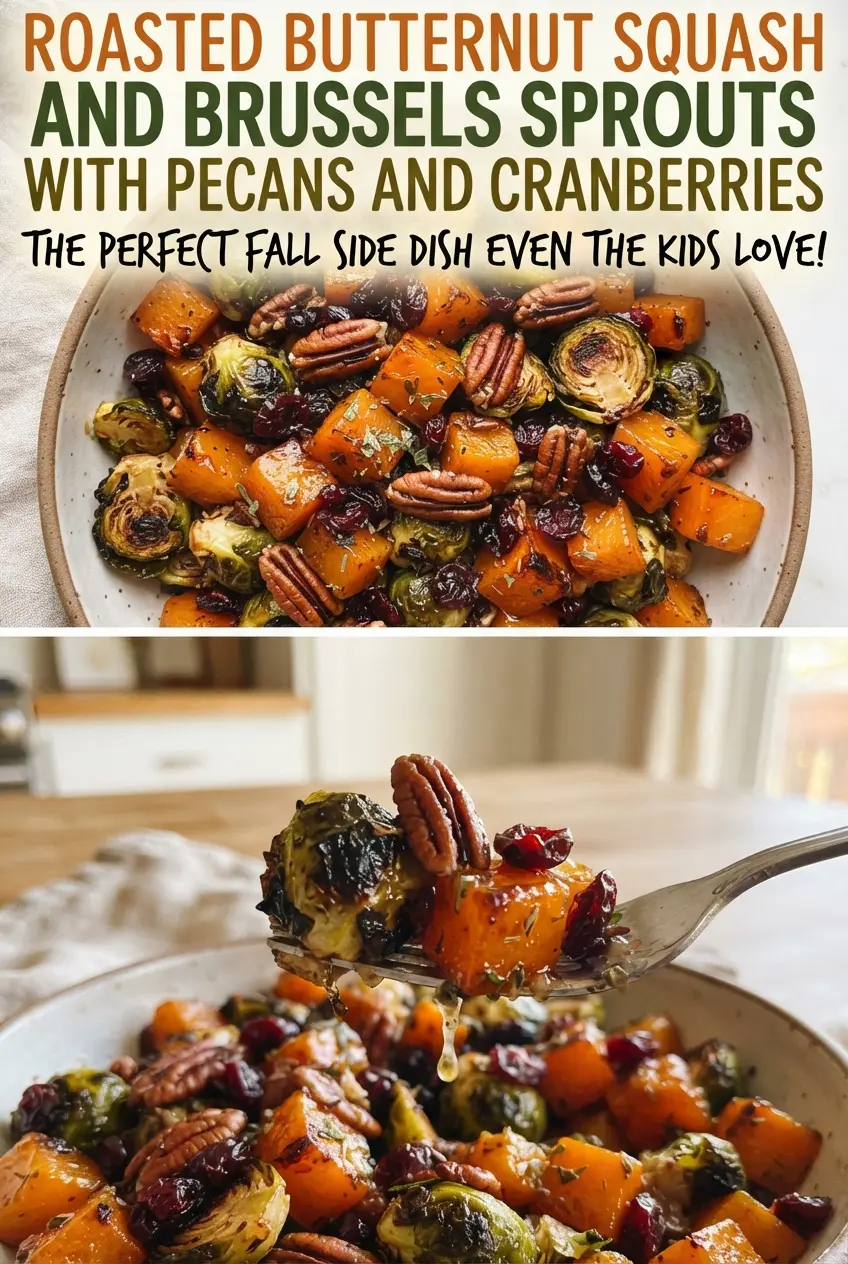
Roasted Butternut Squash and Brussels Sprouts with Pecans and Cranberries
Ingredients
Equipment
Method
- Preheat oven to 425F so it’s hot for caramelization.
- On a large sheet pan, toss butternut squash and Brussels sprouts with olive oil, salt, and black pepper until evenly coated.
- Roast for 25-30 minutes, tossing halfway, until the vegetables are tender and caramelized with browned edges (spread in a single layer for best browning).
- Whisk maple syrup and balsamic vinegar until smooth and glossy.
- Toss the roasted vegetables with the maple balsamic, dried cranberries, and toasted pecans, then serve warm.