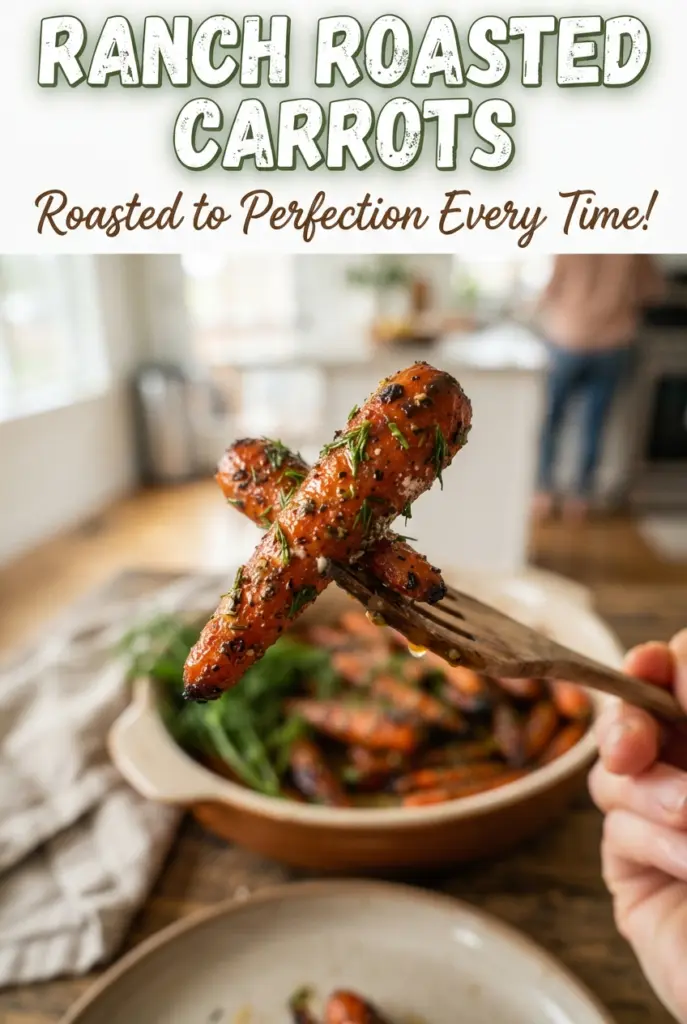
Ranch roasted carrots come out with browned edges, tender centers, and that salty-herby coating that makes people reach for a second helping before the pan even hits the table. The ranch seasoning does more than add flavor; it helps the carrots caramelize while the Parmesan melts into the hot surface and gives the whole dish a savory finish that tastes bigger than the ingredient list looks.
The trick is keeping the carrots in a single layer and roasting them hot enough that they brown before they turn soft and watery. A little olive oil carries the seasoning and helps it cling, while the fresh dill or parsley at the end wakes everything up so the carrots don’t taste flat or heavy. I use a parchment-lined sheet pan so the seasoning stays on the carrots instead of baking onto the pan.
Below, you’ll find the timing that gives you browned edges without overcooking, plus a few easy swaps if you want to change the herbs, skip the cheese, or stretch the dish for a bigger dinner.
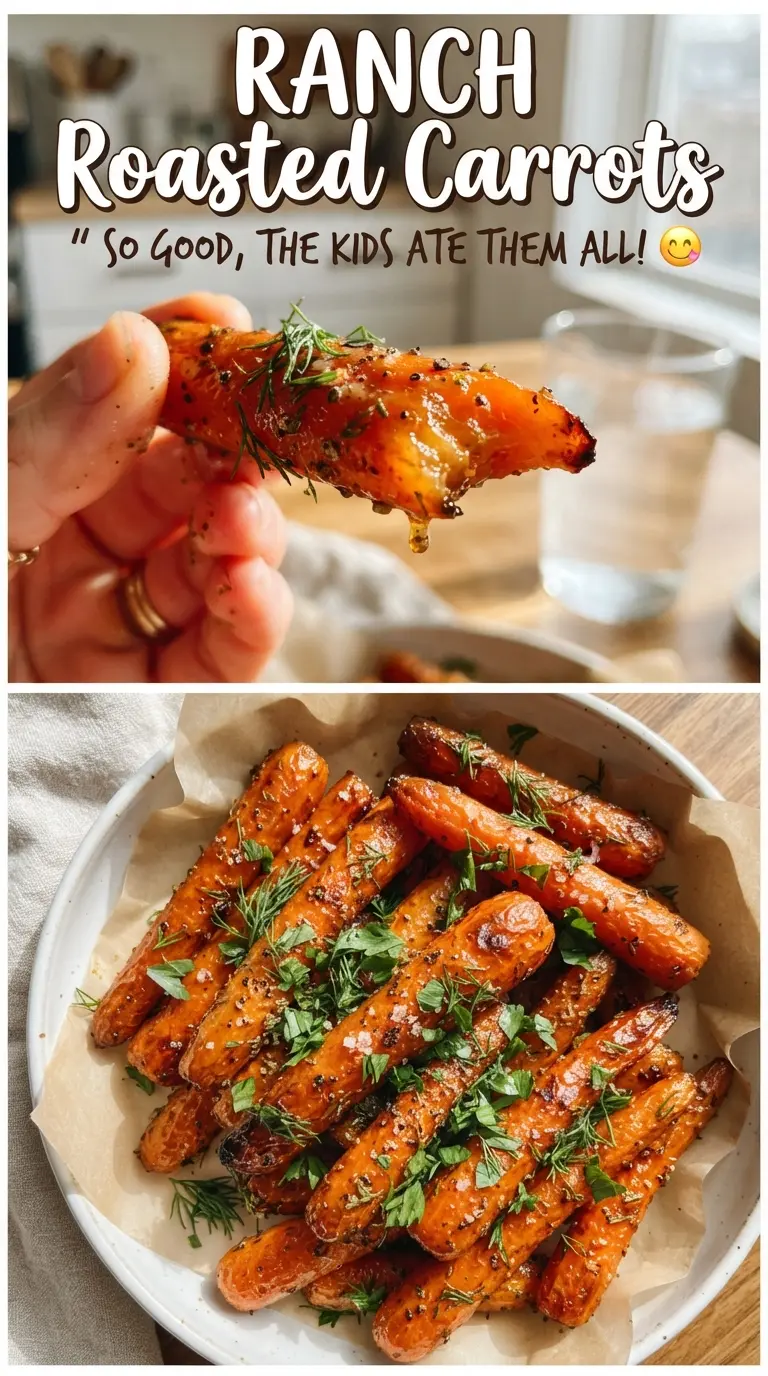
The carrots got those caramelized edges I was hoping for, and the ranch-Parmesan coating stayed on them instead of turning soggy. I roasted them 5 minutes longer for softer centers, and they were perfect.
Ranch-roasted carrots with Parmesan are the kind of side dish that disappears fast, so save this for the nights you want an easy vegetable with real crunch and savory depth.
The One Step That Keeps These Carrots Roasting Instead of Steaming
The biggest mistake with roasted carrots is crowding the pan. When the pieces touch too much, they trap steam and turn soft before they ever have a chance to brown. Give them space, and the high oven heat does the work you want: a dry, caramelized exterior with a tender bite inside.
Cutting the carrots into similar sticks matters more than people think. Thin pieces burn before the thicker ones are tender, and uneven carrots make the whole pan cook in waves. Tossing halfway through exposes the other sides to direct heat, which is what gives you those browned spots instead of a pale, one-note tray of vegetables.
What the Ranch Seasoning and Parmesan Are Really Doing Here
- Carrots — Fresh carrots with some heft roast best because they hold their shape and develop edges without collapsing. Baby carrots work in a pinch, but they tend to steam more and won’t give you the same roasted flavor.
- Olive oil — This is the carrier for the seasoning and the reason the carrots brown instead of drying out. Use a good everyday olive oil here; you don’t need anything fancy, just enough fat to coat every surface lightly.
- Ranch seasoning — The packet brings salt, garlic, onion, and herbs in one hit, which is why this side tastes layered without extra measuring. Homemade ranch-style seasoning can work, but keep the salt level in check or the carrots will taste harsh once they roast down.
- Parmesan — Add it after roasting so it clings to the hot carrots without burning. Pre-grated Parmesan is fine, but freshly grated has a cleaner melt and better flavor.
- Fresh dill or parsley — This is the finishing touch that keeps the dish from tasting heavy. Dill leans more ranch-like; parsley gives you a cleaner green finish if that’s what you want.
Roasting the Carrots Until the Edges Go Deep Gold
Coating Every Surface
Toss the carrots with the olive oil and ranch seasoning until each piece looks lightly stained and glossy. If you see dry patches of seasoning in the bowl, keep tossing; those little clumps often burn on the pan before they flavor the carrots. The coating should look thin, not pasty.
Giving Them Room in the Oven
Spread the carrots in a single layer on the parchment-lined sheet pan. If they’re piled up, they’ll soften instead of roast, and you’ll lose the browned edges that make this side dish worth repeating. A crowded pan is the fastest way to end up with limp carrots and burnt seasoning.
Finishing with Heat and Salt
Roast at 425F for 20 to 25 minutes, tossing halfway through, until the carrots are tender and browned on the edges. Pull them when a fork slides in easily but they still have a little structure. Sprinkle on the Parmesan while they’re hot so it melts slightly, then finish with the herbs right before serving.
How to Change the Flavor Without Losing the Roasted Texture
Dairy-Free Version
Skip the Parmesan and finish with extra herbs and a pinch of flaky salt. You’ll lose the salty meltiness, but the carrots still roast up beautifully and the ranch seasoning carries the flavor on its own.
Gluten-Free Check
Use a ranch seasoning packet that’s labeled gluten-free. Most of the recipe is naturally gluten-free, but some seasoning blends include thickeners or flavoring additives that vary by brand.
Make It a Little More Savory
Add a pinch of black pepper or a small pinch of garlic powder if you want the carrots to taste a little bolder. Don’t add extra salt until after roasting, since the ranch seasoning and Parmesan already bring plenty.
Storage and Reheating
- Refrigerator: Store leftovers in an airtight container for up to 4 days. The carrots will soften a bit, but the flavor holds well.
- Freezer: I don’t recommend freezing these. Carrots lose their roasted texture after thawing and turn soft.
- Reheating: Warm them on a sheet pan in a 400F oven for 8 to 10 minutes so the edges can perk back up. The microwave works, but it makes the carrots much softer and mutes the roasted flavor.
Questions I Get Asked About This Recipe
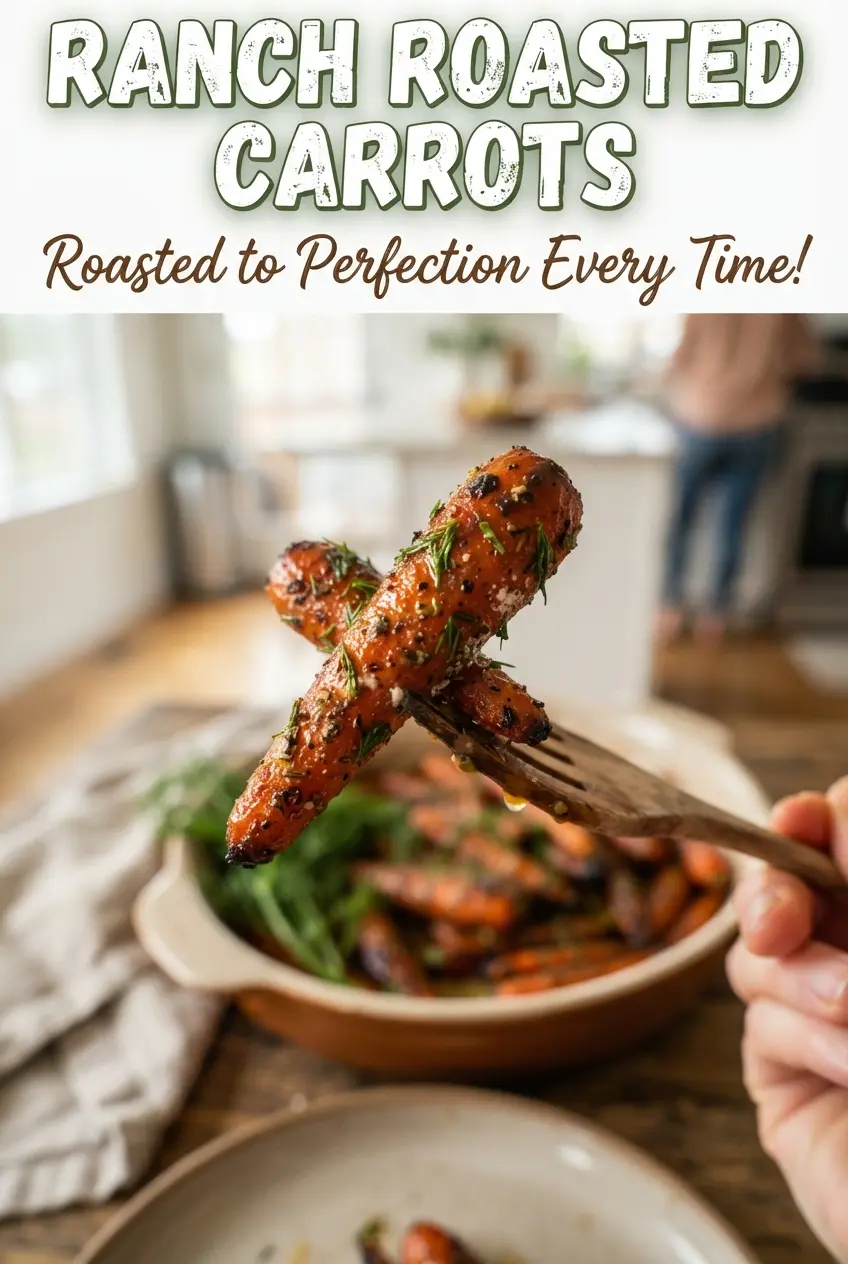
Ranch Roasted Carrots
Ingredients
Equipment
Method
- Preheat the oven to 425°F and line a sheet pan with parchment for easy cleanup (visual cue: parchment fully covers the pan).
- Toss the carrot sticks with the olive oil and ranch seasoning until evenly coated (visual cue: carrots look glossy and speckled with seasoning).
- Spread the carrots in a single layer on the sheet pan so they roast, not steam (visual cue: space between sticks).
- Roast for 20-25 minutes, tossing halfway, until tender and browned at the edges (visual cue: edges are golden and slightly caramelized).
- Sprinkle the hot carrots with Parmesan and fresh herbs, then serve warm (visual cue: cheese melts in spots and herbs look bright).