
Rich, creamy broth, savory sausage, and tender pasta make this soup the kind of bowl that disappears fast. The parmesan melts into the base instead of sitting on top in greasy clumps, and the kale keeps it from feeling heavy even though it eats like a full meal. Every spoonful gets a little bit of everything: crumbles of Italian sausage, soft pasta, and that salty, silky broth that clings just enough.
The trick is building the soup in layers instead of dumping everything in at once. Browning the sausage first gives the broth its backbone, and cooking the flour with the butter and onion takes away that raw flour taste before the liquids go in. Freshly grated parmesan matters here because pre-shredded cheese often melts into a grainy texture, especially in a cream soup like this.
Below, I’ll show you exactly when to add the pasta so it stays tender, not bloated, plus a few smart swaps if you want to make this gluten-free or use a different green.
The broth turned silky and the parmesan melted in without getting gritty. I used hot sausage and the little kick with the kale was perfect.
Save this creamy parmesan Italian sausage soup for the nights when you want a one-pot dinner with a silky broth and plenty of pasta.
The Part That Keeps This Soup Creamy Instead of Grainy
The biggest mistake in parmesan soups is rushing the cheese. If the broth is boiling hard when you add it, the dairy can separate and the parmesan can clump into tiny gritty bits instead of melting smoothly. This soup stays creamy because the base gets thickened first with a butter-flour roux, then the broth and cream go in gradually, and the cheese is stirred in over lower heat at the end.
That order matters. The roux gives the broth enough body to hold the cream and cheese, and the pasta cooks in that seasoned liquid so it picks up flavor instead of tasting like plain noodles floating in cream. Once the sausage goes back in, the soup has enough richness on its own that you don’t need to over-reduce it.
- Italian sausage — This is the backbone of the soup, so use one you actually like eating on its own. Mild sausage gives you a softer, more family-friendly bowl, while hot sausage brings enough heat that you can cut back on the red pepper flakes. Turkey Italian sausage works too, but it won’t give you quite the same savory drippings in the pot.
- Freshly grated parmesan — Grate it yourself. The packaged kind is coated to stop clumping in the bag, and that coating works against you in a cream soup. If you only have pre-shredded cheese, stir it in off the heat and expect a slightly less smooth finish.
- Heavy cream — This is what gives the soup its body and that silky finish. Half-and-half can work in a pinch, but the soup will be thinner and a little more likely to curdle if the heat gets away from you.
- Kale — Kale holds up better than spinach here because it keeps some bite after simmering. Chop it into small pieces and strip out the stems so you don’t end up chewing through tough ribs in the middle of an otherwise soft bowl.
- Ditalini or other small pasta — Small pasta is the right move because it cooks evenly and doesn’t overwhelm the spoon. If you swap in something larger, the soup starts eating like pasta with sauce instead of soup.
What Each Ingredient Is Actually Doing in This Recipe

- Primary ingredient (the star) — Quality matters most. Choose the best you can find.
- Cooking medium (oil, butter, or broth) — This carries flavors and prevents dryness.
- Seasonings (salt, pepper, spices, herbs) — Layer flavors so nothing overpowers. Build depth gradually.
- Aromatics (garlic, onion, herbs) — Cook with fat to bloom flavors. Become the foundation.
- Supporting ingredients — Complement the main ingredient without overpowering it.
- Sauce or liquid (if applicable) — Brings flavors together. Balance richness with acid.
- Acid (lemon, vinegar, wine, or other) — Brightens and prevents flat-tasting results.
- Final finish (garnish, glaze, or sauce) — Prevents one-dimensional taste and adds visual appeal.
How to Build the Broth So the Cheese Melts Smoothly
Brown the sausage hard enough to leave flavor behind
Cook the sausage in a large pot until it’s deeply browned in spots, not just gray and crumbly. Those browned bits on the bottom of the pan are what give the broth its savory base, so don’t wash them away. Drain the excess fat if there’s a lot, but leave a little behind if the sausage is lean.
Cook the onion and flour before the liquid goes in
When the butter melts, soften the onion until it turns translucent and smells sweet. Add the garlic and flour together and stir for a minute or two so the flour loses its raw taste and coats the aromatics. If the flour looks dry or pasty, that’s fine — it should look more like a loose paste than a sauce at this point.
Stir in the broth and cream a little at a time
Add the broth in a slow stream while stirring, then follow with the cream. This keeps the roux from forming lumps and helps the base stay smooth. Once the Italian seasoning and nutmeg go in, bring it to a gentle simmer, not a rolling boil, or the dairy can get unstable later.
Let the pasta finish in the soup
Add the pasta when the broth is gently bubbling and cook it until it’s just tender. It will keep softening as the soup sits, so pull it a minute early if you want a little bite left. If you overcook it here, the noodles will swell and steal broth from the soup as it rests.
Finish with parmesan, kale, and sausage at low heat
Lower the heat before the parmesan goes in and stir until it disappears into the broth. Add the kale and sausage next, then cook just until the greens wilt and the sausage is hot again. Season at the end so you can taste the salt level after the cheese has had its say.
What to Change When You Need a Different Bowl
Gluten-Free With One Pasta Swap
Use a gluten-free small pasta and replace the flour with an equal amount of cornstarch mixed with cold broth before it goes into the pot. The soup will still thicken, but the texture will be a little cleaner and less velvety than a flour-thickened version. Don’t add the cornstarch dry or it can clump.
Dairy-Free Version That Still Eats Like Soup
Swap the butter for olive oil, use unsweetened canned coconut cream or an unsweetened plain cooking cream, and skip the parmesan. You’ll lose the sharp, salty finish parmesan gives, so add a little extra salt and a spoonful of nutritional yeast if you want more depth. The broth will be lighter and less rich, but it still holds together.
Spinach Instead of Kale
Baby spinach works if that’s what you have, but stir it in at the very end and cook it only until it collapses. Spinach disappears faster and gives you a softer finish, while kale keeps more texture and body in the bowl. Use a generous handful because spinach shrinks more dramatically than kale.
Make It Spicier Without Changing the Base
Use hot Italian sausage and keep the red pepper flakes as written, or add another pinch at the end for a sharper heat. This keeps the soup balanced because the cream and parmesan stay in place while the spice rises on the finish instead of taking over the whole pot.
Storage and Reheating
- Refrigerator: Store in an airtight container for up to 4 days. The pasta will continue soaking up broth, so expect the soup to thicken.
- Freezer: It freezes, but cream soups can separate a little after thawing and the pasta can get soft. For best results, freeze without the pasta and cook fresh pasta when you reheat.
- Reheating: Warm it gently on the stove over low heat with a splash of broth or water. Don’t boil it, or the cream can break and the pasta can turn mushy.
Questions I Get Asked About This Recipe
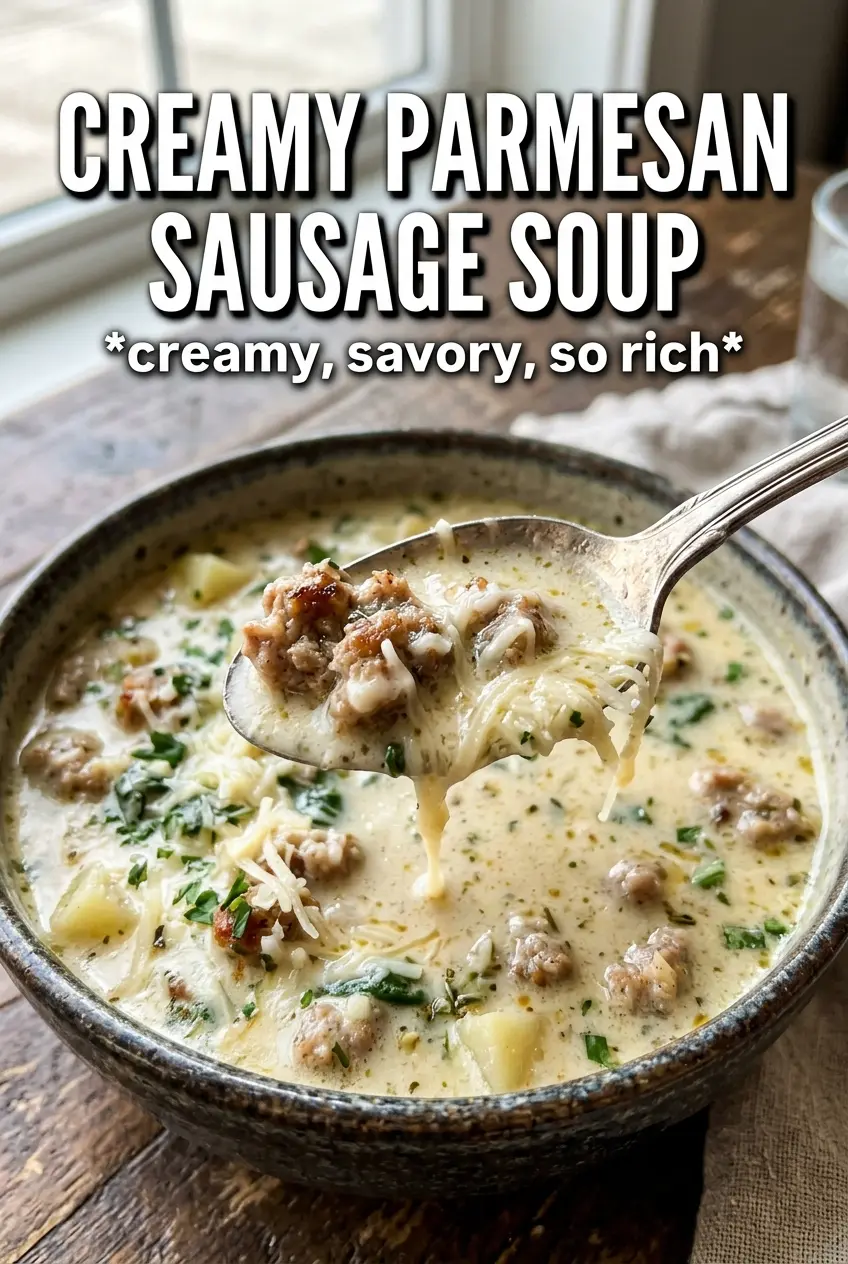
Creamy Parmesan Italian Sausage Soup
Ingredients
Equipment
Method
- Brown Italian sausage in a large pot until cooked through, then drain excess fat and set the sausage aside.
- Melt butter in the same pot, then sauté diced onion for 4 minutes until softened.
- Add minced garlic and flour, and cook 1–2 minutes to remove the raw flour taste.
- Gradually whisk in chicken broth and heavy cream, then stir in Italian seasoning and nutmeg until smooth.
- Bring the soup to a simmer, then add ditalini and cook 8–9 minutes until tender.
- Reduce heat to low, then stir in 1 cup parmesan until fully melted and smooth.
- Add chopped kale, Italian sausage, and red pepper flakes, and cook 4–5 minutes until the kale wilts.
- Season with salt and pepper to taste, then top each bowl with the remaining parmesan.