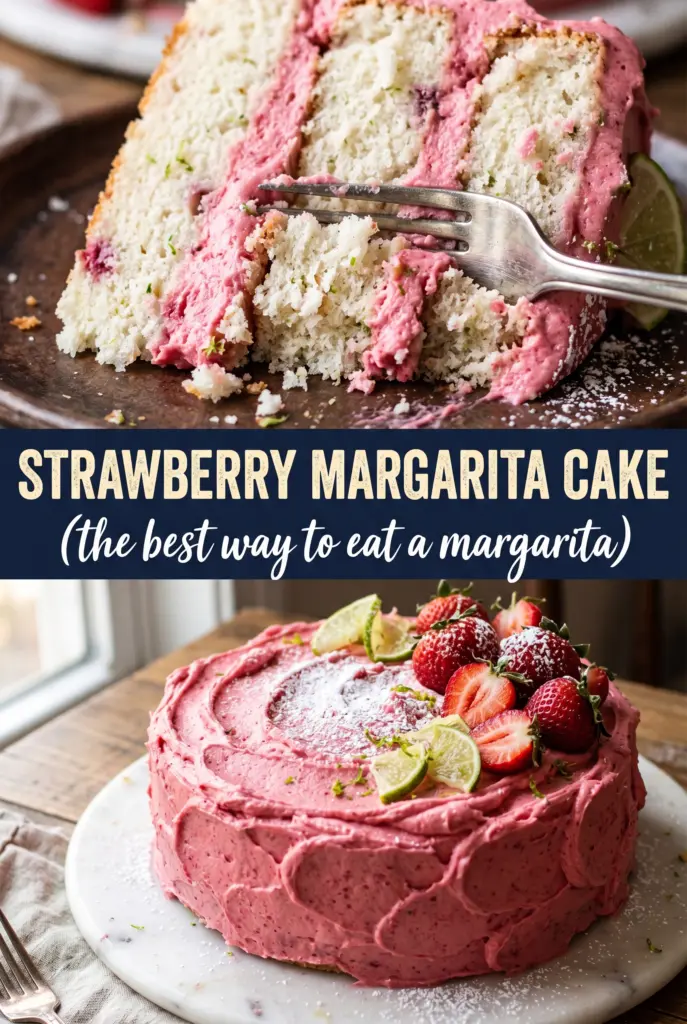
Strawberry Margarita Cake lands somewhere between a celebration layer cake and a bright, bakery-style dessert, with a soft pink crumb, fresh strawberry filling, and a lime-kissed cream cheese frosting that cuts through the sweetness. The contrast is what makes it memorable: tender vanilla-strawberry cake, cool tangy frosting, and juicy berries tucked between the layers. It slices cleanly, but the crumb still stays plush and moist.
The trick is keeping the strawberry and lime flavors distinct instead of muddled. Fresh strawberry puree gives the cake its color and fruit flavor without watering it down too much, while the lime juice shows up again in the frosting for that margarita-style snap. The batter uses the classic creaming method, then alternates dry and wet ingredients so the cake stays light instead of dense or gummy.
Below, you’ll find the small details that keep the layers even, the frosting smooth, and the fruit from sliding around when you cut the cake. There’s also a storage note for making it ahead, because this one actually gets easier to slice after a little chill time.
The cake stayed soft for days and the lime frosting gave it that fresh tart edge without overpowering the strawberries. I chilled it before slicing and the layers held together perfectly.
Save this Strawberry Margarita Cake for a bright layered dessert with strawberry filling and tangy lime frosting.
The Trick to Keeping the Strawberry Flavor Fresh Instead of Flat
The biggest mistake with fruit layer cakes is leaning on too much liquid fruit and ending up with a heavy, gummy crumb. Here, the strawberry puree is balanced with milk and a standard creamed butter base, which keeps the cake tender without turning it wet. The lime juice sharpens the berry flavor, but it also adds acidity, so the cake tastes brighter than a basic strawberry vanilla cake.
If your berries are pale or bland, the cake will still work, but the flavor depends on ripe fruit. Puree the strawberries until smooth, then measure it after blending. If the puree is chunky or overly watery, the batter can bake unevenly and the layers may dome more than they should.
- Fresh strawberry puree — This gives the cake its color and real berry flavor. Frozen berries work if you thaw and drain them first, but the result is usually a little less vivid.
- Lime juice — This is the piece that keeps the cake from tasting one-note. Bottled juice will work in a pinch, but fresh juice gives the frosting and cake a cleaner finish.
- Cream cheese frosting — Buttercream would be sweeter and flatter here. Cream cheese gives the frosting the tang that matches the lime and keeps each bite from feeling sugary.
What Each Layer Is Doing Before It Hits the Pan
- Butter and sugar — This is where the cake gets its lighter texture. Beat them until the mixture looks pale and fluffy, because that trapped air helps the layers rise without becoming dry.
- Eggs — Add them one at a time so the batter stays smooth. If the batter looks slightly curdled after an egg, don’t panic; it comes back together once the dry ingredients go in.
- Flour, baking powder, and salt — The flour gives the cake its structure, while the baking powder lifts it. Whisk these together first so the leavening distributes evenly and you don’t end up with bitter pockets.
- Milk — Whole milk adds richness and keeps the crumb soft. Lower-fat milk works, but the cake loses a little tenderness.
Building the Batter Without Deflating It
Start with a Properly Fluffy Base
Beat the butter and sugar until the mixture looks lighter in color and feels airy on the paddle or beaters. That step matters because it creates the first lift in the cake before the oven ever gets involved. If you rush it, the layers bake up tighter and the crumb feels more like pound cake than a soft layer cake.
Alternate the Wet and Dry Ingredients
Add the flour mixture in thirds, alternating with the strawberry-lime mixture and milk. Start and end with flour so the batter stays stable and doesn’t separate. Stop mixing as soon as the last streaks of flour disappear; overmixing here can make the cake tough and knock out the air you just worked in.
Bake Until the Center Springs Back
Divide the batter evenly between the pans so the layers bake at the same rate. Pull them from the oven when the tops are set, the edges have just started to pull away, and a toothpick comes out with a few moist crumbs. If the center still looks wet, give it a few more minutes, but don’t wait for the tops to darken much or the cake will dry out.
Frost When the Layers Are Completely Cool
Let the cakes cool fully before frosting or the cream cheese frosting will slide right off. If the layers are even slightly warm, the filling melts, the strawberry slices slip, and the sides won’t hold their shape. Chill the frosted cake for a short time before slicing if you want clean layers.
How to Adapt This Cake for Different Kitchens and Different Needs
Gluten-Free Version
Swap in a 1:1 gluten-free baking flour blend with xanthan gum already included. The cake will still rise well, but the crumb may be a little more delicate, so let the layers cool completely before moving them.
Dairy-Free Frosting Swap
Use dairy-free butter and a plant-based cream cheese that’s meant for baking. The frosting will be a little softer than the original, so chill it briefly before spreading and again after assembling the cake.
More Margarita-Like Citrus
Add a little extra lime zest to the frosting and a tiny pinch of salt to the cake batter. That doesn’t make the cake salty; it just sharpens the citrus and keeps the strawberry from tasting candy-sweet.
Make-Ahead Layer Cake
Bake the layers a day ahead, wrap them well once cool, and frost the next day. The texture actually improves after resting, and the chilled layers are easier to level and stack cleanly.
Storage and Reheating
- Refrigerator: Store covered for up to 4 days. The frosting firms up in the fridge, but the cake stays moist.
- Freezer: Freeze unfrosted cake layers tightly wrapped for up to 2 months. Frosted slices can be frozen, but the berries may soften when thawed.
- Reheating: This cake is best served cold or at cool room temperature, not warmed. Let refrigerated slices sit out for 20 to 30 minutes so the frosting softens and the strawberry flavor comes through.
Questions I Get Asked About This Recipe
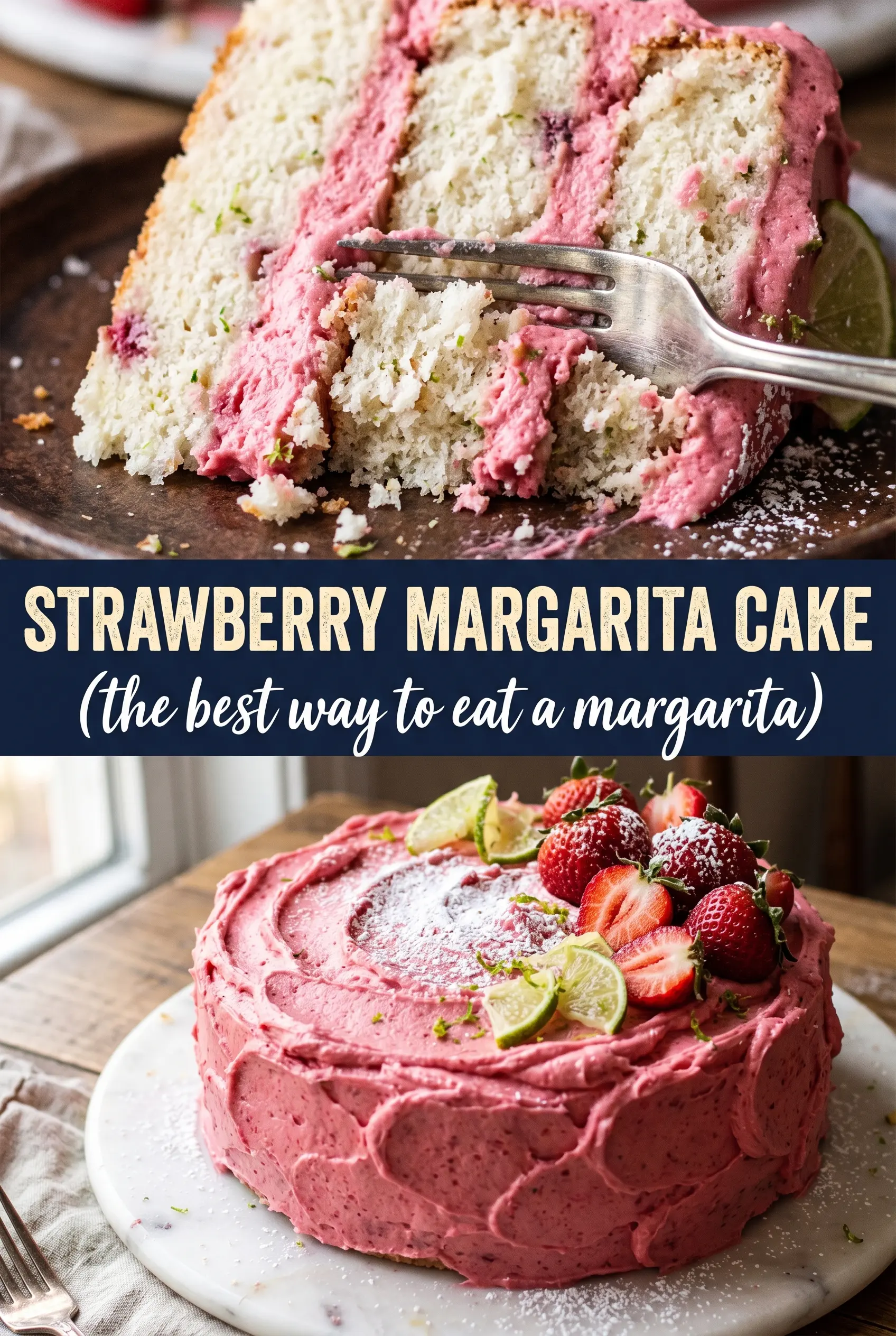
Strawberry Margarita Cake
Ingredients
Equipment
Method
- Preheat oven to 350°F and grease two 8-inch round cake pans for easy release.
- Whisk together all-purpose flour, baking powder, and salt until evenly distributed.
- Beat softened butter and granulated sugar until fluffy, 2–3 minutes, to build structure.
- Add eggs one at a time, beating after each until the batter looks smooth.
- Combine fresh strawberry puree with lime juice until uniform in color.
- Alternate adding the flour mixture and the strawberry-lime mixture with whole milk, beginning and ending with flour, mixing only until just combined.
- Stir in vanilla extract to finish the cake batter.
- Divide batter between the two prepared pans and bake 28–30 minutes, until a toothpick in the center comes out clean or with a few moist crumbs.
- Cool in pans 15 minutes, then turn out onto racks to cool completely.
- Beat softened cream cheese and softened butter until smooth, 1–2 minutes.
- Add powdered sugar, lime juice, and lime zest, then beat until the frosting is thick and spreadable.
- Place one cake layer on a plate, spread frosting on top, and add sliced fresh strawberries in an even layer.
- Place the second cake layer on top, then frost the top and sides for full coverage.
- Garnish with fresh strawberries and mint for a bright finish.