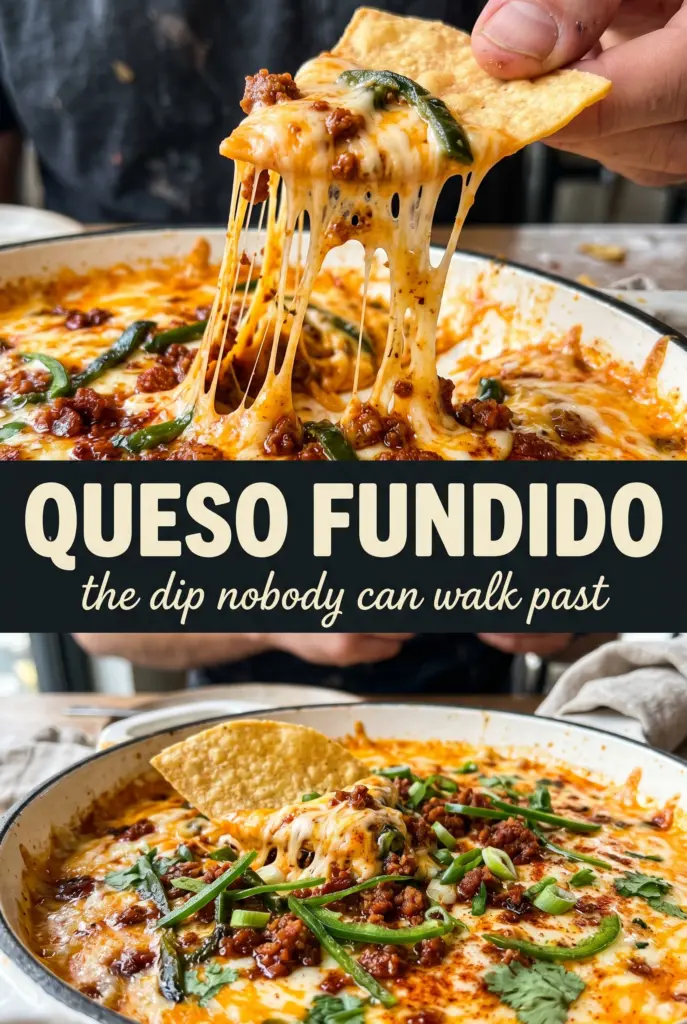
Queso fundido lands at the table bubbling, stretchy, and impossible to leave alone once the first chip goes in. The best versions don’t just melt; they hold onto a little structure, so every scoop gives you long cheese pulls, savory chorizo, and a little hit of jalapeño heat all at once. It’s the kind of appetizer that disappears fast because it tastes like you put in a lot more effort than you actually did.
The key is using cheeses that melt smoothly but still bring some character. Oaxaca gives you those dramatic strings, while Chihuahua or asadero keeps the texture creamy instead of greasy. Cotija adds a salty finish that cuts through the richness, and the chorizo cooks first so its seasoned fat flavors the skillet before the cheese goes in. That little bit of heavy cream helps the mixture stay lush without turning stiff as it sits.
Below, I’ve laid out the part that matters most: how to keep the cheese from turning oily, how to choose substitutes that still work, and what to do if you need to hold it warm for a crowd.
The cheese stayed silky all the way through the second round of chips, and the chorizo gave it enough salt and spice that nobody reached for extra seasoning.
Save this bubbling queso fundido with chorizo and stretchy cheese pulls for your next game night spread.
The Small Mistake That Turns Queso Fundido Greasy
Queso fundido goes wrong when the heat is too aggressive or the cheese blend is too lean. If the pan is screaming hot when the cheese goes in, the fat separates before the proteins have a chance to melt together, and you end up with an oily puddle instead of a smooth dip. The fix is simple: let the chorizo cook fully, then add the cheese over steady low heat and keep stirring until the shreds disappear into a glossy mass.
The other thing that matters is the balance of cheeses. You need one cheese that melts into strings, one that melts into creaminess, and one salty finish that tastes good even after the chips start cooling it down. That’s why this combo works so well. It’s not just about meltability; it’s about keeping the texture rich without becoming dense or broken.
- Cook the chorizo first so it has time to brown and render. That seasoned fat carries the flavor through the whole skillet.
- Use a cast iron skillet or other heavy pan because it holds heat evenly. Thin pans spot overheat, which is how cheese scorches on the bottom before it melts on top.
- Add the cream with the cheese to help the mixture stay loose. It won’t make the dip soupy; it just buys you a little extra silkiness.
What Each Cheese Is Doing in the Skillet
- Oaxaca cheese gives you the classic stretch. Mozzarella works if that’s what you have, but use a low-moisture block and shred it yourself for the best texture. Pre-shredded cheese often has anti-caking starch that makes melting less smooth.
- Chihuahua or asadero brings the creamy middle. If you can’t find either, Monterey Jack is the closest swap and melts cleanly without turning stringy.
- Cotija doesn’t melt into the dip the same way, and that’s the point. It seasons the whole skillet and gives little salty bites on top. Feta can work in a pinch, but it tastes sharper and more crumbly.
- Chorizo is doing more than adding meat. It seasons the fat in the pan and gives the queso a smoky, paprika-heavy backbone. If you use a milder sausage, add a pinch of chili powder and smoked paprika so the dip doesn’t taste flat.
- Jalapeños, garlic, and onion build the base. The garlic only needs a minute with the chorizo, just until it smells warm and nutty; if it browns, it turns bitter fast.
Building the Dip Without Breaking the Melt
Brown the Chorizo First
Put the chorizo into a cold skillet and let the heat come up with it. That gives the fat time to render before the outside gets crusty, which helps the whole pan season itself. Break the meat apart as it cooks so you get small, spoonable bits instead of clumps. When it’s fully browned and no longer looks raw in the center, move right into the garlic and jalapeños.
Wake Up the Aromatics
Add the garlic and diced jalapeños directly to the hot chorizo. Stir for about a minute, just until the garlic smells fragrant and the peppers lose their raw edge. If the garlic starts to toast hard or the pan looks dry, lower the heat before moving on. Burnt garlic will haunt the whole dip, and there’s no saving it once the cheese goes in.
Melt Low and Steady
Scatter in the cheeses with the cream and stir often. The mix should go from separate shreds to glossy strands, then finally into a smooth pool that still has some body. If the cheese clumps or looks oily, the heat is too high; pull the skillet off the burner for a few seconds and keep stirring until it comes back together. The finished queso should slump from the spoon, not pour like soup.
Finish and Serve Right Away
Top the hot cheese with onion and cilantro just before serving. That fresh crunch keeps the dip from feeling heavy after a few bites. Serve it in the same skillet with warm tortilla chips, and don’t let it sit uncovered for long or the top will tighten up. If you’re holding it for a party, keep the heat low and stir occasionally so the bottom doesn’t overcook.
How to Adapt This Queso Fundido for Different Crowds
Make It Vegetarian
Skip the chorizo and sauté the garlic, jalapeños, and onion in 2 tablespoons of butter or neutral oil instead. Add a pinch of smoked paprika, chili powder, and salt so the dip still has depth, because without the chorizo fat it needs a little help carrying the spice.
Make It Gluten-Free
The queso itself is naturally gluten-free, but chorizo can sometimes include fillers or thickeners. Check the label before you cook, and serve it with certified gluten-free tortilla chips if cross-contact matters in your kitchen.
Turn Up the Heat
Leave some jalapeño seeds in the mix or add a few thin slices of serrano with the garlic. That gives the dip a sharper finish without changing the texture, but go easy if the chorizo you bought is already heavily seasoned.
Storage and Reheating
- Refrigerator: Store leftovers in a covered container for up to 3 days. The cheese will firm up and lose some of its stretch, but the flavor stays good.
- Freezer: Don’t freeze queso fundido. The cheese separates when thawed and reheated, and the texture turns grainy.
- Reheating: Warm it gently in a skillet over low heat with a splash of cream, stirring often. High heat is the mistake that makes it break, so take your time and stop as soon as it loosens and turns smooth again.
Questions I Get Asked About This Recipe
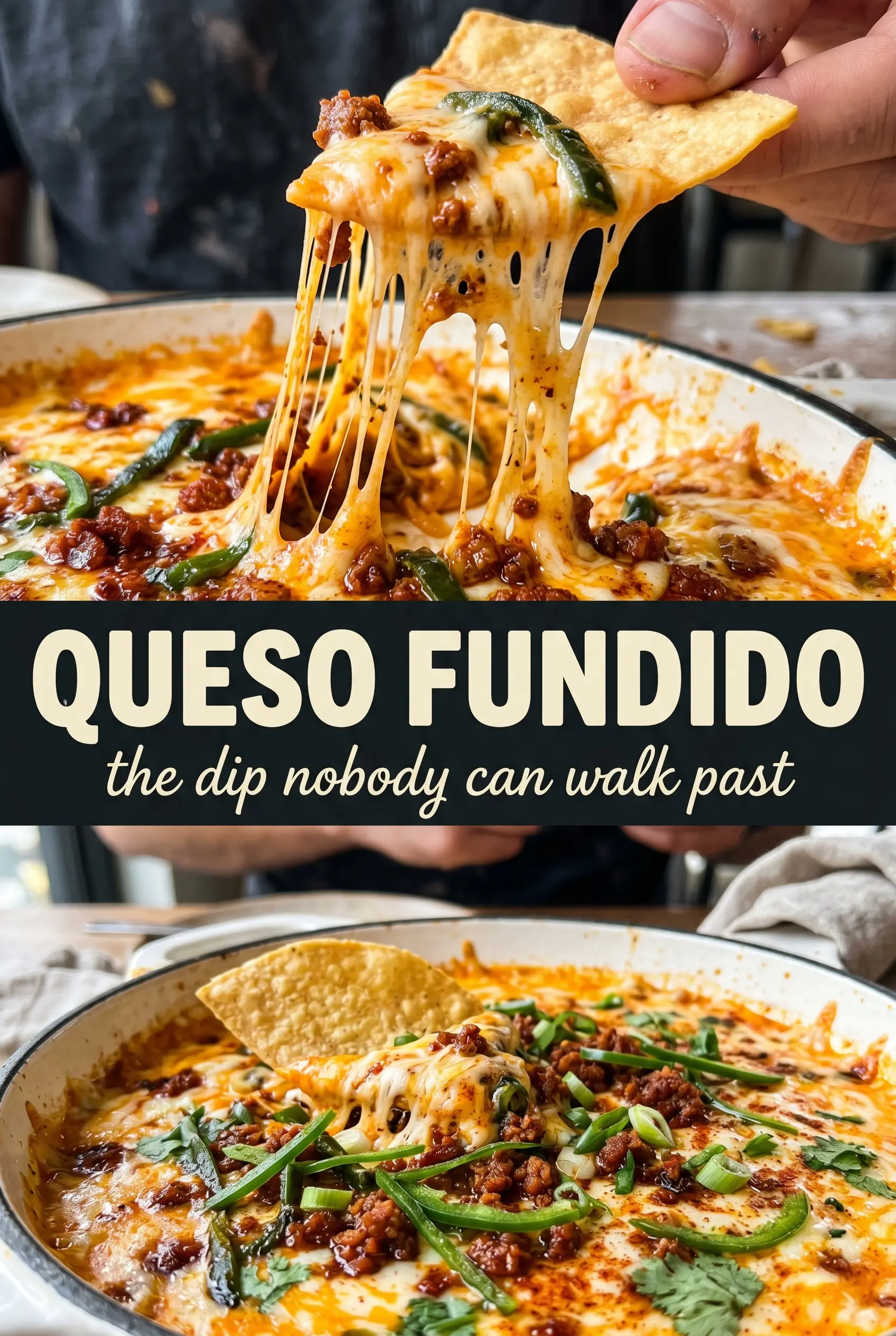
Queso Fundido
Ingredients
Equipment
Method
- Heat a cast iron skillet over medium heat and cook the chorizo, breaking it apart as it cooks, until browned (about 8-10 minutes). Visual cue: the fat renders and the chorizo crumbles look crisp at the edges.
- Add the minced garlic and diced jalapeños to the browned chorizo and cook for 1 minute until fragrant. Visual cue: you should see a quick sizzle and a glossy, aromatic look.
- Reduce heat to medium-low and add Oaxaca, Chihuahua, and Cotija cheeses along with the heavy cream, stirring frequently until completely melted and smooth (about 5-7 minutes). Visual cue: the mixture turns uniform, thick, and starts bubbling gently like a bubbling pot of melted cheese.
- Top the queso with diced onion and chopped cilantro, then serve immediately in the cast iron skillet with tortilla chips for dipping. Visual cue: when scooped, the cheese stretches into strings.
- Keep the queso warm over low heat or in a slow cooker for serving. Visual cue: it should stay gently bubbling without boiling.