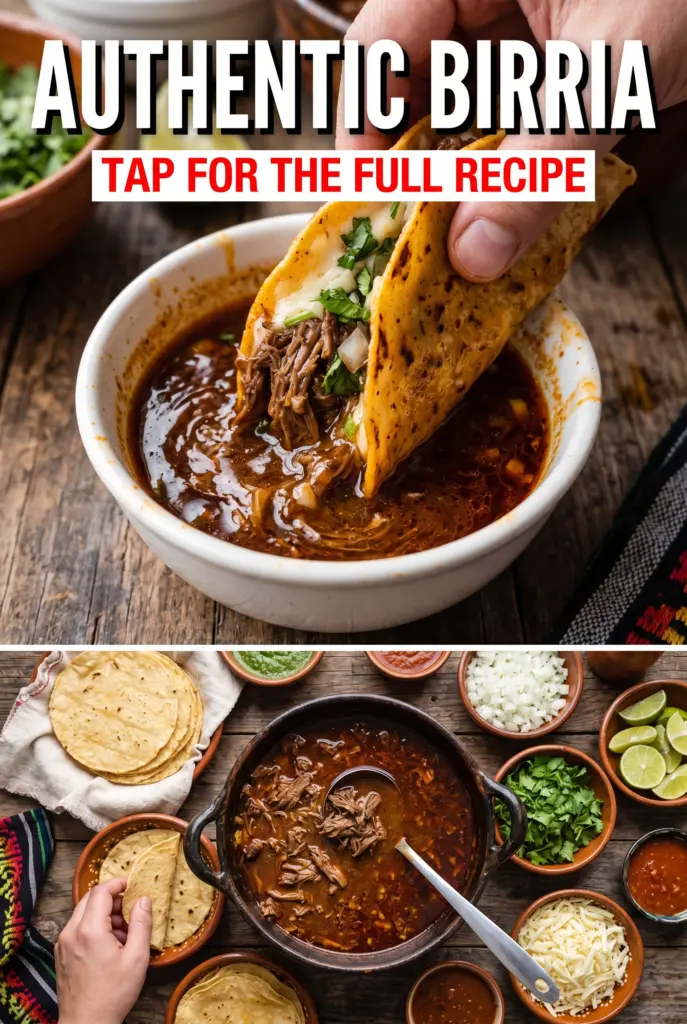
Deep red birria has a way of taking over the dinner rotation once you’ve made it properly. The broth turns rich and glossy, the beef goes tender enough to shred with a spoon, and the whole pot smells like toasted chiles, warm spice, and slow-cooked comfort. Served as tacos with crispy dipped tortillas or ladled into bowls as stew, it hits that rare middle ground between weekend project and unforgettable payoff.
What makes this version work is the way the chiles are handled before they ever hit the pot. Toasting them first wakes up their flavor; soaking softens them for blending; straining the sauce keeps the finished consomé smooth instead of gritty. The cinnamon and bay leaf stay in the background, adding depth without turning the broth sweet, while a little vinegar sharpens the chile base so the final dish tastes layered instead of heavy.
Below, you’ll find the part that matters most: how to keep the sauce silky, how to know when the beef has gone from tough to ready, and how to serve birria two different ways without losing what makes it special.
The chile sauce came out silky after I strained it, and the beef was shredding on its own after about 2 hours. I used the leftovers for tacos the next day and the tortillas dipped in consomé were unreal.
Save this birria recipe for the nights when you want tender beef, smooth consomé, and tacos worth dipping twice.
The Part That Keeps Birria Broth Rich Instead of Muddy
Birria falls apart when the chile base is rushed. If the dried chiles go straight into the blender dry or under-soaked, the sauce stays grainy and the flavor tastes sharp instead of rounded. Toasting the chiles first brings out their natural sweetness, and soaking them in hot water gives the blender enough time to break them down into a paste that can actually strain cleanly.
The other place people miss is the pot. The strained sauce needs a few minutes in oil before the broth goes in. That step cooks off the raw edge from the chiles and deepens the color into that brick-red consomé people expect. Skip it, and the broth can taste flat even if the beef itself turns out tender.
- Guajillo chiles — These are the backbone of the color and the gentle, fruity heat. They’re worth seeking out because nothing else gives quite the same red broth and mellow depth.
- Ancho chiles — They add a raisin-like sweetness and a thicker body to the sauce. If you have to swap, dried New Mexico chiles work, but the broth will taste a little cleaner and less dark.
- Chipotle chiles — They bring smoke and a little bite. Use fewer if you want a milder birria, but don’t skip them entirely unless you want a broth that leans sweeter and softer.
- Beef chuck roast — Chuck is the right cut because it has enough fat and connective tissue to turn silky during the long simmer. Leaner beef gets dry before it gets tender.
- Apple cider vinegar — This brightens the chile paste and keeps the finished broth from tasting heavy. Lime can’t replace this at the blending stage; save the lime for serving.
Building the Consomé Before the Beef Goes In
Waking Up the Chiles
Set the chiles in a dry skillet and toast them just until they smell fragrant and a shade darker, about 2 minutes. Pull them before they smoke or blacken, because burnt chile skins turn bitter fast. Once they’ve softened in hot water, drain them well so the blender isn’t fighting extra liquid.
Making a Smooth Chile Base
Blend the softened chiles with the onion, garlic, cumin, oregano, and vinegar until the mixture looks as smooth as you can get it. Then push it through a fine-mesh sieve. That step takes a minute, but it’s the difference between a silky consomé and one that feels sandy on the tongue.
Cooking the Sauce in Oil
Warm the olive oil over medium heat and add the strained sauce before anything else goes in. It should sizzle gently and darken a bit as it cooks. If the pan is too hot, the chile paste can scorch on contact, so keep it at a steady medium and stir for the full 5 minutes.
Simmering Until the Beef Relaxes
Once the broth, tomato paste, bay leaves, and cinnamon stick are in, bring everything to a boil and add the beef. Then drop the heat to low and let it simmer uncovered. The broth should move with small, lazy bubbles, not a hard boil, or the beef can tighten instead of softening. When it’s ready, the chunks should give way with almost no resistance and shred easily.
How to Adapt Birria for Tacos, Stew, or Different Diets
Birria Tacos with Crispy Dipped Tortillas
Shred the beef, dip corn tortillas into the consomé, then crisp them in a hot skillet before filling. The dipped tortillas pick up flavor and color, and the edges get just a little chewy before they brown. This version is the best choice when you want the full taco-shop feel.
Birria Stew in a Bowl
Keep more of the cooking liquid in the pot and serve the beef and broth together with lime, onion, and cilantro. You’ll get a lighter, soupier finish with every spoonful carrying the chile and spice. This is the easiest way to serve a crowd without standing at the stove frying tortillas.
Dairy-Free and Naturally Gluten-Free
This recipe already fits both of those needs as written, as long as you use corn tortillas for tacos. Just check the broth if you’re using store-bought, since some brands sneak in additives. The texture and flavor stay the same, which is why this dish works so well for mixed-diet tables.
Freezer-Friendly Leftovers
Let the birria cool, then freeze the beef and consomé together in airtight containers. The broth protects the meat from drying out, and the flavor gets even deeper after a day in the freezer. Thaw overnight in the fridge before reheating so the fat can melt back in evenly.
Storage and Reheating
- Refrigerator: Store the beef and consomé in separate containers or together for up to 4 days. The broth will thicken slightly as it chills.
- Freezer: Freezes well for up to 3 months. Use airtight containers and leave a little headspace so the broth can expand.
- Reheating: Warm gently on the stove over low heat until hot. Don’t boil it hard, or the beef can dry out and the broth can turn greasy on top instead of silky.
Questions I Get Asked About This Recipe
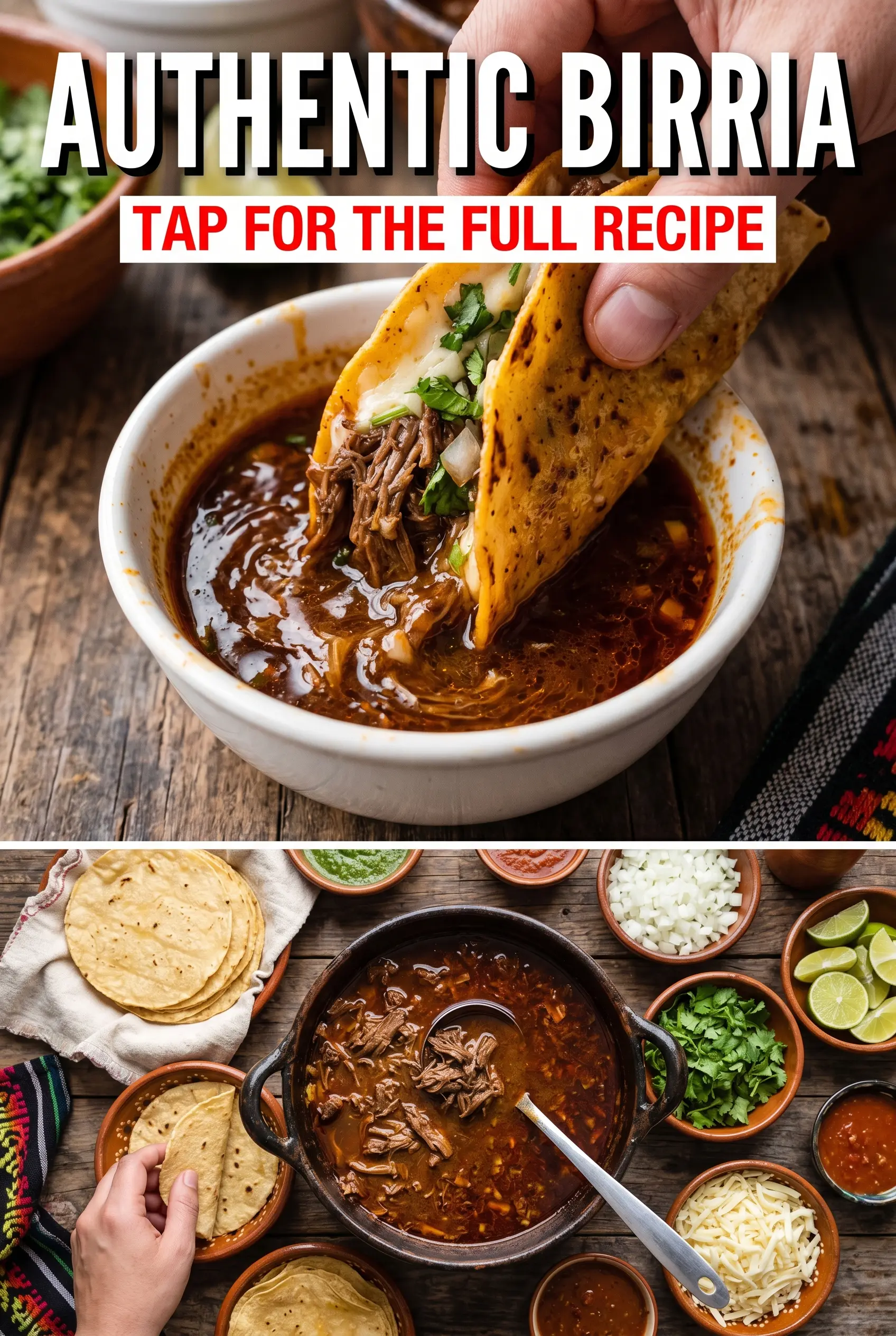
Authentic Birria (Consomé) for Tacos or Stew
Ingredients
Equipment
Method
- Toast the dried guajillo, ancho, and chipotle chiles in a dry skillet over medium heat until fragrant, about 2 minutes, stirring once or twice as the color darkens slightly.
- Soak the toasted chiles in hot water for 10 minutes until softened, then drain well and shake off excess water.
- Blend the drained chiles with halved onion, crushed garlic, cumin, oregano, and apple cider vinegar until smooth, adding a splash of soaking liquid only if needed for blending.
- Strain the blended sauce through a fine mesh sieve to remove skins, pressing with a spoon so you keep the smooth red chile base.
- Heat olive oil in a large pot or Dutch oven over medium heat, until shimmering.
- Add the strained chile sauce and cook for 5 minutes, stirring until it looks slightly thickened and deeper red.
- Add beef broth, tomato paste, bay leaves, and cinnamon stick, then bring everything to a boil.
- Add the beef chuck roast chunks, return to a boil, then reduce heat to low.
- Simmer uncovered for 90-120 minutes, until the beef is fall-apart tender and the broth turns a deep red, skimming only if foam collects at the surface.
- Season the consomé with salt and pepper to taste, then stir and taste once more for balance.
- For tacos, shred the tender beef and keep warm in a ladle of consomé.
- Dip corn tortillas in the hot consomé for a quick soak, then fill with shredded meat.
- Top birria tacos with diced onion and cilantro for a fresh finish.
- For stew, ladle the meat and consomé into bowls and serve with lime wedges.