
Sausage green bean potato casserole bakes into one of those comforting pans that disappears fast at the table: creamy, savory, and sturdy enough to serve as a main dish or a hearty side. The potatoes turn tender without falling apart, the green beans stay bright instead of mushy, and the sausage gives every bite enough richness that you don’t need much else alongside it.
What makes this version work is the way the broth and cream simmer together before the casserole goes into the oven. That gives the potatoes a head start and keeps the bake from drying out, while the cheese melts into the liquid instead of sitting on top as a greasy layer. Cooking the sausage first also matters, because the browned bits in the pan carry a deeper flavor into the onion and garlic base.
Below you’ll find the small details that keep the vegetables tender, the sauce creamy, and the top bubbling properly. There are also a few swaps and storage notes for the nights when you want to stretch it or make it ahead.
The potatoes came out tender all the way through and the sauce stayed creamy instead of getting watery. I loved that the green beans still had a little bite, and my husband went back for seconds before I even sat down.
Save this sausage green bean potato casserole for the nights when you want a bubbling, cheesy pan dinner with tender potatoes and crisp-tender beans.
The Trick to Keeping the Potatoes Tender Without Turning the Beans Soft
This casserole lives or dies on the timing of the vegetables. Potatoes need enough time in the simmering liquid to soften all the way through, but green beans will go limp if they sit in that heat too long before baking. The fix is to cut the potatoes into even pieces so they cook at the same rate, then keep the beans in chunks that hold some structure.
The other place people run into trouble is the sauce. If the broth and cream never get a chance to simmer before baking, the potatoes can stay firm in the center while the top overbrowns. A gentle simmer gives you a head start, and the oven finishes the job with a creamy base that bubbles around the edges instead of breaking into a greasy mess.
- Even potato pieces — Dice them close to the same size so they cook through at the same time. Big chunks stay hard in the middle while smaller ones collapse.
- Fresh green beans — Fresh beans keep a pleasant snap after baking. Frozen beans can work, but they turn softer and release more moisture into the casserole.
- Heavy cream — This gives the sauce body and helps it stay silky under heat. Half-and-half can work in a pinch, but the sauce will be thinner.
- Chicken broth — It seasons the potatoes from the inside instead of relying on the cheese alone. Use a good-tasting broth, since bland broth makes the whole dish taste flat.
What Each Ingredient Is Doing in the Skillet and the Baking Dish
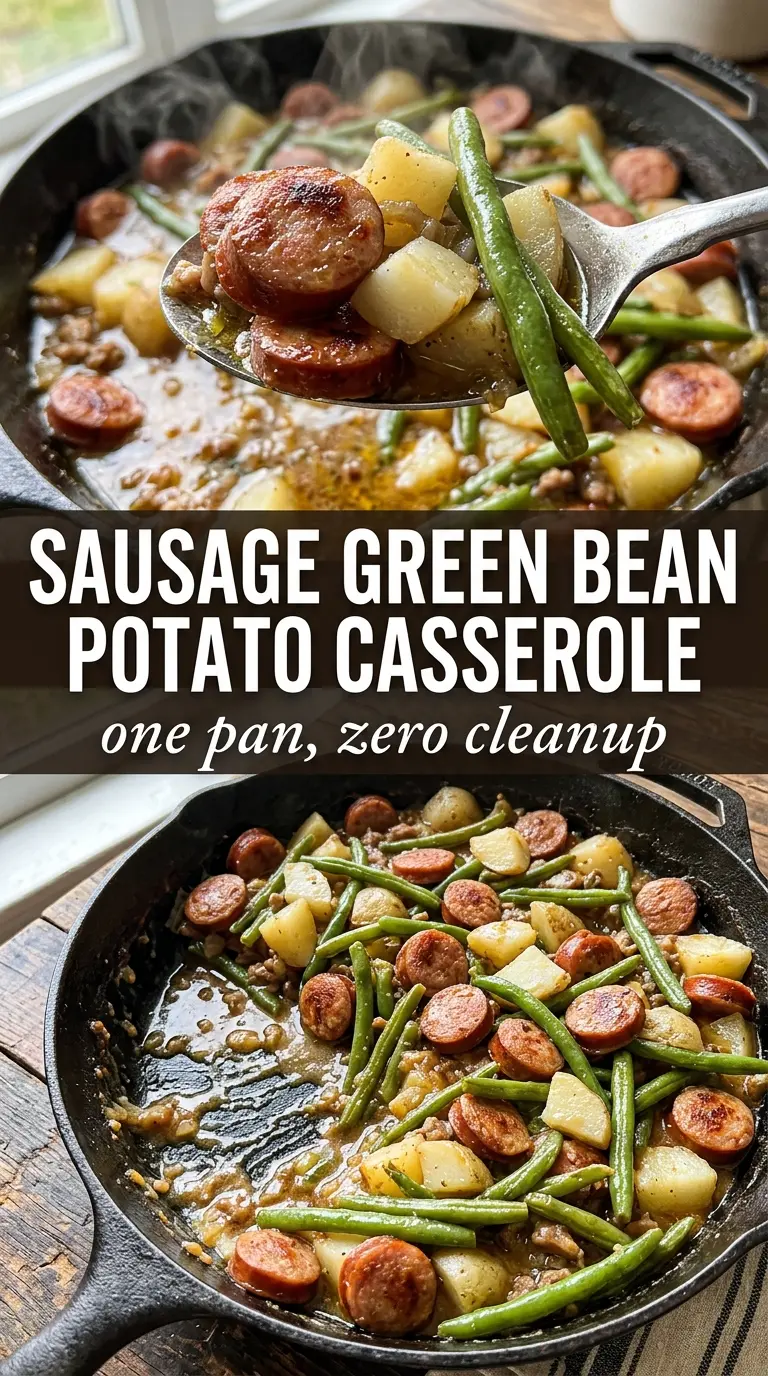
- Italian sausage — This is the main source of seasoning and richness. Mild or hot sausage both work; hot sausage adds a little heat, while mild keeps the casserole more kid-friendly.
- Butter, onion, and garlic — These build the base of the sauce. The butter carries the onion flavor, and the garlic only needs a short cook so it doesn’t turn bitter.
- Potatoes — They soak up the broth and cream, which is what makes the casserole feel hearty instead of soupy. Yukon Golds are a great choice because they stay creamy, but russets work if you want a softer finish.
- Cheddar and Parmesan — Cheddar melts into the sauce and Parmesan sharpens the finish. Grate them yourself if you can; pre-shredded cheese often melts less smoothly because of the anti-caking coating.
- Italian seasoning and garlic powder — These round out the sausage and keep the dish from tasting like plain potatoes in cream. Garlic powder gives background flavor that survives the oven better than fresh garlic alone.
Building the Casserole So It Bubbles Instead of Breaking
Brown the sausage first
Cook the sausage until it has real color and the fat renders out. That browned surface is where the deeper flavor comes from, and it seasons the onion base later in the pan. Remove the sausage before starting the vegetables so it doesn’t overcook while the potatoes are still getting tender.
Soften the onion and garlic in the same pan
Melt the butter in the skillet and cook the onion until it turns glossy and just starts to soften. Add the garlic for the last minute only, long enough for it to smell fragrant. If the garlic starts browning, the flavor turns sharp and can carry through the whole casserole.
Simmer the potatoes and beans before baking
Add the broth, cream, potatoes, green beans, and seasonings, then bring the pan to a gentle simmer. You want the liquid moving steadily around the edges, not boiling hard. This is the stage that keeps the finished casserole creamy, because the potatoes begin softening before they go into the oven.
Finish with cheese and bake until the edges bubble
Stir in the sausage and both cheeses, then transfer everything to the baking dish. Bake until the potatoes are tender when pierced and the edges are actively bubbling. If the top browns before the potatoes are done, cover it loosely with foil for the last stretch so the center can catch up.
How to Adapt It for Different Tables and Different Nights
Make It Gluten-Free Without Losing the Creamy Texture
This recipe is naturally gluten-free as long as your sausage and broth are certified gluten-free. Check both labels, because some sausage fillers and broths sneak in wheat-based ingredients. The texture stays the same, so this is an easy one to serve to mixed-diet crowds.
Use Smoked Sausage for a Stronger, Saltier Finish
Swap in sliced smoked sausage if you want a firmer bite and a more pronounced smoky flavor. Since smoked sausage is already cooked, you only need to brown it briefly before moving on. The casserole will taste a little saltier and less crumbly than the Italian sausage version.
Make It Lighter with Milk and a Little More Broth
You can replace the heavy cream with whole milk if you want a lighter casserole, but the sauce won’t cling as richly to the potatoes. Add a splash more broth if the mixture looks too thick before baking. The result is still comforting, just a little less plush.
Storage and Reheating
- Refrigerator: Store leftovers in an airtight container for up to 4 days. The sauce thickens as it sits, which actually helps the casserole hold together better.
- Freezer: This freezes well for up to 2 months, though the potatoes soften a little after thawing. Cool it completely, wrap it tightly, and freeze in portions for easier reheating.
- Reheating: Reheat covered in a 350°F oven until hot in the center. Add a splash of broth or cream before reheating if it looks dry; microwave reheating works, but it can make the potatoes uneven and the sauce separate at the edges.
Questions I Get Asked About This Recipe

Sausage Green Bean Potato Casserole
Ingredients
Equipment
Method
- Preheat oven to 375°F. Brown the Italian sausage in a skillet, then remove and set aside until crumbs are cooked through and lightly browned.
- In the same skillet, melt the butter. Sauté the onion for 2 minutes, stirring until translucent and softened.
- Add the garlic and cook for 1 minute more, stirring until fragrant with visible bubbles at the edges.
- Add the potatoes, green beans, chicken broth, heavy cream, Italian seasoning, and garlic powder. Bring everything to a simmer over medium heat until you see steady bubbling through the sauce.
- Stir in the cooked Italian sausage, sharp cheddar cheese, and Parmesan cheese. Stir until the cheeses melt into a thick, creamy mixture that looks glossy.
- Season with salt and pepper to taste. Taste and adjust until the flavors pop without tasting under-seasoned.
- Transfer the mixture to a greased 9x13 baking dish. Smooth into an even layer so the edges bake consistently.
- Bake for 40-45 minutes at 375°F until the potatoes are tender and the casserole is bubbling at the edges. Look for steam and bubbling channels around the perimeter with a lightly golden top.
- Garnish with fresh thyme before serving. Add it right after baking so the aroma stays fresh.