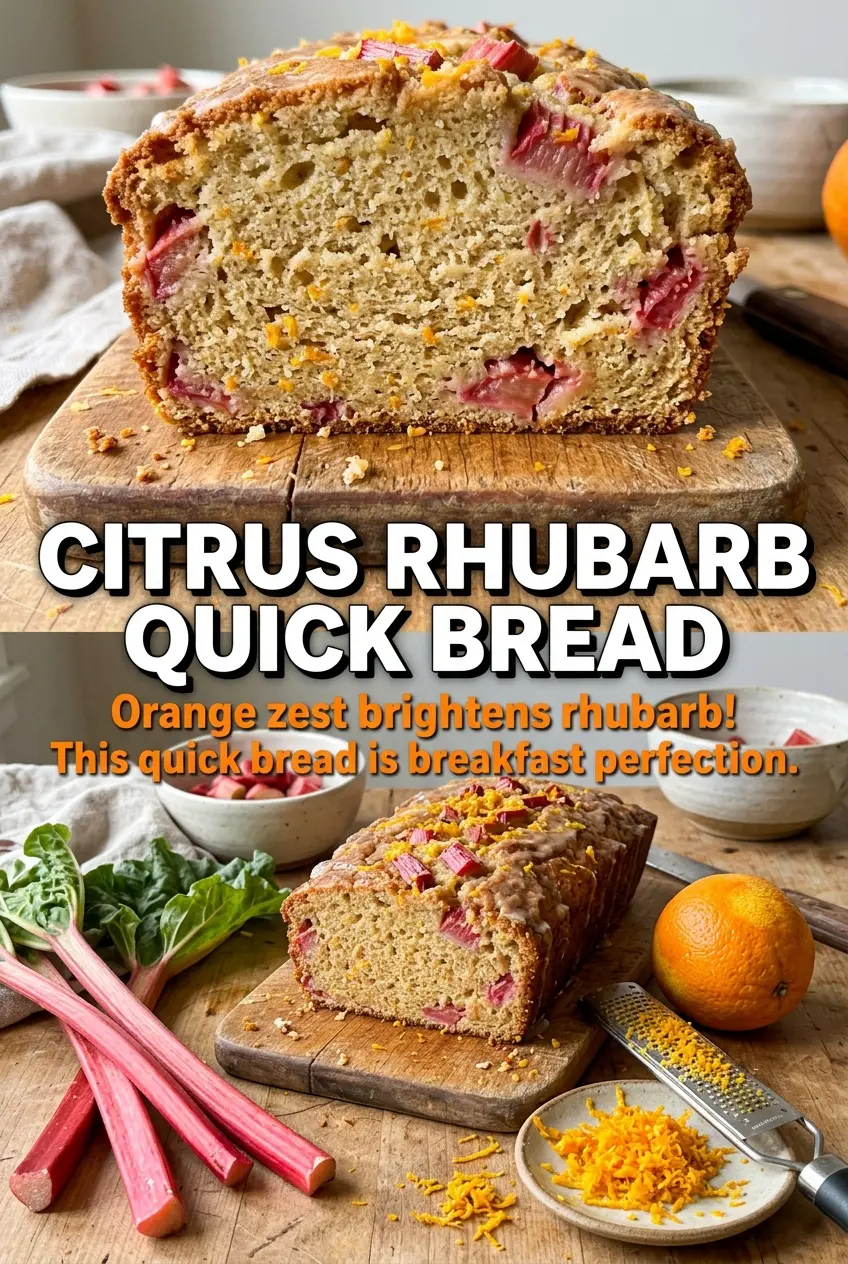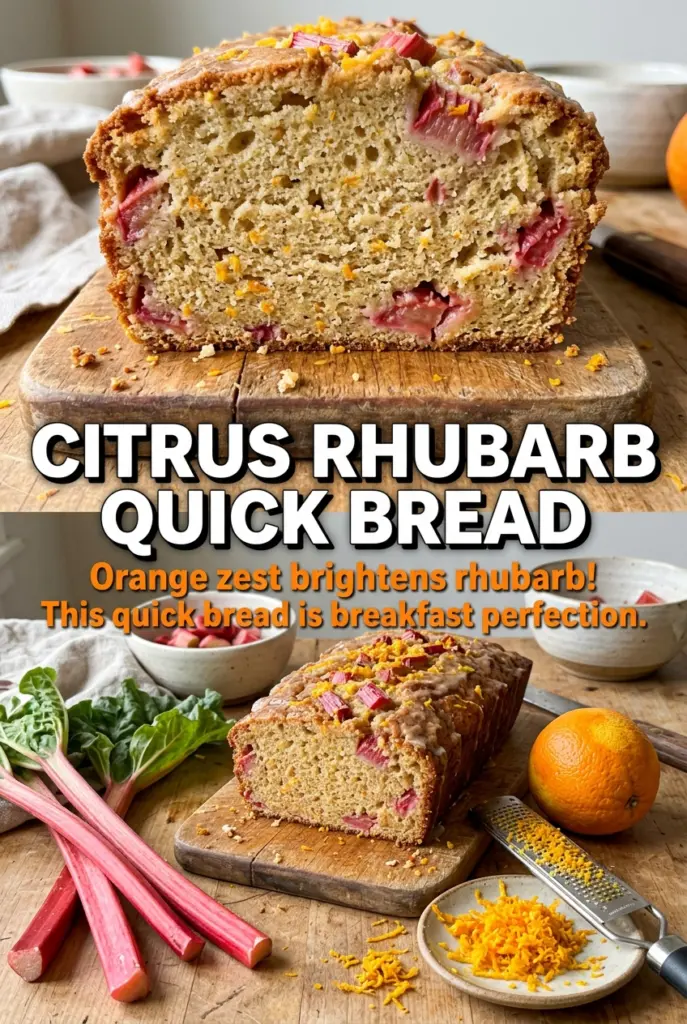
Orange rhubarb bread bakes up soft and fragrant with a tart, juicy streak running through every slice. The crumb stays tender from the oil, while the orange zest gives the loaf a bright edge that keeps the rhubarb from tasting flat or one-note. A light glaze on top finishes it with just enough sweetness to echo the citrus in the batter.
What makes this loaf work is the balance. Rhubarb brings moisture and sharpness, but it can turn a quick bread soggy if it’s chopped too large or stirred too aggressively. Finely dicing it helps the pieces stay suspended through the batter, and mixing the wet ingredients separately keeps the crumb even instead of dense. The orange juice does more than add flavor here; it loosens the batter and ties the glaze back to the loaf so the citrus reads in every bite.
Below you’ll find the timing that keeps the middle from sinking, the one mixing habit that protects the texture, and a few ways to adapt the loaf if your kitchen ingredients are a little different from mine.
The loaf came out incredibly moist, and the rhubarb stayed in little tart pockets instead of disappearing. I loved how the orange glaze soaked into the top without making it sticky.
Save this orange rhubarb bread for a bright, tender loaf with a tangy fruit swirl and glossy citrus glaze.
The Reason This Loaf Stays Tender Instead of Dense
Quick breads like this one are easy to overmix because the batter looks a little lumpy before it’s fully combined. That’s normal. Once the wet ingredients hit the dry, the batter only needs enough stirring to disappear into one thick mixture, and then the rhubarb goes in at the end so it doesn’t get smashed into the batter.
The other thing that makes a difference is the loaf pan. A 9×5-inch pan gives this batter room to rise without spilling over or baking into a gummy center. If you use a smaller pan, the middle takes longer to set and the top can brown before the crumb is done.
What the Orange and Rhubarb Are Each Doing Here
Below, the ingredient notes focus on the parts that carry the loaf. The orange juice and zest bring both moisture and aroma, but the zest is the stronger flavor source, so don’t skip it if you want the bread to taste bright instead of just sweet. Fresh rhubarb is worth using here because it holds its shape better than frozen and gives those clean tart bites through the crumb.
- Orange zest — This is where most of the orange flavor lives. Juice alone tastes soft and a little thin in baked goods, but zest brings the oils that make the bread smell and taste fresh. Zest the orange before juicing it so you don’t fight a slippery fruit later.
- Orange juice — It loosens the batter and helps the glaze echo the loaf instead of sitting on top like an afterthought. Fresh-squeezed is best if you have it, but bottled juice works fine here because the zest is doing the heavy lifting.
- Fresh rhubarb — Dice it finely so the pieces soften in the oven and stay evenly distributed. Bigger chunks can sink, and frozen rhubarb can leak too much water unless it’s thawed, drained, and patted dry first.
- Vegetable oil — Oil keeps the crumb moist for days in a way butter doesn’t quite match in a quick bread. That soft texture is part of the charm here, especially once the loaf has cooled and the glaze has set.
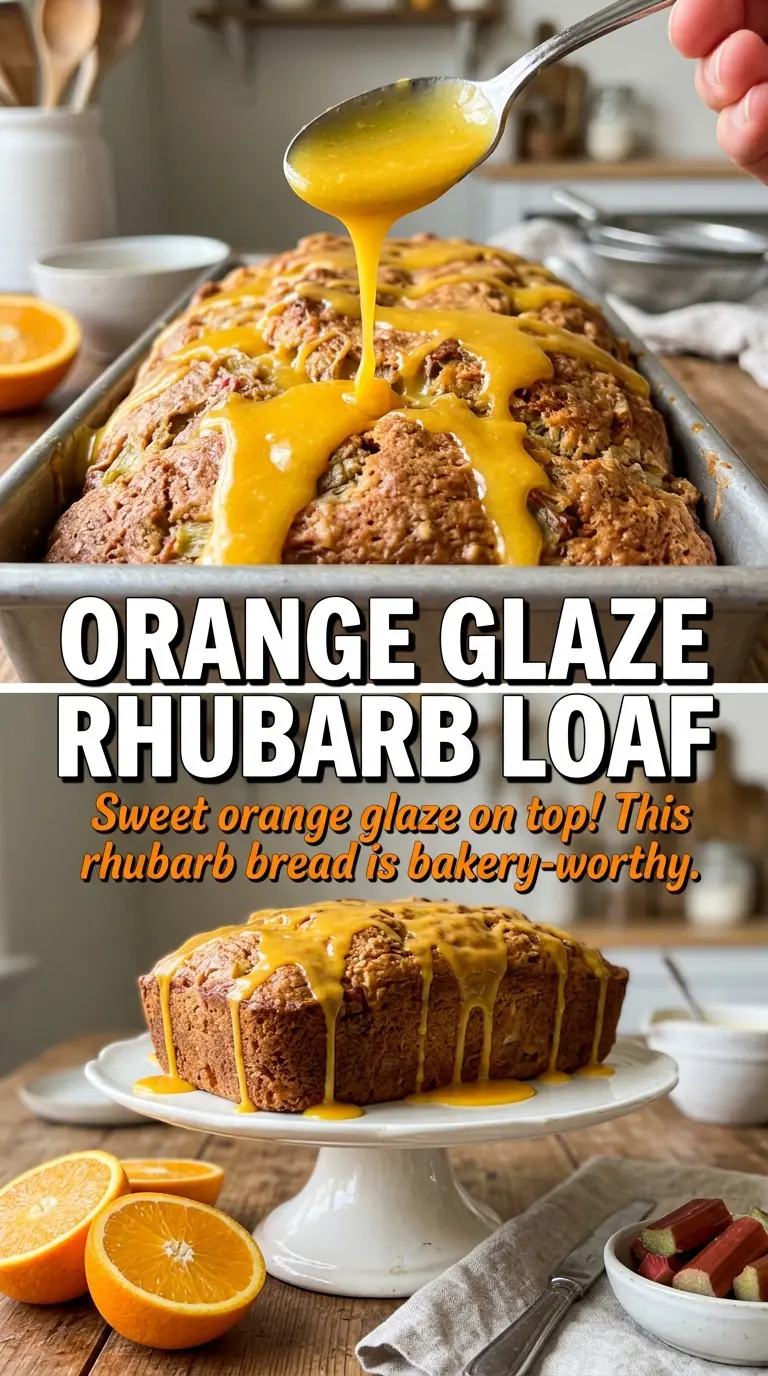
- Powdered sugar glaze — This glaze should be thin enough to drip, not plaster on. Add the orange juice slowly so you can stop when it turns glossy and pourable; if it gets too thin, it slides off the loaf instead of clinging to the top.
How to Keep the Center Set While the Top Stays Soft
Mix the batter just until it comes together
Whisk the dry ingredients first so the baking soda and salt are evenly spread through the flour. Once the wet and dry mixtures come together, stir only until no dry streaks remain. If you keep going, the loaf gets tight and chewy instead of tender, and the rhubarb pieces can break down into the batter.
Fold in the rhubarb at the very end
Use a spatula and fold gently so the pieces stay intact. You want the batter thick enough to hold the fruit in place, not thin enough that everything slides to the bottom of the pan. If the rhubarb looks wet on the surface, pat it dry first so it doesn’t water down the loaf.
Bake until the middle tests clean, not until the top looks done
The loaf is ready when a toothpick comes out clean from the center and the top springs back lightly when touched. If the top is browning too fast before the center is done, tent it loosely with foil for the last 10 to 15 minutes. Pulling it too early leaves a gummy stripe through the middle, which is the one problem this bread can’t hide.
Glaze while the bread is still warm
Let the loaf cool in the pan for 10 minutes, then move it to a rack. Drizzle the glaze over warm bread so it sinks into the top a little and sets into a thin, shiny finish. If the bread is hot, the glaze melts straight off; if it’s completely cool, it won’t soak in at all.
Three Smart Ways to Change This Loaf Without Losing the Texture
Make it dairy-free without changing the crumb
This loaf is already dairy-free as written, which is part of why the texture stays so soft. Keep the oil-based batter and you’ll get the same moist, even crumb without needing any special substitutions.
Swap in lemon when you want a sharper citrus edge
Replace the orange juice with lemon juice and use lemon zest instead of orange zest for a brighter, tarter loaf. The rhubarb will taste more pronounced, and the glaze will set with a sharper finish, but the bread still bakes up tender.
Use frozen rhubarb when fresh isn’t available
Thaw it first, drain off the liquid, and pat it dry before folding it in. Frozen rhubarb works, but it can add extra moisture to the batter, so draining it well keeps the center from turning wet.
Turn it into muffins for faster breakfasts
Portion the batter into lined muffin cups and start checking around 20 to 24 minutes. You’ll get a lighter, quicker bake with more edges and less of the soft loaf-style slice, but the orange-rhubarb flavor stays intact.
Storage and Reheating
- Refrigerator: Store tightly wrapped for up to 4 days. The crumb stays moist, but the glaze will soften as it sits.
- Freezer: Freeze the unglaed loaf or individual slices for up to 2 months, wrapped well and sealed in a freezer bag. Thaw at room temperature before glazing.
- Reheating: Warm slices briefly in the microwave or toast them lightly. Don’t overheat them or the crumb dries out and the rhubarb turns a little tough.