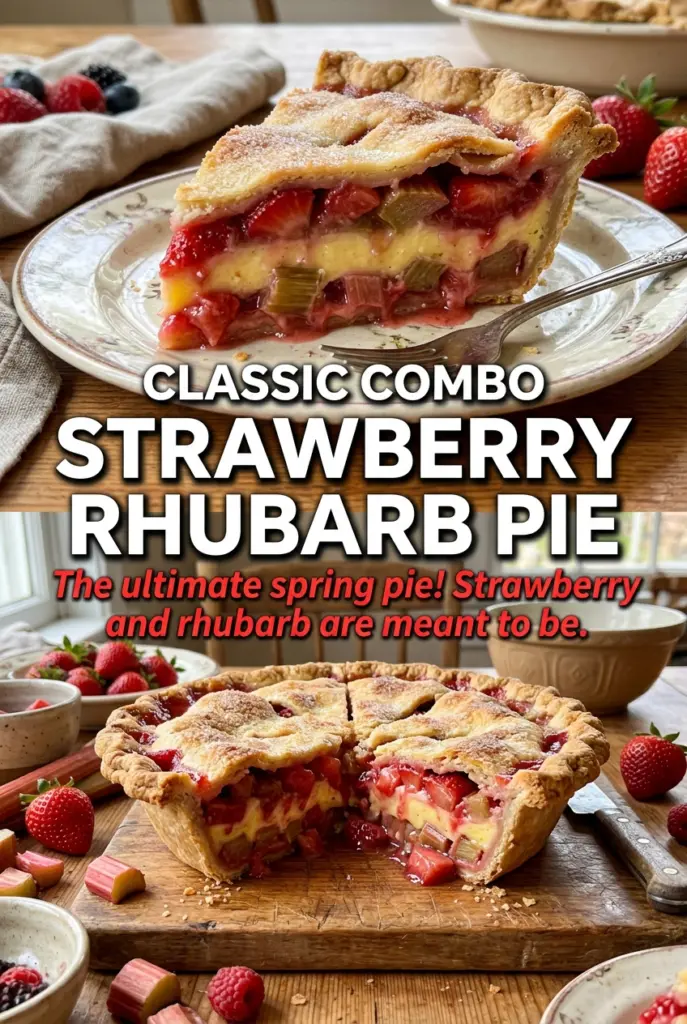
Creamy custard, soft pink rhubarb, and juicy strawberries settle into a flaky crust and bake into a pie that slices cleanly after a proper cool-down. The filling tastes bright and rich at the same time, with the fruit holding its shape just enough to give each bite a little burst of tartness under the custard.
What makes this version work is the balance between fruit and custard. Rhubarb brings the sharp edge the pie needs, while the strawberries round it out without turning the filling heavy or muddy. The flour in the custard helps it set into a sliceable texture instead of spilling out when you cut into it, and the two-stage bake gives the crust time to brown without overcooking the center.
Below, I’ve included the one cooling mistake that makes this pie seem underbaked, plus a few swaps for when you need to work with frozen fruit or a different crust. If you’ve ever had a fruit custard pie turn soupy, the notes here will help you avoid that.
The custard set up beautifully and the fruit stayed distinct instead of turning into jam. I chilled it overnight and the slices came out clean with no runny center at all.
Love the creamy custard and tart strawberry-rhubarb filling? Save this pie for the next time you want a chilled fruit dessert that slices neatly.
The Custard Needs Gentle Heat, Not Guesswork
The most common mistake with a pie like this is pulling it when the center still looks loose and hoping it will firm up later. With custard pies, the filling should jiggle in the middle like set gelatin, not ripple like liquid. The first blast of high heat helps the crust start browning and gives the custard a jump start; reducing the oven after that keeps the eggs from scrambling at the edges before the center has time to set.
Rhubarb also deserves a little respect here. It gives off a lot of moisture as it bakes, which is part of why this filling tastes bright instead of flat, but too much liquid can make the pie seem underdone even when the custard is technically set. Letting the pie cool all the way is not optional. The texture finishes as it rests, and a warm slice will always look softer than it really is.
What Each Ingredient Is Actually Doing in the Pie

- Rhubarb — This is the backbone of the pie’s tartness. Fresh rhubarb gives the cleanest flavor and the best texture, and it softens into tender pieces without collapsing into mush.
- Strawberries — These balance rhubarb’s sharp edge and add sweetness without making the pie cloying. Fresh berries hold their shape better than frozen, which matters because the filling is already soft from the custard.
- Eggs — They set the custard. There isn’t a substitute that gives the same silky, sliceable texture, so this is not the place to cut corners.
- Flour — A small amount steadies the filling and helps it cut cleanly. It keeps the custard from tasting eggy and thin.
- Heavy cream — This gives the custard its rich, soft texture. Half-and-half will work in a pinch, but the filling won’t be quite as lush.
- Unbaked pie crust — A sturdy, cold crust bakes up flaky enough to support the filling. If your crust tends to shrink, chill it in the pan before adding the fruit so it holds its shape better in the oven.
How to Bake the Custard So the Center Sets Cleanly
Building the Fruit Layer
Spread the rhubarb and strawberries evenly in the bottom of the crust so the custard can move around them and settle into the gaps. If the fruit is piled high in one spot, the center can bake unevenly and the slice will fall apart. You don’t need to toss the fruit with sugar first; the custard is sweet enough, and extra moisture on the fruit can make the filling looser.
Whisking the Custard Smooth
Whisk the eggs, sugar, flour, cream, vanilla, and salt until the mixture looks smooth and the flour has disappeared. A few streaks of flour left behind can show up as little pasty spots in the finished pie. Pour slowly over the fruit so the custard settles between the pieces instead of sitting on top in one thick layer.
Reading the Bake
After 15 minutes at 400°F, reduce the heat to 350°F and continue baking until the edges are set and the center has a slight wobble. If the top starts to brown too fast, tent the pie loosely with foil. The pie is done when the filling no longer sloshes, but don’t wait for it to look completely firm in the oven or it will overbake by the time it cools.
Cooling Before You Slice
Set the pie on a rack and leave it alone for at least 3 hours. That cooling time is what turns a soft custard into a clean slice. If you cut it while warm, the center will spread, and that has nothing to do with a bad bake — it just hasn’t finished setting yet.
How to Adapt This Pie for Different Kitchens and Different Fruit
Gluten-Free Crust Swap
Use a gluten-free 9-inch pie crust and keep the rest of the filling the same. The texture of the custard doesn’t change, but gluten-free crusts can brown faster, so start checking the edges a little early and cover them if they deepen too quickly.
Dairy-Free Version
Swap the heavy cream for full-fat coconut cream or an unsweetened dairy-free creamer with some body. The pie will still set, but the flavor becomes a little less rich and a little more pronounced in the fruit, so vanilla matters even more here.
Using Frozen Fruit
Frozen strawberries and rhubarb can work, but thaw and drain them first so the filling doesn’t turn watery. The pie may need a few extra minutes in the oven because cold fruit slows the set, but drain well or the custard can stay loose in the middle.
Storage and Reheating
- Refrigerator: Store covered for up to 4 days. The custard stays clean and sliceable, though the crust softens a bit underneath the filling.
- Freezer: This pie freezes better after baking than most custard pies, but the texture will soften slightly after thawing. Wrap slices tightly and freeze for up to 1 month for the best results.
- Reheating: Serve it chilled or let a slice sit at room temperature for 15 to 20 minutes. If you warm it, use a low oven briefly; the mistake is using high heat, which can make the custard weep.
The Questions Worth Asking Before You Bake This Pie
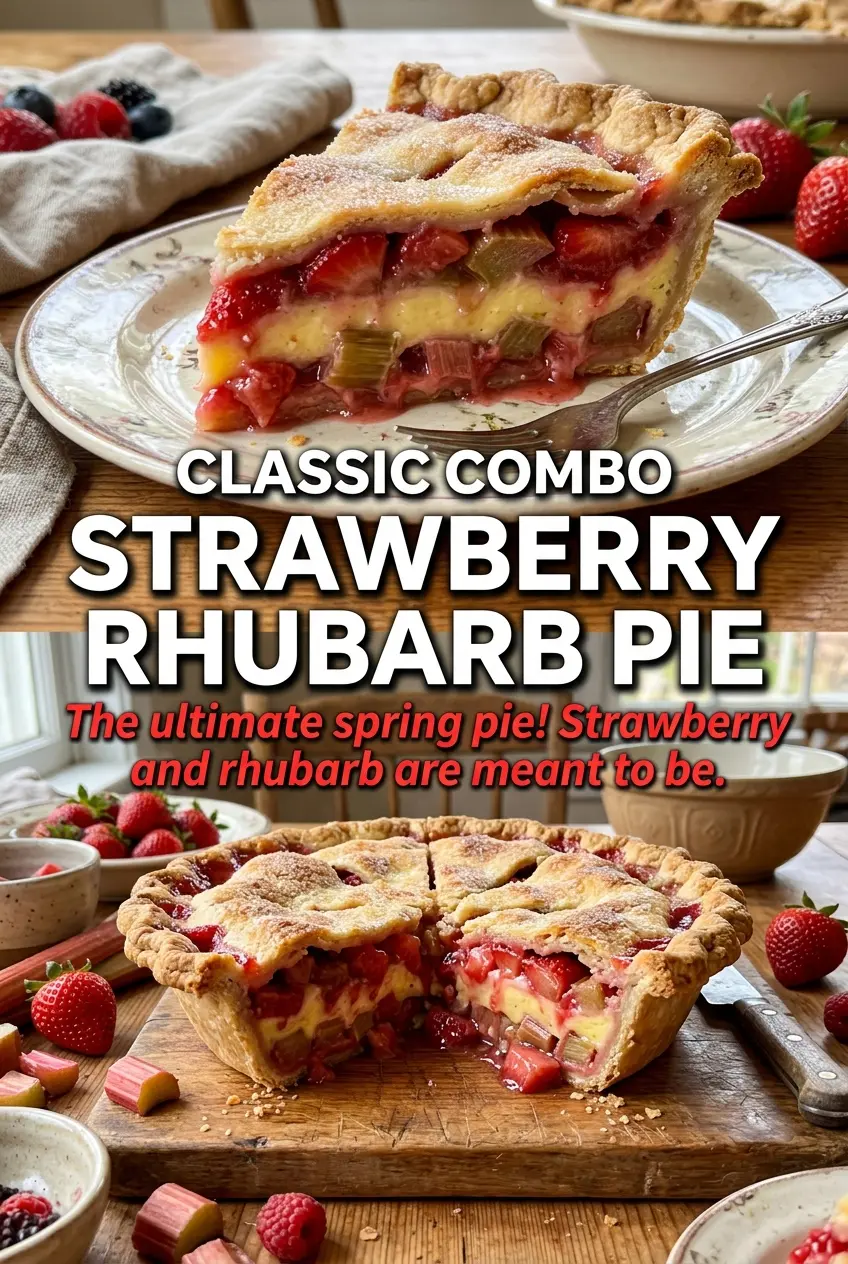
Strawberry Rhubarb Custard Pie
Ingredients
Equipment
Method
- Preheat oven to 400°F and place pie crust in a 9-inch pie plate.
- Arrange the rhubarb and strawberries in the bottom of the crust.
- Whisk together sugar, eggs, flour, heavy cream, vanilla extract, and salt until smooth.
- Pour the custard mixture over the fruit.
- Bake at 400°F for 15 minutes until the edges look slightly set.
- Reduce heat to 350°F and bake 35 to 40 minutes more until the custard is set in the center with a gentle wobble.
- Cool completely for at least 3 hours until the filling is fully chilled and sliceable.
- Serve chilled with whipped cream.