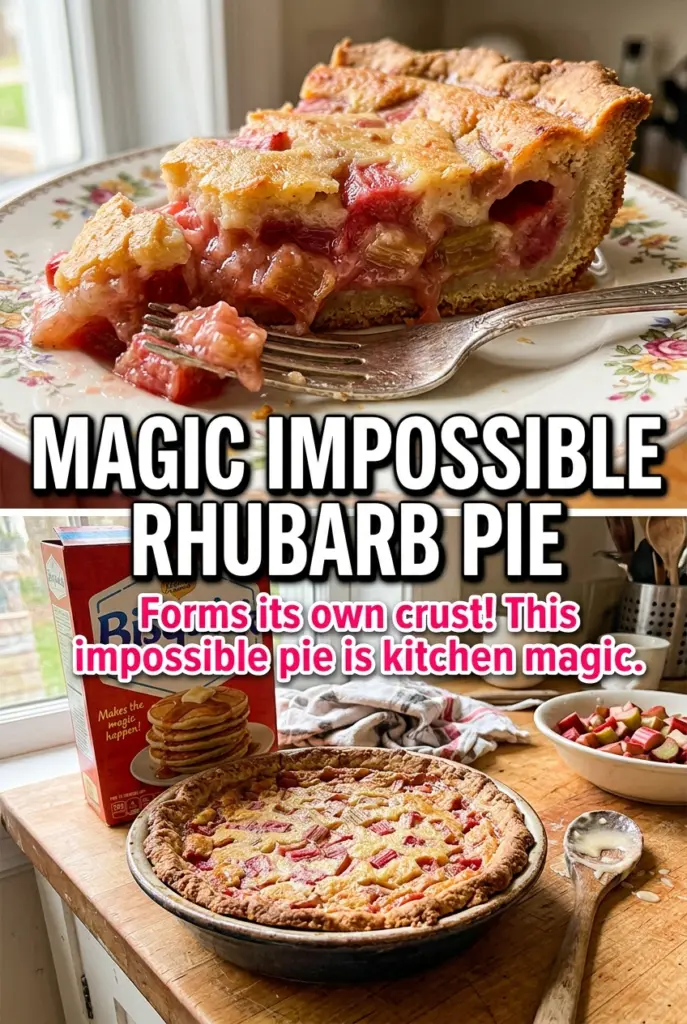
Rhubarb Impossible Pie bakes into its own layers: tart pink fruit on the bottom, a tender custard in the middle, and a light golden crust that forms right in the oven. The batter looks too thin when it goes into the pan, but that’s exactly what makes this dessert work. It settles around the rhubarb, rises slightly as it bakes, and turns into a sliceable pie with almost no effort.
The trick is keeping the batter smooth and the rhubarb evenly scattered so every slice gets a good balance of fruit and custard. I like fresh rhubarb here because it holds its shape and gives the pie those bright, clean bites that cut through the sweetness. A long cool-down matters, too. If you cut it early, the custard hasn’t finished setting and the layers won’t hold together.
Below you’ll find the small details that make this pie slice neatly, plus a few ways to adapt it if you want to change the fruit or work with what you already have.
The pie set up with that custardy middle and a real little crust on the bottom, and the rhubarb stayed bright instead of turning mushy.
Save this Rhubarb Impossible Pie for a custard dessert with a built-in crust and bright, tangy rhubarb in every slice.
The Batter Has to Stay Thin to Build the Crust
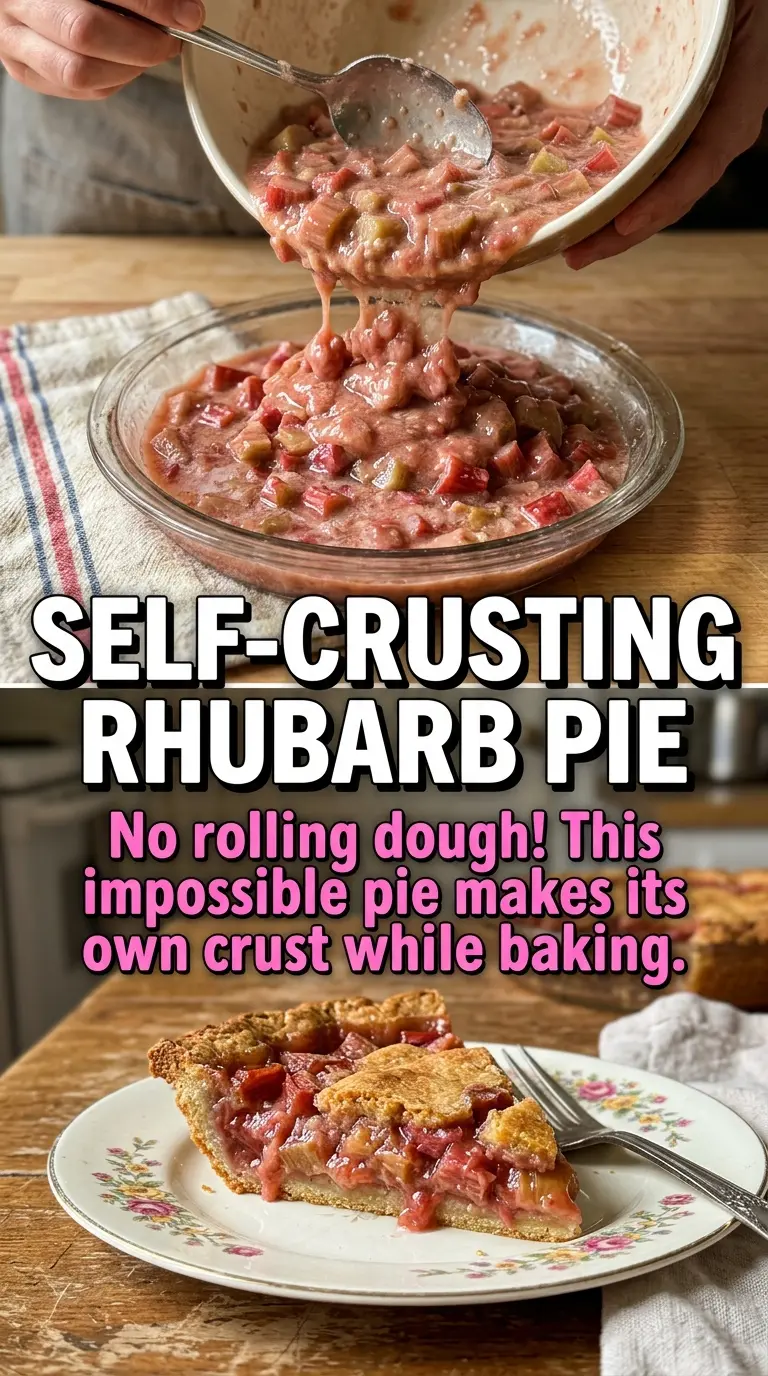
Most pies ask you to make a crust first and a filling second. This one flips that around. The flour, eggs, milk, and butter form a loose batter that sinks and sets into layers as it bakes, which is why the mixture looks more like pancake batter than pie filling when it goes into the pan. If the batter seems thick, the flour wasn’t blended in fully or the measurements were off, and the pie won’t separate cleanly into its self-crusting layers.
The other thing that matters is the pan. A deep-dish pie plate gives the custard enough depth to rise and set without bubbling over. If you use a shallow plate, the center can overbake before the middle firms up. The rhubarb goes in first for a reason, too. It softens under the batter and releases just enough juice to flavor the custard without turning the pie soupy.
What Each Ingredient Is Actually Doing in This Pie
- Rhubarb — Fresh rhubarb is worth using here because it stays tart and gives the pie its bright flavor. Frozen rhubarb can work, but thaw it and drain it well first so extra liquid doesn’t weaken the set.
- Sugar — This does more than sweeten. It balances rhubarb’s sharp edge and helps the custard brown on top. Cutting it much lower changes the texture and the pie can taste flat and eggy.
- Eggs — They set the custard and give the pie structure. There isn’t a true substitute that behaves the same way, which is why this dessert is best kept in its original form if you want the layered result.
- Butter — Melted butter adds richness and helps the bottom layer bake into something closer to a tender crust than a plain custard. Use real butter here; the flavor carries through the whole pie.
- Flour — This is the ingredient that creates the “impossible” part. It settles during baking and gives the pie its self-forming base, so don’t reduce it or swap in a flour with a very different absorbency unless you’re prepared for a softer set.
- Vanilla — It rounds out the sharpness of the rhubarb and makes the filling taste fuller. It won’t hide the fruit, just smooth the edges.
How to Bake the Layers So They Set in the Right Order
Start with the Rhubarb Layer
Grease the pie plate well, then spread the diced rhubarb in an even layer across the bottom. Thin spots or big mounds create uneven baking, so keep the fruit level. The sugar in the batter will draw some juice from the rhubarb as it bakes, which is part of the magic, but too much piled in one spot can make the center wet.
Blend Until the Batter Is Completely Smooth
Combine the sugar, eggs, melted butter, milk, flour, vanilla, and salt in a blender and blend until no dry flour shows. Any lumps left behind can bake into gummy pockets in the finished pie. Pour it over the rhubarb right away; the batter should be thin and pourable, not spoonable.
Bake Until the Center Barely Wobbles
Bake at 350°F for 40 to 45 minutes. The top should turn golden and the center should look set with just a slight wobble in the middle when you nudge the pan. If the top is browning too fast before the center is done, lay a loose piece of foil over it for the last 10 minutes. Underbaking leaves the custard loose; overbaking makes the texture rubbery.
Let It Cool All the Way
This is the part people rush, and it’s the part that matters most. Cool the pie for at least 2 hours before slicing so the custard can finish setting and the layers can hold. Warm pie will taste good, but it won’t cut cleanly. Chilling it after cooling gives the neatest slices and the most defined crust on the bottom.
Three Ways to Work With What You Have
Make It Gluten-Free
Use a 1:1 gluten-free all-purpose flour blend instead of regular flour. The pie still sets into layers, but the bottom crust will be a little more delicate and less bready. Pick a blend that includes xanthan gum or a similar binder so the custard doesn’t feel fragile when sliced.
Use Frozen Rhubarb
Frozen rhubarb works when fresh isn’t available, but thaw it first and drain away the excess liquid. If you skip that step, the extra moisture can keep the center from setting as cleanly. The flavor stays bright, though the pieces soften a little more than fresh.
Lower the Sweetness a Bit
If you like rhubarb tart, you can drop the sugar slightly, but don’t cut it too far. Sugar helps the custard brown and keeps the pie from tasting flat. A small reduction is fine; a big one changes the structure and the pie bakes up less evenly.
Storage and Reheating
- Refrigerator: Store covered for up to 4 days. The custard firms up in the fridge, which makes the slices even cleaner.
- Freezer: It freezes better than a cream pie, but the texture softens a little after thawing. Wrap slices tightly and freeze for up to 2 months; thaw overnight in the refrigerator.
- Reheating: Serve chilled or let it come to room temperature. If you warm it, do it briefly at low heat. High heat makes the custard tighten and can cause the layers to lose their neat texture.
Answers to the Questions Worth Asking
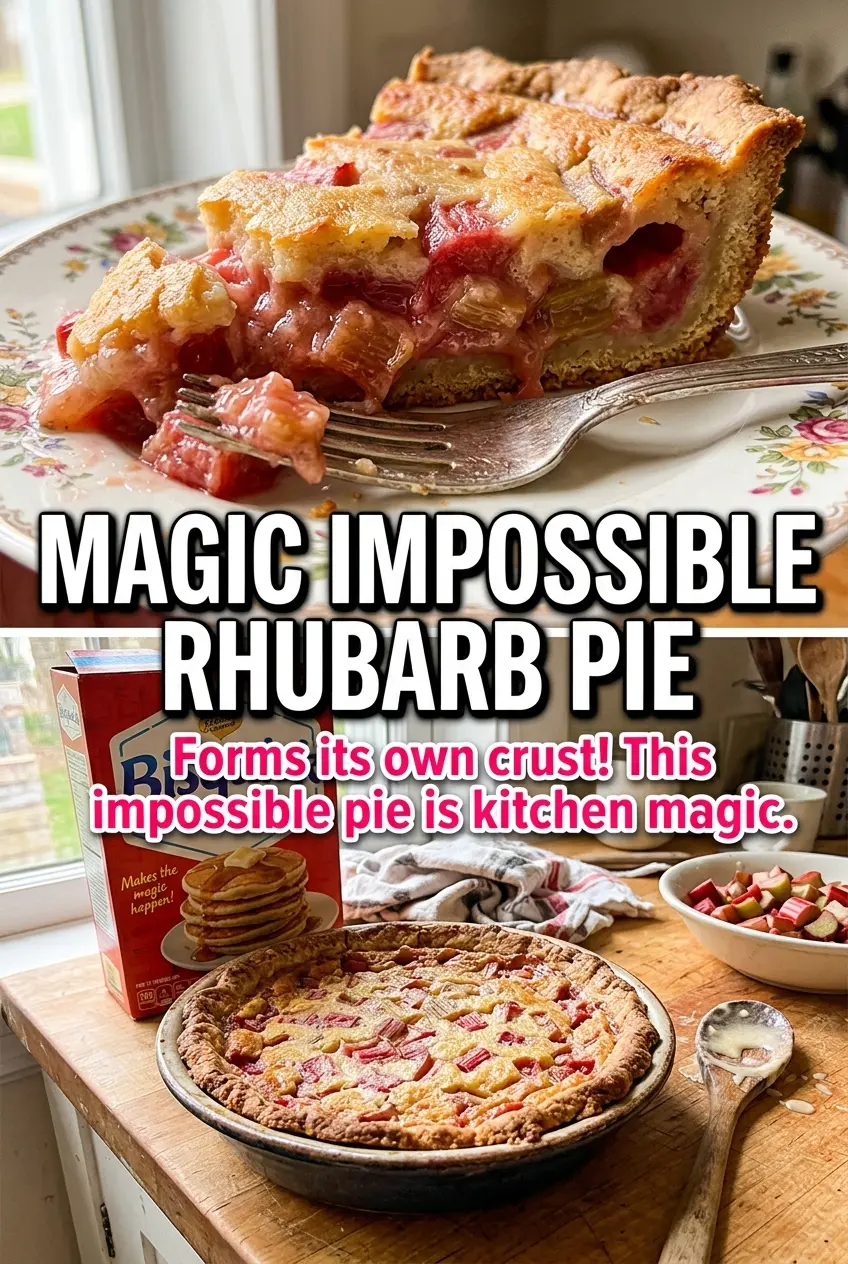
Rhubarb Impossible Pie
Ingredients
Equipment
Method
- Preheat the oven to 350°F and grease a 9-inch deep-dish pie plate with a thin coating.
- Spread the diced rhubarb evenly in the bottom of the pie plate so it forms an even layer.
- Add sugar, eggs, melted butter, milk, flour, vanilla, and salt to a blender.
- Blend until smooth, then scrape down if needed so the batter pours evenly (it will be thin).
- Pour the batter over the rhubarb in the pie plate, making sure the rhubarb stays evenly distributed.
- Bake for 40-45 minutes at 350°F until the top is golden and the center is set, with a slight wobble that firms as it cools.
- Cool completely for at least 2 hours so the magic crust firms up for clean slices.
- Serve chilled or at room temperature.