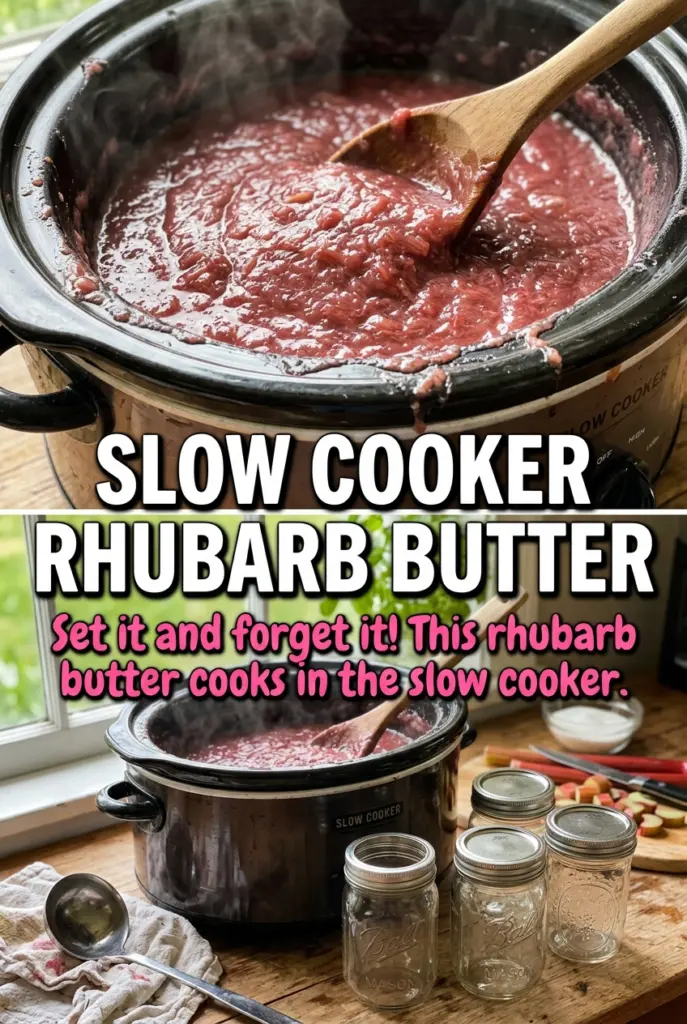
Thick, glossy rhubarb butter is one of those old-fashioned condiments that earns its place the moment you spread it on warm toast. The flavor is concentrated and bright, but the texture is what makes people stop and ask what you did differently. It’s smooth enough to swirl into yogurt and sturdy enough to sit proudly on a biscuit without running everywhere.
The trick is patience. Rhubarb needs time to break down and lose enough moisture to turn from tart compote into a spoonable fruit butter, and the last few minutes matter just as much as the first simmer. The sugar helps pull out liquid and rounds the sharp edge of the rhubarb, while vanilla, cinnamon, and nutmeg give it the kind of warmth that makes the whole jar taste finished instead of just cooked down.
Below, I’ve included the small details that keep the butter silky instead of watery, plus a few ways to adjust the sweetness and storage so you can keep a jar in the fridge or put up a batch for later.
The texture turned out perfect after that last simmer — thick enough to mound on a spoon, and the cinnamon really softened the tartness without burying the rhubarb.
Save this rhubarb butter for the days when you want a thick, pink spread that sets up smooth and finishes with warm vanilla spice.
The Part That Keeps Rhubarb Butter from Staying Thin
Rhubarb releases a lot of water as it cooks, and that’s the biggest reason fruit butters end up loose instead of spreadable. The first simmer softens the stalks and dissolves the sugar, but the texture only changes once the mixture cooks long enough for steam to escape. If it still looks a little loose in the pot, keep going. It should begin to leave a trail when you drag a spoon through it, and it should mound instead of pour when it’s ready.
Blending after the initial cook gives you the silky finish you want, but don’t rush that step while the mixture is still too liquid. Pureeing early can make the texture seem smooth while hiding the fact that it hasn’t reduced enough yet. The final 5 to 10 minutes after blending are where the butter tightens into that dense, spoonable consistency.
What Each Ingredient Is Actually Doing in This Rhubarb Spread
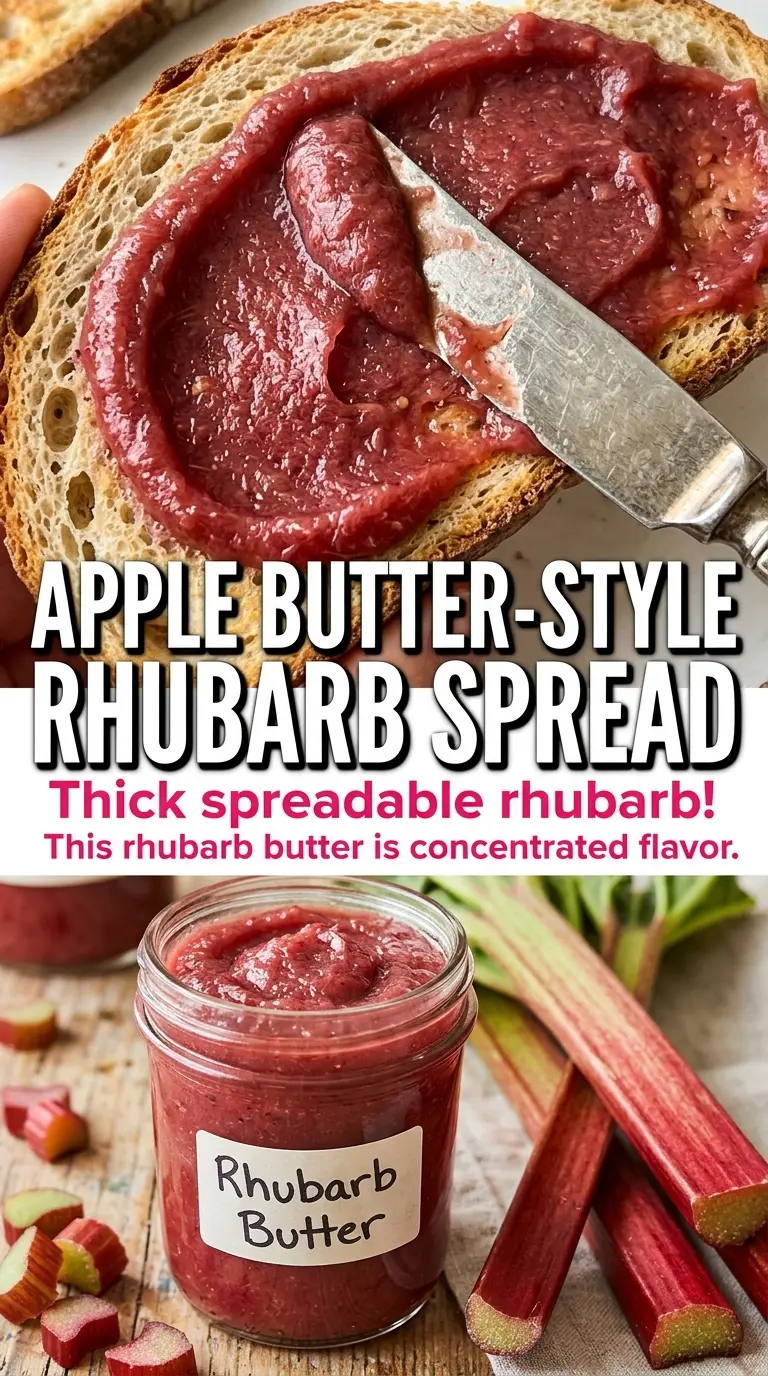
- Fresh rhubarb — This is the whole backbone of the recipe. Fresh stalks cook down into a bright, tangy base with enough natural pectin-like body to thicken as the moisture evaporates. Older, woody stalks can taste stringy and won’t puree as smoothly, so trim them well.
- Sugar — It does more than sweeten. Sugar helps pull liquid from the rhubarb early on, which speeds the breakdown, and it balances the sharp tartness so the final butter tastes rounded instead of harsh. Cutting it much lower changes the texture and makes the butter taste thin and acidic.
- Water — Just enough to start the pot without scorching the rhubarb before it begins to release its own juices. You don’t want much more than this, because extra water only lengthens the cooking time. If your rhubarb is especially juicy, you won’t need to add any more liquid later.
- Vanilla, cinnamon, and nutmeg — These are the finishing notes that make the butter taste like a preserve and not plain cooked fruit. Vanilla softens the edges, cinnamon adds warmth, and nutmeg gives a quiet background spice that reads as homemade. Add them near the end so the flavor stays fresh.
Cooking the Rhubarb Down Until It Mounds
Starting the Pot
Combine the rhubarb, sugar, and water in a large heavy pot and bring it to a boil over medium-high heat. The mixture should look wet and a little fragmented at first, then start to slump as the rhubarb gives up its juices. Stir often enough to prevent scorching on the bottom, especially once the sugar melts and the mixture starts to thicken around the edges.
Reducing the Moisture
Lower the heat and simmer uncovered for 30 to 40 minutes. You’re looking for the rhubarb to collapse completely and the liquid to turn syrupy, with slow bubbles that pop lazily instead of a rapid boil. If the heat stays too high, the bottom can catch before the top has reduced, so keep the simmer gentle and steady.
Blending to a Smooth Finish
Use an immersion blender to puree the mixture until smooth, or carefully blend in batches if that’s what you have. The texture should become glossy and even, with no visible strands of rhubarb left behind. If you skip the blender stage, the butter will still taste good, but it won’t have that classic fruit butter consistency that spreads cleanly.
Finishing the Flavor and Thickness
Stir in the vanilla, cinnamon, and nutmeg, then cook for 5 to 10 minutes more until the butter is thick enough to mound on a spoon. This last stage is where the mixture tightens from puree into spread. If it still slides off the spoon in a thin ribbon, it needs more time. You want it dense enough that a spatula leaves a clear path for a second or two before the surface closes in.
How to Adjust This Rhubarb Butter for Different Kitchens
Lower-Sugar Version
You can reduce the sugar a little, but don’t cut it aggressively. Less sugar means a sharper, more tart butter and a looser set because the mixture won’t cook down into the same syrupy base. If you want it less sweet, start by reducing the sugar by 1/4 cup and cook it a few minutes longer at the end.
Spiced-Up Batch
Add a pinch of ginger or a small strip of orange zest with the rhubarb if you want a brighter, more aromatic finish. The key is to keep the spice subtle so the rhubarb still tastes like rhubarb. Too much warm spice turns this into something closer to pie filling.
Water-Bath Canning for Longer Storage
If you want pantry storage, process the filled jars in a boiling water bath after making sure the butter is hot and the jars are sterilized. That step gives you a longer shelf life than the refrigerator alone, but the butter still needs to be cooked down properly first so it’s thick before it goes into the jars. A thin batch won’t magically thicken in storage.
Storage and Reheating
- Refrigerator: Store in sterilized jars for up to 3 weeks. The butter will firm up as it chills, so don’t panic if it seems a little looser when warm.
- Freezer: It freezes well in freezer-safe containers, leaving a little headspace for expansion. Thaw overnight in the refrigerator and stir before using if any separation appears.
- Reheating: For serving, let it sit at room temperature or warm it gently for a few seconds in the microwave. Don’t boil it again, or it can thin out and lose the glossy texture that makes it spread so well.
Answers to the Questions Worth Asking
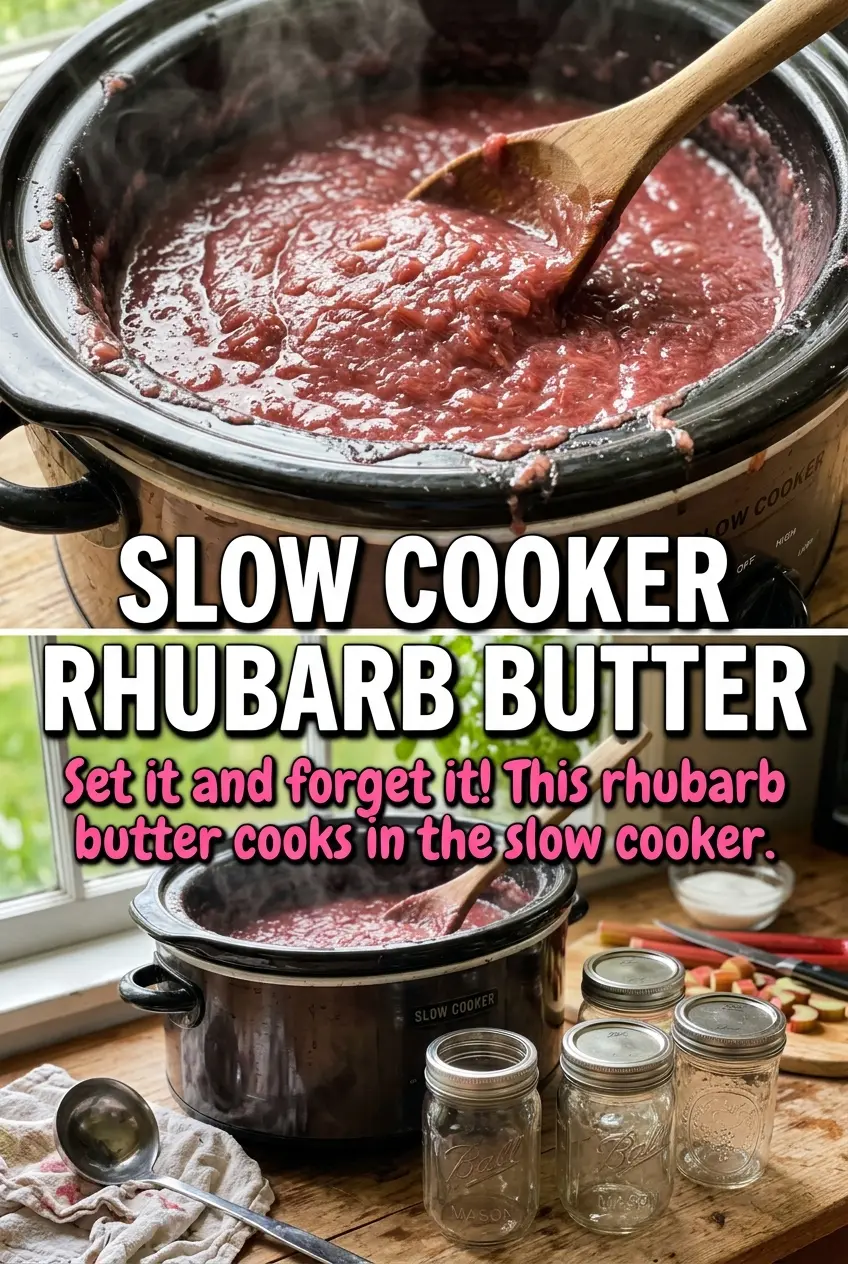
Rhubarb Butter
Ingredients
Equipment
Method
- Combine fresh rhubarb, chopped, sugar, and water in a large pot, then bring to a boil over medium-high heat. You should see steady bubbling across the surface.
- Reduce the heat to a gentle simmer and cook uncovered for 30-40 minutes, stirring occasionally. The mixture should visibly thicken and become darker pink as the volume reduces.
- Use an immersion blender to puree until smooth, pausing as needed so it doesn’t splatter. The texture should turn silky with no visible rhubarb chunks.
- Stir in vanilla extract, cinnamon, and nutmeg, mixing until evenly incorporated. The color will look uniform and slightly deeper.
- Continue cooking uncovered for 5-10 minutes more on a gentle simmer until very thick, stirring often. When you drag a spoon through it, the mixture should mound and hold shape.
- Pour the hot rhubarb butter into sterilized jars, leaving headspace and wiping rims if needed. You should see a smooth, spreadable consistency filling the jars.
- Store in the refrigerator for up to 3 weeks, or process jars in a water bath for longer storage. The sealed jars should keep at room temperature only if properly water-bathed.