Cutting into this keto rhubarb custard pie gives you three things at once: a tender almond flour crust, tart pieces of rhubarb that keep their shape, and a creamy custard that slices clean instead of slumping on the plate. That contrast is what makes it worth putting on repeat. It tastes like the kind of pie you’d expect from a bakery case, just without the sugar crash.
The trick is keeping the filling balanced enough to set without turning rubbery. Rhubarb brings plenty of sharpness, so the custard needs enough richness from the cream and eggs to smooth it out. A little almond flour in the filling helps it hold together without making it heavy, and the pre-baked crust keeps the bottom from going soggy under all that moisture.
Below, I’ll walk through the part that matters most: how to keep the custard silky, how to avoid a watery slice, and the small cooling step that makes all the difference when you’re baking with rhubarb.
The custard set up beautifully and the rhubarb stayed bright and tart instead of turning mushy. I chilled it overnight and the slices came out clean with that perfect creamy middle.
Like this keto rhubarb custard pie? Save it for the days when you want a sugar-free dessert with a creamy slice and a crisp almond crust.
The Reason This Custard Holds Its Shape Instead of Turning Watery
Rhubarb is loaded with moisture, and that’s the first place these pies go wrong. If you pile raw fruit into a shell and pour in a thin custard, the filling can look set at the edges and still slump once it cools. Here, the almond flour in the custard adds just enough body to help the eggs hold the fruit in place without making the pie feel dense.
The other piece that matters is cooling. A custard pie keeps setting as it comes down to room temperature, and if you cut it early, the center will spill before it has a chance to firm up. Three hours is the minimum I’d give this one, and overnight in the fridge makes the cleanest slices.
What the Almond Flour Is Doing in Both the Crust and the Filling
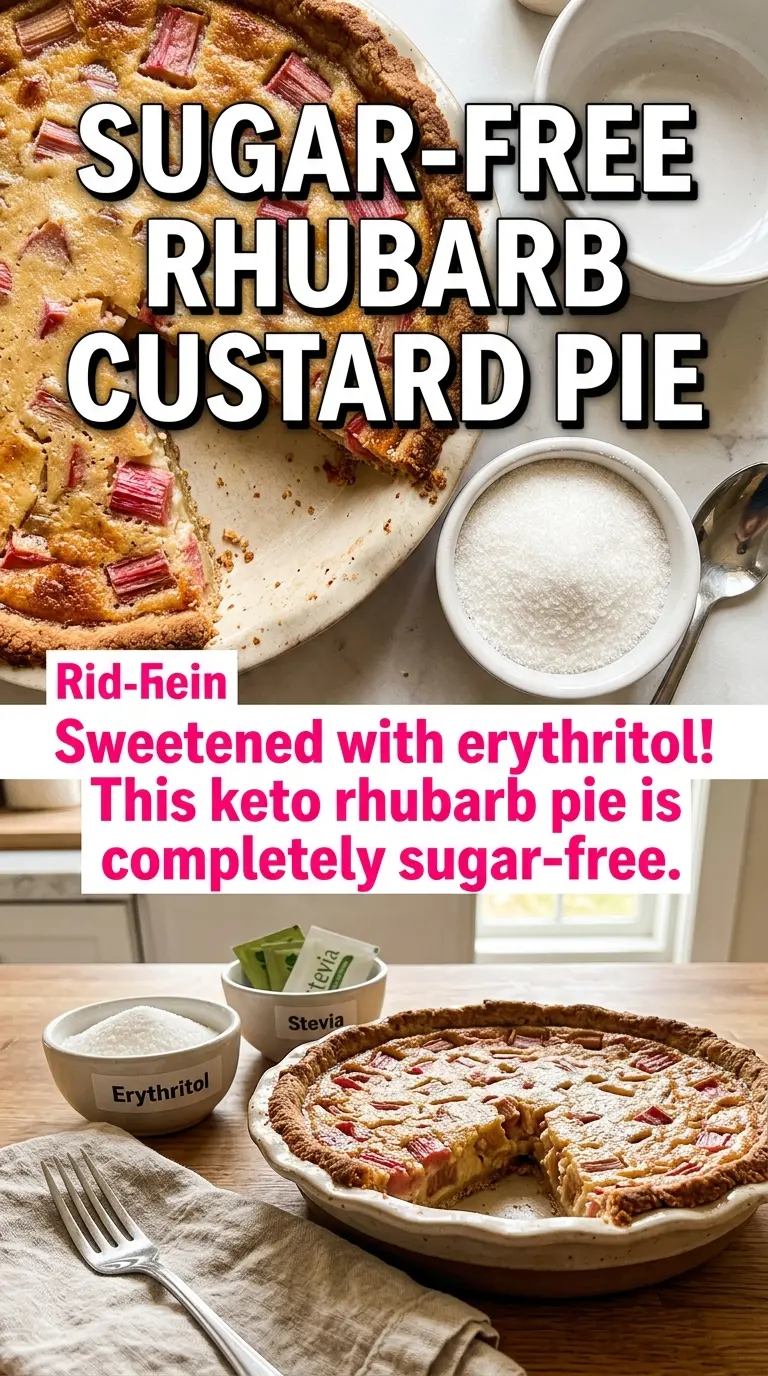
The almond flour in the crust gives you a short, tender base that behaves like a real pie crust without any white flour. It doesn’t become flaky in the traditional sense, but it does bake up sturdy enough to hold a soft filling, and the egg helps it bind so it slices instead of crumbling. If you use almond meal instead of finely ground almond flour, expect a rougher texture and a more rustic look.
In the filling, the small amount of almond flour works like quiet insurance. It helps thicken the custard just enough, which matters because rhubarb releases juice as it bakes. The heavy cream brings richness, and the vanilla rounds out the sharpness so the pie tastes balanced instead of bluntly tart.
- Almond flour — Use finely ground almond flour for the crust and filling. It gives the best texture here; coconut flour won’t behave the same and will make the pie dry and overly firm.
- Erythritol — This keeps the pie sugar-free and gives the custard the right sweetness level. If you prefer monk fruit or a blend, use the same measure if it converts 1:1.
- Heavy cream — This is what makes the custard taste silky. Half-and-half can work in a pinch, but the filling will be a little less rich and slightly softer.
- Rhubarb — Fresh rhubarb is worth using here because frozen rhubarb can release extra water and thin the custard. If frozen is all you have, thaw it first and drain it well before baking.
- Eggs — They set the custard. Don’t reduce them or the pie won’t slice cleanly.
Building the Pie So the Custard Sets Cleanly
Pressing and Pre-Baking the Crust
Mix the crust ingredients until the dough looks evenly moist and holds together when pressed. Push it firmly into the pie plate, especially up the sides, because a loose crust can shrink and crack when it bakes. The 10-minute blind bake should leave the crust lightly set and just starting to take on color; that head start keeps it from turning soggy once the filling goes in.
Whisking the Filling Without Overworking It
Whisk the custard until it’s smooth and the almond flour disappears into the liquid. Don’t beat in a lot of air, or the top can puff and then fall unevenly as it cools. If the sweetener has coarse crystals, let the mixture sit for a minute, then whisk again so you don’t end up with grainy spots in the finished pie.
Baking Until the Center Still Has a Gentle Wobble
Pour the custard over the rhubarb and bake until the edges are set and lightly golden while the center still has a small jiggle. That wobble matters; if the whole pie looks firm in the oven, it’s already overbaked and the eggs will tighten into a firmer, drier texture once cooled. Pull it from the oven and let it settle on the counter before moving it to the refrigerator.
How to Adapt It When You Need a Different Sweetener or Crust
Monk Fruit Instead of Erythritol
Use a 1:1 monk fruit sweetener if that’s what you keep on hand. The pie will taste a little cleaner and less cool on the tongue than with erythritol, which some people prefer in custard desserts. Just use the same amount and check the package, since blends vary more than the label suggests.
Dairy-Free Version
You can swap the butter for a firm dairy-free baking stick and use full-fat canned coconut milk in place of the cream. The filling will taste a little coconut-forward and set a touch softer, but it still works. Keep the pie fully chilled before slicing so the custard has time to firm up.
Frozen Rhubarb in a Pinch
Frozen rhubarb works if you thaw it first and drain off the liquid. Skip this step and the filling can turn loose and watery, especially while the pie cools. If the drained rhubarb still seems wet, pat it dry with paper towels before adding it to the crust.
Storage and Reheating
- Refrigerator: Store covered for up to 4 days. The crust softens slightly on day two, but the flavor stays good.
- Freezer: This pie freezes better than many custards if you wrap slices tightly and freeze them flat. Thaw in the refrigerator overnight; don’t thaw on the counter or the custard can weep.
- Reheating: Serve it chilled or let a slice sit at room temperature for 10 to 15 minutes. I don’t recommend microwaving it, because custard can turn grainy and the rhubarb can break down.
Answers to the Questions Worth Asking

Keto Rhubarb Custard Pie
Ingredients
Equipment
Method
- Preheat the oven to 350°F and grease a 9-inch pie plate, so it’s ready for baking.
- Mix almond flour, melted butter, erythritol, and egg until it forms a cohesive dough, then press it into the pie plate.
- Bake the crust for 10 minutes at 350°F until set and lightly fragrant.
- Arrange the diced rhubarb evenly in the baked crust.
- Whisk erythritol, eggs, heavy cream, almond flour, vanilla extract, and salt until smooth and pourable.
- Pour the custard mixture over the rhubarb, then bake for 40–45 minutes at 350°F until the custard is set and lightly golden.
- Cool the pie completely for at least 3 hours so the custard fully firms up for clean slices.
- Refrigerate and serve chilled for the best set texture and flavor balance.