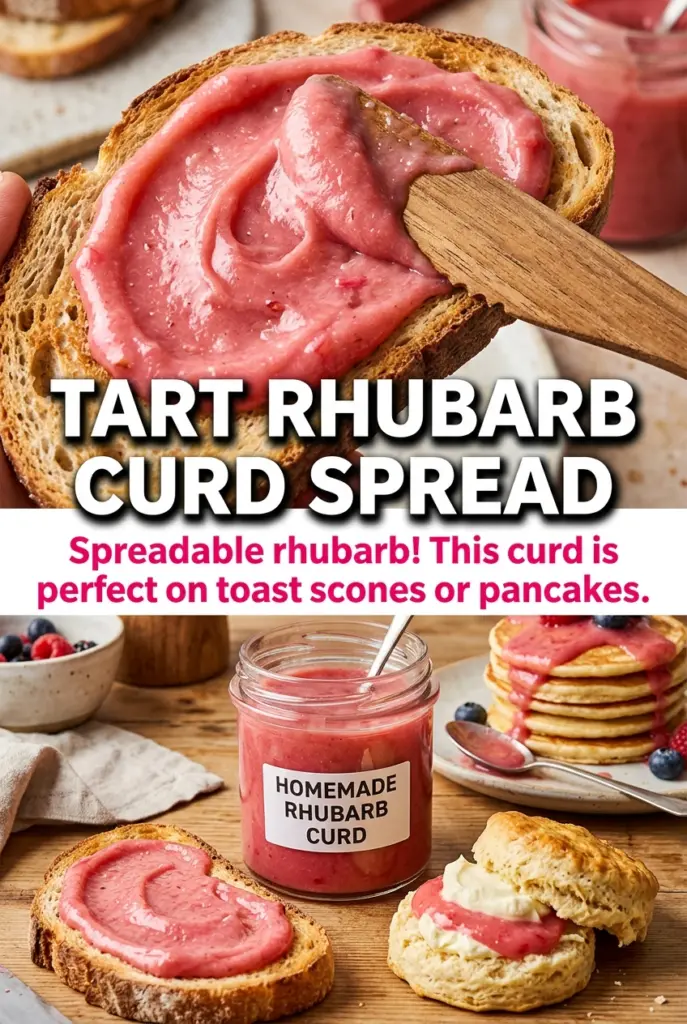
Rhubarb curd is the kind of spread that wakes up plain toast, turns a simple scone into something memorable, and makes a spoonful of yogurt taste like dessert. It’s silky, glossy, and brightly tart with just enough butter to round out the sharpness. When it’s done right, the texture lands somewhere between lemon curd and custard: smooth enough to spread cleanly, rich enough to feel special, and bold enough that a little goes a long way.
What makes this version worth making is the way the rhubarb gets cooked down and strained before the eggs ever go in. That step keeps the curd from tasting fibrous or grainy, which is a common problem with fruit curds. I also keep the heat moderate once the yolks are added. Curds only break when they get rushed, and rhubarb already brings plenty of personality without extra heat working against it.
Below, you’ll find the exact texture cues I watch for, plus the small adjustments that help the curd set properly and stay smooth in the fridge. If you’ve only made citrus curd before, this one behaves a little differently, but the method is just as manageable once you know what to look for.
The curd thickened up exactly when you said it would, and straining the rhubarb made it unbelievably smooth. I spread it on warm scones and the tart-buttery balance was spot on.
Silky rhubarb curd with that bright pink color is worth saving for scones, cakes, and spoonfuls straight from the jar.
The part that keeps rhubarb curd smooth instead of stringy
Rhubarb can make a curd taste lovely and still feel a little rough if it goes straight from the pan into the eggs. Cooking it down until it collapses completely, then blending and straining it, removes the fibrous bits that would otherwise stay behind. That extra minute of prep changes the whole texture. You end up with a curd that spreads like satin instead of one that feels pulpy on the tongue.
The other place people run into trouble is heat. Once the yolks are in, the mixture needs steady stirring over medium-low heat, not a hard simmer. If the pan gets too hot, the eggs scramble before the curd thickens. The safe cue is simple: it should coat the back of a spoon and leave a clean line when you drag a finger through it.
What each ingredient is actually doing in this curd
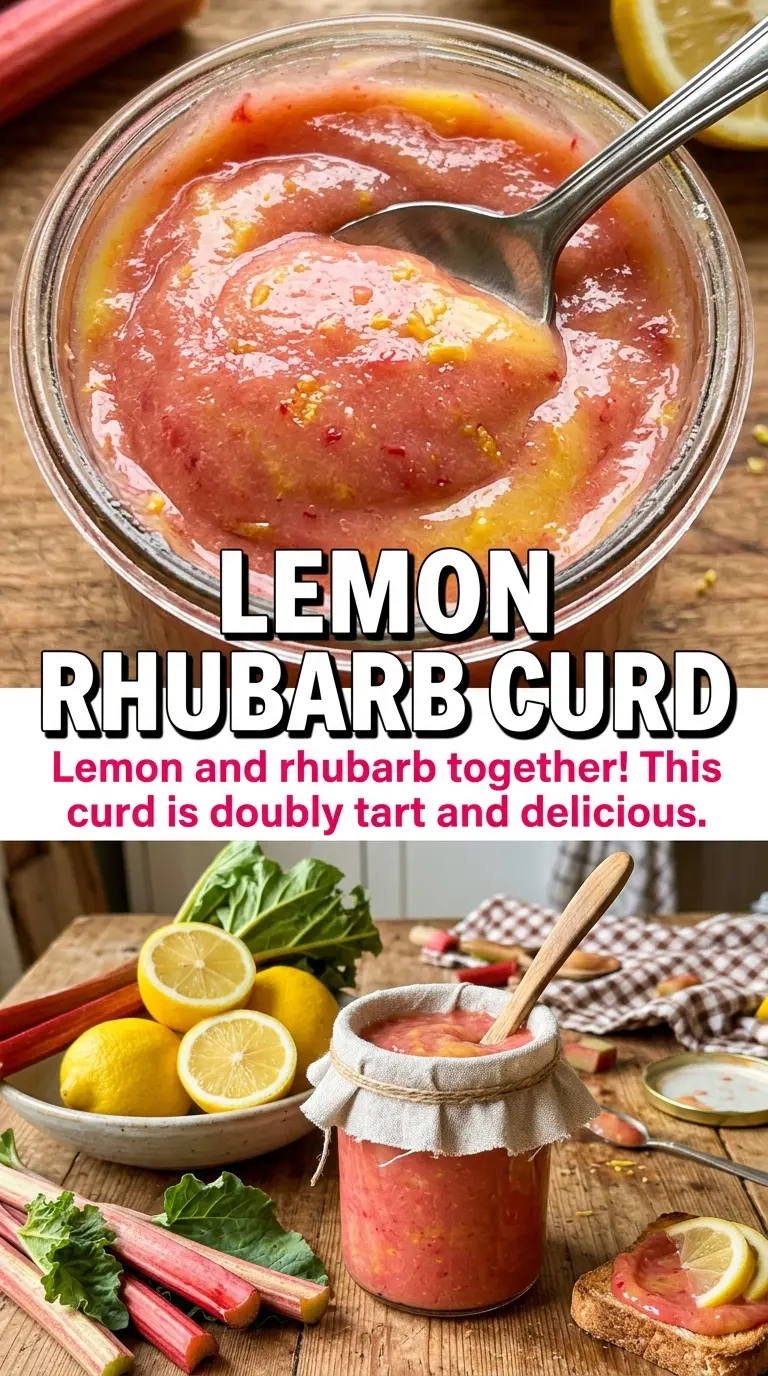
- Rhubarb — This is the backbone of the recipe. Fresh rhubarb gives you the sharp, clean tartness and that natural pink color after cooking. If your stalks are especially pale, the curd will still taste great, just a little less vivid.
- Sugar — Sugar does more than sweeten. It softens rhubarb’s edge and helps the egg yolks thicken into a smooth custard. Cutting it too far makes the curd taste harsh and can throw off the set.
- Egg yolks — Yolks give the curd its body and rich, spoonable texture. Whole eggs won’t give the same lush finish. If you want a firmer curd, don’t add more yolks casually; that can turn the texture heavy instead of silky.
- Butter — Butter goes in at the end to finish the curd and give it that glossy, melt-in-your-mouth feel. Use good butter if you can, because its flavor comes through. Cube it first so it melts quickly without needing extra heat.
- Fine mesh strainer — Not an ingredient, but it matters enough to mention. Straining is what turns cooked rhubarb from good to polished. Skip it and you’ll keep all the stringy bits.
How to cook rhubarb curd without curdling the eggs
Softening the rhubarb first
Start by cooking the rhubarb with half the sugar until it breaks down completely and looks jammy, not watery. You want the pieces to collapse with almost no resistance from the spoon. If you stop too soon, the puree will be thin and the finished curd can taste sharp in a raw way. Let it get soft enough that blending is effortless.
Blending and straining for a clean finish
Blend the cooked rhubarb until completely smooth, then push it through a fine mesh sieve. Use the back of a spoon and don’t rush this part; the strained puree should look glossy and uniform. If a lot of pulp remains behind, that’s normal and worth discarding. The curd will be smoother and set more evenly because of it.
Thickening the custard slowly
Whisk in the remaining sugar, egg yolks, and salt, then cook over medium-low heat while stirring constantly. Keep the spatula moving across the bottom and into the corners so nothing sits long enough to overheat. The mixture starts out loose, then suddenly takes on body and clings to the spoon. The second it coats the spoon and leaves a clear trail, pull it off the heat.
Finishing with butter
Add the butter cubes off the heat and whisk until every piece disappears. The residual heat is enough to melt it; putting the pan back on the burner can make the curd greasy or split. When it’s done, it should look smooth, shiny, and slightly thicker than you want it to be, because it firms up as it chills.
How to adapt rhubarb curd for different uses and diets
Make it dairy-free with a neutral plant butter
Use a high-quality vegan butter with a clean, neutral taste. The curd will still set and stay glossy, though it won’t have quite the same rounded finish as classic butter. Choose one that melts smoothly; waxy substitutes can leave a greasy film.
Use frozen rhubarb when fresh isn’t available
Frozen rhubarb works well here. Cook it straight from frozen so it can release its liquid slowly, then continue until the mixture looks soft and concentrated. The flavor stays bright, but the color can lean a little lighter than fresh rhubarb.
Turn it into a dessert topping by thinning it slightly
If you want a pourable sauce for cheesecake or ice cream, whisk in a teaspoon or two of warm water after the butter melts. That loosens the texture without flattening the flavor. Don’t add too much or it stops behaving like curd and starts reading as syrup.
Storage and Reheating
- Refrigerator: Store in clean jars for up to 2 weeks. The curd will firm up as it chills and may loosen slightly once stirred.
- Freezer: It freezes well for up to 3 months. Leave a little space at the top of the jar for expansion, and thaw it overnight in the fridge.
- Reheating: You usually don’t need to reheat it. If it feels too firm straight from the fridge, let it sit at room temperature for 10 to 15 minutes and stir. Microwaving can make the butter separate, so avoid quick high heat.
Answers to the questions worth asking
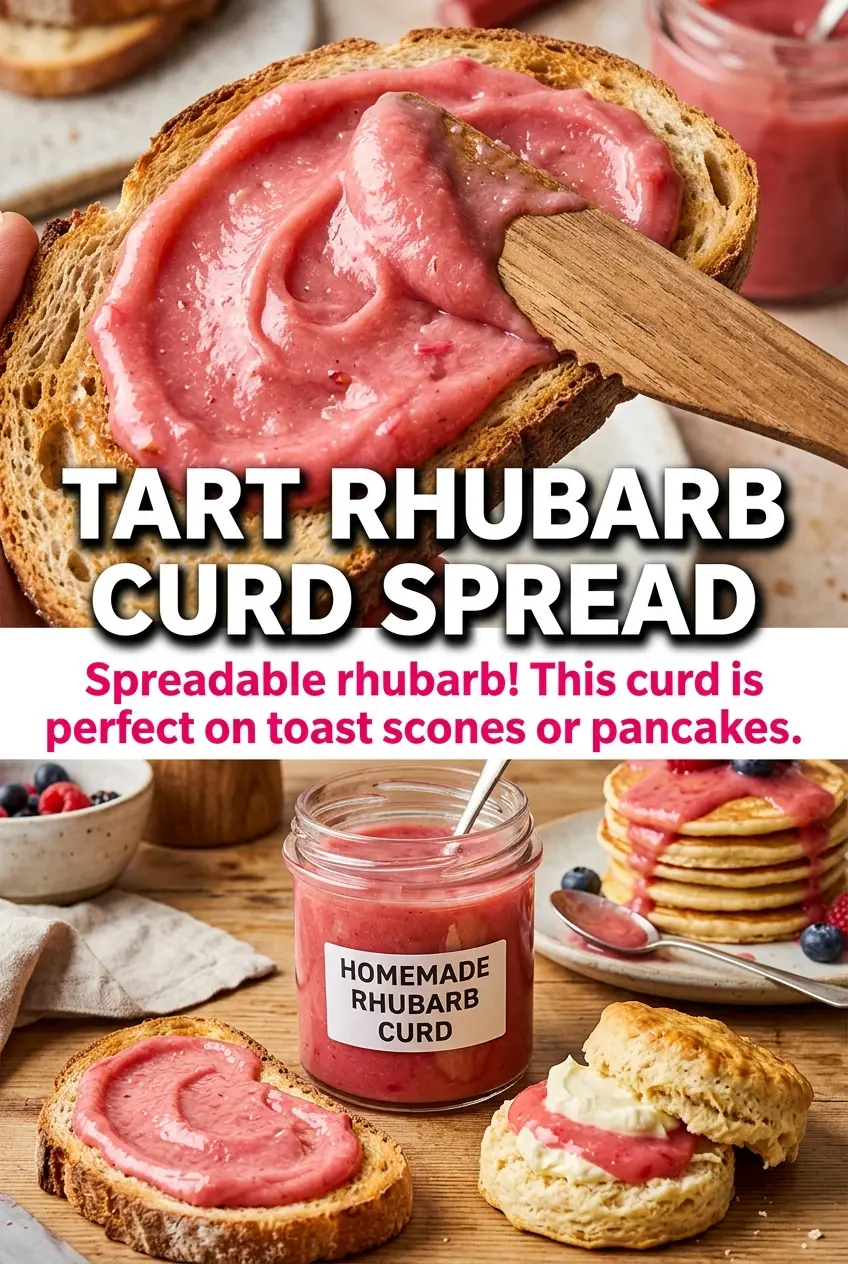
Rhubarb Curd
Ingredients
Equipment
Method
- Combine chopped fresh rhubarb and 1/2 cup sugar in a saucepan and cook over medium heat until very soft, about 10 minutes, stirring occasionally as the fruit breaks down.
- Transfer the cooked rhubarb mixture to a blender and puree until smooth, then pour it through a fine mesh sieve to remove any solids for a silky texture.
- Return the strained rhubarb puree to the saucepan and whisk in the remaining 1/2 cup sugar, egg yolks, and salt until smooth.
- Cook over medium-low heat, stirring constantly, until the mixture thickens and coats the back of a spoon, about 8-10 minutes, scraping the bottom and corners so it stays lump-free.
- Remove the saucepan from the heat and whisk in the butter cubes until fully melted and incorporated for a glossy, buttery finish.
- Pour the curd into clean jars, cover the surface with plastic wrap so it touches the curd, and refrigerate for at least 2 hours to set.
- Store the rhubarb curd in the refrigerator for up to 2 weeks, keeping the jar sealed between uses.