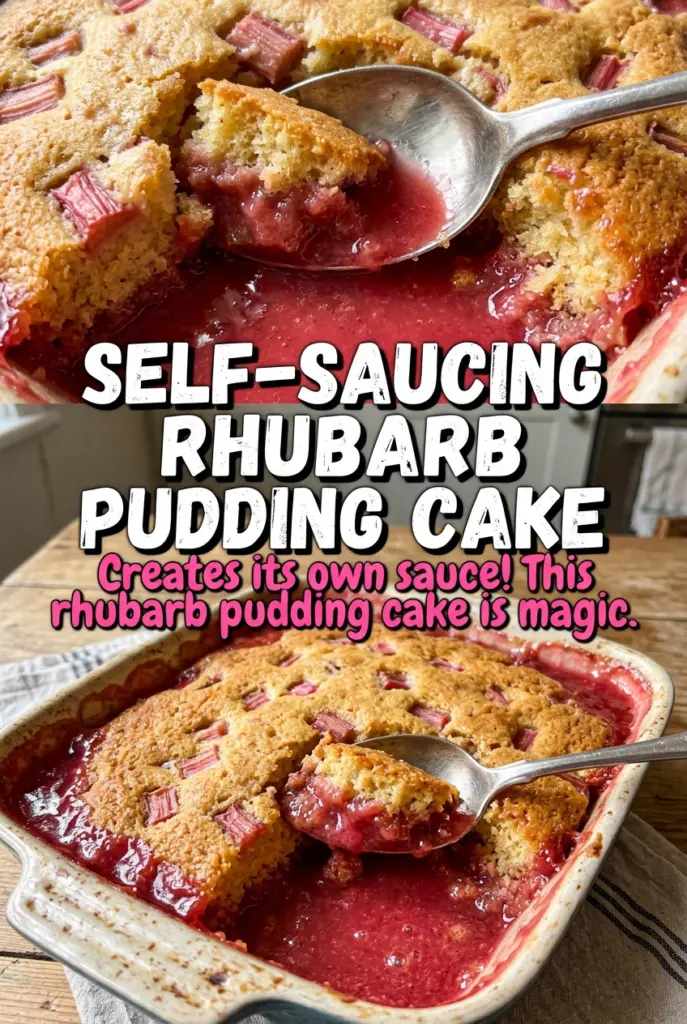
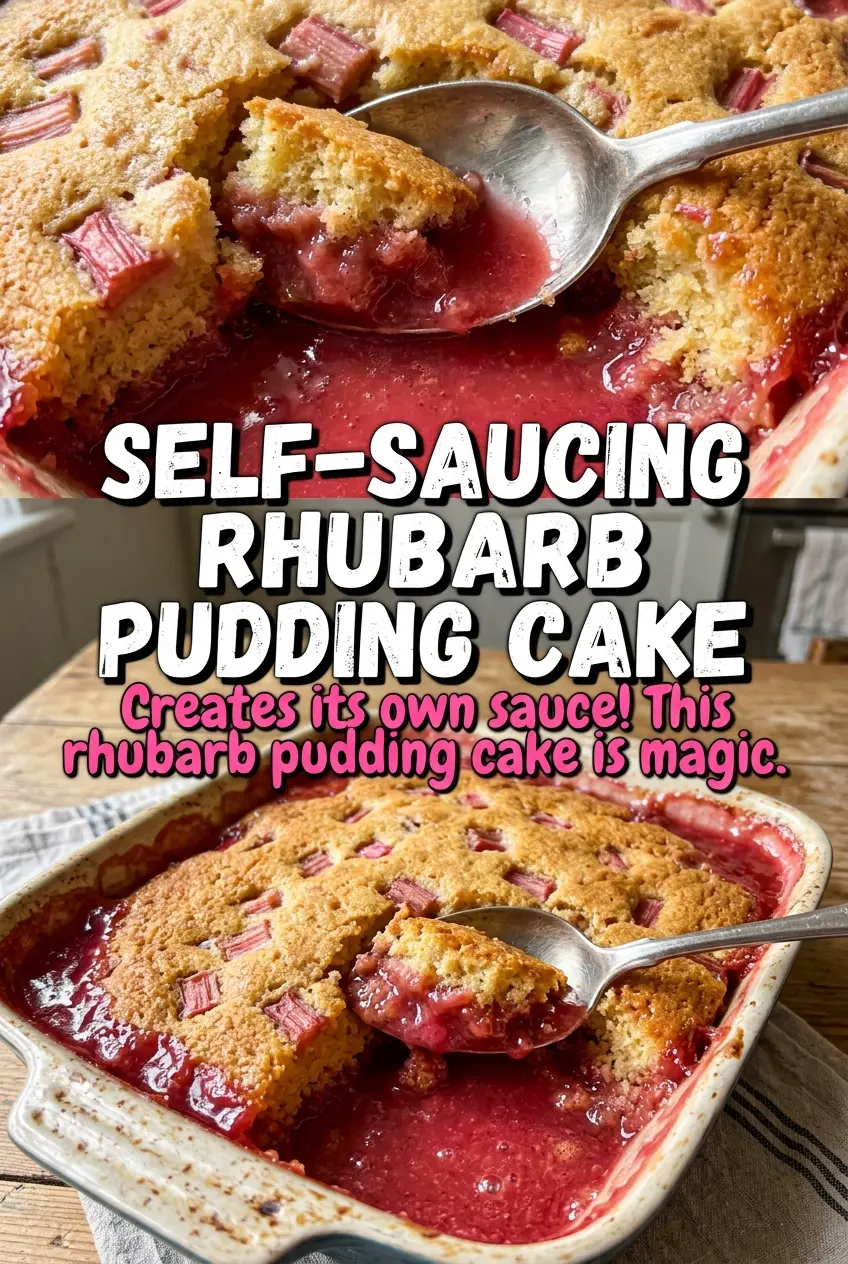
Rhubarb pudding cake gives you the best kind of dessert surprise: a tender, pale-golden cake on top and a warm, spoonable sauce underneath. The rhubarb softens as it bakes, turning tart and jammy without losing its shape completely, so every bite has a little brightness to cut through the sweetness. It’s the kind of pan dessert that looks humble coming out of the oven and disappears fast once it hits the table.
The trick is in the layering. The batter stays fairly simple and loose, which helps it rise around the fruit instead of baking up dense. The sugar-cornstarch topping and boiling water look strange the first time you do it, but that’s what creates the self-saucing effect. As it bakes, the water sinks through the batter and thickens into a glossy pudding layer below while the cake sets above it.
Below, I’ll show you how to keep the cake from turning gummy, how to get the sauce to thicken properly, and a few swaps that still preserve that soft, warm, spooned-from-the-pan texture.
The cake baked up tender and the sauce underneath turned glossy instead of watery. I spooned it into bowls with vanilla ice cream and the rhubarb stayed bright and tangy.
Save this rhubarb pudding cake for the nights when you want a warm fruit dessert with a built-in sauce.
The Part That Stops the Sauce From Turning Thin and Watery
Self-saucing desserts can fail in one frustrating way: the top bakes into cake, but the bottom tastes sweet and thin instead of turning into pudding. That usually happens when the topping isn’t evenly distributed or the water gets poured too fast and creates holes through the batter. Here, the dry sugar-cornstarch mixture sits over the batter and the boiling water is poured gently across the surface so it can seep through without blasting the whole thing apart.
The other piece that matters is the rhubarb. Dice it small enough that it softens in time with the cake, but not so tiny that it disappears. You want distinct tart bites tucked into the crumb, not a jammy layer that muddles the structure.
What Each Ingredient Is Doing in the Pan
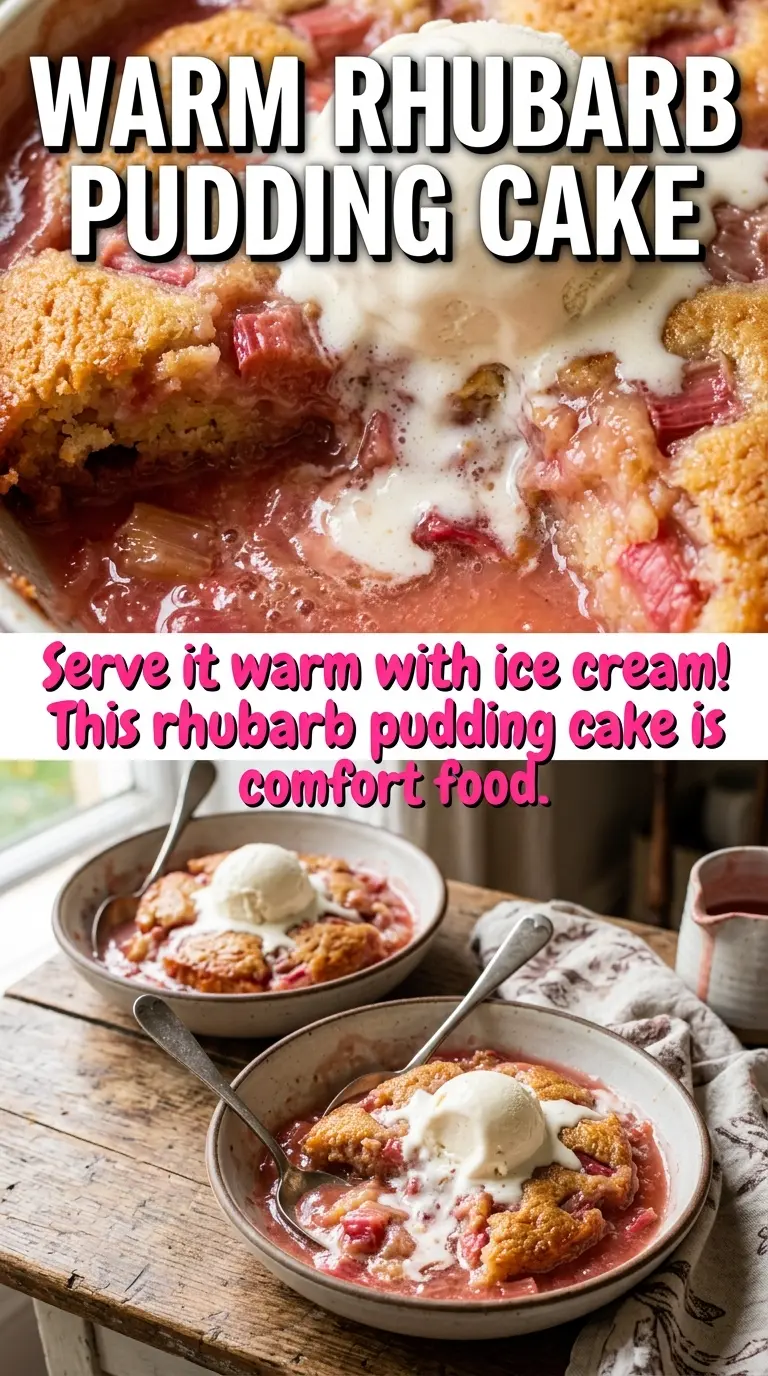
- All-purpose flour — This gives the cake enough structure to hold the fruit and let the sauce settle beneath it. Cake flour can make the top too fragile for a pudding cake like this.
- Sugar — There’s sugar in both the batter and the sauce. The batter needs it for tenderness, while the topping combines with the cornstarch to create that glossy spoonable layer below.
- Milk — Milk keeps the batter loose enough to spread easily, which helps it bake into a soft cake instead of a tight crumb. Whole milk gives the richest result, but 2% works fine.
- Melted butter — Melted butter mixes in fast and gives the cake a clean, even richness. Don’t use browned butter here; you want the batter flavor to stay soft and neutral so the rhubarb stands out.
- Fresh rhubarb — Fresh is the ingredient that matters most. Frozen rhubarb can work, but don’t thaw it first or you’ll add extra liquid and muddy the texture.
- Cornstarch — This is what helps the sauce thicken into pudding instead of staying watery. There isn’t a good substitute that behaves the same way here.
Building the Cake, Then Letting the Sauce Happen
Mixing the Batter
Whisk the dry ingredients first so the baking powder and salt are evenly distributed, then stir in the milk and melted butter just until smooth. The batter should be thick but pourable. If you beat it hard, the cake can turn tight and rubbery instead of soft.
Adding the Rhubarb
Fold in the diced rhubarb and spread the batter into a greased 8×8-inch baking dish. The fruit should sit throughout the batter, not just on top, because that’s what gives you tart little pockets in each spoonful. If the rhubarb looks piled in one corner, the cake will bake unevenly.
Making the Self-Saucing Layer
Mix the sugar and cornstarch together before sprinkling it over the batter. That keeps the cornstarch from clumping and helps the sauce thicken evenly. Pour the boiling water over the top slowly and try not to stir; the layers need to stay separate so the sauce can sink and form underneath while the cake bakes above it.
Baking Until the Center Sets
Bake until the top is golden and the edges are bubbling. The center should look set but still a little soft when you nudge the pan. If you pull it too early, the sauce may stay loose. If you bake it too long, the pudding layer tightens up and you lose that silky spoonable texture.
Berry-Rhubarb Version
Swap 1 cup of the rhubarb for chopped strawberries or raspberries. The cake gets a softer, sweeter fruit layer and the sauce turns a little more jammy, but the rhubarb still keeps the dessert from tasting flat.
Gluten-Free Version
Use a 1:1 gluten-free flour blend in place of the all-purpose flour. The cake may bake a touch more tender and fragile, but it still gives you the same saucy bottom if you don’t overmix the batter.
Dairy-Free Version
Use a neutral dairy-free milk and replace the butter with melted vegan butter or refined coconut oil. The texture stays close, though coconut oil will add a faint coconut note and vegan butter keeps the flavor more neutral.
Storage and Reheating
- Refrigerator: Keep covered for up to 4 days. The sauce will thicken as it chills, which is normal.
- Freezer: It freezes, but the sauce texture gets less silky after thawing. Freeze in portions if you want to, then thaw overnight in the fridge.
- Reheating: Warm individual servings in the microwave or reheat the whole dish covered in a low oven. Add a splash of milk if the sauce looks tight, and don’t blast it on high heat or the cake can dry out before the sauce loosens.
Questions I Get Asked About This Recipe
Rhubarb Pudding Cake
Ingredients
Equipment
Method
- Preheat the oven to 350°F and grease an 8x8-inch baking dish so the batter releases cleanly after baking.
- Whisk together the all-purpose flour, sugar, baking powder, and salt until evenly combined.
- Stir in the milk and melted butter until the batter looks smooth and lump-free.
- Fold in the diced fresh rhubarb and spread the batter into the prepared baking dish so it bakes through.
- Stir together the sugar and cornstarch, then sprinkle the mixture evenly over the batter.
- Pour the boiling water over the top and dot with the butter so a pudding layer forms while baking.
- Bake for 40-45 minutes at 350°F until the cake is golden and the sauce is bubbling around the edges.
- Cool for 15 minutes before serving warm so the sauce thickens slightly and sets under the cake.