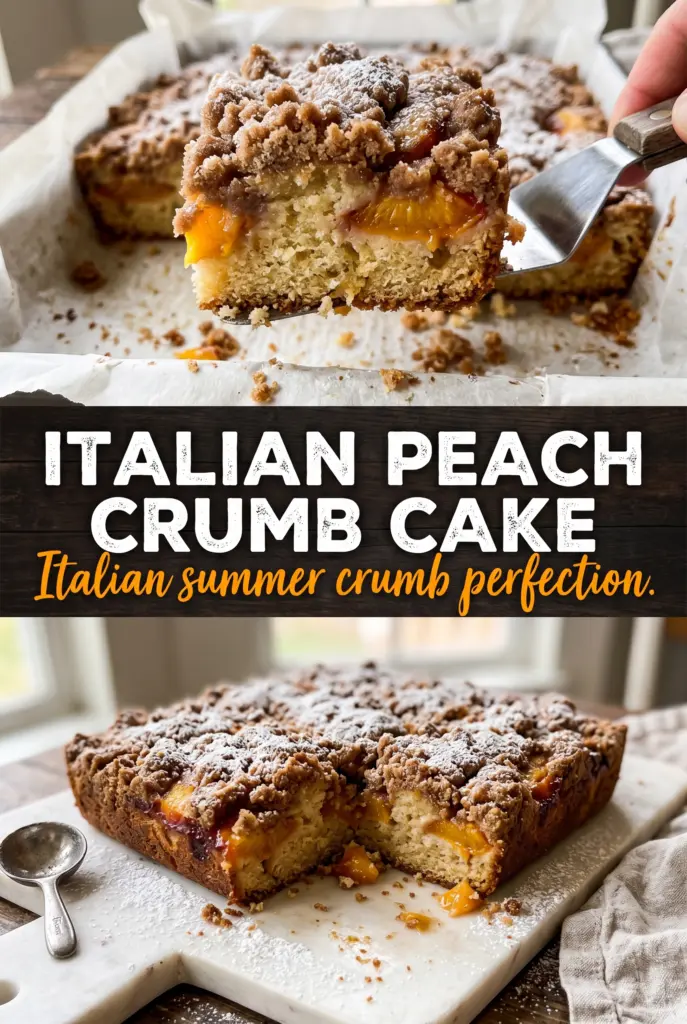
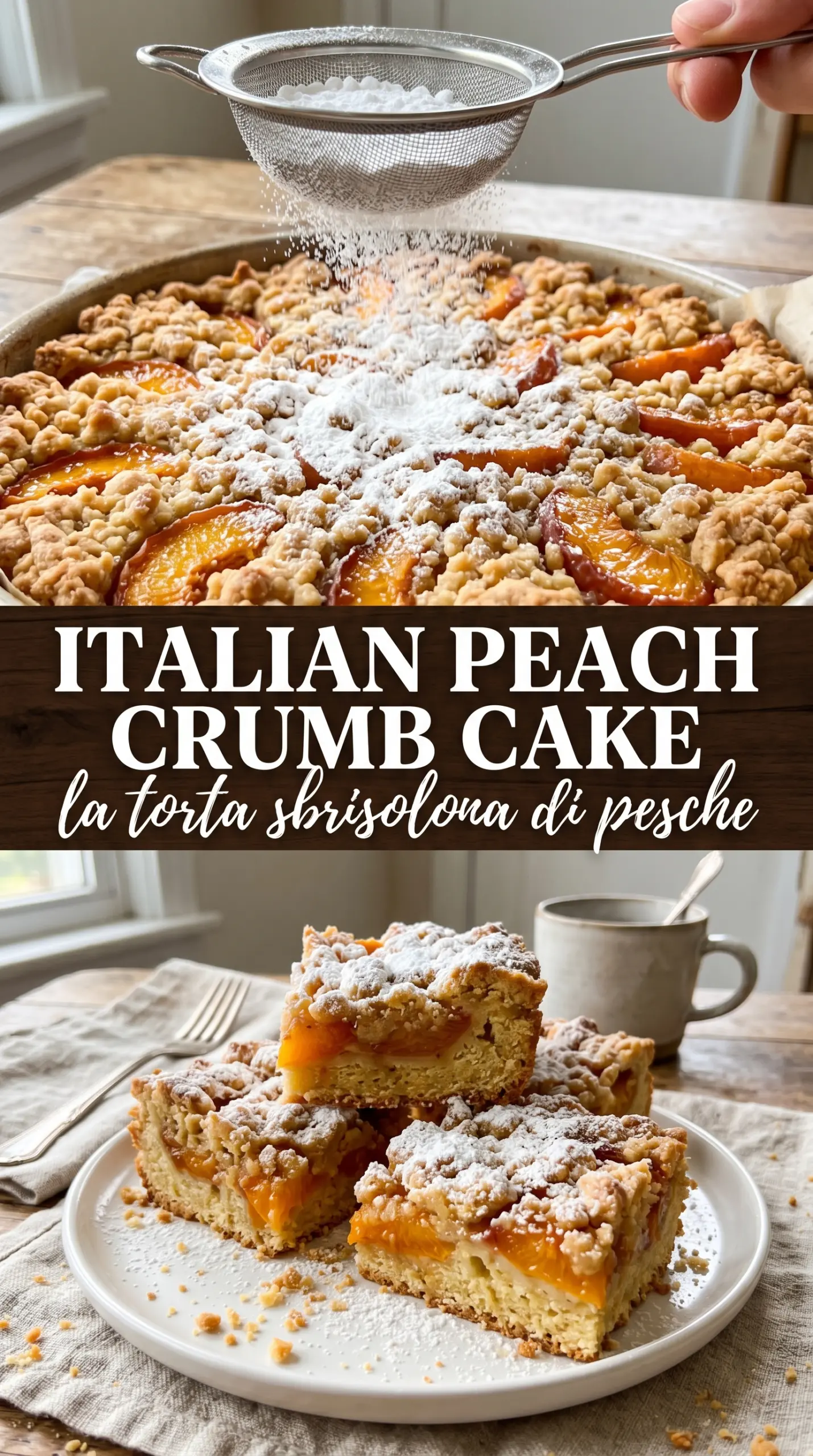
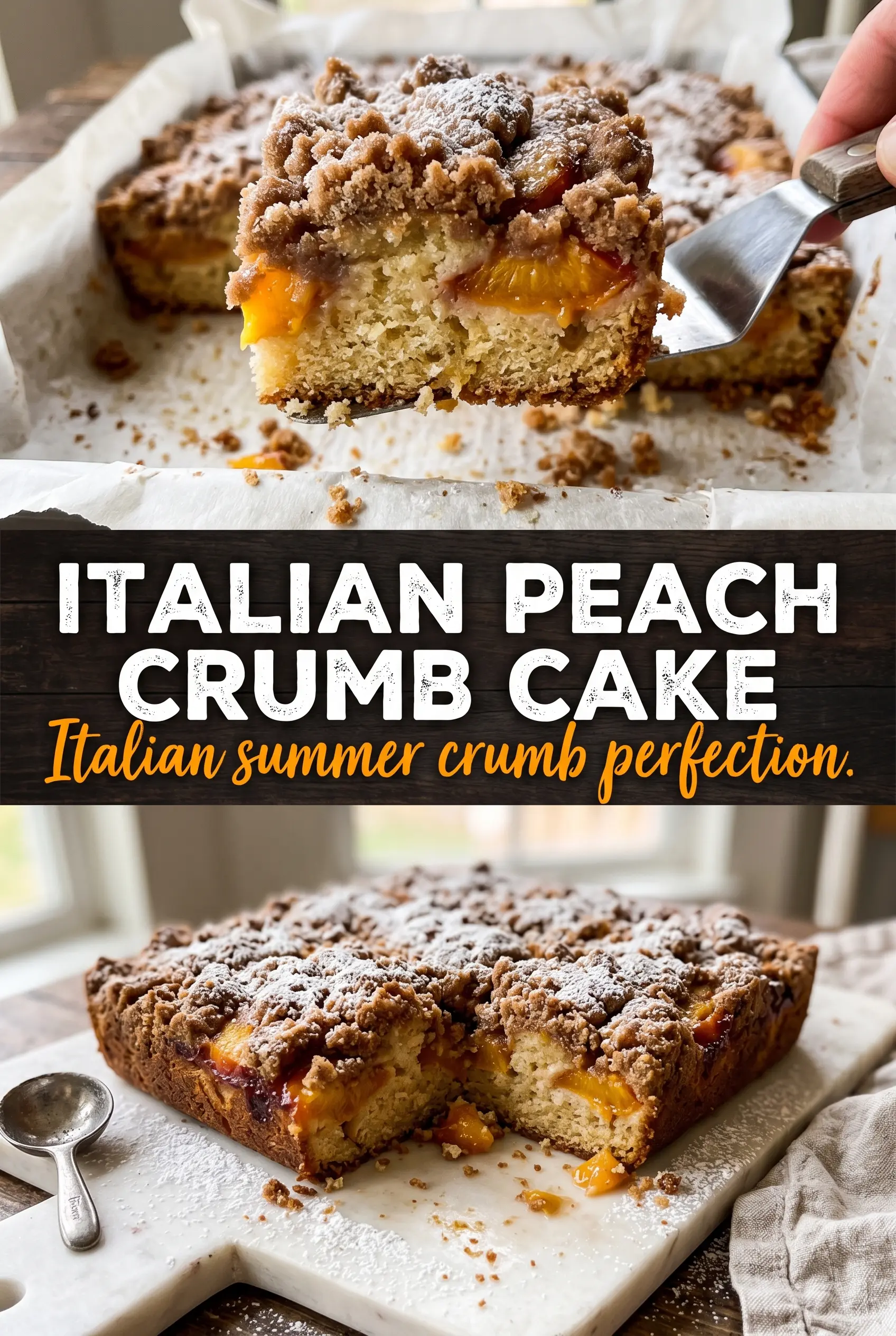
Buttery, sandy crumbs and jammy peaches are exactly what make Italian peach crumb cake worth keeping in regular rotation. It lands somewhere between coffee cake and fruit pie: sturdy enough to slice cleanly, but soft in the middle where the peaches melt into the crumb. The top bakes into a rough, golden layer that breaks apart under a fork, and the fruit underneath stays sweet without turning watery.
What makes this version work is the way the dough stays crumbly from the start. Cold butter gets rubbed into the dry ingredients until it looks like coarse sand, then the eggs and vanilla are mixed in just enough to bind it. That texture matters. If you overwork it, you lose the sandy crumble that gives a sbriciolata its name. A little lemon zest sharpens the peaches, and the sugar on the fruit pulls out just enough juice to make the center taste lush instead of dry.
Below, I’ve broken down the part that matters most: how to keep the base sturdy while the top stays loose and crisp. You’ll also find a few smart swaps for different diets and a couple of answers for the things that usually trip people up with fruit crumb cakes.
The crumb stayed sandy and light, and the peaches baked into this jammy layer without making the bottom soggy. I served it warm with coffee and everyone went back for a second piece.
Save this Italian peach crumb cake for when you want a rustic dessert with a buttery crumble top and a juicy peach center.
The Reason the Crumble Stays Tender Instead of Turning Dense
The biggest mistake with a crumb cake like this is treating the dough like a regular batter. It isn’t one. You want dry, sandy crumbs that clump only when pressed, because that loose texture is what bakes into the rustic layers this cake depends on. If the mixture looks smooth before it goes into the pan, the butter warmed too much or the eggs were worked in too long.
The other trap is overpacking the base. Press it in firmly enough to hold together, but don’t mash it into a tight crust. A light hand keeps the bottom tender after it bakes, while the top stays crumbly instead of cakey. The peaches also need a little sugar, not a lot; just enough to draw out juices so they soften into the center without flooding the pan.
- Cold butter is what creates the sandy crumble. Cube it first and keep it cold until the last minute.
- Lemon zest brightens the peaches and keeps the cake from tasting flat.
- Fresh peaches matter here. Frozen peaches release too much liquid unless they’re thawed and drained well.
- The dough should still look broken and uneven after the eggs go in. That rough look is the goal.
What Each Ingredient Is Actually Doing in This Cake
- All-purpose flour — This gives the cake enough structure to hold the two crumble layers together. Cake flour would make the crumb too soft and delicate for the rustic texture you want.
- Granulated sugar — Sugar sweetens the crumb and also helps it brown. It’s doing more than sweetening here; it helps create that crisp, golden surface.
- Cold unsalted butter — Butter is the backbone of the crumb. Unsalted is best because you control the salt level, and cold butter is non-negotiable if you want the sandy texture instead of a paste.
- Eggs — They provide just enough binding so the base holds together in the pan. Add them only until the dough starts to clump; overmixing makes the texture tight.
- Lemon zest — This wakes up the peaches and keeps the cake from tasting heavy. Fresh zest matters more than bottled juice here.
- Fresh peaches — Use ripe peaches that still slice cleanly. If they’re very soft, the filling turns mushy; if they’re under-ripe, the cake tastes flat and the fruit won’t soften enough in the oven.
How to Build the Layers Without Losing the Crumb
Mix the Crumbs, Don’t Make Dough
Start by rubbing the cold butter into the flour mixture until it looks like damp sand with some larger pebbles scattered through it. That uneven texture is exactly what you want. Add the eggs and vanilla just until the mixture starts to cling in places, then stop. If you keep mixing until it becomes a smooth dough, the finished cake will bake up dense instead of crumbly.
Press the Base Lightly and Evenly
Take about two-thirds of the mixture and press it into the bottom of a greased springform pan, working it gently up the sides just a little. You’re building a soft base, not a pressed crust. If the layer is too thick in spots, it bakes unevenly and stays doughy under the peaches. A level base gives the filling a clean place to settle.
Let the Peaches Sit in Their Own Juices
Toss the sliced peaches with sugar and spread them over the base in an even layer. As they bake, the sugar pulls out juice and turns the center jammy. Don’t add extra flour or starch unless your peaches are especially wet; with ripe fruit, that usually just muddies the flavor. Scatter the remaining crumble over the top without pressing it down so the top bakes into loose, crisp clusters.
Bake Until the Top Turns Deep Gold
Bake at 350F until the top is golden and the center no longer looks wet, usually 40 to 45 minutes. The edges should set first and the middle should feel firm, not sloshy, when the pan is gently nudged. If the top browns before the center is done, lay a loose piece of foil over it and keep baking. Let it cool before removing the springform ring so the layers can settle cleanly.
Three Ways to Work This Cake Into Your Own Routine
Make it dairy-free
Use a firm plant-based butter that stays solid when cold. The crumb won’t taste exactly like butter, but the texture holds up well as long as the substitute is meant for baking and not a soft tub spread.
Use nectarines or apricots instead of peaches
Both fruits work in the same amount and bring a slightly sharper, cleaner fruit flavor. Nectarines keep the same jammy texture, while apricots bake up a little brighter and more tart.
Bake it gluten-free
A good 1:1 gluten-free baking blend can work here because the structure comes more from the eggs and butter than from gluten development. The crumb may be a little more delicate, so let the cake cool fully before slicing.
Hold it in the refrigerator for breakfast slices
This leans into coffee-cake territory when served chilled or at room temperature the next day. The crumb softens a little overnight, but the flavor gets even better once the peaches settle in.
Storage and Reheating
- Refrigerator: Store covered for up to 4 days. The crumb softens slightly, but the cake stays sliceable and the peach layer remains moist.
- Freezer: It freezes well in slices. Wrap tightly and freeze for up to 2 months, then thaw overnight in the refrigerator.
- Reheating: Warm slices in a 300F oven for about 10 minutes. The microwave softens the crumb too much and makes the top lose its sandy texture.
Answers to the Questions Worth Asking
Italian Peach Crumb Cake
Ingredients
Equipment
Method
- Preheat oven to 350F and grease a 9-inch springform pan.
- Combine all-purpose flour, granulated sugar, baking powder, salt, and lemon zest, then rub in cold butter until the mixture resembles coarse, sandy crumbs.
- Add eggs and vanilla extract and mix briefly until the dough stays crumbly, not smooth.
- Press two-thirds of the crumble mixture into the bottom of the pan, slightly up the sides.
- Toss sliced fresh peaches with 3 tablespoons sugar, then layer them over the base.
- Scatter the remaining crumble over the peaches without pressing.
- Bake for 40-45 minutes at 350F until the top is golden.
- Cool before removing from the pan, then dust with powdered sugar.