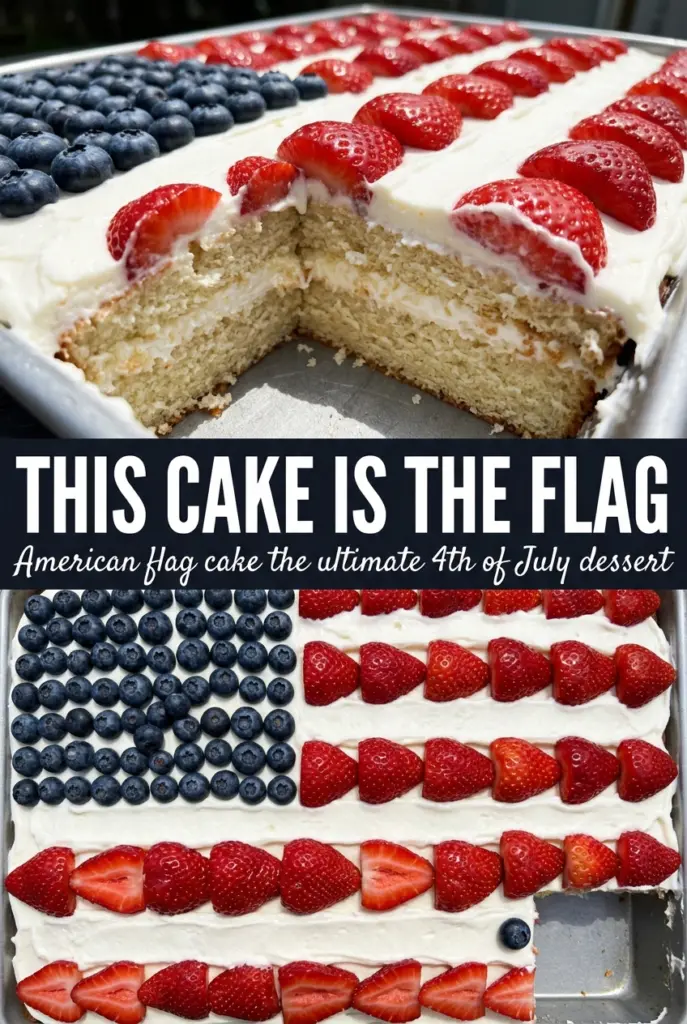
American Flag Cake gets its charm from the contrast: soft white cake underneath, a thick layer of vanilla buttercream on top, and clean rows of fruit that turn the whole thing into a dessert people actually stop to look at before they cut in. The best versions are bright, tidy, and sturdy enough to slice without the design sliding into a mess. That balance comes down to a few simple choices — a fully cooled cake, a frosting that spreads smoothly, and fruit that’s prepped for neat lines instead of casual scattering.
Using white cake mix keeps the crumb light and neutral so the decorations stand out, and the homemade buttercream gives you enough body to anchor the fruit. Fresh strawberries and blueberries work better than frozen here because they hold their shape and don’t bleed color into the frosting. If you want the stripes to stay crisp, the cake needs to be cold before you start decorating and chilled again before serving.
Below, I’ll walk through the little things that matter most, including how to keep the frosting from dragging crumbs across the top and how to lay out the berries so the flag design stays sharp all the way to the last slice.
The frosting set up beautifully and the strawberries stayed put, even after the cake sat out for the cookout. I used banana slices for the white stripes and the whole design looked clean when I cut it.
Save this American Flag Cake for the Fourth of July table, with its neat berry stripes and white frosting bands.
The Part That Keeps the Flag Design Clean Instead of Sliding
The biggest mistake with an American Flag Cake is decorating it while the frosting is still soft or the cake is still warm. Warm cake releases steam, which loosens the buttercream and makes the berries sink or skid out of place. A cold cake gives you a firm surface, and a slightly chilled frosting holds the fruit instead of letting it wander.
The other thing that matters is density. This isn’t the place for delicate piped details that need perfection from every angle. The flag looks best when the blueberries are packed tightly in the corner and the strawberry rows are lined up with purpose, because the whole design reads from a distance. If the rows look a little uneven while you’re placing them, step back before adding the next line and correct it then, not after the entire top is covered.
What the Cake Mix, Buttercream, and Fruit Each Need to Do

- White cake mix — The boxed mix keeps the crumb light, even, and neutral so the fruit colors stay vivid. Bake it exactly as directed, then cool it all the way before frosting. A scratch white cake works too, but it needs to be sturdy enough to hold the heavy fruit layout.
- Unsalted butter — This is what gives the frosting its structure. Salted butter works in a pinch, but unsalted gives you better control over the final flavor. Start with truly softened butter, not melted butter, or the frosting will turn loose and greasy instead of fluffy.
- Powdered sugar — This thickens the buttercream and gives it body for spreading. Add it gradually so it doesn’t puff into the air and so the frosting stays smooth. If it seems stiff, a spoonful of cream fixes it faster than adding more butter.
- Fresh strawberries and blueberries — Fresh fruit is the whole point here. Frozen berries leak juice and blur the flag pattern. Slice the strawberries lengthwise so they lay flat and make cleaner stripes; chunky slices make the top look messy and uneven.
- Banana slices or extra white frosting — Banana gives you a softer, more natural-looking white stripe, but it browns if the cake sits too long. If you need the cake to hold for several hours, pipe frosting stripes instead. Frosting is the safer choice for make-ahead serving.
Building the Flag So the Fruit Holds Its Shape
Cooling the Cake Completely
Bake the sheet cake according to the package directions, then let it cool all the way before you even think about frosting. The surface should feel completely neutral, not faintly warm in the center. If you rush this, the buttercream melts into the crumb and the top loses its clean canvas.
Whipping the Buttercream Until It Spreads Easily
Beat the softened butter until it turns pale and fluffy, then add the powdered sugar gradually. Pour in the vanilla and enough cream to make the frosting spreadable, but stop before it turns loose. You want a thick, smooth frosting that drags a little under the spatula and still holds a ridge when you lift it.
Laying Out the Flag Design
Spread the frosting in an even layer across the whole cake, then build the canton first in the upper left corner with tightly packed blueberries. After that, add the strawberry rows across the cake in straight lines. The stripes look best when the berries lie flat and overlap just enough to cover the frosting underneath without creating tall bumps.
Finishing and Chilling Before Slicing
Once the flag is assembled, refrigerate the cake until the frosting firms up. That chill time matters because it helps the fruit stay put and makes clean slices possible. If you cut it while the buttercream is soft, the design smears across the knife and the berries slide out of line.
Three Ways to Adapt This Patriotic Sheet Cake
Use frosting stripes instead of banana
If you want the cake to hold for a longer party window, pipe white frosting in the spaces between the strawberry rows. It won’t brown the way banana does, and the flag keeps its clean look even after several hours in the fridge or on the table.
Make it dairy-free
Swap in a dairy-free white cake mix and use plant-based butter with a splash of non-dairy milk in the frosting. The frosting will be a little softer, so chill it briefly before spreading. The finished cake still works, but the buttercream won’t have quite the same richness or firmness.
Turn it into a two-pan version
If you don’t have a 12×18 sheet pan, bake the batter in two 9×13 pans and join the cooled cakes side by side on a large board or tray. Frost the seam well so the surface looks continuous before you add the flag pattern. The layout is a little less seamless than a true sheet pan, but the design still reads clearly.
Storage and Reheating
- Refrigerator: Store covered for up to 3 days. The berries stay best on day one, but the cake still slices neatly after chilling.
- Freezer: I don’t recommend freezing the decorated cake. The fruit softens and weeps as it thaws, which blurs the flag design.
- Reheating: No reheating needed. Serve chilled or let the cake sit at room temperature for 15 to 20 minutes before slicing so the buttercream softens just enough to cut cleanly.
Answers to the Questions Worth Asking
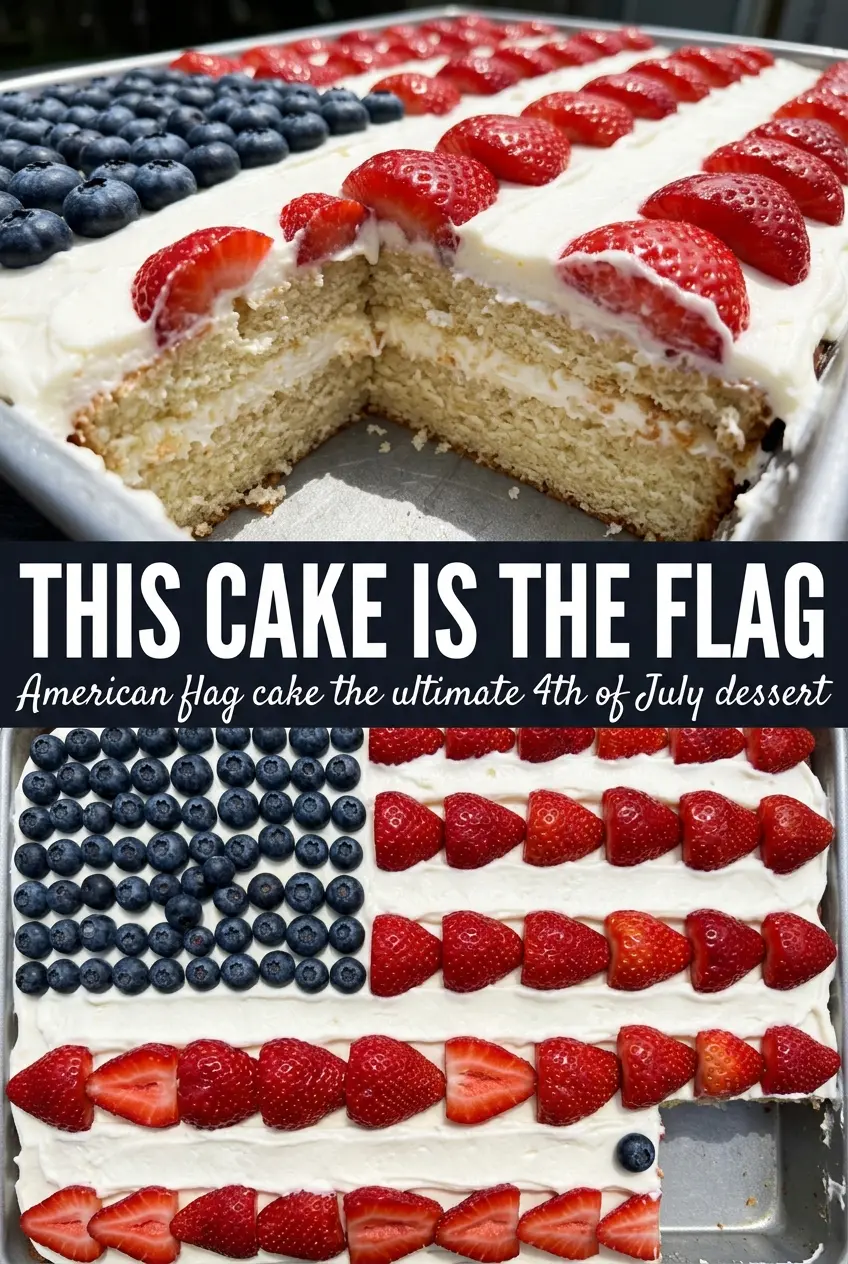
American Flag Cake
Ingredients
Equipment
Method
- Bake both white cake mixes in a large 12x18 sheet pan or two 9x13 pans joined together according to package directions, then cool completely.
- Let the cakes cool fully before frosting so the buttercream spreads smoothly without melting.
- Beat the softened unsalted butter until fluffy.
- Gradually add powdered sugar and beat until the mixture is combined and looks pale.
- Mix in the vanilla extract and then add 4 tbsp heavy cream.
- Beat until smooth and spreadable, adding 1–2 more tbsp heavy cream if needed to reach a thick, pipeable texture.
- Spread a thick, even layer of buttercream over the entire cooled sheet cake top.
- In the upper left corner, arrange fresh blueberries into a dense rectangle to form the canton.
- Create red stripes by arranging sliced fresh strawberries in flat rows across the length of the cake.
- Fill the white stripes by piping extra frosting in rows between the strawberry rows, or placing thin banana slices to form clean white lines.
- Refrigerate the cake until ready to serve, then slice into squares.